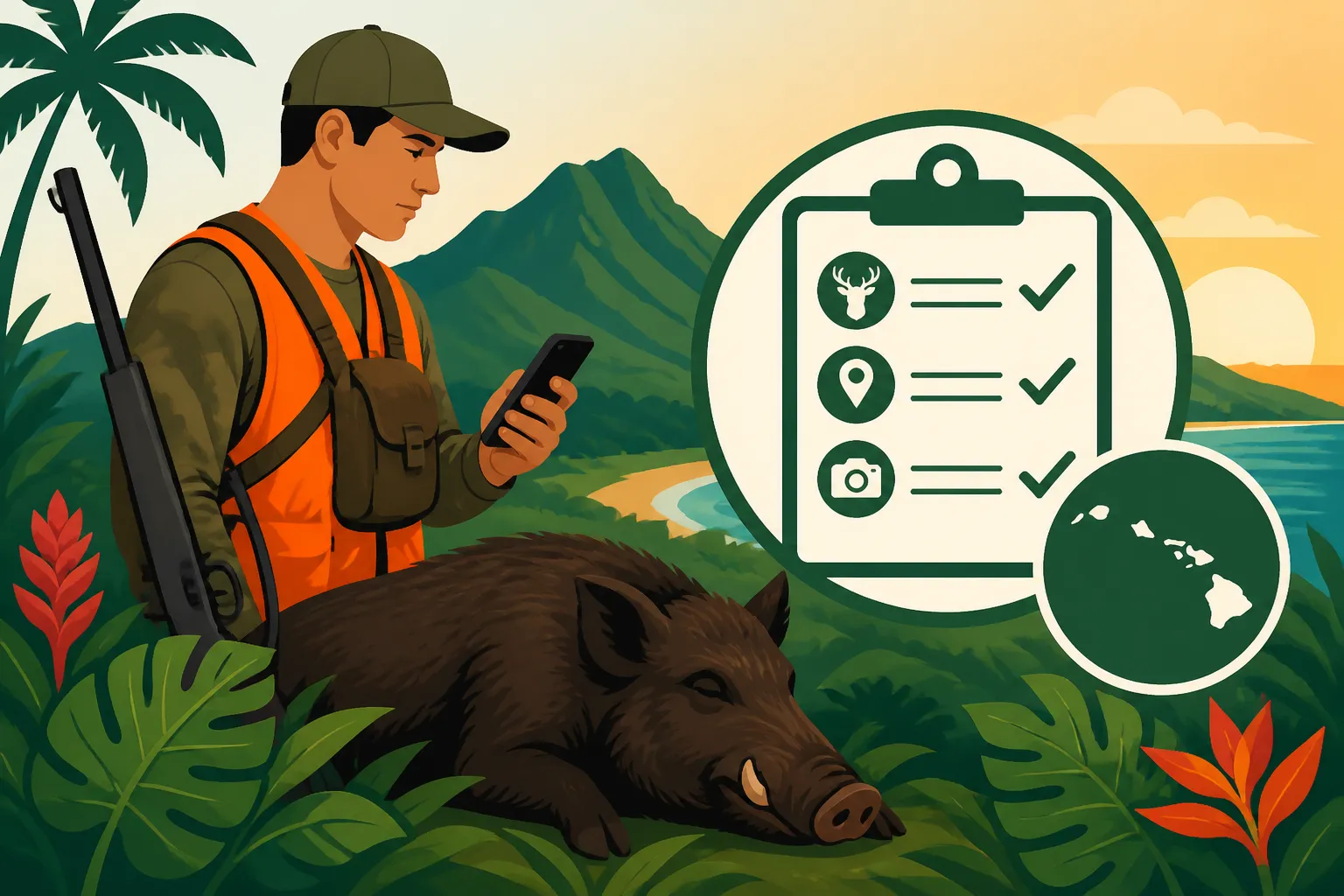
Harvest Reporting Requirements After a Kill
Alright, you've put in the hard work, tracked your game through the dense ʻōhiʻa forest or across the kiawe flats, made a clean shot, and now your quarry is down. That rush of adrenaline is still coursing through you, but before you start thinking about the cool cuts of venison or the rich pork for your lūʻau, there's a crucial step that many hunters overlook or misunderstand: harvest reporting. It can feel like just another piece of paperwork, a bureaucratic hurdle after an already demanding hunt, but fulfilling these requirements isn't just about avoiding a fine; it's absolutely vital for the future of hunting in Hawaii. This guide will walk you through exactly what you need to do to report your harvest correctly and why it matters so much.
The Importance of Reporting Your Harvest in Hawaii
It’s easy to think of harvest reporting as just some formality, another hoop to jump through after a successful hunt. Believe me, I’ve been there – tired, trying to pack out a heavy animal, and all you want to do is get home. But truly, this step is one of the most critical responsibilities we have as hunters. It's the backbone of wildlife management here in the islands, ensuring that our unique ecosystems and game populations remain healthy and sustainable for generations to come.
Why Reporting Matters for Conservation Beyond Just Compliance
When you take an animal in Hawaii, whether it’s a big axis buck on Molokaʻi or a wily feral pig in a Big Island gulch, you’re not just taking meat for your freezer; you’re participating in a dynamic system. Each reported harvest provides a piece of the puzzle that helps the Department of Land and Natural Resources (DLNR), specifically the Division of Forestry and Wildlife (DOFAW), understand the health and trends of our game populations. Without accurate data, they're essentially flying blind.
Consider the rapidly multiplying Axis deer on Maui, for example. Without precise harvest numbers, it would be impossible for DOFAW to gauge the effectiveness of management strategies, adjust bag limits, or plan for future seasons. If hunters aren’t reporting, managers might underestimate the actual harvest, leading to decisions that could either over-exploit a population or, conversely, allow populations to grow unchecked, causing significant agricultural damage or habitat degradation. This is especially pertinent in Hawaii, where most game animals are introduced species, and managing their numbers is often critical for protecting native flora and fauna. Every single time you report, you're contributing to real, data-driven decisions that impact everything from Axis Deer Hunting in Hawaii to Hunting Hawaii's Feral Pigs for years to come. It truly is about being a responsible steward of the land and its resources, not just a consumer.
The Data DOFAW Collects and How It's Used
So, what exactly does DOFAW want to know? It's more than just "I shot something." They're looking for specific details that paint a comprehensive picture. For big game like deer, pigs, goats, or mouflon, you'll typically be asked for:
- Species and Sex: Was it an Axis deer buck or a sow pig? This is vital for understanding breeding populations and herd structure.
- Date of Harvest: Helps track hunting pressure and animal movement throughout the season.
- Hunting Unit: Pinpoints where harvest is occurring, helping to identify areas with high animal density or high hunter success.
- Weapon Used: Whether it was archery, muzzleloader, or rifle, this data informs weapon-specific season lengths and regulations. For instance, knowing how many animals are taken during Hawaii Archery Season Windows helps evaluate that season's impact.
- Public or Private Land: Understanding where animals are harvested helps DOFAW differentiate between public land pressure and private land takes.
- Time Spent Hunting: Sometimes requested to gauge hunter effort versus success.
- Whether the Animal was Tagged: Confirmation that you complied with Tagging Rules After the Kill.
For game birds, the data might be slightly different, often focusing on species and daily bag limits. All this information is aggregated and analyzed, influencing the setting of Hawaii Game Mammal Seasons and Hawaii Game Bird Seasons and Bag Limits, unit specific quotas, and even the allocation of resources for habitat improvement or animal control programs. When you neglect to report, you're leaving a blank space in that critical data, which can lead to less effective wildlife management for everyone.
Step-by-Step Guide to Hawaii's Harvest Reporting Process
Navigating the specifics of harvest reporting in Hawaii can sometimes feel a bit convoluted, especially with the mix of traditional paper methods and newer digital options. But once you understand the system, it's quite straightforward. The key is to be prepared before you even head into the field.
When and How to Report Mammal Harvests
For most big game species, the reporting process usually ties into the check-in/check-out system of Hawaii's hunting units. Many public hunting areas in Hawaii require you to check in before your hunt and check out afterward, regardless of success. This is where your harvest report typically gets submitted.
Traditional Paper Method:
Many check stations, especially in more remote areas, still rely on physical paper cards. When you check out, there will be a section on the card to fill out your harvest details. You’ll need to legibly write in all the information requested: species, sex, date, unit, weapon, and any other specific questions asked. After completing it, you'll typically deposit this card into a designated drop box at the check station. Make sure you fill it out completely and accurately. I've heard stories of hunters rushing through, making mistakes, and then having to try and clarify later, which is a headache for everyone.
Digital Reporting via OuterSpatial and GoHunt:
This is where technology has really stepped up to make things easier, especially when you're dealing with No Cell Signal on a Hawaii Hunt. The Division of Forestry and Wildlife (DOFAW) has integrated harvest reporting into the OuterSpatial app, which you also use for checking in and out of many units. The GoHunt Hawaii portal is also a key player here, often linked with your OuterSpatial account. When you're using the OuterSpatial app and Using the OuterSpatial App to Check In, after you've completed your hunt and are checking out, the app will prompt you to enter harvest details if you were successful.
The beauty of the digital system, through GoHunt and OuterSpatial, is that you can often enter the data even if you're out of cell service. The app will save your information and automatically upload it to the DOFAW system once you regain a connection. This is a game-changer for folks hunting deep in a gulch or far up a mountain where a phone signal is a rare luxury. Just make sure you initiate the check-out and reporting process while you remember all the details. For more in-depth information, check out Checking In and Out of Hawaii Hunting Units.
Specifics for Game Bird Harvest Reporting
Game bird reporting often works a little differently than big game. While some units might still use a check-in/check-out system where you report bird harvests, it's also common for hunters to simply keep a tally of their take throughout the season. At the end of the season, or when renewing your license, you might be required to submit an aggregated report of all game birds harvested.
For example, on game bird weekends, you might be required to record your take on your game bird stamp or permit itself, or through a specific online survey or form that DOFAW provides. Always consult the most current Hawaii Game Bird Seasons and Bag Limits and unit-specific rules for the area you’re hunting. The requirements can vary by island and unit, so don't assume what applies to Chukar Hunting Hawaii Island's High Country will be the same for dove hunting on farm ground. The best practice is to always confirm the specific reporting method for your target species and unit before you head out.
What Information You'll Need to Provide
To ensure your harvest report is complete and accurate, gather these details:
- Hunter License Number: This is how you're identified in the system. Make sure it's valid, as you'll also need a valid Hawaii Hunting Licenses and What They Cost to hunt in the first place.
- Permit/Tag Number (if applicable): For species requiring specific tags, like Axis deer on Lanaʻi or Mouflon on the Big Island, you’ll need to record the tag number used. For a refresher on this, refer to How Hawaii's Permit-Tag System Works.
- Species Harvested: Clearly state whether it was an Axis Deer, Feral Pig, Feral Goat, Mouflon Sheep, Black-tailed Deer, or a specific game bird species like Francolin or Chukar.
- Sex of Animal: Crucial for population modeling.
- Date and Time of Harvest: Important for understanding hunting patterns and compliance with legal shooting hours.
- Hunting Unit/Area: Specify the exact unit, like Unit A on Mauna Kea or a specific Game Management Area (GMA). Knowing Hawaii's Hunting Units and How They Work is key here.
- Weapon Type: Rifle, shotgun, muzzleloader, bow, spear, or knife (for dog hunting pigs). This helps analyze hunter success by method.
- Approximate Weight (optional but helpful): Some reports ask for this, offering more data points for animal health studies.
- Tusk/Horn/Antler Measurements (optional but helpful): Again, not always mandatory but valuable data for trophy quality trends.
- Time Spent Hunting: Often requested to calculate hunter effort.
Having this information readily available, perhaps even noted in a small waterproof notebook in your pack, will make the reporting process much smoother whether you’re using a paper card or the GoHunt-enabled OuterSpatial app.
Common Pitfalls and Best Practices for Hunters
Even with the best intentions, it's easy to make mistakes when it comes to harvest reporting. After a long day in the field, sometimes exhaustion can lead to oversights. But knowing the common pitfalls can help you avoid them and ensure you’re always in compliance.
Avoiding Missed Deadlines and Penalties
The most common pitfall is simply forgetting to report, or missing a specific deadline. While some reporting, like the instant digital check-out via OuterSpatial, happens immediately, other reports might have specific submission windows. For instance, an annual game bird harvest report might be due by a certain date after the season closes. Not reporting a harvest is a violation of Hawaii administrative rules and can lead to fines, loss of hunting privileges, and even confiscation of game. Imagine working so hard to secure that animal, only to lose it, or pay a hefty fine because you forgot to fill out a form or press "submit" on your phone. It's a frustrating situation that’s entirely avoidable. Always double-check the rules for the specific unit and species you're pursuing in the current Hawaii Game Mammal Seasons or Hawaii Game Bird Seasons and Bag Limits pamphlets available through DOFAW or the GoHunt Hawaii website.
Tips for Accurate and Timely Reporting Even When Remote
Hunting in Hawaii often takes you to truly wild and remote places – steep gulches, dense rainforests, or wide-open lava flows. Cell service is notoriously spotty in many of these areas, which can make digital reporting challenging. Here are some best practices:
- Pre-load Maps and Download Unit Info: Before you leave home, ensure the OuterSpatial app has the maps for your Hawaii's Hunting Units and How They Work downloaded for offline use. This often includes unit-specific rules and check-in/out procedures.
- Physical Backup: Always carry a small, waterproof notebook and a pen. Even if you plan to use the app, having a physical record of your harvest details (date, time, species, sex, unit) means you won't be scrambling if your phone dies or the app glitches.
- Charge Your Devices: A fully charged phone (and maybe a portable power bank) is essential for digital reporting. There’s nothing worse than a dead battery when you need to check out.
- Report in the Field (or Immediately After): Even if you don’t have service, start the reporting process in OuterSpatial as soon as possible after the kill. It will queue the data and send it when you get signal. This ensures accuracy while details are fresh in your mind and before the fatigue of packing out sets in. Remember Field Care in Hawaii's Heat and Humidity often means you're rushing, so get that report done first!
- Verify After Submission: If reporting digitally, once you're back in service, double-check that your report actually went through. Sometimes, a slow connection might cause a delay, and you want to be sure it's recorded.
Utilizing Digital Tools for Streamlined Reporting
The advent of digital tools like the OuterSpatial app and the GoHunt Hawaii portal has revolutionized how hunters manage their licenses, permits, and harvest reports. These platforms aren't just for checking in; they're designed to make the entire process more efficient.
- Integrated System: Your Hawaii hunting license, permits (if needed), and check-in/out records are all often linked through your GoHunt account. This means less paper to keep track of and a more centralized record of your hunting activities.
- Real-time Updates: DOFAW can push out real-time updates on season changes, unit closures (like Why Some Hawaii Units Close Suddenly), or rule modifications directly through these platforms, keeping you better informed.
- Ease of Use: Once you're familiar with the interface, filling out a harvest report on your phone is often faster and clearer than fumbling with a wet paper card in the rain. Plus, the system guides you through the necessary fields, reducing the chance of missed information.
Embracing these digital tools, like those found on the GoHunt Hawaii site, can significantly streamline your post-harvest responsibilities, allowing you to focus more on the hunt itself and the delicious game meat you'll be enjoying.
| Category | Information Required | Typical Reporting Method | Deadline & Notes |
|---|---|---|---|
| Big Game Mammals | Species, Sex, Date, Unit, Weapon, Tag # (if applicable), Public/Private Land | OuterSpatial App / GoHunt Portal (or Paper Check Station) | Immediately upon checking out of unit or within 24-48 hours. |
| Game Birds | Species, Number Taken Daily/Seasonally, Date, Unit | Specific forms/surveys, or aggregated season-end reports | Varies; often within a few days of hunt or by season's end (e.g., December 31st). |
| General Details | Hunter License #, Time Spent Hunting, Weight/Measurements (optional but encouraged) | Included in all reporting methods | Accuracy is paramount for conservation management. |
Remember, adhering to these requirements isn't just about compliance; it's about being a vital part of Hawaii's unique conservation efforts. Every piece of data you provide helps ensure that the wildlife resources we cherish continue to thrive.
Disclaimer
The information provided in this article is intended for general guidance and informational purposes only. Hunting regulations in Hawaii are subject to change, and it is the hunter's responsibility to consult the most current Hawaii Department of Land and Natural Resources (DLNR) Division of Forestry and Wildlife (DOFAW) regulations, laws, and official announcements before engaging in any hunting activities. Always prioritize safety and ethical hunting practices.