Hawaii’s Feral Cattle History
It's easy to picture Hawaii as a pristine paradise, full of native birds and untouched forests, but the reality is much more complex, especially when you look back at its history. One of the most surprising elements of that history for many is the story of feral cattle, huge beasts roaming wild that once posed a significant threat to the islands' delicate ecosystems and early communities. This guide dives deep into the unexpected journey of cattle to Hawaii, their profound impact, and the fascinating, sometimes dramatic, ways people have tried to manage them over the centuries.
The Unintended Legacy: How Cattle Arrived in Hawaii
The presence of large, free-ranging cattle in Hawaii might seem like a natural fit for some, evoking images of rugged ranchlands, but the truth is, these animals are entirely foreign to the islands. Their introduction was a well-intentioned, though ultimately problematic, "gift" that would forever change the Hawaiian landscape.
Captain Vancouver's Gift
The story of Hawaii's cattle truly begins in the late 18th century, with Captain George Vancouver. A British explorer, Vancouver made several voyages to the Hawaiian Islands, and during his visit in 1793, he gifted King Kamehameha I five head of cattle – a bull and four cows – from California. His intention was noble: to provide a sustainable food source for the Hawaiian people, who at that time primarily relied on agriculture and fishing. It was a vision of future prosperity, a way to diversify the islands' resources.
To ensure the herd could establish itself and grow, King Kamehameha I, acting on Vancouver's advice, placed a kapu, or taboo, on hunting the cattle for ten years. This royal decree meant that no one was allowed to harm the animals, allowing them to roam freely and multiply without any human predation. While this protection was crucial for the initial survival of the herd, it also laid the groundwork for an ecological challenge that would plague the islands for generations. The idea was good in theory, but the lack of natural predators in Hawaii, coupled with abundant forage, created a perfect storm for rapid population growth.
From Ranch Stock to Wild Herds
As the years passed and the kapu was lifted, those initial few cattle had indeed multiplied, exploding in numbers across the Big Island, especially on the fertile slopes of Mauna Kea and Mauna Loa. While some attempts were made to establish controlled ranching operations, many of these animals inevitably escaped into the dense forests and rugged volcanic terrain. Once free, they quickly reverted to a wild, or "feral," state.
These escaped cattle thrived in Hawaii's varied climates, from the wet, lush forests to the drier, open grasslands. They were resourceful, adapting to different forage and terrain. Without predators like wolves or bears to keep their numbers in check, and with the kapu now a distant memory, their populations continued to swell unchecked. The distinction between genuinely wild cattle and those that were simply hard-to-manage ranch stock became increasingly blurred. What started as a small, protected herd meant for sustenance had become a growing ecological problem, a powerful force of nature reshaping the very landscape it inhabited.
The Reign of the Pipipi: Ecological and Cultural Impact
The proliferation of feral cattle, or pipipi as they came to be known, wasn't just a nuisance; it was a profound ecological disaster and a cultural disruption that affected nearly every aspect of life for early Hawaiians and later settlers. Their massive size and destructive grazing habits carved an indelible mark on the islands.
Devastation of Native Ecosystems
Imagine a landscape that evolved over millions of years without the presence of large grazing mammals. Hawaii’s native plants, many of them unique to the islands, had no natural defenses against the sheer power and appetite of cattle. The arrival of these animals was catastrophic. They overgrazed vast tracts of land, stripping away native grasses and shrubs, and inhibiting the regeneration of delicate forest understories. This relentless grazing led to significant soil erosion, especially on steep slopes, as the protective plant cover was removed.
Beyond just eating, cattle trampled sensitive areas, compacting soil and destroying habitats for native insects and ground-dwelling birds. They also inadvertently spread invasive weed seeds through their waste and hooves, introducing non-native plants that competed fiercely with the already struggling indigenous flora. Watersheds, vital for supplying fresh water, were particularly vulnerable. The cattle disturbed stream banks, fouled water sources, and accelerated runoff, impacting the overall health of the islands’ delicate water systems. The long-term effects of this damage are still visible today, reminding us why efforts to protect Hawaii's Fenced Conservation Boundaries are so crucial for preserving what remains.
Conflict with Human Settlements and Agriculture
The impact of feral cattle wasn't limited to the wilderness; it spilled directly into the lives of the people. Traditional Hawaiian agriculture, particularly the cultivation of kalo (taro) in irrigated patches, was highly vulnerable. Feral cattle would break through fences, trample cultivated fields, and devour crops that were essential for sustenance. This constant threat to food security was a huge source of frustration and hardship for communities trying to feed themselves.
Beyond agricultural damage, the sheer presence of these wild, often aggressive animals posed a physical danger. They could charge people, damage homes, and break down the few fences that communities could erect. Roads and trails, even rudimentary ones, were churned into muddy quagmires, making travel difficult. The situation was one of constant struggle, a battle against an introduced force that seemed to have no natural limits. For many, the "gift" of Captain Vancouver had become a relentless burden, requiring continuous vigilance and immense effort to protect their livelihoods and way of life.
Early Attempts at Control: From Spears to Vaqueros
As the feral cattle problem spiraled, it became clear that passive observation was not an option. The sheer numbers and destructive power of the pipipi demanded action, leading to a series of evolving, and often dramatic, control efforts.
The Era of Royal Decrees and Restricted Hunting
Initially, after the kapu was lifted, the idea was that local hunters could simply harvest the cattle as needed. However, these were not domesticated animals used to human presence. They were wild, elusive, and often dangerous. Early hunting methods, using spears or basic firearms, were insufficient to make a significant dent in the rapidly expanding populations. The scale of the problem was simply too vast for individual, uncoordinated efforts.
Recognizing the escalating damage, Hawaiian royalty and subsequent governing bodies continued to issue decrees, but these now shifted from protection to systematic reduction. There were attempts to organize hunts, but without effective infrastructure, skilled hunters, or proper equipment, these efforts largely failed to contain the herds. The terrain itself, rugged and often densely forested, favored the cattle, making them incredibly difficult to track, corner, and dispatch. The story of feral cattle illustrates just how challenging it is to manage introduced species without a comprehensive strategy, a lesson that would also apply later to Hawaii's Feral Pigs, Island by Island and Hawaii's Feral Goats and Why They Matter.
The Paniolo and the Rise of Ranching
The turning point came in the early 19th century when King Kamehameha III recognized the need for a more organized and specialized approach. In the 1830s, he invited skilled vaqueros from Spanish California, renowned for their horsemanship and cattle handling techniques, to come to Hawaii. These vaqueros, or paniolo as they became known (a Hawaiianized pronunciation of "español"), brought with them not just their riding and roping skills, but also the entire culture of ranching.
The paniolo introduced horses, lassos, and systematic round-ups, transforming the chaotic pursuit of wild cattle into an art form. They taught local Hawaiians these skills, leading to the birth of Hawaii's unique cowboy culture, a blend of Hawaiian traditions and Spanish ranching techniques. This period marked a significant shift: from merely attempting to kill problem animals, the focus moved towards capturing, branding, and domesticating them, or at least converting them into a manageable economic resource. While still challenging, the advent of the paniolo allowed for more effective control of the feral herds, bringing a semblance of order to the wild cattle problem and laying the foundation for Hawaii's enduring ranching industry, which continues to this day on islands like the Big Island and Maui.
Modern Management and Lingering Presence
While the era of truly unbridled feral cattle dominating the islands has largely passed, the legacy of their introduction continues to shape conservation efforts and land management in Hawaii. Modern approaches combine lessons from the past with advanced techniques to maintain ecological balance.
Public Hunting and Conservation Efforts
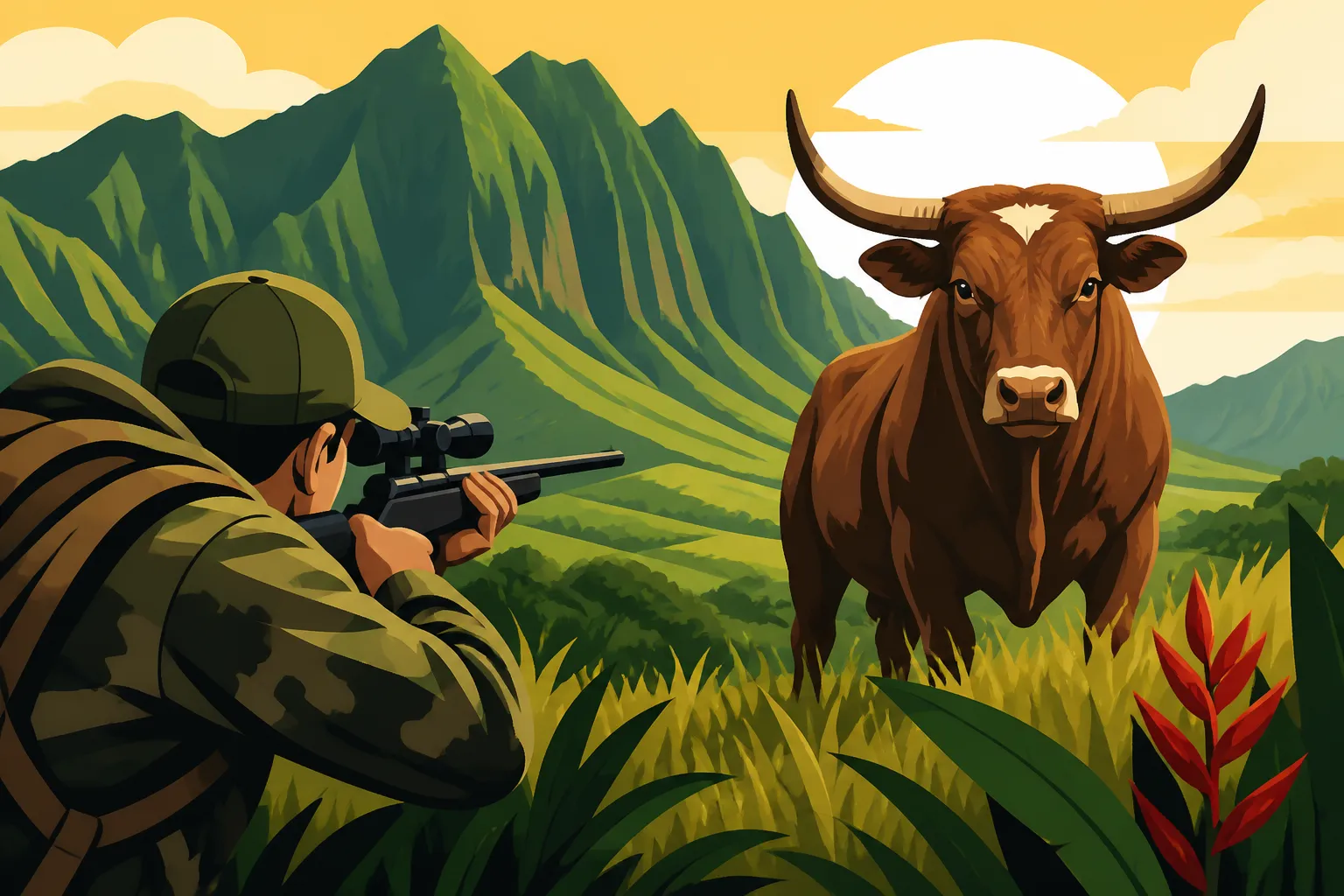
Today, while large, entirely feral cattle herds are rare, some populations of cattle do revert to a wild state, or are managed as free-ranging stock on large ranches that border public lands. In certain designated areas, public hunting plays a role in managing these populations, along with other introduced ungulates. The philosophy here is often dual-purpose: to provide recreational hunting opportunities for residents while simultaneously aiding conservation efforts by reducing animal numbers that can damage native forests.
These hunts are highly regulated, requiring specific permits and licenses. Hunters seeking to participate in such opportunities would typically need to navigate the Hawaii Department of Land and Natural Resources (DLNR) Division of Forestry and Wildlife (DOFAW) system. This is where platforms like GoHunt become incredibly useful. GoHunt provides a streamlined way to access information on available hunts, apply for permits, and purchase necessary licenses, such as the general hunting license, making the process much more accessible for both residents and nonresidents. Understanding How Hawaii's Permit-Tag System Works and Hawaii Hunting Licenses and What They Cost is essential, and GoHunt often aggregates this information. The idea is that regulated hunting contributes to the ongoing management of non-native species, helping to mitigate their impact on Hawaii's unique biodiversity.
Fencing and Targeted Removals
Beyond public hunting, Hawaii's conservation agencies employ more intensive strategies in particularly sensitive or remote areas. One of the most effective tools has been the construction of extensive fencing. These fences, often built to incredibly high standards, are designed to exclude large ungulates, including cattle, from critical watershed areas and native forest remnants. By protecting these fragile ecosystems from grazing and trampling, native plants can recover, and vital water sources are safeguarded. You'll find these projects often fall under the umbrella of Hawaii's Watershed Partnership Lands, where collaborative efforts are made to protect these essential resources.
In areas where fencing isn't practical or where populations are particularly entrenched, targeted removal programs are sometimes implemented. This can involve ground-based culling by trained professionals or, in more remote and rugged terrain, even aerial removal programs using helicopters. While these methods can be controversial, they are often deemed necessary to protect critically endangered native species and habitats from irreparable damage. These intensive efforts highlight the ongoing commitment to address the legacy of introduced species and reverse the ecological degradation caused over centuries.
The Legacy in Today's Landscape
Today, the truly "feral" cattle, in the sense of massive, unmanaged herds roaming freely across entire islands, are largely a thing of the past. The combined efforts of early paniolo, the establishment of ranching, and modern conservation management have significantly reduced their widespread impact. However, their genetic legacy persists. Many cattle on Hawaii's ranches still carry the bloodlines of those original Vancouver animals, adapted to the rugged island terrain.
Occasional escapees from ranchlands continue to revert to a wild state, especially in areas bordering remote forests or deep gulches. These animals require ongoing management, and sometimes they fall under the purvey of Hawaii's Aerial Ungulate Control Programs. So, while you're unlikely to stumble upon a vast, unchecked herd of truly wild cattle in many parts of Hawaii, their story remains a powerful reminder of Why Every Hawaii Game Animal Was Introduced and the complex, often challenging, relationship between introduced species and native ecosystems. It's a continuous balancing act, ensuring that the beauty and biodiversity of the islands can thrive alongside the animals that have become a part of its unique landscape. The ongoing management of these animals is a testament to the long-term commitment required for How Hunting Fits Hawaii's Conservation Plan.
A Timeline of Hawaii's Feral Cattle Management
To give you a clearer picture of how this history unfolded, here's a brief timeline of significant periods in Hawaii's feral cattle story:
| Period | Key Events | Impact on Cattle Populations | Management Approach |
|---|---|---|---|
| Late 18th Century | Captain Vancouver's gift of cattle to King Kamehameha I. Royal kapu (taboo) on hunting for 10 years. | Initial establishment and rapid population growth. | Protection and encouragement of breeding. |
| Early 19th Century | Kapu lifted. Cattle populations explode on the Big Island. Attempts at unorganized hunting. Damage to agriculture. | Uncontrolled growth, widespread ecological damage. | Ineffective, unstructured hunting by local residents. |
| 1830s | King Kamehameha III invites Mexican vaqueros (paniolo). Introduction of horses, lassos, and ranching techniques. | Beginnings of organized control and domestication. | Systematic round-ups, branding, and development of Hawaiian ranching. |
| Late 19th – Mid 20th Century | Expansion of private ranching operations. Development of fences and more controlled grazing. | Populations largely contained within ranches. | Commercial ranching, continued culling of wild strays. |
| Late 20th – 21st Century | Increased focus on conservation. Establishment of public hunting programs and wildlife management areas, often guided by information available through platforms like GoHunt. Extensive fencing of critical watersheds. Targeted aerial and ground removals. | Reduced numbers of truly feral cattle. Lingering presence of escapees and managed wild stock. | Regulated public hunting, conservation fencing, professional culling in sensitive areas, land access for hunters in Hawaii's Game Management Areas and Hunting Hawaii's Forest Reserves. |
Disclaimer
This article is for general informational purposes only and does not constitute professional advice. Laws, prices and regulations vary by location and change over time. Consult a qualified professional for guidance on your specific situation.