What Trapping and Snaring Rules Allow
It can be incredibly confusing to sort through all the rules and regulations when you’re looking into different ways to manage or hunt game in Hawaii. Many folks, especially those dealing with persistent issues like feral pigs on their property, might wonder if trapping or snaring is even an option. This guide is here to untangle the complexities of Hawaii's trapping and snaring rules, detailing exactly what's permitted, what's not, and how to stay on the right side of the law.
The General Landscape of Trapping and Snaring in Hawaii
Let's be real, when most people think about hunting in Hawaii, they picture spot-and-stalk with a rifle or bow, or perhaps a dog-and-knife operation for pigs. Trapping and snaring tend to exist in a bit of a gray area for many, and it's easy to get it wrong if you're not informed. The primary thing to understand right off the bat is that recreational hunting on public lands with snares or traps for mammals is generally not permitted under Hawaii's hunting regulations. The Department of Land and Natural Resources (DLNR), through its Division of Forestry and Wildlife (DOFAW), manages game populations and outlines very specific legal methods for harvest.
Public Lands: A Strict Stance Against Recreational Trapping
When we talk about Hawaii's public hunting units, whether it's a vast Forest Reserve on the Big Island or a Game Management Area on Maui, the rules for taking game mammals like Axis deer, Mouflon sheep, feral goats, or feral pigs are pretty clear: you're generally using firearms, archery equipment, or in the case of pigs, often dogs and knives. You won't find a section in the official hunting regulations that lists "snaring" as a legal method for recreational take on these public grounds. This is a critical distinction that often catches people by surprise.
The reasons for this strictness are multi-faceted. Safety is a huge concern; snares can be indiscriminately placed and pose a risk to other hunters, hikers, or even protected wildlife. There's also the issue of non-target catches. A snare isn't always smart enough to differentiate between a feral pig and an endangered Hawaiian hoary bat or a domestic animal that wandered onto public land. For these reasons, and to maintain ethical hunting standards, DOFAW has largely restricted trapping and snaring from public recreational hunting. If you're planning a public land hunt, you'll need to focus on methods like those described in our article on methods for Hunting Hawaii's Feral Pigs. You should also always be aware of Hawaii's Legal Weapons by Season to ensure your equipment is compliant.
Private Property: Where the Rules Shift
Now, this is where things get a little more nuanced. While public land rules are tight, the scenario changes significantly when you're dealing with private property. Landowners, farmers, and ranchers in Hawaii face immense challenges from invasive species, particularly feral pigs and goats, which can devastate crops, fences, and native ecosystems. In these situations, managing these animals becomes less about recreational hunting and more about agricultural protection and resource management.
On private lands, landowners do have more leeway to control nuisance animals, and this can often include trapping and snaring. However, it's never a free-for-all. Even on private land, there are expectations for humane methods and responsible practices. The primary goal here is usually depredation control – reducing damage caused by these animals. It’s absolutely essential to remember that securing explicit, written permission from the landowner is non-negotiable before you even think about setting a trap or snare. Without that, you're looking at severe trespass penalties, regardless of your intentions.
Specific Regulations for Feral Pigs and Other Nuisance Animals
Feral pigs are arguably the most commonly targeted animal when it comes to trapping and snaring discussions in Hawaii. Their destructive rooting habits, particularly in agricultural areas and native forests, make them a constant headache for many.
Feral Pig Snaring and Trapping on Private Property
For those struggling with pigs on their private land, snaring can be an effective control method. Cable snares, often made from aircraft cable, are commonly used. However, their use is not without guidelines.
- Device Type and Placement: Snares should be designed to capture the animal humanely. Generally, cable snares are permitted, but there might be restrictions on cable diameter or locking mechanisms to ensure a quick and clean capture or dispatch. Placement is key; snares should be set in areas where only the target animals are likely to travel, like pig trails, and away from public access points or areas frequented by non-target species or pets.
- Retrieval Requirements: This is a huge one for humane practice. Snares and traps must be checked frequently, ideally daily, to prevent prolonged suffering of captured animals. Leaving a snare unchecked for days on end is not only inhumane but also likely illegal and will result in a rotting carcass. This means if you set snares, you need to be committed to regular inspection.
- Landowner Permission is Paramount: We mentioned it before, but it bears repeating. You must have clear permission from the property owner. This isn't just a polite request; it's a legal requirement. The landowner is ultimately responsible for what happens on their property, so they need to be fully aware and approve of any snaring activities.
- Beyond Snaring: Live Traps: Many landowners also utilize large live traps, often referred to as "pig traps." These are typically large corrals or cages designed to capture multiple animals alive. These traps are considered more humane by some as they allow for the sorting and selective dispatch of pigs, and non-target animals can be released. While a hunting license generally covers the act of hunting, when it comes to trapping nuisance animals on private land for depredation control, the focus shifts more to property rights and pest management, rather than strictly "hunting" in the recreational sense. That said, it's always wise to ensure you possess a valid Hawaii Hunting Licenses and What They Cost if you plan to dispatch animals you've trapped, especially if you intend to utilize the meat, as this aligns with ethical and legal harvest.
Other Feral Species and Trapping Considerations
While pigs are the main focus for snaring, other feral animals like goats or even cats can be targeted with traps for control purposes on private lands.
- Feral Goats: Goats, like pigs, can cause significant ecological damage. Trapping efforts for goats are less common than snaring for pigs but do occur, usually with live traps in specific areas where their removal is critical. Again, this is typically for management, not recreational hunting, and strictly on private property with permission.
- Feral Cats and Mongoose: Trapping is a primary method for controlling these invasive predators, which decimate native bird populations. These efforts are typically carried out by professional pest control operators or authorized conservation agencies, using specialized live traps or kill traps, and are subject to very specific permitting and regulations, often separate from hunting regulations. This isn't something the average hunter would engage in without specific authorization and training.
Legal Devices, Permitting, and Responsible Use
Understanding what devices are legal and how to use them responsibly is just as important as knowing where you can use them. Misuse of any trapping device can lead to legal trouble, ethical concerns, and unintended harm.
Permitted Trapping Devices and Placement
When it comes to trapping, the goal is typically either live capture for relocation/dispatch or quick, humane dispatch.
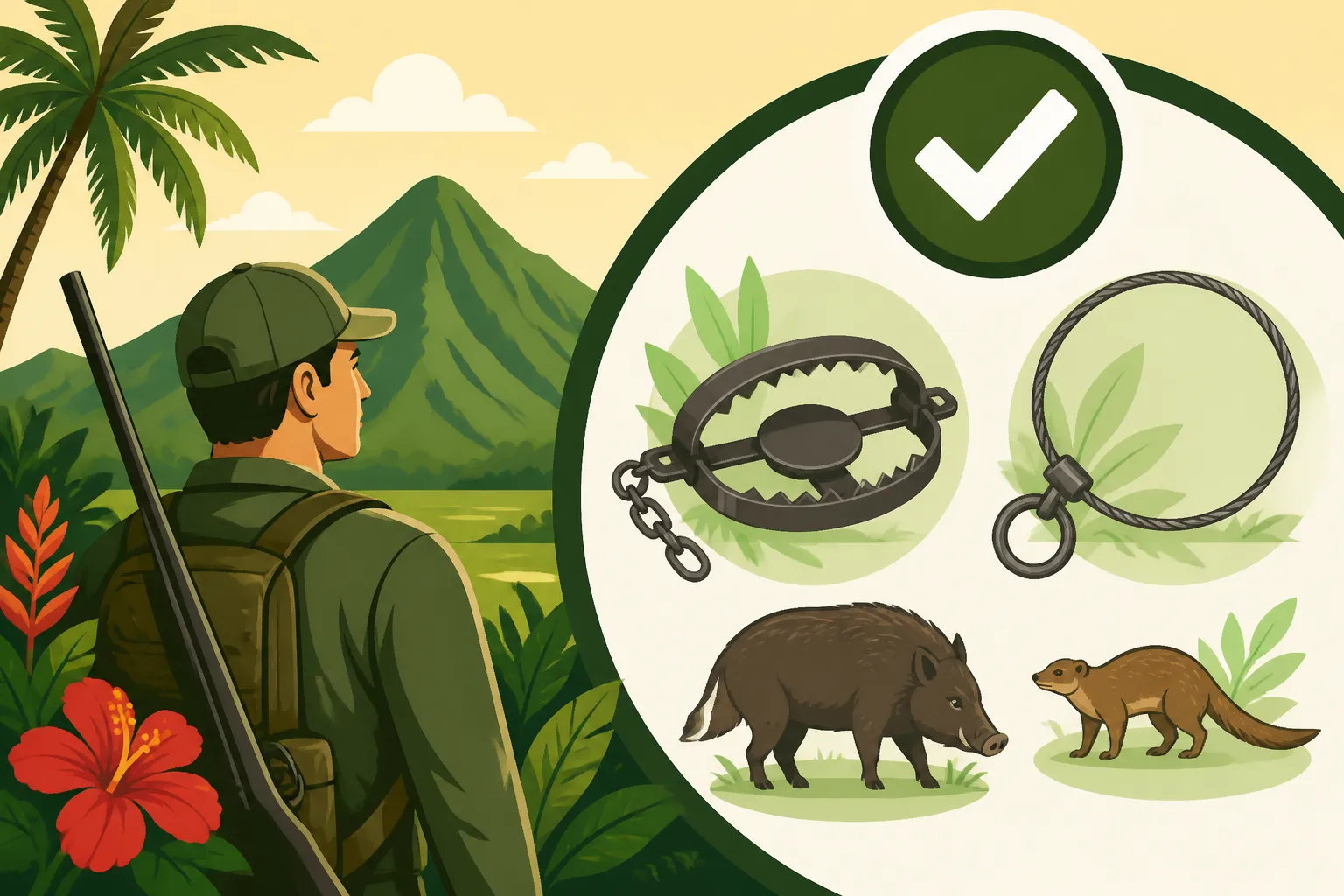
- Live Traps: These are widely accepted and preferred for many situations, especially on private property, because they allow for the release of non-target animals. They come in various sizes, from small traps for mongoose and feral cats to large, walk-in corrals for pigs and goats. The key is ensuring the trap is sturdy, provides shelter from the elements, and is checked regularly.
- Cable Snares: For feral pigs, cable snares are used on private land. The exact specifications (cable diameter, type of stop, locking mechanism) might not be explicitly detailed in public hunting regulations, but best practices suggest using heavy-duty cable (e.g., 1/8 to 3/16 inch aircraft cable) with a deer-stop to prevent over-tightening and ensure a more humane capture. Proper anchoring is crucial to prevent the animal from escaping or injuring itself further. Snares should always be placed where they target the intended animal's natural travel path, at the correct height for the neck or body, and camouflaged effectively.
- Marking Requirements: Any trap or snare should ideally be marked with the owner's information, especially if it's part of a larger control effort. This helps identify who is responsible and demonstrates a commitment to responsible management.
The Role of Permits and Landowner Approval
While general hunting licenses (which you can learn more about on sites like GoHunt, though their focus is typically on traditional hunting permits and tags) are mandatory for recreational hunting, the world of trapping on private land operates a little differently.
- No General "Trapping License": There isn't a readily available general "trapping license" for private citizens to set traps for game mammals in Hawaii in the same way you get a hunting license. Instead, the legality hinges heavily on landowner permission and the context of nuisance animal control.
- Landowner Responsibility: The landowner grants permission to individuals to set traps or snares on their property. This permission should be in writing, clearly stating the species to be targeted, the methods allowed, and the duration of the activity. This protects both the landowner and the individual setting the traps.
- DOFAW/HDOA Involvement: For larger-scale control programs, or for trapping certain protected species (which would be for research or recovery, not hunting), specific permits from DOFAW or the Hawaii Department of Agriculture (HDOA) would be required. These are not typically granted to the general public for recreational purposes but for authorized agencies or contractors. So, if you're a landowner trying to tackle a massive pig problem, contacting DOFAW for guidance on best practices or potential assistance is a good first step, even if they don't issue a "trapping permit" for you.
Ethical Considerations and Non-Target Catches
Setting traps comes with significant ethical responsibilities. The goal is to manage a problem, not inflict unnecessary suffering or harm unintended animals.
- Regular Checks: As mentioned, traps must be checked frequently. This means at least once every 24 hours, if not more often, depending on the conditions and the type of trap. This is crucial for the welfare of the captured animal and to prevent spoilage of meat if the animal is to be harvested.
- Humane Dispatch: Any animal captured in a snare or trap should be dispatched humanely and swiftly. This usually means a quick, clean shot to the head. Know your methods and be proficient.
- Dealing with Non-Target Catches: What happens if you catch something you didn't intend to? This is a serious concern. If it's a domestic animal, you're responsible for its safe release and potentially for any veterinary care if injured. If it's a protected native species, you immediately contact DOFAW. Never try to handle or release a protected species yourself unless explicitly instructed by wildlife officials, as you could cause further harm or violate laws. This risk is why trapping is restricted on public lands and why responsible placement and frequent checks on private land are so vital. If you’re ever wondering about the impact of these animals on the landscape, consider reading up on Why Pigs Root Up Hawaii Rainforest.
Prohibited Practices and Enforcement
Just as there are permitted methods, there are clearly forbidden practices when it comes to trapping and snaring in Hawaii. Ignoring these can lead to serious legal consequences.
What is Strictly Forbidden
When it comes to trapping and snaring for game mammals, you absolutely cannot:
- Set traps or snares on public hunting land for recreational take. This is the big one. If you're on public land, stick to legal hunting methods, which are detailed in publications about Hawaii Game Mammal Seasons.
- Use pit traps: These are dangerous, inhumane, and illegal. They consist of a covered hole designed for an animal to fall into.
- Use poisoned bait or devices: This is highly illegal and incredibly dangerous to all wildlife, pets, and even humans. It's an indiscriminate method that causes immense suffering and ecological damage.
- Set traps or snares in close proximity to public trails, roads, or residential areas without extreme caution and explicit authorization. This is both a safety and liability nightmare.
- Leave traps or snares unchecked for extended periods. This constitutes inhumane treatment and is often illegal, leading to waste and potential public health hazards.
- Use snares that are designed to cause excessive suffering or dismemberment. While difficult to define precisely, the intent and outcome of the snare should be a reasonably humane capture.
Enforcement and Consequences
Hawaii's enforcement agencies, including DOFAW enforcement officers and county police, take violations of hunting and wildlife regulations very seriously. The consequences for illegal trapping or snaring can be severe:
- Fines: Monetary penalties can range from hundreds to thousands of dollars, depending on the severity of the offense, the species involved (especially if protected species are harmed), and whether it's a repeat offense.
- Confiscation: Any illegally used equipment, including traps, snares, and even firearms, can be confiscated.
- Loss of Hunting Privileges: You can lose your hunting license and the privilege to hunt in Hawaii for a period of time, or even permanently.
- Criminal Charges: Depending on the nature of the violation, especially if protected species are harmed or poisoned bait is used, you could face felony charges, jail time, and restitution requirements.
- Public Outcry: Beyond legal ramifications, there's also the very real consequence of public condemnation. Unethical or illegal trapping practices can cast a negative light on all hunters and conservation efforts.
The table below provides a quick overview of key differences for trapping/snaring in Hawaii:
| Feature | Public Hunting Lands | Private Property (with permission) |
|---|---|---|
| Purpose | Recreational hunting (not permitted) | Nuisance animal control, depredation |
| Primary Target | N/A (for trapping/snaring) | Feral pigs, feral goats, other pests |
| Legal Devices | Not permitted for recreational mammals | Live traps, cable snares (for pigs), kill traps for specific pests (e.g., mongoose) |
| Required Permissions | N/A | Explicit, written landowner permission |
| Permits from DOFAW | Not for recreational trapping | Usually not required for landowner's control, but may be for large-scale agency programs |
| Check Frequency | N/A | Daily recommended, never prolonged |
| Ethical Considerations | N/A | Humane dispatch, avoid non-target catches |
| Prohibited Practices | All trapping/snaring methods | Pit traps, poisoned bait, excessive cruelty |
Ultimately, if you're on public land, your focus should be on traditional hunting methods. If you're dealing with nuisance animals on private land, ensure you have explicit permission, use humane methods, and check your traps frequently. Resources like Hunting Pigs Without Dogs in Hawaii can provide alternatives if you're looking to remove pigs without resorting to snaring, and always make sure you've fulfilled the requirements for Checking In and Out of Hawaii Hunting Units when you are pursuing game on public lands.
Disclaimer
The information provided in this guide is for informational purposes only and is not intended as legal advice. Hunting and trapping regulations can change, and interpretations may vary. It is your sole responsibility to consult the most current Hawaii Administrative Rules and actively communicate with the Hawaii Department of Land and Natural Resources (DLNR) Division of Forestry and Wildlife (DOFAW) or other relevant authorities to ensure full compliance with all applicable laws and regulations before engaging in any hunting or trapping activity.