Hunting a Sea Cliff Goat Ledge
Hunting Hawaii's sea cliffs for goats is undeniably one of the most challenging pursuits an outdoors enthusiast can undertake in the islands. It's a test of nerve, endurance, and skill, often leaving hunters wondering if the breathtaking views are worth the sheer physical exertion and the genuine danger involved. This guide is here to walk you through what it takes to safely and successfully navigate these incredibly demanding environments, from preparing your gear to executing the stalk and getting your hard-earned animal off the mountain.
The Allure and Dangers of Sea Cliff Goat Hunting
There's something incredibly primal about hunting wild goats on the sheer, unforgiving sea cliffs of Hawaii. The landscape itself is a character in the hunt, constantly challenging your resolve. It's a world away from a leisurely stroll through a treestand back home, and it’s precisely that raw, untamed nature that draws so many to this unique challenge.
Why Goats Choose the Cliffs
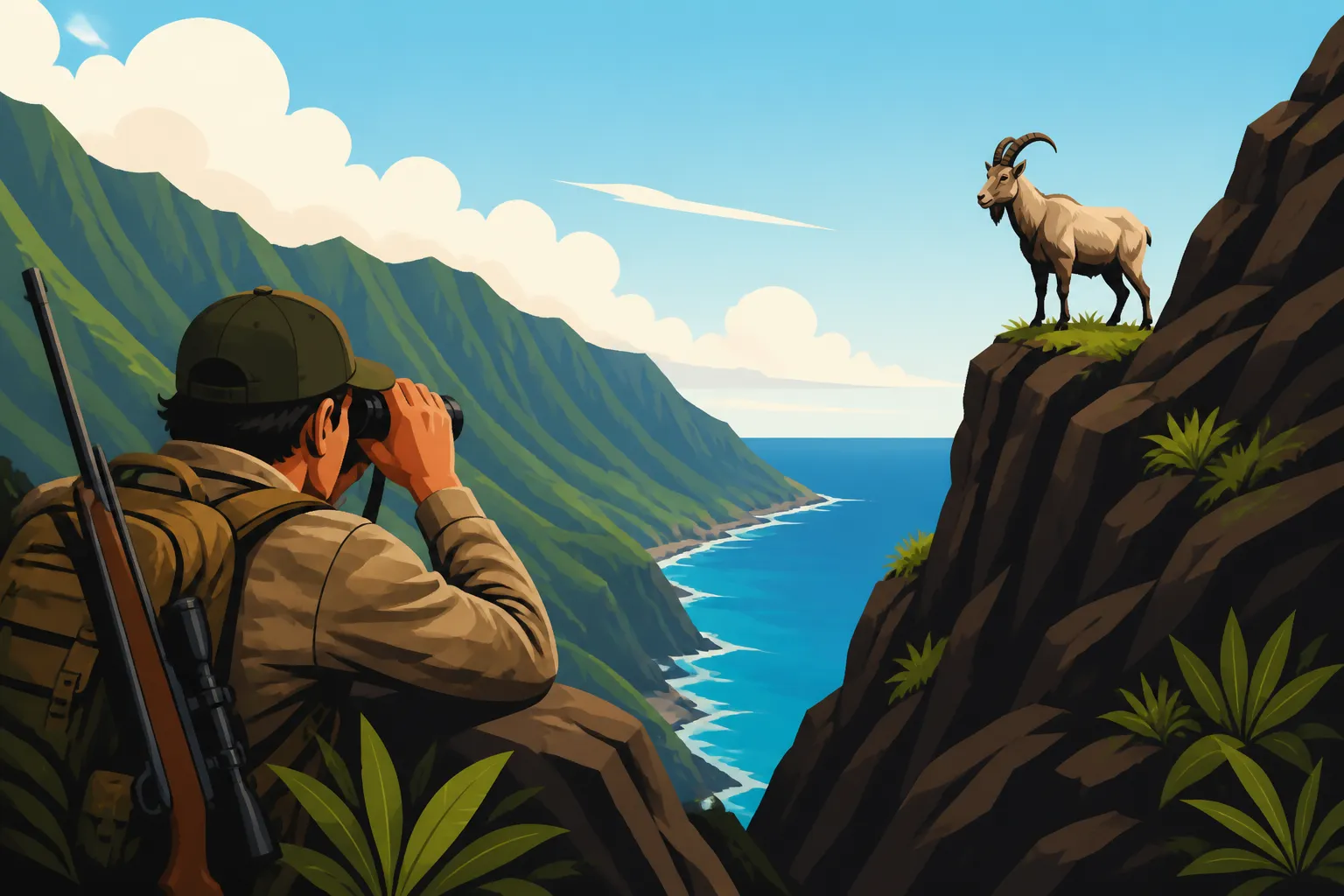
Feral goats thrive in environments where other animals struggle, and Hawaii's sea cliffs provide them with precisely that. These areas often have less human disturbance due to the inherent dangers of access. The sparse vegetation clinging to the rocks and ledges, while seemingly insufficient, provides a steady diet for these adaptable animals. They pick through tough grasses, small shrubs, and even the occasional succulent plant that can withstand the salt spray and relentless sun. These cliffs are also their natural fortresses, offering protection from hunters and the few terrestrial predators Hawaii has, like feral dogs. They've learned that the higher, steeper, and more exposed the terrain, the safer they are. You'll often spot them silhouetted against the vast ocean, seemingly defying gravity, making you wonder just how you'll ever get close.
The Thrill and the Risk
The thrill of a sea cliff goat hunt is hard to match. Spotting a trophy billy silhouetted against the blue Pacific, knowing the immense effort required to reach him, is an experience that resonates deeply. You’re not just hunting an animal; you're battling the elements, your own physical limits, and the raw, untamed landscape. However, with this thrill comes undeniable risk. The footing can be treacherous, loose rock is common, and a single misstep can have dire consequences. The sheer drops, crumbling edges, and unpredictable weather patterns demand unwavering focus and respect. It's not a place for the faint of heart or the unprepared. Many hunters find themselves humbled by these cliffs, retreating with empty hands but a profound respect for both the goats and the land.
Key Islands and Locations
Feral goats are found on several Hawaiian islands, but the truly epic sea cliff hunting experiences are often associated with specific, rugged coastlines. Molokai is legendary for its massive cliffs, particularly on the northern side, though public access here can be exceptionally challenging, often involving strenuous hikes or even boat drops. Maui also has rugged coastal areas, particularly on its eastern and southern flanks, where goats find refuge in the steep, dry gulches that eventually fall to the ocean. The Big Island's Kona coast, with its lava flows meeting the sea, also offers opportunities, though less "cliffy" and more "lava-ledged." And let’s not forget Kauai, where the Na Pali Coast presents perhaps the most stunning, albeit often inaccessible, goat habitat in the state. Each island's coastal terrain presents its own unique set of challenges and rewards. You'll want to carefully research the specific units and their access points.
Essential Gear and Preparation for Ledge Hunts
Success and safety on a sea cliff goat hunt hinge heavily on your gear and how well you prepare. This isn't a hunt where you can skimp on quality or overlook critical items. The right equipment can literally be the difference between a successful hunt and a dangerous situation.
Footwear and Traction
Your boots are arguably the most important piece of gear for a sea cliff goat hunt. Forget about lightweight hikers or soft-soled trail shoes. You need serious ankle support, a stiff sole to handle uneven rock, and aggressive, non-slip traction. Look for boots designed for mountaineering or heavy-duty backpacking with a sticky rubber compound that grips wet and dry rock. Vibram soles are a common choice, but the specific tread pattern and rubber hardness matter. Breaking them in before your hunt is absolutely non-negotiable; blisters on a cliff face are a nightmare. Consider bringing a pair with gaiters if you anticipate loose scree or thick brush, as keeping debris out of your boots prevents hot spots and discomfort. The terrain here can be brutal on your feet, so invest wisely.
Optics and Scouting
High-quality optics are your lifeline when glassing these vast, vertical landscapes. A good pair of 10x binoculars is essential for initial spotting and assessing goat movements from a safe distance. For truly detailed scouting and judging animals, a spotting scope (15-45x or 20-60x) mounted on a sturdy tripod is invaluable. Imagine glassing a distant cliff face, trying to discern if that speck is a nanny or a respectable billy. That's where clear, powerful optics shine. They allow you to survey the treacherous terrain from afar, identifying potential routes, hazards, and, most importantly, the goats themselves, before you commit to a dangerous stalk. This is especially crucial for Glassing a Hawaii Coastline for Goats, allowing you to pinpoint targets without having to descend into risky areas blindly.
Safety Equipment
Never, ever underestimate the need for safety equipment on a sea cliff hunt. Beyond your hunting gear, a well-stocked first-aid kit is paramount, containing supplies for cuts, scrapes, sprains, and dehydration. A reliable headlamp is a must, even if you plan to be off the mountain before dark, as unexpected delays can happen. Communication is key: a fully charged cell phone (though service is spotty in many remote areas) and a satellite messenger or personal locator beacon (PLB) are highly recommended. A whistle can also be useful for signaling. Rope, while not for active rappelling unless you are highly trained and equipped, can be invaluable for lowering gear, securing an animal, or assisting a partner in a pinch. Always carry ample water, even more than you think you need, and a water filter or purification tablets.
Weapon Choice
The choice of weapon for a sea cliff goat hunt demands careful consideration of the conditions. Rifles are popular due to their effective range, which can be beneficial for taking shots across steep canyons or at goats on distant ledges. However, accuracy is paramount, and windy conditions can make long shots difficult. A flat-shooting caliber in the .270 to .30-06 range is common, but focus on precision over power. Bowhunters face an even greater challenge, as closing the distance to goats on open, vertical terrain requires exceptional stealth and patience. A compound bow with a solid broadhead setup is typical. Some hunters also utilize handguns, particularly if they anticipate extremely close quarters in dense pockets, but this is less common for the wide-open cliff environments. The key is proficiency with your chosen weapon, as shot opportunities can be fleeting and at awkward angles.
Stalking Tactics and Safety on the Ledges
Once you've spotted your target and committed to a stalk, the real challenge begins. Navigating Hawaii's sea cliffs requires a blend of calculated risk, keen observation, and unwavering caution. It's about moving deliberately and methodically through incredibly unforgiving terrain.
Approaching the Terrain
Moving quietly and efficiently on a goat ledge is an art form. Every step must be intentional. Before you even set foot on a potential route, take your time to glass the entire area. Look for loose scree, crumbling rock, or areas that might lead to a dead end. Always test your footing before committing your full weight. Use natural features for cover, moving slowly and steadily. Goats have incredible eyesight and can pick up movement from astonishing distances. Often, the best approach is to come from above, if possible, allowing gravity to be your friend on the descent, but always with an escape plan. Remember, safety always trumps the kill. If a path looks too dangerous, it probably is. This is especially true when you are Hunting Goats on a Sea Cliff Safely, where one mistake can be life-threatening.
Reading Goat Behavior
Goats are creatures of habit, even on the cliffs. They'll often bed down in protected crevices or on ledges where they have a commanding view of their surroundings. Learning to read their behavior is critical. They tend to feed most actively in the early morning and late afternoon, often moving to sun-exposed ledges to warm up. In the midday heat, they'll seek shade or simply lie down. Understanding Why Hawaii Goats Move at First Light can give you a significant advantage, as this is when they are often most predictable. Look for fresh droppings, rub marks on rocks, or worn paths along the ledges – these are all indicators of active goat traffic. Pay attention to how they use the wind; goats will typically bed or feed with the wind at their backs, allowing them to detect threats from below.
Shot Placement and Recovery Challenges
When a shot opportunity finally arises, precision is absolutely critical. Goats, especially billies, are tough animals, and a poorly placed shot on a cliff can mean a lost animal or an incredibly dangerous recovery. Aim for the vitals, generally the shoulder or chest cavity, avoiding head or neck shots unless you are exceptionally confident. Consider the angle carefully – you'll often be shooting downhill or across a canyon, which can affect bullet trajectory. Even with a perfect shot, recovery can be monumental. Imagine a goat falling into an inaccessible crevice or tumbling down hundreds of feet to the ocean. Before you pull the trigger, mentally map out a potential recovery route. Is it even possible to get to the animal? This planning is similar in difficulty to Getting a Pig Out of a Hawaii Gulch, where steep, often vegetated terrain complicates things immensely.
Utilizing Mapping Tools
Modern technology can be an invaluable asset for sea cliff hunting. Apps like onX Hunt allow you to download detailed topographical maps and satellite imagery, providing a 3D view of the terrain even when you're offline. You can mark potential goat sightings, plan safe approach and egress routes, and identify property boundaries. This is crucial for understanding the complex public and private land mosaics in Hawaii. Before heading out, you can pre-plan your entire hunt, marking steep contours, potential water sources, and safe zones. This kind of detailed digital mapping, combined with traditional map and compass skills, provides an essential layer of safety and efficiency, helping you visualize the vertical world you're about to enter.
Overcoming the Unique Challenges of Hawaii's Coastal Hunts
Beyond the physical demands and the inherent dangers, hunting Hawaii's sea cliffs throws a myriad of other unique challenges your way. From unpredictable weather to legal access complexities and the sheer logistics of packing out an animal, every aspect requires meticulous planning and a deep respect for the islands' environment and regulations.
Weather and Environment
Hawaii's coastal weather can be deceptively tricky. One moment, you might be bathed in brilliant sunshine, and the next, a sudden squall can roll in, turning rock ledges slick and treacherous. The trade winds, while often pleasant, can intensify along the cliffs, making standing and shooting challenging, and carrying your scent for miles. Always pack layers that can handle both heat and unexpected rain. Sun protection – hats, sunscreen, and sunglasses – is non-negotiable. The salt air can also be hard on gear, so ensure your optics and firearms are protected. The environment itself is fragile; avoid dislodging rocks and be mindful of rare plants that may cling to these extreme habitats.
Legal Access and Boundaries
Understanding where you can legally hunt is perhaps the most critical logistical challenge in Hawaii, particularly in areas near the coast. Many sea cliffs are adjacent to private land, conservation areas, or even residential properties. Relying on outdated paper maps or vague memory is a recipe for disaster. This is where tools like onX Hunt truly shine, offering up-to-date land ownership information right on your phone, even without cell service if you've downloaded the maps. Always double-check current regulations with the Hawaii Department of Land and Natural Resources (DLNR) or consult resources from services like GoHunt for the latest unit specifics and boundaries. Trespassing, even unintentionally, can lead to severe penalties and reflects poorly on all hunters. Knowing What Hawaii Trespass Law Requires is not just a suggestion, it's a necessity.
Packing Out Your Harvest
The moment of truth arrives after a successful shot: the pack out. This is often the most grueling part of a sea cliff goat hunt. Unlike flat terrain, every step is an uphill climb, a precarious descent, or a traverse across uneven ground, all while carrying a heavy load. You'll need to field dress the animal as quickly and cleanly as possible to preserve the meat in Hawaii's heat. Consider cutting the animal into smaller pieces or quartering it to make it more manageable. Backpack frames designed for heavy loads are highly recommended. If hunting with a partner, sharing the load significantly eases the burden. Planning your extraction route before the hunt, anticipating where the animal might fall and how you would retrieve it, can save you immense grief. For tips on handling the meat in such challenging conditions, look into advice on Packing Meat Out of a Hawaii Gulch, as the principles of steep, difficult retrieval are very similar.
Respecting the Aina and Other Users
Hunting in Hawaii is not just about the game; it's about connecting with the land, or "aina," and respecting its cultural significance. The islands are popular with hikers, sightseers, and local fishermen, who may not always be aware of hunting activity. Exercise extreme caution and courtesy if you encounter others in public areas. Be mindful of your visibility and noise. Pack out everything you pack in, and then some, leaving no trace of your presence. Respecting the land means not just adhering to regulations but also understanding the spirit of conservation and stewardship that is so vital in Hawaii. Your actions reflect on the entire hunting community, so represent us well.
Disclaimer
This article is for general informational purposes only and does not constitute professional advice. Laws, prices and regulations vary by location and change over time. Consult a qualified professional for guidance on your specific situation.