Hunting Goats in Hawaii’s Canyon Country
Hunting goats in Hawaii's incredible canyon country is an experience unlike any other, but it comes with a unique set of challenges. The sheer verticality, unforgiving terrain, and often scorching temperatures can leave even experienced hunters feeling overwhelmed and underprepared. This guide is designed to help you navigate these rugged landscapes, understand the elusive wild goats that call them home, and equip you with the knowledge to safely and successfully pursue them in Hawaii's deep, winding canyons.
Understanding Hawaii's Canyon Goats
Hawaii's feral goats are a resilient and adaptable species, thriving in some of the islands' most extreme environments. When you're talking about canyon country, you're looking at a different breed of challenge and a different kind of goat behavior than what you might encounter on open pastures or coastal cliffs. These animals are masters of vertical movement, using the terrain to their advantage for both feeding and evasion.
The Elusive Nature of Canyon Goats
Canyon goats, particularly the older billies, are incredibly wary animals. They spend their lives traversing steep, broken ground, which hones their senses and instincts for survival. Unlike goats on more accessible flatlands, those in canyons are less accustomed to human presence, making them even more skittish. They often bed down in shaded alcoves, under rock overhangs, or on narrow ledges where they have an unobstructed view of their surroundings, often from above. Spotting them can be difficult, as their coloring blends seamlessly with the volcanic rock and dry scrub. When spooked, they don't typically run far; instead, they'll often melt into the nearest impassable terrain, using sheer rock faces or dense, thorny kiawe thickets as their escape route. Understanding this tendency is key to anticipating their movements and planning your stalk.
What Canyon Goats Eat and Where They Water
While goats are notoriously opportunistic browsers, their diet in Hawaii's canyons is dictated by the arid conditions that often prevail there. You'll find them nibbling on tough, drought-resistant plants like kiawe, buffelgrass, fountain grass, and various native shrubs that manage to cling to life in the rocky crevices. They are also drawn to small pockets of green vegetation that might emerge after a rare rainfall or near seeps and springs hidden deep within the canyon walls. Water sources are critical focal points in these dry environments. Locating these isolated pools or trickles, often marked by greener vegetation or goat sign like tracks and droppings, can reveal predictable patterns of movement. Goats will often move down to water in the cooler morning or evening hours, making these times excellent for observation. Learning to read the subtle clues of their feeding and watering habits is paramount for success, much like understanding the specific challenges of Hunting a Water Source in Dry Hawaii Country.
Physical Traits and How They Adapt to Canyons
Hawaii's feral goats are generally lean and athletic, a necessity for their canyon lifestyle. Billies, the males, can be quite impressive, with large, sweeping horns that often distinguish them from the nannies (females), which typically have shorter, more slender horns. However, judging a goat's size and age from a distance in the distorted perspective of a canyon can be tricky. Their hooves are designed for incredible grip, with hard outer walls and soft, pliable pads that allow them to cling to seemingly impossible inclines. Their bodies are compact and muscular, enabling explosive bursts of speed up vertical faces. They often have shaggy coats, varying in color from black and brown to white and various mixed patterns, which helps them camouflage against the diverse rock and vegetation of the canyon walls. These physical adaptations make them formidable adversaries, showcasing why What a Hawaii Feral Goat Weighs can vary greatly depending on their habitat and diet.
Key Canyon Hunting Areas for Goats
Hawaii's islands are dotted with numerous gulches and canyons, but some stand out as prime goat hunting grounds due to their ruggedness, goat populations, and accessibility (or lack thereof). These areas demand respect, thorough preparation, and a keen understanding of the terrain.
Kauai's Waimea Canyon System
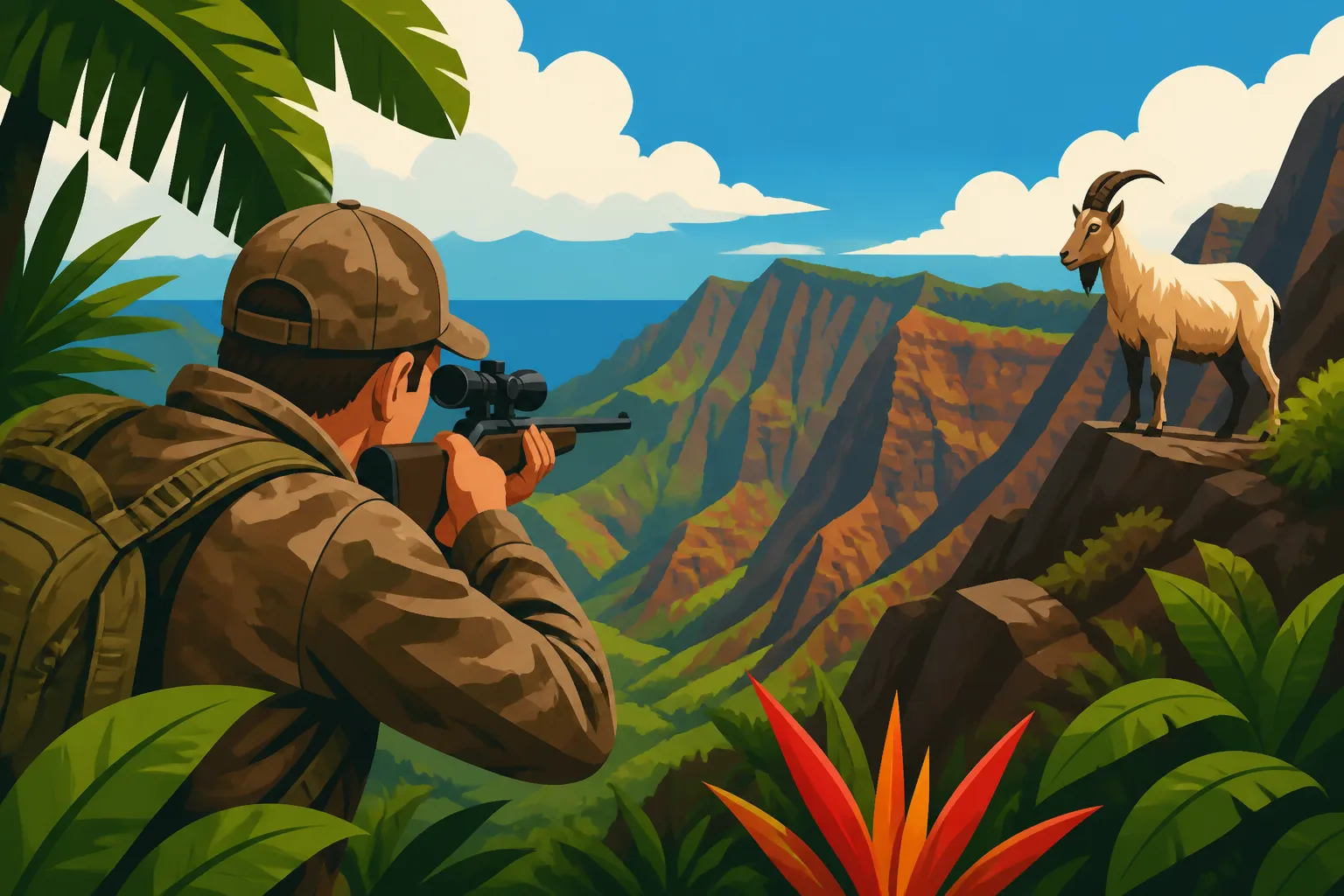
Often called the "Grand Canyon of the Pacific," Kauai's Waimea Canyon is a spectacular, massive chasm that stretches for miles, with depths reaching over 3,000 feet. This is a premier destination for hunting goats in Hawaii's canyon country. The sheer scale of it means you'll find everything from vast, open, red-dirt slopes to deeply carved side gulches filled with dense vegetation. Goats here are abundant, but they are scattered, and finding them often involves extensive glassing from the rim or arduous hikes down into its labyrinthine depths. Access points can be limited, and navigating the internal ridges and drainages requires excellent map-reading and compass skills, or a reliable GPS unit. The dry leeward side of the canyon receives less rain, concentrating goats around limited water sources. Hunters often focus on the upper rim areas early in the morning, then transition to glassing the deeper pockets as the sun climbs. This area demands top physical condition and a serious commitment to deep-country hunting.
Maui's Remote Canyon Country
While Maui is famous for its Axis deer, its lesser-known, more rugged areas hold substantial goat populations, particularly in the deep gulches and undeveloped private ranch lands on the leeward slopes of Haleakala. Areas like Kahikinui, with its vast, dry, and often desolate landscape, are crisscrossed by ancient lava flows and deep, brushy canyons that descend towards the coast. These canyons are often steeper and more choked with kiawe and thorny vegetation than Kauai's more open terrain. Access to these areas can be challenging, often requiring permission from private landowners or navigating rough 4×4 tracks on public lands. The goats here are particularly wild, benefiting from less hunting pressure in these remote, difficult-to-access pockets. Hunters might find success by scouting the upper edges of these canyons for goat sign at first light, then planning a careful descent into promising areas, always mindful of the intense heat and lack of water. This kind of terrain demands careful attention to Walking Rough Lava Without Wrecking Your Boots.
Big Island's Deep Gulches
The Big Island, while renowned for its Mouflon sheep and feral pigs, also offers excellent goat hunting in its myriad of deep gulches, particularly on the dryer, leeward slopes. Areas like the Kau Forest Reserve or the lower slopes of Mauna Loa are dissected by countless ravines and gulches that funnel down from the mountains towards the coast. These aren't always "canyons" in the grand Waimea sense, but they present equally challenging vertical hunting. The terrain can be a mix of dense ohi'a forest in the upper reaches, transitioning to dry, brushy, and rocky gulches lower down. Goats here often use these gulches as travel corridors, bedding in the protected shadows during the day. Access often involves hiking in from main roads or exploring rough trails. Unlike the more open canyons, hunting in the Big Island's gulches frequently involves tighter quarters and more bushwhacking. This makes close-range encounters more likely, but also increases the challenge of scent and noise control. Understanding Hunting Hawaii's Feral Goats in these diverse environments is crucial for successful outings.
Essential Gear for Canyon Goat Hunts
A successful and safe canyon goat hunt in Hawaii hinges on having the right gear. This isn't your average walk in the woods; it's a test of endurance, traction, and careful planning. The extreme environment demands durable, reliable equipment that can withstand sharp rocks, intense heat, and sudden weather shifts.
Footwear and Traction for Steep Terrain
Your boots are arguably the most critical piece of gear for canyon goat hunting. You need something robust, with excellent ankle support to prevent twists and sprains on uneven ground, and a stiff sole to absorb impacts from sharp rocks. Most importantly, the outsole must provide superior traction on loose scree, slick rock, and dusty, steep slopes. Look for boots with a deep, aggressive lug pattern. Many experienced Hawaii hunters prefer a durable leather or synthetic boot that's not overly heavy but can still take a beating. Don't forget high-quality wool or synthetic socks to prevent blisters, as you'll be covering many vertical miles. Trekking poles are also an absolute game-changer in this terrain, offering stability on descents, aiding balance on climbs, and providing a third and fourth point of contact when navigating tricky sections. They literally save your knees and ankles.
Optics for Long-Range Scouting
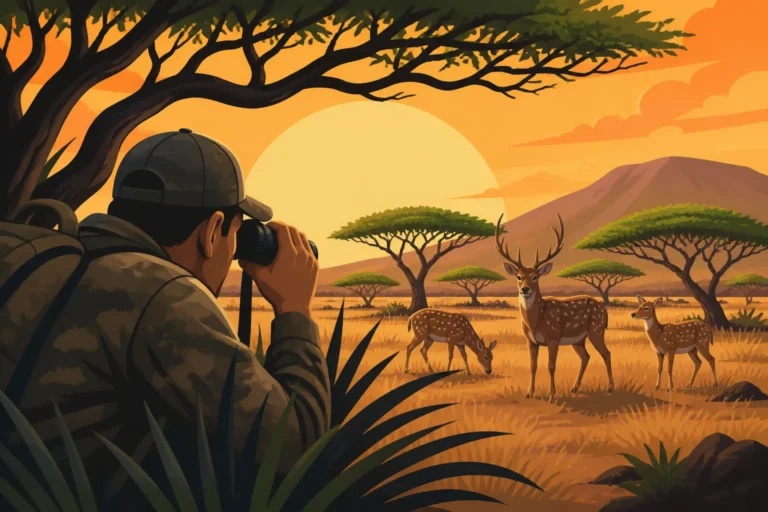
In the expansive world of Hawaii's canyons, your eyes are your most important tool, and quality optics greatly extend their reach. A good pair of 10x or 12x binoculars is non-negotiable for thoroughly picking apart canyon walls, identifying goats at extreme distances, and assessing routes. Often, goats will appear as tiny specks on a distant ledge, and strong binoculars allow you to confirm identity and assess horn size. If you're serious about long-range scouting, a spotting scope (20-60x magnification) is invaluable, especially when looking at the opposite canyon rim or deep into shaded pockets. Lightweight tripods for both binoculars and spotting scopes are essential for stable viewing, preventing arm fatigue, and picking up subtle movements. When you’re trying to spot a goat that blends into the background, the slightest tremor in your hand can mean the difference between seeing it and walking right past. This kind of careful observation is similar to tactics used for Glassing a Lava Flow for Mouflon Rams.
Hydration and Survival Essentials
The heat in Hawaii's canyons, especially on the leeward sides, can be brutal. Dehydration is a serious threat, so carrying ample water is paramount. A hydration pack with a 3-liter capacity is a minimum, supplemented with extra bottles or a water filter/purifier if you know there are reliable water sources. Electrolyte tablets or powders are also wise additions to replace what you sweat out. Beyond water, a robust first-aid kit is essential, tailored for cuts, scrapes, sprains, and blisters. Emergency communication devices like a satellite messenger (Garmin InReach, Zoleo) are highly recommended, as cell service is often non-existent in deep canyons. A headlamp, knife, fire-starting kit, multi-tool, and an emergency shelter (like a lightweight tarp or space blanket) should always be in your pack. Always let someone know your exact hunting plan and expected return time. When you are deep in a gulch, having No Cell Signal on a Hawaii Hunt is a stark reality, making self-reliance and proper preparation crucial.
Effective Hunting Tactics in Canyon Terrain
Canyon hunting is a chess match against a highly adapted adversary. It requires patience, keen observation, and the physical fortitude to execute a challenging stalk. Your tactics need to be tailored to the vertical nature of the environment and the goat's incredible ability to disappear into it.
Glassing the Depths and Rims
The most effective way to hunt canyon goats is often from a vantage point high above, systematically glassing the terrain. Find a comfortable spot with a wide view of the canyon, preferably in the shade, and settle in. Use your binoculars or spotting scope to meticulously pick apart every rock, every ledge, every patch of scrub on both the canyon walls and the opposite rim. Look for movement, a horizontal line where there should be vertical, or a splash of color that doesn't quite match the surroundings. Pay special attention to shaded areas where goats might be bedded during the heat of the day. Remember, goats often emerge to feed in the cooler hours of early morning and late afternoon. Patience is key; a goat can materialize from seemingly barren rock. This focused glassing strategy is similar to what you'd employ when Glassing a Hawaii Coastline for Goats, but with the added complexity of multi-tiered terrain.
The Art of the Canyon Stalk
Once you've spotted a goat, the real challenge begins: the stalk. Canyon stalks are rarely direct. You'll often have to navigate steep descents, ascend treacherous rockslides, and move across open, exposed slopes. The wind can be notoriously shifty in canyons, often swirling unpredictably due to thermals rising and falling with the sun. Always try to approach from downwind, but be prepared for unexpected changes. Use every bit of cover available – boulders, dry streambeds, dense scrub – to conceal your approach. Take your time, move slowly, and check your footing with every step. Avoid making noise from dislodged rocks. Sometimes, a successful stalk means descending thousands of feet, only to realize the goat has moved, and you have to climb back out. The physical and mental demands are immense.
Calling Goats in Open Country
While not as common as calling deer or elk, calling can sometimes be effective for goats, particularly younger animals or curious billies. A simple "baa" or distress bleat can sometimes get a goat to stop, stand up, or even take a few steps in your direction, offering a better shot opportunity. However, use caution. In wide-open canyon country, a call can also make goats instantly aware of your presence and send them scrambling for safety. It's often best used as a last resort to stop a moving animal or to draw out a goat that's just out of sight but known to be in a specific area. Practice different calls to replicate the sounds of a lost kid or a doe. The effectiveness will depend heavily on the specific animal's temperament and the surrounding environment.
Safety and Logistics in Hawaii's Canyons
Hunting in Hawaii's canyons is an adventure, but it's also inherently risky. Prioritizing safety and meticulously planning your logistics can make the difference between a memorable hunt and a dangerous situation. The remote nature and extreme terrain demand respect.
Navigating Steep Gulches and Cliffs
The steep, broken terrain of Hawaii's canyons presents significant hazards. Loose rock, scree slopes, and eroded trails are common. Falls are a primary concern, so never hunt alone if possible, and always inform someone of your route and expected return. When navigating particularly treacherous sections, use trekking poles for stability. Be cautious of crumbly rock and vegetation that might appear stable but isn't. Some areas might require rudimentary scrambling or even short, controlled descents using hands and feet. Avoid approaching cliff edges too closely, especially when trying to glass. If you encounter a section that feels beyond your skill level, turn back and find an alternate route. A goat isn't worth a serious injury.
Weather Challenges and Flash Flooding
Hawaii's weather can be notoriously localized and change rapidly, especially around large geographical features like canyons. Even if your side of the canyon is dry and sunny, a rainstorm miles upstream could send a torrent of water rushing through the streambeds below. Flash flooding is a real danger in narrow gulches and dry washes. Always check weather forecasts for the entire region, not just your immediate vicinity. If you see dark clouds upstream or hear the rumble of thunder, seek higher ground immediately. Intense sun and heat are also significant weather challenges. Plan your hydration carefully, wear lightweight, breathable clothing, and seek shade whenever possible. A sudden downpour can also make already slick rock incredibly dangerous, so be prepared for changing conditions.
Permits, Check-In, and Unit Boundaries
Before you even think about stepping foot into Hawaii's canyon country, ensure you have all the necessary licenses and permits. Hawaii's hunting units are strictly regulated, and many prime canyon areas fall within specific hunting units with their own rules and seasons. Always check the current regulations published by the Department of Land and Natural Resources (DLNR), Division of Forestry and Wildlife (DOFAW). Many units require checking in and out, either physically at a hunter check station or digitally Using the OuterSpatial App to Check In. Familiarize yourself with the unit boundaries, as crossing onto private land or into a closed area can lead to serious penalties. GoHunt is an excellent resource for checking maps and regulations. Ensure you understand the legal weapons permitted for the season and species you're pursuing, as outlined in Hawaii's Legal Weapons by Season. Always carry your hunting license, permit-tags, and identification with you.
Field Care and Packing Out Your Goat
Harvesting a goat in Hawaii's canyons is a tremendous accomplishment, but the work isn't over. Proper field care is crucial to preserve the meat in the warm climate, and packing it out of a deep gulch presents its own set of strenuous challenges.
Quick Field Dressing in Warm Climates
Once your goat is down, the clock starts ticking, especially in Hawaii's heat and humidity. Rapid field dressing is essential to cool the carcass quickly and prevent spoilage. Immediately gut the animal to remove the internal organs, which are a major source of heat. If possible, prop the carcass open to allow for maximum airflow. Some hunters will skin the animal in the field if temperatures are particularly high, but be prepared for flies and dirt. Wipe out the body cavity with clean cloths or paper towels to remove any excess blood or debris. If you're quartering the animal for packing, separate the meat from the bone as much as possible to reduce weight and allow for faster cooling. Consider bringing game bags specifically designed for breathability. This immediate attention is critical, emphasizing why proper Field Care in Hawaii's Heat and Humidity is vital for any game animal.
Packing Meat Out of a Hawaii Gulch
Getting a goat, or its meat, out of a deep canyon is often the hardest part of the hunt. You might be looking at thousands of feet of elevation gain, often over rough, unstable ground. Heavy-duty backpacks with sturdy frames are non-negotiable. Plan to make multiple trips if necessary, or hunt with a partner to share the load. Deboning the meat in the field is highly recommended to significantly reduce weight. This involves separating all muscle groups from the bone, saving only the prime cuts and the backstraps. Carry enough water for the packing effort, as it will be physically exhausting. If you can, take advantage of cooler morning or evening temperatures for the most strenuous packing, or allow for breaks in the shade. The effort is similar to the grueling task of Getting a Pig Out of a Hawaii Gulch, demanding determination and physical stamina.
Preserving Your Trophy in the Field
If you're interested in keeping the horns and cape as a trophy, special care is needed in the field. After field dressing, carefully skin around the neck and shoulders if you plan for a shoulder mount. Ensure you get enough cape to allow the taxidermist plenty of material to work with. For a European mount, simply remove the head. Clean off any excess meat and tissue from the skull or horn bases. Salt is your best friend for preserving a cape in the field; liberally apply non-iodized salt to the flesh side of the cape to begin the drying process and prevent hair slippage. Keep the cape and horns as cool as possible and out of direct sunlight. While it's tempting to rush, taking the time to properly care for your trophy in the field will pay dividends down the line.
Disclaimer
Hunting is a challenging and potentially dangerous activity. The information provided in this guide is for informational purposes only and is not a substitute for proper training, experience, or professional guidance. Always prioritize safety, adhere to all local, state, and federal hunting regulations, and respect private land. Consult with the Hawaii Department of Land and Natural Resources (DLNR) and its Division of Forestry and Wildlife (DOFAW) for the most current regulations, season dates, and unit specific rules before planning any hunt. Conditions in Hawaii's wilderness can change rapidly, and personal responsibility is paramount.