Packing Meat Out of a Hawaii Gulch
You’ve just made a great shot. Your animal is down, nestled perfectly out of sight… which often means it’s at the bottom of a steep, thick Hawaiian gulch. The adrenaline rush quickly fades into the daunting reality of how you're going to get hundreds of pounds of precious meat from that deep, slippery ravine back to your truck. This guide is here to walk you through the nitty-gritty, realistic steps of packing meat out of a Hawaii gulch, ensuring both your safety and the quality of your hard-earned harvest.
The Reality of a Hawaii Gulch Kill
Let's be honest, hunting in Hawaii isn't like flatland deer hunting. The terrain here is wild, unforgiving, and often downright dramatic. When you harvest an animal in a gulch, you're not just dealing with gravity; you're dealing with humidity, heat, volcanic rock, tangled roots, and dense jungle flora that seems determined to keep you from your prize.
Why Gulches Are Prime Hunting Ground
It might feel like a cruel joke when your animal tumbles into a gulch, but these challenging topographical features are often exactly where the game lives and thrives. Gulches, or 'ʻāwā' in Hawaiian, act as natural highways, water sources, and sheltered bedding areas for various species. They offer escape routes from hunting pressure and provide lush vegetation even when the surrounding areas are dry. Whether you're after Hawaii's Feral Pigs rooting in the moist earth or Hawaii's Feral Goats navigating the steep, rocky sides, these animals use the gulches to their advantage. This is especially true for Axis Deer Hunting in Hawaii, where deer will often seek the cooler, shaded areas within gulches during the heat of the day, or use them as travel corridors between feeding grounds and bedding areas. It's frustrating when they drop into the deepest part, but that's often where you find them.
The dense cover provides security, making them a natural hideout. Animals can feel safe moving through these corridors, knowing they have plenty of places to disappear. For hunters, this means stalking through the rim of a gulch or glassing into its depths can be incredibly productive. It's a calculated risk, though: the very features that make gulches attractive to game are also what make packing an animal out of them such an epic undertaking.
The Immediate Challenges of a Downed Animal
The moment you confirm your animal is down in a gulch, a clock starts ticking, and the real work begins. Your first challenge is often simply getting to the animal. Gulches can be incredibly steep, with loose rock, slippery mud, and a dizzying array of tangled vegetation. What looked like a manageable slope from above can become a near-vertical descent once you're on it, especially with a rifle in hand.
Once you reach the animal, the next challenge is assessing the situation. Is it in a stream bed? On a narrow ledge? Tangled in thick vines? These immediate surroundings dictate your next steps: how you'll field dress, quarter, and prepare the meat for the grueling pack out. There's no flat, open ground for easy processing, just an uneven, often wet, and uncomfortable workspace. And let's not forget the sheer scale of the animal itself – a mature Axis buck or a hefty boar can easily weigh 150-200 pounds or more, and that's before factoring in the rough terrain.
The Unique Hawaiian Terrain Factor
Hawaii's gulches aren't just steep; they're composed of a unique mix of volcanic rock, red dirt, and incredibly dense, often thorny, vegetation. This isn't your mainland forest with open understory. Here, you're battling strawberry guava, ʻōhiʻa lehua, koa, and a hundred other plants that claw at your clothes, trip your feet, and obscure your vision. The ground can shift from slick, wet mud to sharp, unstable lava rock in a matter of feet.
Moreover, the climate plays a massive role. High humidity means sweat doesn't evaporate, leading to rapid fatigue and dehydration. The tropical heat, even in the shade of a gulch, demands that you work quickly to preserve the meat. Understanding Navigating a Hawaii Gulch System is paramount, as many gulches twist and turn, forming a labyrinth that can disorient even experienced hunters. Losing your way or getting stuck in dense growth adds precious time, which is meat's worst enemy in this environment.
Essential Gear for Meat Packing in Hawaii
Going into a gulch unprepared for the pack out is a recipe for disaster, or at best, spoiled meat and a miserable experience. You need specialized gear that can stand up to the rigors of Hawaiian terrain and climate. Think tough, light, and efficient.
Specialized Backpacks and Frames
Your everyday daypack isn't going to cut it when you're hauling hundreds of pounds of meat up a near-vertical incline. You need a dedicated meat-hauling system. External frame packs are often favored for their ability to carry heavy, awkward loads and keep the meat off your back, allowing for better ventilation. Brands like Mystery Ranch and Stone Glacier make excellent purpose-built hunting packs with integrated load shelves designed specifically for packing out game. These packs distribute weight effectively, which is critical for maintaining balance on slippery, uneven ground.
Look for features like a robust frame, adjustable suspension, and plenty of compression straps to cinch down your load. Padded hip belts and shoulder straps are non-negotiable for comfort during a multi-hour pack out. Given the constant moisture, quick-drying materials are a bonus, and a pack that can shed water easily will prevent it from becoming a sponge. Consider practicing with a heavy load in your chosen pack before your hunt; a loaded pack feels very different in real-world conditions.
Meat Bags and Coolers for Tropical Climates
This is where many hunters make a critical mistake in Hawaii. Standard pillowcases or thin garbage bags just don't cut it. You need breathable, durable game bags. Alaska Game Bags or other similar synthetic, washable bags are ideal. They protect the meat from flies, dirt, and debris while allowing it to cool. Airflow is crucial to prevent spoilage in Hawaii's warm, humid conditions. You want that heat to escape the meat as quickly as possible.
Once the meat is quartered and bagged, you need a plan for getting it to a cooler. If your vehicle access is limited, you might need to carry large, soft-sided coolers (like those from Yeti or RTIC) down to a staging area, or even carry meat straight into heavy-duty coolers in your truck bed. For the latter, ensure you have plenty of ice, and consider dry ice if you have a long journey ahead. Remember, Field Care in Hawaii's Heat and Humidity is not optional; it's the defining factor in whether your meat is good or gone. Don't skimp on quality cooling options.
Knives, Saws, and Sharpening Tools
A good, sharp knife is your most important tool in the field. Carry at least two: a primary fixed-blade knife for general work and a smaller, sharper blade for precise cuts and skinning. Many hunters also swear by a Havalon or replaceable blade knife for its surgical sharpness and ease of use. Having a bone saw or a small folding saw can be invaluable if you opt to take bone-in quarters, especially for larger animals like Axis deer. It saves your knife edge and makes cleaner cuts.
Don't forget a way to keep your blades razor sharp. A small sharpening stone or a compact field sharpener is essential. Dull knives are dangerous and make the work much harder. Gloves are also a must – nitrile gloves underneath cut-resistant processing gloves can keep your hands clean and protected from both bacteria and accidental slips, which are more likely in a wet, slippery gulch environment.
Field Dressing and Quartering for the Pack Out
Proper field dressing and quartering in a gulch is more than just butchering; it's a strategic operation designed to make the pack out manageable and preserve the meat's quality. This isn't the time to rush or cut corners.
Gutting on the Steep Slope
The first step after harvesting is to field dress the animal, or 'gut' it. This immediately removes internal organs, which are the primary source of heat and bacteria. On a steep slope, this presents its own challenges. Try to position the animal so its head is uphill, allowing gravity to assist in removing the guts downhill and away from the carcass. If the slope is too severe, you might need to secure the animal with a rope to prevent it from sliding further.
Work carefully but quickly. Make a shallow incision down the belly, from the sternum to the pelvis, being careful not to puncture the intestines. Cut around the anus and esophagus, detaching them, and then roll the animal over to let the entrails spill out. Inspect the meat for any visible contamination and address it immediately. Remember, the faster you get that internal heat out, the better your chances of preserving the meat.
Boning Out Versus Bone-In Quarters
This is a critical decision point that heavily impacts your pack out, especially in a gulch.
- Bone-In Quarters: If you have a short, easy pack out, or a large, strong team, taking bone-in quarters is an option. It's faster in the field as it requires less cutting. However, you're carrying a lot of extra weight (bone, hide, head), which is agonizing on steep terrain. For example, a bone-in Axis hindquarter can be incredibly heavy and awkward to secure to a pack frame.
- Boning Out: This method involves removing all the meat from the bone in the field, leaving the carcass skeleton and hide behind (check regulations for head/hide retention). It's more time-consuming initially, but it significantly reduces weight and allows you to pack meat in smaller, more manageable chunks. For a Hawaii gulch, boning out is almost always the superior strategy. You're reducing weight by 30-50% immediately, making the climb exponentially easier and safer.
Here’s a comparison table to help decide:
| Feature | Boning Out | Bone-In Quarters |
|---|---|---|
| Weight | Significantly reduced (30-50% less) | Heavier (includes bone, hide, head) |
| Time in Field | Longer (more cutting) | Shorter (fewer, larger cuts) |
| Packability | Easier to fit in bags/pack, less awkward | Bulky, awkward shapes, harder to secure |
| Meat Care | Faster cooling (more surface area exposed) | Slower cooling (bone retains heat) |
| Effort | More initial cutting, less packing effort | Less initial cutting, much more packing effort |
| Ideal Terrain | Steep, rough, long pack outs | Mild, short, easy pack outs |
When boning out, separate the muscle groups carefully, ensuring no hair or dirt contaminates the meat. Place each muscle group into its own breathable game bag.
Protecting the Meat from Contamination
Once you've gutted and quartered, protecting your meat from spoilage and contamination is paramount. Flies are a huge problem in Hawaii, especially in warm, humid gulches. Get the meat into breathable game bags immediately. This is why synthetic game bags are superior to cotton, which can quickly become soaked with blood and hold moisture, hindering cooling.
Keep the meat off the ground as much as possible. If you can hang it from a sturdy branch while you work, do so. If not, lay it on clean vegetation or a ground cloth. Work cleanly; avoid getting dirt, leaves, or hair on the meat. Carry a small spray bottle with a vinegar-water solution to wipe down any contaminated areas (though this is a last resort, prevention is best). Every effort made here contributes directly to the quality of the venison you'll take home. It's a small island, and word travels fast about good or bad meat, so take pride in your field care!
Packing Strategies for Steep, Rough Terrain
So, the animal is processed, bagged, and ready. Now comes the real grunt work: getting it out of that gulch. This is where physical fitness, smart packing, and teamwork shine.
The Buddy System and Teamwork
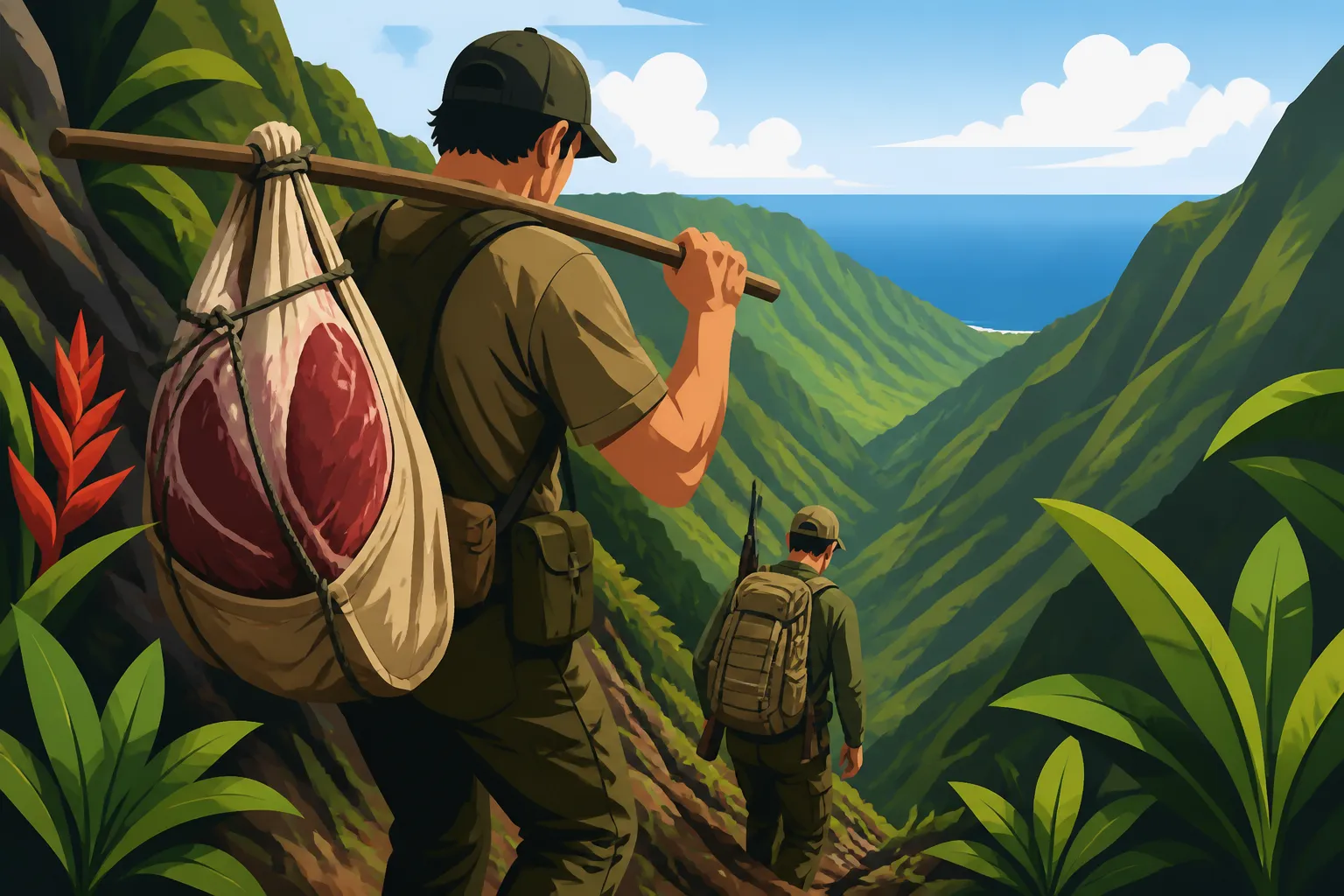
Hunting in Hawaii's challenging terrain, especially around gulches, is often best done with a partner or a small team. When you're facing a steep, slick climb with 60-80 pounds of meat on your back, having a buddy is invaluable. They can spot for you, help you regain balance, pass you gear, and, most importantly, share the load. A second set of hands can help lift a heavy pack onto your back, which is nearly impossible to do solo on an uneven slope.
If you're hunting Axis deer, you might be packing out over 100 pounds of boned meat. Dividing that between two or three hunters makes the job far more manageable. Even for smaller animals like pigs or goats, the physical exertion is extreme, and a partner can provide crucial moral support and practical assistance. Plus, in an emergency, having another person there to assist is critical, especially when No Cell Signal on a Hawaii Hunt is a common reality in remote areas.
Securing Loads for Uneven Ground
A shifting, unstable load is a death trap on a steep, rough ascent. You need your meat to be as close to your back as possible and perfectly balanced. Place the heaviest items (the larger muscle groups) low and close to your spine on your pack frame. Use all compression straps to cinch everything down tightly. There should be no sloshing or swinging of your load. Imagine navigating slippery roots or loose scree; any unexpected shift in weight can send you tumbling.
For external frame packs with a load shelf, ensure the meat is secured tightly to the shelf and then strapped against the frame. If you're using individual game bags, try to distribute them evenly within your pack, perhaps placing them in a larger dry bag or trash bag liner (as an outer layer only, not directly on the meat) to prevent blood leakage and make them easier to handle. A good pack will have a dedicated meat shelf or compression system that keeps the bulk stable and centralized, helping you to maintain your center of gravity while climbing.
Pace and Breaks in the Climb
Don't try to be a hero. Hawaii's gulches demand respect and a steady, conservative pace. Rushing will only lead to exhaustion, mistakes, and potential injury. Start slow, take small, deliberate steps, and pay close attention to your footing. Look for natural handholds and footholds. If the ground is too steep or unstable, consider traversing the slope rather than climbing straight up, even if it means a longer path.
Take frequent, short breaks. Every 15-20 minutes, stop for a minute or two to catch your breath, sip some water, and adjust your pack. Find a secure spot to rest your pack against a tree or rock, rather than trying to take it off and put it back on a dozen times. Longer breaks are for refueling with snacks and hydrating more thoroughly. Remember, the goal is to get the meat out safely and efficiently, not to win a race. Proper hydration and nutrition throughout the day are vital, especially when you're engaging in such strenuous activity.
Dealing with Heat, Humidity, and Time
Hawaii’s tropical climate is the ultimate adversary when it comes to meat preservation. You are in a constant battle against spoilage, and every minute counts.
Rapid Cooling Techniques On-Site
As soon as the animal is field dressed and quartered, your priority is to cool the meat down rapidly. This is where those breathable game bags really shine. If you can, hang the meat in the coolest, shadiest spot you can find in the gulch, allowing air to circulate around it. If there's a stream nearby, and local regulations allow (and it's safe to do so), you might briefly dunk bagged quarters in cold running water, but be cautious of contamination and ensure the bags are waterproof to prevent waterlogging the meat. The primary goal is to get the core temperature of the meat to drop as quickly as possible.
Wiping down the meat surface with clean cloths to remove any moisture or blood can help. In particularly warm conditions, some hunters will even pack a small amount of ice (in a sealed bag, so it doesn't leak directly onto the meat) into their pack to place directly on or next to the bagged quarters for the initial hike out. Every degree you can drop the meat temperature in the field adds precious hours to its shelf life. For more detailed strategies, consult a guide on Cooling Meat Fast on a Hawaii Hunt.
Transporting Meat to the Vehicle
Once you've made the arduous climb out of the gulch, the work isn't over. You need to get that meat into proper cooling as quickly as possible. Have your vehicle prepared. That means large, clean coolers filled with ice already waiting. Ideally, you’ll have a mix of block ice (lasts longer) and crushed ice (fills gaps and cools faster). As soon as the bagged meat reaches the truck, transfer it immediately into the iced coolers. Pack the ice strategically around and between the meat bags to maximize contact.
Keep the coolers closed as much as possible to maintain temperature. If you have a long drive ahead, consider stopping for more ice or even transferring to a larger, insulated chest that can maintain colder temperatures. The goal is to get the meat to a refrigerator or processing facility as quickly as possible. Do not leave the meat sitting in bags in the sun while you celebrate; that's how good meat turns bad fast.
Post-Hunt Meat Care and Processing
Once you're home or at your processing location, the meticulous care continues. Remove the meat from the game bags and inspect each piece. Trim away any bloodshot areas, hair, or contaminated spots. Wipe down the meat with a clean, damp cloth (some hunters use a weak vinegar solution) to remove any remaining debris.
Then, either hang the meat in a cool, well-ventilated area (like a walk-in cooler) for a few days to "age" it (if temperatures allow and you have proper facilities), or begin processing it immediately. Cut the meat into roasts, steaks, and grind, then vacuum seal and freeze it. If you're going to a professional processor, get the meat there within a few hours of the hunt, clearly labeled, and explain your field care to them. They can advise on optimal aging based on the condition of the meat. Remember, your effort in the field will be reflected in the deliciousness on your plate!
Safety First: Navigating Dangerous Gulches
Getting your meat out is important, but your safety and the safety of your hunting partners always come first. Hawaiian gulches can be treacherous, and underestimating them can have serious consequences.
Avoiding Falls and Injuries
Gulches are inherently dangerous. The terrain is often steep, uneven, and covered in loose rock, slick mud, or tangled vegetation. Always maintain three points of contact when climbing or descending (two feet and one hand, or two hands and one foot). Use trekking poles for added stability, especially when carrying a heavy pack. Wear sturdy, well-broken-in hiking boots with excellent ankle support and aggressive tread. Sprains, twists, and falls are common, and a simple misstep can lead to a serious injury far from help.
Be aware of your surroundings:
- Loose Rocks: Always test your footing. A seemingly stable rock might be precariously balanced.
- Slippery Surfaces: Wet leaves, mud, and moss-covered rocks are like ice. Take small, deliberate steps.
- Hidden Obstacles: Thick vegetation can hide drop-offs, roots, or holes. Use your trekking poles to probe ahead.
- Sharp Lava Rock: Can easily cut skin or puncture boots. Watch your step.
Taking your time and being methodical in your movements is your best defense against injury.
Weather Awareness and Flash Floods
Hawaii's weather can change dramatically and quickly, especially in mountainous regions where many gulches are located. A sunny morning can turn into a torrential downpour in minutes, particularly on the windward side of the islands. This is why paying attention to Reading Hawaii's Trade Wind Patterns and overall weather forecasts is so vital. Rain makes already slippery gulches exponentially more dangerous, turning dirt paths into muddy slides and creating fast-flowing, unpredictable streams.
Flash floods are a very real danger in gulches. If heavy rain occurs upstream, a dry streambed can become a raging torrent in moments, sweeping away anything in its path. If you hear a sudden increase in water flow or see the water level begin to rise, get to higher ground immediately. Never camp in a gulch bottom. Always be aware of the weather, and if a storm is brewing, prioritize getting out of the gulch, even if it means leaving some gear or meat behind temporarily.
Communication and Emergency Plans
Hunting in remote Hawaiian gulches often means you're far from cell service. This is why having an emergency plan is non-negotiable. Before heading out, inform someone reliable of your exact hunting area, your planned route, and your expected return time. If your plans change, let them know.
Carry a satellite communication device (like a Garmin inReach or Zoleo) that allows for two-way texting and an SOS function, even without cell signal. This is critical for summoning help in an emergency. A fully charged headlamp is also a must, as daylight can disappear quickly in dense gulches, and an unexpected pack out could stretch into darkness. A basic first-aid kit, whistle, and fire starter should also be standard in your pack. The Department of Land and Natural Resources (DLNR) on GoHunt Hawaii provides valuable resources and safety tips for all hunters, including essential items for your pack. Being prepared for the worst allows you to focus on the task at hand with greater confidence.
Disclaimer
Always check the latest Hawaii Division of Forestry and Wildlife (DOFAW) regulations before any hunt, as rules and unit specifics can change. This guide is for informational purposes only and does not substitute for official regulations or professional safety training.