What One Either-Sex Tag Means on Lanai
One of the biggest head-scratchers for hunters looking at a Lanai Axis deer hunt, especially if you're coming from the mainland or even another Hawaiian island, is understanding the specific language around tags. When you finally draw that coveted permit for the Lanai hunt, and you see "one either-sex tag" staring back at you, it can bring up a mix of relief and a whole lot of questions. This guide is here to demystify exactly what an either-sex tag means for your hunt on Lanai and how you can best approach your season with this unique opportunity in hand.
Deciphering the Lanai Either-Sex Axis Deer Tag
Getting a tag for Axis deer on Lanai is a huge achievement, considering it’s usually a lottery drawing. Unlike some hunting opportunities where you might be strictly limited to a buck or a doe, Lanai’s system, for the most part, issues an "either-sex" tag. This means exactly what it says: with this tag, you are legally permitted to harvest either a male (buck) or a female (doe) Axis deer. Simple, right? Well, the implications for your hunting strategy are quite profound and worth exploring in detail.
What 'Either-Sex' Truly Implies for Your Hunt
The core benefit of an either-sex tag is the immense flexibility it offers. Imagine you’ve been on the island for a few days, spending time scouting, and perhaps you've seen a handful of deer. If you only had a buck tag, and all you're encountering are does and fawns, your hunt could quickly become an exercise in frustration. With an either-sex tag, however, every legal Axis deer you spot becomes a potential target. This drastically increases your opportunities and can significantly improve your chances of filling your tag.
For many hunters, the goal is often a trophy buck, especially with Axis deer known for their impressive antlers. An either-sex tag doesn't take that dream away. In fact, it provides a valuable fallback. If the big bucks aren't showing themselves, or the conditions are making a trophy hunt extremely difficult, you can pivot your focus to harvesting a doe for delicious venison. This flexibility is particularly appreciated on a drawn hunt like Lanai's, where opportunities are limited, and you want to make the most of your time and effort. It’s also important to remember that Axis deer venison is incredibly mild and sought after, so harvesting a doe is far from a "consolation prize" in terms of meat quality.
The Specifics of Lanai's Tagging System
Lanai's hunting regulations are designed to manage the island's burgeoning Axis deer population, which can have significant impacts on the delicate ecosystem. The Hawaiian Division of Forestry and Wildlife (DOFAW) manages these hunts, and the "either-sex" tag is a key part of their strategy. It helps ensure a certain harvest level, contributing to overall herd health and balancing deer numbers with available habitat.
The way this tag system works often involves a lottery draw, for which you'll typically apply through the GoHunt Hawaii system. This platform is where you handle your license purchase, apply for special hunt permits, and sometimes even check in and out of units. When you apply for a Lanai hunt, usually for one of the specific rifle weekends, the permit information will clearly state the type of tag you'll receive if successful. For many of the public land hunts, that will indeed be the either-sex option. It's a contrast to some other hunts in Hawaii where specific male or female tags might be issued, or where certain units might have different restrictions. For instance, while Molokai also has Axis deer, its management programs might differ in tag specifics.
Strategic Considerations for Hunting with an Either-Sex Tag
Having the flexibility of an either-sex tag means you need to think through your priorities before you even step foot in the unit. Are you here strictly for a trophy, or is filling the freezer your main objective? Perhaps it’s a bit of both, hoping for a great buck but happy to take a doe if the chance arises.
Prioritizing Your Hunt Goals
When you get that precious Lanai tag, the first question to ask yourself is: what do I want most out of this hunt?
- Trophy Hunt Focus: If you're dead set on a mature Axis buck, your strategy will revolve around identifying buck hangouts, understanding their rutting behavior (which can occur year-round with Axis deer, but often peaks at certain times), and patiently glassing Lanai's open ridgelines and kiawe flats for that tell-tale antler mass. The either-sex tag provides a safety net; if after several days, the big boys are just not cooperating, you have the option to shift gears. This can reduce the pressure, allowing you to focus on a buck without the fear of going home empty-handed.
- Meat Hunt Focus: For many, the primary goal is high-quality protein. Lanai Axis deer are renowned for their lean, delicious meat. If a meat animal is your priority, then any legal deer, buck or doe, becomes fair game. Does often travel in groups and can be a bit less wary than solitary mature bucks, potentially offering more frequent opportunities. This focus also means you might spend less time scrutinizing antlers and more time identifying healthy, robust animals. When you are looking to get a lot of meat out, remembering proper Field Dressing Axis Deer in Hawaii Heat and how to achieve Cooling Meat Fast on a Hawaii Hunt becomes critically important.
It's completely acceptable to start with a trophy mindset and then adjust as the hunt progresses. The beauty of the either-sex tag is that it empowers you to make that call dynamically in the field.
Adapting to Deer Behavior and the Lanai Landscape
The Lanai landscape is a mix of dry kiawe forests, open pastures, and steep, brushy gulches. Axis deer utilize all of these environments. Your approach with an either-sex tag will naturally adapt to what you're seeing.
- Early Morning and Late Evening: These are prime times for deer movement. Does and fawns often move into more open areas to feed at first light or dusk. Bucks may also be active, but mature bucks, especially during non-rut periods, can be quite reclusive, often staying in thicker cover. Your either-sex tag means you’re observing all deer, not just searching for antlers.
- Mid-Day Movement: In the hotter parts of the day, deer tend to bed down in shaded areas or thickets. This is when still-hunting through cover or careful glassing of known bedding areas can be productive. With an either-sex tag, you’re not passing on a doe that stands up from a bed if it presents a clean shot.
- Water Sources: During dry periods, water sources become magnets for all deer. Hunting a water source in dry Hawaii country can be a very effective strategy. With an either-sex tag, you're observing all deer approaching the water, maximizing your chances.
- Herd Dynamics: Axis deer are often found in herds. Does typically form larger, matriarchal groups, while bucks might be solitary or form bachelor groups outside of the rut. Understanding these dynamics helps you anticipate where you might find different types of animals. If you encounter a large group of does, and a clean shot presents itself, your either-sex tag allows you to capitalize on that opportunity without hesitation. This is especially relevant given that Lanai's Axis Deer Density Compared to Maui is quite high, offering more encounters.
Maximizing Your Opportunity on Lanai
Drawing a tag for Lanai, especially with the flexibility of an either-sex permit, is an incredible privilege. To make the most of it, thorough preparation and smart hunting tactics are paramount.
Scouting and Pre-Hunt Preparation
Even if you can't be on Lanai weeks ahead of your hunt, doing your homework is crucial.
- Maps and Aerial Imagery: Study detailed maps of the unit you’ve drawn. Identify potential water sources, bedding areas, and travel corridors. Look for changes in vegetation that might indicate feeding areas. Modern mapping apps like onX Hunt can be incredibly useful for this, especially for understanding topography and property lines.
- Understanding Unit Boundaries: Lanai has specific public hunting areas, like Unit One, and it's essential to know their exact boundaries to avoid trespassing. Knowing these boundaries is crucial for any hunt, especially on an island where private land is interspersed with public access.
- Physical Fitness: Lanai terrain can be rugged and steep, with plenty of walking involved, often under the hot Hawaiian sun. Being in good physical condition will allow you to cover more ground and endure longer days in the field, increasing your chances. When you're considering Hunting Lanai's Eleven Rifle Weekends, remember these hunts often involve significant walking.
- Gear Check: Ensure your rifle is sighted in, your optics are clean, and you have enough water and supplies for a full day. Consider appropriate footwear for varied terrain and potential thorns from kiawe trees.
Effective Hunting Tactics for Either-Sex Tags
With an either-sex tag, your tactics can be more versatile.
- Spot-and-Stalk: This is a classic and highly effective method on Lanai. It involves getting to a high vantage point, Glassing Lanai's Open Ridgelines or other open areas for deer, then planning and executing a careful stalk. With an either-sex tag, you're not just looking for antlers; you're looking for any legal deer that offers an ethical shot. This broadens your target pool and increases success rates. Mastering Spot-and-Stalk Tactics on Open Country is key here.
- Still-Hunting: Moving slowly and deliberately through cover, stopping frequently to observe and listen, can be very effective, especially in thicker areas where deer might be bedded. The key is to move like a predator, using the wind to your advantage and constantly scanning for movement or parts of an animal.
- Ambush Points: Identifying natural funnels, pinch points, or trails leading to food or water sources can provide excellent ambush opportunities, especially at dawn and dusk. With an either-sex tag, you're ready for whatever deer comes down the trail.
- Calling: While less common for Axis deer than for some other species, a fawn bleat can sometimes bring in curious does or even protective bucks. It's another tool in your arsenal to try if other methods aren't producing.
Remember, patience is often the most important tool. Take your time, enjoy the incredible landscape, and make ethical decisions in the field.
Post-Harvest Logistics
Once you've successfully harvested an animal, the work isn't over.
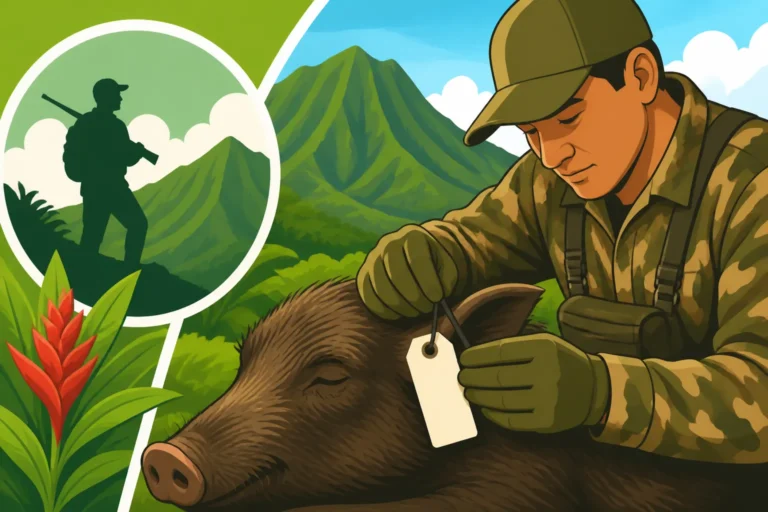
- Tagging: Immediately after the kill, you must properly attach your tag to the carcass as per Hawaii's regulations. This is a crucial step to remain legal.
- Field Dressing: The warm Hawaiian climate means meat spoils quickly. Field dressing your animal immediately and thoroughly is essential. Get the guts out, allow air to circulate, and protect the meat from flies and dirt. Understanding Field Dressing Axis Deer in Hawaii Heat is paramount.
- Cooling: Cooling the carcass down as rapidly as possible is vital for meat quality. If you have a long pack out, consider quartering the animal and putting the meat into game bags that allow for airflow, away from direct sunlight. Cooling Meat Fast on a Hawaii Hunt means utilizing shade, airflow, and if possible, ice once you get back to your vehicle or camp.
- Check-In/Check-Out: Hawaii hunting regulations require you to Check In and Out of Hawaii Hunting Units. This can often be done via the GoHunt system or the OuterSpatial App to Check In. Failing to check out can result in penalties or affect your ability to participate in future draws.
Having an either-sex tag on Lanai is an exciting prospect that offers a fantastic opportunity to hunt a truly unique species in a beautiful setting. Plan carefully, hunt smart, and savor the experience!
Comparing Hunting Approaches with an Either-Sex Tag
To help you visualize the choices, here's a quick comparison of prioritizing a buck versus a doe with your either-sex tag:
| Feature | Targeting a Buck (Trophy Focus) | Targeting a Doe (Meat Focus) |
|---|---|---|
| Primary Goal | Large antlers, mature animal, challenging hunt | High-quality venison, filling the freezer, more opportunities |
| Typical Behavior | More solitary, cautious, often in thicker cover outside rut | Group-oriented, sometimes less wary, often in open areas |
| Hunting Strategy | Extensive glassing, patient stalking, targeting bedding areas | Spot-and-stalk on groups, ambushing food/water sources |
| Challenge Level | Generally higher due to selectivity and buck wariness | Moderate, higher chance of encounter and successful harvest |
| Seasonality Impact | Rutting behavior can dictate buck movement and location | Consistent movement patterns, less impacted by rut peaks |
| Meat Yield | Good, often similar to a larger doe, sometimes slightly gamier | Excellent, typically very lean and mild |
| Opportunity Rate | Lower due to specific target requirements | Higher due to broader target definition |
Remember, the either-sex tag gives you the power to choose and adapt your strategy as the hunt unfolds.
Disclaimer
Hunting in Hawaii requires adherence to all local, state, and federal regulations. This guide provides general information and does not substitute for reviewing the official Hawaii Division of Forestry and Wildlife (DOFAW) hunting regulations. Always confirm current season dates, bag limits, and specific unit rules before planning your hunt. Safety is paramount; always hunt ethically and responsibly.