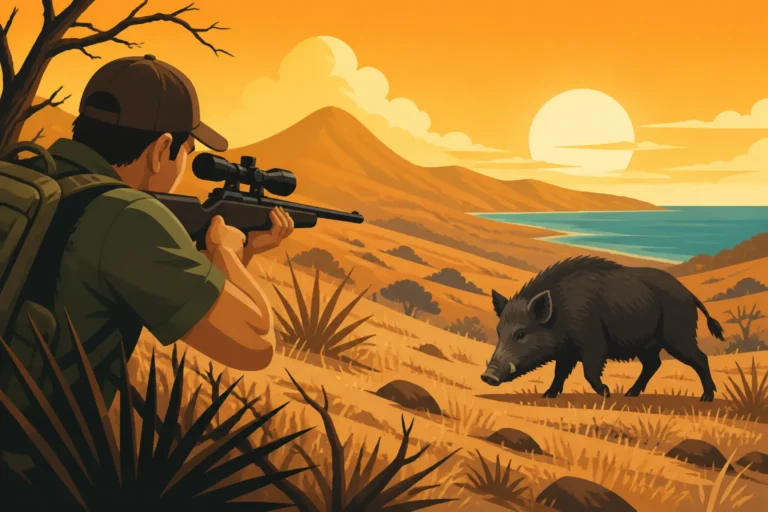
Hunting Lanai’s Eleven Rifle Weekends
The thrill of chasing a mature Axis buck or doe on Lanai is something many hunters dream of, but securing one of those coveted rifle weekend spots can feel like hitting the lottery. With limited access and intense competition, understanding the ins and outs of Hunting Lanai's Eleven Rifle Weekends is absolutely essential for anyone hoping to experience this unique Hawaiian hunting adventure. This guide aims to break down everything you need to know, from the application process to on-island tactics and what to expect when you finally draw that precious tag.
Understanding Lanai's Unique Rifle Season Structure
Lanai, often called "Pineapple Isle," is a hunter's paradise, especially for Axis deer. But unlike many mainland seasons, hunting here isn't a continuous affair. The Hawaii Department of Land and Natural Resources (DLNR) Division of Forestry and Wildlife (DOFAW) manages the Lanai Axis deer rifle season through a series of specific weekend hunts, typically around eleven of them, spread out through the fall and winter months. This structure is designed to manage herd numbers while providing opportunities, but it also creates a highly competitive environment for hunters.
The Eleven Weekend Format Explained
These eleven weekends are not arbitrary; they are meticulously planned to coincide with periods that help manage the deer population, often after the peak rut, and also to fit within the island's unique ecological and social landscape. Each weekend slot is a separate opportunity, and hunters must apply for these specific dates. You don't just get a "season-long" tag; you get a tag for a particular set of days. This means your preparation isn't just about general readiness; it's about being dialed in for a specific 48-hour window. Imagine drawing the first weekend, only to realize you hadn't scouted or trained for that particular phase of the deer's behavior. It can be a real punch to the gut. Knowing When Lanai's Axis Deer Rifle Season Runs is step one, but understanding that it's a series of distinct events, each with its own vibe, is crucial.
Furthermore, these weekends are strictly regulated. You can't just show up and expect to hunt. Every hunter must go through the lottery system, and if successful, adhere to the specific dates on their permit. This concentrated hunting pressure on specific weekends can make the deer warier during those times, pushing them into thicker cover or more remote areas. It’s a challenge that experienced Lanai hunters learn to adapt to, often by focusing on pre-scouting and understanding deer movement patterns between these intense periods. This structured approach, while frustrating for some due to its limited nature, is part of what makes a Lanai Axis deer hunt so sought after – it’s a truly special, hard-earned opportunity.
Why Lanai's Axis Deer Population is Unique
Lanai's Axis deer are renowned for their impressive numbers and excellent meat quality, a testament to the island's ideal habitat. The deer were originally introduced in the 1860s and have since thrived in the dry, scrubby terrain of the island's leeward side, interspersed with kiawe forests and open grasslands. This particular habitat, while beautiful, presents its own set of challenges for hunters. Unlike the dense rainforests found on other Hawaiian islands, much of Lanai’s hunting ground is open, volcanic, and dry, demanding keen glassing skills and patience.
The island’s relatively isolated nature and limited natural predators mean the Axis deer population can grow exponentially. While a blessing for hunting opportunities, it also means the deer can have significant impacts on the delicate island ecosystem and ranching operations. DLNR actively manages these populations, and the rifle seasons are a critical tool in that management. The sheer density of deer in certain areas, particularly on the western and southern slopes, is something to behold. However, don’t mistake high numbers for easy hunting. These deer are smart, constantly pressured, and know how to vanish into seemingly sparse cover. Understanding the nuances of this unique population and their behavior is key to success on these rifle weekends.
Navigating the Permit-Tag System and Draws
Getting ready for a Lanai rifle weekend hunt begins long before you even set foot on the island. The permit-tag system and the highly competitive drawing process are the gates to this hunting experience. Many hunters feel a deep sense of frustration with the lottery system, especially after years of applying without success. It's a testament to the desirability of these hunts, but it doesn't make the wait any easier.
Applying for the Lanai Axis Deer Draw
The application process for the Lanai Axis deer rifle season is entirely managed by DOFAW and typically conducted through the GoHunt Hawaii portal. This online system is your gateway to securing a spot, and it's imperative to understand the deadlines and requirements. Historically, the application period usually opens in the summer, often around June or July, with the draw results announced a few weeks later. Missing a deadline, even by a minute, means you're out for the year, and that can feel absolutely devastating after months of anticipation.
When applying, you'll need to specify your preferred hunting weekends, usually ranking your choices. It's wise to review the historical draw odds if available, though these hunts are always popular. To apply, you'll need a valid Hawaii hunting license, which you can also purchase through the GoHunt platform. If you’re a non-resident, remember that the cost of Hawaii Resident Hunting License Cost versus Hawaii Nonresident Hunting License Cost will differ, and you'll need to ensure your hunter education requirements are met, potentially requiring a Getting a Letter of Exemption as a Nonresident if you’ve completed a course elsewhere. Take your time when filling out the application, double-checking all dates and personal information. One small error could invalidate your entry, and trust me, you don't want to find that out after the draw results are posted.
Understanding What "One Either-Sex Tag" Means
If you're one of the fortunate few to draw a Lanai rifle weekend permit, congratulations! But don't just assume what your tag entails. The permit for Lanai Axis deer typically grants you "one either-sex tag." This means you are authorized to harvest one Axis deer, regardless of whether it's a buck or a doe. For many hunters, especially those focused on trophy animals, this can be a bit of a shift in mindset. You might be hoping for a monster buck, but if a healthy doe presents the best shot opportunity, that’s your legal animal.
This "either-sex" designation is a critical component of DOFAW's management strategy to control the overall population. It removes the pressure to solely target bucks, allowing hunters to contribute more effectively to herd management. It also means that when you’re out there, your focus should be on ethical harvest and meat acquisition, rather than just antler size. Knowing What One Either-Sex Tag Means on Lanai simplifies your decision-making in the field, as you don't have to spend precious moments agonizing over a buck's score or whether it meets specific antler point requirements. Your goal is simply to secure a legal Axis deer.
Here's a quick overview of the Lanai Rifle Weekend Draw:
| Feature | Details |
|---|---|
| Application Period | Typically June-July (check GoHunt Hawaii annually for exact dates) |
| Platform | GoHunt Hawaii online portal |
| License Required | Valid Hawaii Hunting License (resident or nonresident) |
| Permit Type | Drawn permit for specific weekend dates |
| Tag Limit | One (1) either-sex Axis Deer tag per successful applicant |
| Cost (Tag Fee) | Varies by resident/nonresident status (in addition to license fee) |
| Requirements | Hunter Education certification (or exemption) |
| Check-In/Out | Mandatory at designated hunter check stations or via OuterSpatial app |
This table provides a general framework, but always verify current information through the official GoHunt Hawaii portal or DOFAW website as rules and dates can shift.
Key Tactics for Successful Rifle Hunting on Lanai
Once you've secured your permit for one of Lanai's Eleven Rifle Weekends, the real work begins: preparing for the hunt itself. Lanai offers a unique hunting experience that requires a blend of physical fitness, sharp observation skills, and strategic thinking. Forget sitting in a blind over a food plot; this is spot-and-stalk country that will test your mettle.
Spot-and-Stalk on Open Ridgelines
Lanai's terrain, particularly in the prime hunting units, is often characterized by open, undulating ridgelines, deep gulches, and scattered kiawe and thorny brush. This makes Glassing Lanai's Open Ridgelines your primary scouting and hunting tool. Before dawn breaks, position yourself on a vantage point that overlooks expansive terrain. Use high-quality binoculars or a spotting scope to systematically scan for deer. Axis deer are crepuscular, meaning they are most active at first light and last light, so these are your prime glassing windows. Look for movement, distinct white spots against the brown landscape, or the subtle twitch of an ear.
Once you spot deer, the challenge shifts to Spot-and-Stalk Tactics on Open Country. This often involves long, arduous stalks, utilizing every fold in the terrain, every patch of cover, to close the distance. Wind direction is absolutely paramount; the swirling thermals in these hills can be tricky, so always try to keep the wind in your favor. Be prepared for multiple stalks in a day, some lasting hours, only to have the deer disappear over a ridge or into an impossibly thick patch of kiawe. Patience is not just a virtue here; it's a necessity. The sun can be brutal, and the volcanic rock unforgiving on your feet, so proper hydration and footwear are crucial. Remember, you’ll likely be Hunting Lanai Without a Guide on public lands, so you're solely responsible for your approach.
Hunting Water Sources and Kiawe Flats
While ridgelines are excellent for glassing, don't overlook the importance of water sources and kiawe flats, especially during drier periods. Lanai can get incredibly arid, and Axis deer, like all animals, need water. Identifying and focusing on Hunting a Water Source in Dry Hawaii Country can be a game-changer. This could be a stock tank, a small spring, or even a low-lying area that holds dew longer. During midday or in extended dry spells, deer will often gravitate towards these areas. Setting up an ambush point downwind of a water source can be a viable tactic, but always be mindful of other hunters and the unit's regulations.
Similarly, the dense kiawe forests that dot the landscape provide critical cover and forage. Deer will often bed down in these thorny thickets during the heat of the day. Hunting a Kiawe Flat for Axis Deer involves slow, deliberate movements, much like still-hunting a dense forest. You’ll need to move quietly, constantly scanning ahead and to your sides. The thorns can be brutal on clothing and skin, so wear durable hunting pants and long sleeves. You might not see deer until they burst from cover, so be ready for quick, close-range shots. These flats are also excellent places to find fresh sign, like tracks and droppings, which can help confirm deer presence. Much of Lanai’s terrain could be classified as Hunting Hawaii's Dry Kiawe Forest, so getting comfortable with this environment is key.
Reading Sign and Animal Behavior
Successful hunting on Lanai isn't just about shooting; it's about understanding the animals and their environment. Reading sign is vital. Look for fresh tracks around waterholes, along trails leading to and from bedding areas, and in dusty patches. Droppings can tell you how recently deer were in an area. Rubs on small trees indicate buck activity, especially during the rut, though Axis deer can rut throughout the year in Hawaii. Wallows, small depressions where deer roll in mud or dust, are also clear indicators of their presence.
Beyond physical sign, observing Axis deer behavior is invaluable. They are naturally alert animals, constantly scanning their surroundings. They communicate through subtle ear movements, tail flicks, and vocalizations. A sharp, barking alarm call means you've been busted. Pay attention to how they react to your presence and learn to anticipate their escape routes. Also, consider the time of year and weather. During hot, dry periods, deer will be more nocturnal or seek dense shade. After a rain, they might be out feeding in more open areas. Understanding these patterns, honed over many hours in the field, is what separates the consistently successful hunters from those who just get lucky. If you've hunted on Hunting Molokai's Axis Deer Country, you'll find some similar behavioral patterns, but Lanai's specific pressures and habitat create unique challenges.
Essential Preparations for Your Lanai Rifle Weekend
Drawing a tag for Lanai is a huge accomplishment, but it's only the first step. The island itself, while beautiful, is rugged, and proper preparation is non-negotiable for a safe and successful hunt. Neglecting any of these aspects could turn your dream hunt into a nightmare.
Physical Fitness and Gear Considerations
Lanai hunting is physically demanding. The terrain consists of steep gulches, uneven volcanic rock, and thick brush, all under a hot Hawaiian sun. You'll be covering miles on foot, often with significant elevation changes, and then potentially packing out an Axis deer over that same unforgiving ground. Start a rigorous exercise regimen well in advance: cardio for endurance, strength training for carrying weight, and plenty of hiking with your pack on. Don’t underestimate the heat and humidity; staying hydrated is a constant battle.
Your gear selection should be equally robust. Durable, broken-in hiking boots with good ankle support are crucial for traversing lava and rocky slopes. Lightweight, breathable clothing that can withstand thorns is a must. A quality backpack, capable of carrying water, food, first-aid, and extra layers, is essential. For optics, invest in good binoculars and a spotting scope. Your rifle should be sighted in and reliable, and bring plenty of ammunition. Don’t forget basic field dressing tools and a plan for Field Dressing Axis Deer in Hawaii Heat and Cooling Meat Fast on a Hawaii Hunt, as spoilage can happen rapidly in warm temperatures. Bringing a reliable GPS device or a mapping app like OuterSpatial is also highly recommended, as cell service can be spotty in remote areas.
Travel, Logistics, and Island Etiquette
Getting to Lanai involves a short flight from Honolulu or Maui, or a ferry from Lahaina. Plan your travel well in advance, especially if you’re bringing a firearm. You’ll need to declare your rifle with the airline and follow all federal and state regulations for transporting firearms. Once on the island, a 4WD vehicle is almost mandatory for accessing the hunting units. Rental cars often have restrictions on off-road use, so look into dedicated hunting vehicle rentals or make arrangements with local contacts. Many hunters find it useful to consult with local outfitters even if they are Hunting Lanai Without a Guide just for local insights on travel and access.
Upon arrival, remember that Lanai is a small, close-knit community. Hunters are visitors, and respecting the land, the wildlife, and the local people is paramount. Always check in and out at the designated hunter check stations, as required by DOFAW. This isn't just a formality; it's a safety measure and helps DOFAW monitor hunting pressure and harvest data. Be mindful of private property boundaries and absolutely, under no circumstances, trespass. This means carefully reviewing your hunting unit maps and understanding exactly where you can and cannot go. Being a respectful, responsible hunter ensures continued access for everyone in the future. Don't forget that using platforms like GoHunt can also help you stay current on regulations and check-in procedures specific to your unit.
Disclaimer
Please note: Hunting regulations and seasons in Hawaii are subject to change. Always consult the most current Hawaii Department of Land and Natural Resources (DLNR) Division of Forestry and Wildlife (DOFAW) regulations and official GoHunt Hawaii portal before planning any hunt. This guide is for informational purposes only and does not replace official legal requirements.