Still-Hunting a Guava Thicket for Pigs
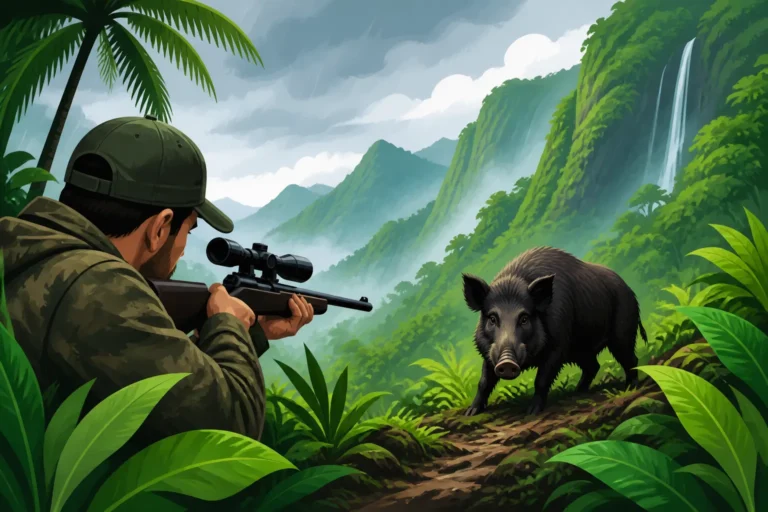
Hunting feral pigs in Hawaii's notoriously thick guava forests can feel like searching for a ghost in a green maze. Many hunters spend hours slogging through the nearly impenetrable tangles, only to catch a fleeting glimpse or just the sound of a hog vanishing into the dense undergrowth, leaving them exhausted and frustrated. This comprehensive guide is designed to equip you with the knowledge, strategies, and mindset needed to successfully still-hunt these elusive animals within their preferred guava strongholds.
The Guava Jungle: Understanding Pig Behavior in Dense Cover
Before you can effectively hunt pigs in guava thickets, you first need to understand why these thorny jungles are so appealing to them, and how that influences their behavior. Guava, with its dense growth and low-hanging branches, offers everything a feral pig desires: food, impenetrable cover, and a cool, shaded refuge from the intense Hawaiian sun.
Why Pigs Choose Guava Thickets
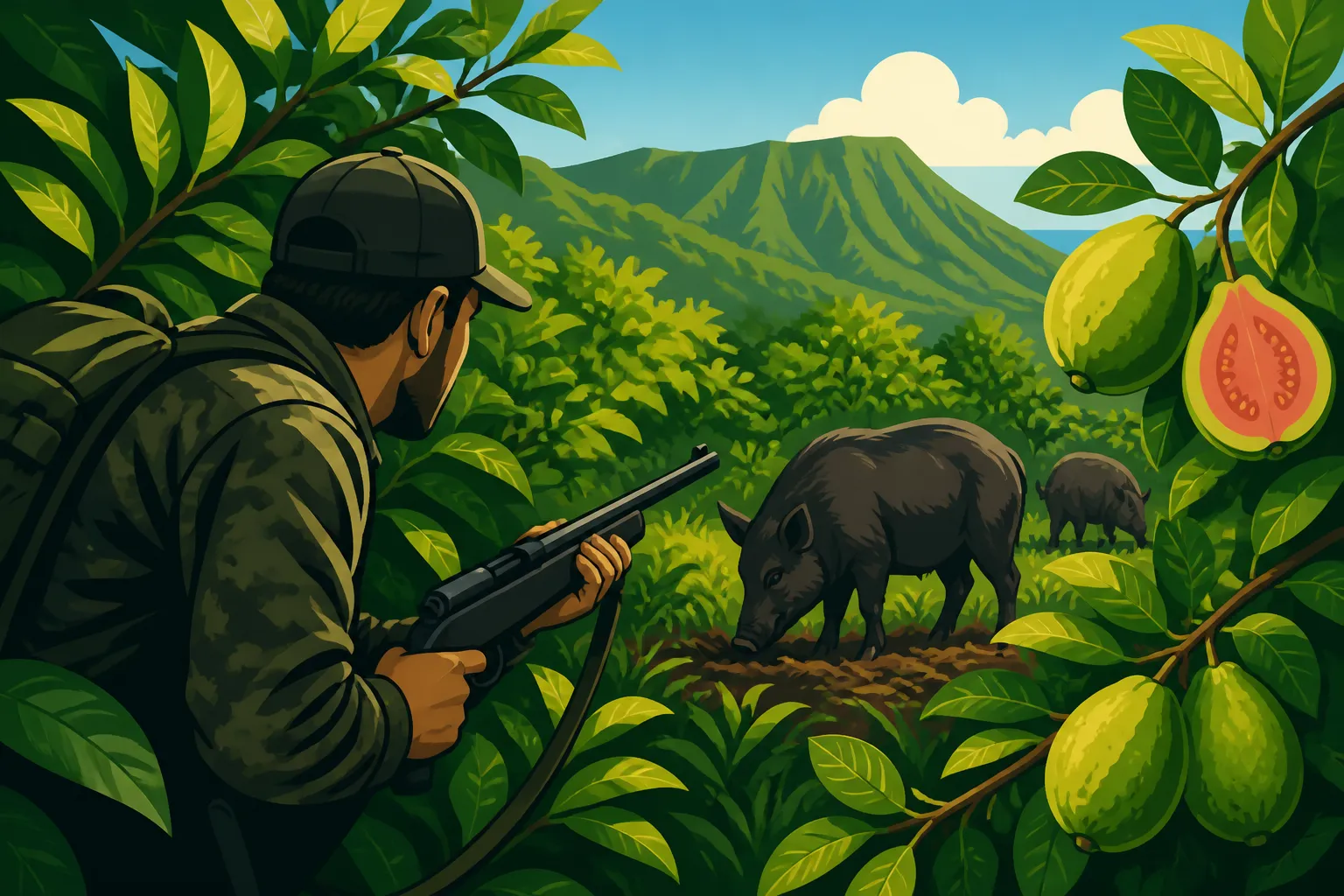
Feral pigs in Hawaii are survivors, and guava thickets are their ultimate sanctuary. The primary draw is often the fruit itself. Guava fruit, especially during its peak fruiting seasons, is a high-energy food source that pigs will readily exploit. They'll gorge themselves on fallen fruit, and sometimes even stand on their hind legs to reach lower branches. Beyond the food, the sheer density of a mature guava thicket provides unparalleled security. Imagine trying to push through a wall of thorny branches and tangled vines – that's what a pig feels when it retreats into its core bedding area. This thick canopy also offers deep shade, a crucial element for pigs to escape the tropical heat, especially during the hotter midday hours. You’ll often find them hunkered down in the coolest, densest parts of these thickets, barely moving until the cooler temperatures of dawn or dusk.
Reading Subtle Pig Sign in the Green Wall
In open country, reading pig sign is relatively straightforward: obvious tracks, large wallows, and extensive rooting. In a guava thicket, however, the signs can be much more subtle, hidden beneath layers of leaves and interwoven branches. You'll need to develop a keen eye for less obvious clues. Look for narrow, well-worn tunnels or "pig trails" snaking through the undergrowth – these are often the only passable routes. Unlike deer trails, pig trails often appear lower to the ground and have signs of rooting along their edges where pigs have fed. Pay attention to fresh rooting patterns; pigs will tear up the forest floor looking for tubers, grubs, and fallen fruit. The fresher the dirt, the more recent the activity. Scrapes on the bark of guava trees or other woody plants can indicate a boar rubbing his scent or simply scratching an itch. Small, dark pellets of scat, especially if still moist, are a dead giveaway that pigs have recently been in the immediate vicinity. Don't expect to see grand wallows in the deepest parts of a thicket; instead, look for muddy depressions or damp areas along these trails where pigs might have briefly cooled off. Understanding What Feral Pigs Eat in the Islands can also help you predict where they might be feeding within these dense zones.
Seasonal Impacts on Guava Thicket Use
The behavior of feral pigs in guava thickets can shift significantly with the seasons and local weather patterns. During periods of heavy rain, especially on the wet windward sides of the islands, pigs might spread out more, as water and food sources become abundant across a wider range. However, they will still use the thickets for bedding and shelter from the downpours. Conversely, during dry spells, especially on the leeward sides, guava thickets near perennial water sources become even more critical to pig survival. While they might venture out to feed at night, they’ll retreat deep into the cool, shaded interior of the guava during the day, making them incredibly difficult to locate. The fruiting cycles of guava also play a huge role. When the fruit is ripe and falling, pigs will concentrate in these areas. Once the fruit is gone, their feeding patterns might shift to other food sources, although the thicket will always remain a preferred bedding and security zone. For a deeper dive into pig behavior based on location, consider articles like Hunting Pigs on Hawaii's Wet Windward Side.
Mastering the Art of Still-Hunting a Guava Thicket
Still-hunting is less about charging through the woods and more about becoming part of the landscape, moving with such deliberate slowness that you might as well be a shadow. In a guava thicket, this patient, meticulous approach is not just a preference, it's an absolute necessity.
The "Ghosting" Technique: One Step, Look, Listen
When you're still-hunting in a guava thicket, forget everything you know about covering ground quickly. Your pace should be agonizingly slow – often, just a few yards in 10 minutes. The core of this technique is "one step, look, listen." Before you take a single step, assess your surroundings. Scan every shadow, every cluster of leaves, every break in the vegetation for any unnatural shape, color, or movement. Pigs are masters of camouflage, and often, only a flicker of an ear, a dark snout, or the curve of a back will give them away. After you've scanned, then take one slow, deliberate step, placing your foot down softly, testing the ground for crunching leaves or snapping twigs. Once your foot is placed, stop. Listen intently for any rustling, grunting, or the subtle sound of chewing. Let the jungle settle around you. Any sound you make will echo in the stillness, and if you move too quickly, you'll be alerting every animal within earshot without even realizing it. This meticulous process helps you detect animals before they detect you, which is crucial in such close-quarters hunting.
Harnessing Wind and Thermals in Close Quarters
In any hunting scenario, wind is your most critical ally or your worst enemy. In a dense guava thicket, it becomes even more challenging due to swirling air currents and unpredictable thermals. Always, and I mean always, hunt into the wind. Pigs have an incredible sense of smell, and the dense vegetation will hold your scent longer and more effectively than in open country. Even a slight breeze in the wrong direction can carry your scent ahead of you, emptying a thicket before you even enter it. In Hawaii, trade winds are often consistent, but as you drop into gulches or climb ridges, thermals can become a factor, rising in the morning as the sun heats the ground and falling in the evening as it cools. Use a wind checker frequently – those small squeeze bottles of powder are invaluable. Puff it into the air every few minutes to see exactly which way the micro-currents are moving. Sometimes, even if the general wind is in your favor, a sudden swirl can betray you. For tips on how to effectively navigate challenging terrain, you might find Staying Found in Dense Hawaii Rainforest helpful.
Reading Entry Points and Exploiting Natural Funnels
Pigs, despite their preference for thick cover, are surprisingly habitual creatures. They will use the path of least resistance to enter and exit their bedding areas, especially if moving between feeding grounds or water sources. Look for these natural funnels: areas where the dense thicket thins out to an old road, a dry stream bed, or a fence line. These edges are prime spots to set up and wait, or to approach with extreme caution. Often, a narrow game trail will lead from a more open area directly into the heart of a guava thicket. These are your highways into their world. By identifying and strategically moving along or parallel to these natural funnels, you significantly increase your chances of intercepting a pig. Remember that the dense nature of these areas often concentrates animal movement, making these pinch points extremely valuable. The GoHunt app can be useful for scouting these terrain features and understanding potential travel corridors even before you step foot in the unit.
Essential Gear and Practical Tactics for Thicket Hunting
Success in the guava thicket isn't just about stealth; it's also about being properly equipped for the environment and employing tactics that leverage its unique challenges. From durable clothing to the right choice of weapon, every detail matters.
Clothing and Footwear for Thorny Terrain
Hunting in guava means you're going to get scratched, snagged, and poked if you're not prepared. Forget your lightweight hunting gear; you need tough, abrasion-resistant clothing. Durable canvas or ripstop nylon pants and a long-sleeved shirt are a must to protect against thorns and sharp branches. Some hunters even opt for pig hunting cut vests (designed for dogs) for their own torsos for extreme protection, or wear heavy leather chaps. Quietness is also paramount; avoid noisy fabrics that rustle with every movement. For footwear, sturdy, waterproof boots with excellent ankle support are non-negotiable. You'll be navigating uneven terrain, slick mud, and sharp lava rock beneath the leaf litter. Good traction is key, and the thick soles will offer some protection against thorns that inevitably make their way through. For general advice on hunting pigs in Hawaii, take a look at Hunting Hawaii's Feral Pigs.
Weapon Choices for Close-Quarters Encounters
In the close confines of a guava thicket, your shot opportunities will likely be quick, close, and potentially obstructed. This influences your weapon choice considerably.
- Rifles: A shorter, handier rifle in a moderate caliber (like .30-30, .44 Mag, or .357 Mag lever action, or a compact .308) is often preferred over long, unwieldy magnum rifles. You need something that can swing quickly in tight spaces and deliver substantial knock-down power at short ranges. Make sure your optic, if you use one, is low power (1-4x or fixed 2.5x) or a red dot sight for quick target acquisition.
- Shotguns: A slug gun, especially with a red dot sight, can be incredibly effective. The quick handling and potent slug at close range make it a formidable tool in thick brush.
- Archery: Bowhunting in guava thickets is a true test of skill and patience. A shorter axle-to-axle bow is easier to maneuver. Shot opportunities will be extremely close, often 10-20 yards, and you'll need a heavy arrow and a strong broadhead to push through potential brush deflections and penetrate tough hide.
Regardless of your weapon, practice shooting quickly and accurately from awkward positions, as you won't always have a clear, open shot. If you are interested in a different approach to pig hunting, you might find Hunting Pigs Without Dogs in Hawaii helpful for general guidance.
Packing Out: The Challenge of the Harvest
Successfully taking a pig in a dense guava thicket is just half the battle; getting it out is the other, often more arduous, half. Pigs can be heavy, and dragging one through tangled thorns and uneven terrain is brutal work. Always carry game bags to quarter your animal on the spot. Quartering is often the only realistic way to extract a pig from deep inside a thicket, especially if you're alone. A good quality hunting pack with a frame is essential for carrying out meat. A sharp knife and a small bone saw are invaluable for efficient field dressing and quartering. Given Hawaii's heat and humidity, cooling the meat quickly is paramount to prevent spoilage. You'll want to get the hide off and the meat into coolers with ice as soon as humanly possible. Our article on Field Dressing Axis Deer in Hawaii Heat offers excellent tips that are directly applicable to cooling pig meat quickly in the tropics. Always plan your extraction route before you even start hunting, identifying the easiest path, however rough, to a vehicle or accessible trail.
Overcoming Challenges and Enhancing Your Success
Hunting pigs in guava thickets is inherently challenging, pushing your limits of patience, physical endurance, and woodsmanship. But by acknowledging these difficulties and preparing for them, you can significantly increase your chances of success.
Patience, Persistence, and the Mental Game
The biggest hurdle in still-hunting guava thickets isn't physical, it's mental. It requires an extraordinary amount of patience. You might move only a few hundred yards in an entire morning, and still not see a single animal. It's easy to get discouraged, to start rushing, or to convince yourself that there are no pigs around. But remember, the pigs are there. They rely on the thick cover for their survival. Your job is to move slowly enough, quietly enough, and with enough attention to detail that you catch them off guard. Celebrate the small victories: finding fresh sign, successfully navigating a tricky section quietly, or just making it through the morning without losing your cool. Persistence is key; the hunter who stays focused and disciplined for hours on end is often the one who eventually gets an opportunity.
Differentiating Fresh Pig Sign from Old
As mentioned earlier, recognizing pig sign is vital, but in a constantly growing, often damp environment like a guava thicket, it can be hard to tell how fresh a sign truly is. This is where experience really pays off. Fresh rooting will expose moist, dark soil, sometimes with bits of green vegetation still clinging to the edges. Older rooting will be dry, compacted, and might have new plant growth starting in it. Tracks in mud or soft earth are clear indicators; look for sharp, defined edges if they're fresh. If the edges are rounded or crumbling, they're older. Scat is perhaps the best indicator: fresh scat will be moist and dark, while older scat will be dry, faded, and potentially covered in insects or mold. Keep an eye out for fresh rubs on trees, where bark might be recently scraped or even still have sap oozing. Learning to tell the difference means you're focusing your efforts on areas where pigs are currently active, rather than old haunts. To further refine your tracking skills, check out Reading Pig Sign Along a Muddy Trail.
Understanding and Respecting Hawaii's Hunting Regulations
Before you even step foot into a guava thicket, ensure you are fully compliant with all of Hawaii's hunting regulations. This includes having a valid Hawaii hunting license and understanding the specific rules for the unit you plan to hunt. Some units may require permits, have specific entry/exit procedures (like checking in via the GoHunt system or physical check stations), or have restrictions on weapon types or hunting days. Ignorance of the law is never an excuse, and violating regulations can lead to fines, loss of hunting privileges, and even confiscation of gear. The Hawaii Department of Land and Natural Resources (DLNR) Division of Forestry and Wildlife (DOFAW) website is your primary resource for these details, and the GoHunt portal is often where licenses and permits are purchased and unit rules are clarified. It's also important to be aware of the daily bag limits for feral pigs, which can vary by unit. Understanding Hawaii Hunting Licenses and What They Cost is the first step in ensuring a legal and ethical hunt.
Still-Hunting vs. Dog Hunting in Guava Thickets
While still-hunting focuses on stealth and solitary pursuit, another popular method for feral pigs in Hawaii is hunting with dogs. Both approaches have their distinct advantages and disadvantages, especially when tackling dense guava thickets.
| Feature | Still-Hunting in Guava Thicket | Dog Hunting in Guava Thicket |
|---|---|---|
| Pace | Extremely slow, meticulous, ghost-like | Fast-paced, often involves running to keep up with dogs |
| Sound | Minimal, deliberate silence, listening for subtle cues | Loud, dogs barking on a track or baying, hunter shouting |
| Concealment | Hunter seeks to remain unseen, blending with environment | Dogs locate and confront pigs, drawing attention away from hunter |
| Effort | High mental focus, physical endurance for sustained slow movement | High physical endurance for quick, often difficult movement |
| Weapon Use | Precision shot often with rifle or bow, from a distance (though close) | Often knife or spear once pig is bayed, or shotgun/rifle at close range |
| Success Rate | Lower number of opportunities, but can be highly rewarding | Higher probability of encountering a pig, but requires coordination |
| Gear Focus | Quiet clothing, durable footwear, compact weapon | GPS collars for dogs, cut vests for dogs, communication devices |
| Ethical Aspect | Solitary, relies on hunter's skill to approach undetected | Involves dogs confronting and holding an animal, requiring immediate intervention |
| Public Land | Generally allowed in open units | Restricted in some units, requires specific permits/registrations for dogs |
For a completely different perspective on pig hunting, you might be interested in our guide on Dog and Knife Pig Hunting in Hawaii. Each method offers a unique challenge and reward, and understanding both can enhance your appreciation for the varied approaches to hunting Hawaii's prolific feral pigs.
Disclaimer
Hunting is an inherently dangerous activity. Always prioritize safety, understand and follow all local and state regulations, and ensure you have the necessary skills and equipment for your chosen method and terrain. The information provided here is for educational purposes and should not replace proper hunter education or professional guidance. Be aware of your surroundings, know your target and what lies beyond, and always hunt ethically and responsibly.