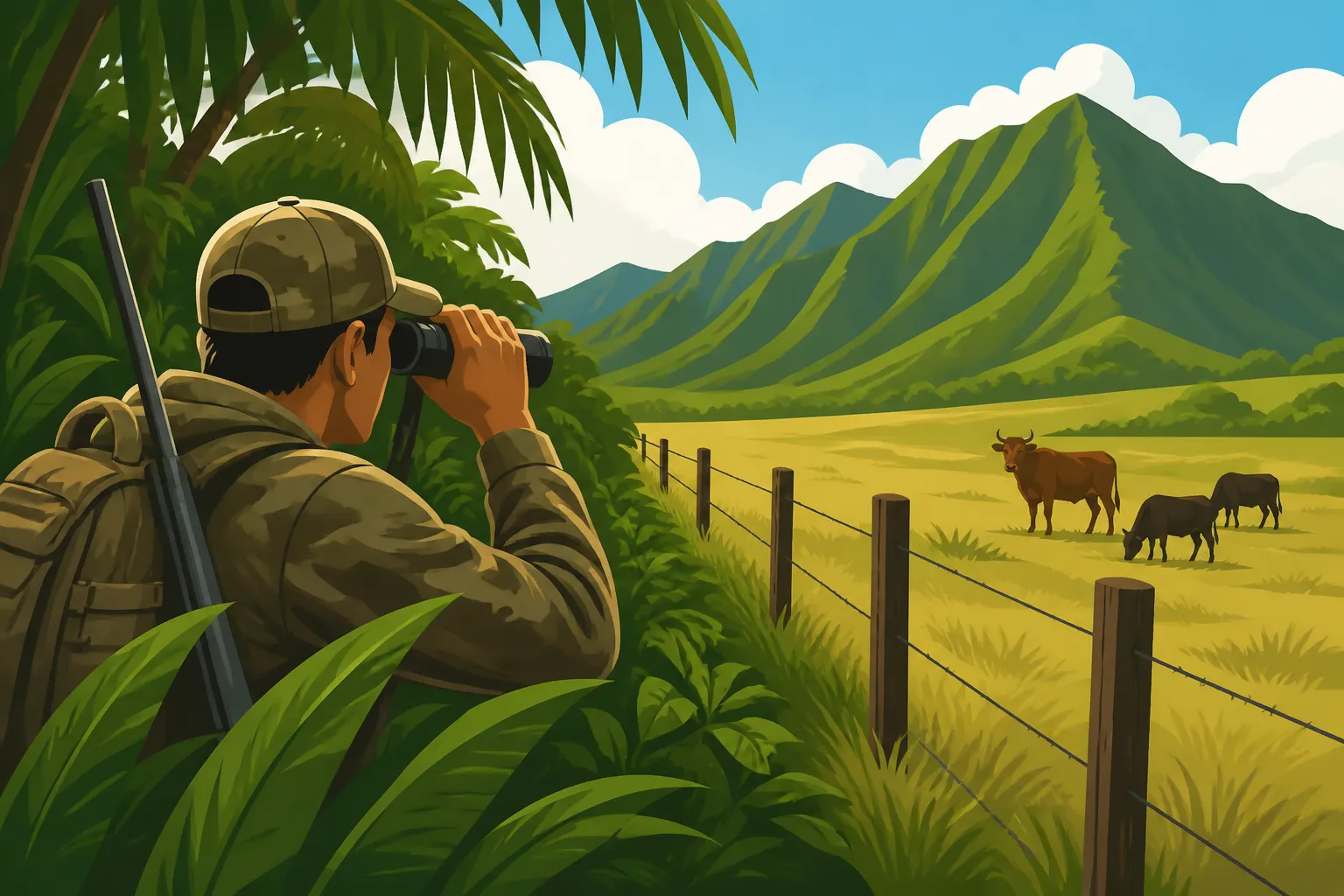
Hunting a Ranch Pasture Boundary
Hunting Hawaii's ranch pasture boundaries presents a unique set of challenges and opportunities that can leave hunters feeling both excited and confused. It’s not simply about finding a fence line and setting up shop; there are distinct dynamics at play, from animal behavior to complex access rules, that can make or break your hunt. This guide is dedicated to untangling those complexities, helping you understand how to navigate these often-productive zones legally, ethically, and with a far better chance of filling your freezer.
Understanding Hawaii's Ranch Pasture Dynamics
Hawaii's ranch lands, with their vast open pastures bordered by dense native and invasive forests, create incredibly attractive environments for game animals. These aren't your typical mainland deer farms; the unique ecosystems here dictate different patterns and behaviors that every hunter needs to understand.
Why Pasture Boundaries Attract Game
The appeal of a pasture boundary to Hawaii's game animals isn't just a coincidence; it's a strategic choice dictated by their survival instincts. Think of it as the best of both worlds for them.
Firstly, these areas represent classic "edge habitat"—the critical transition zone where two distinct ecosystems meet. On one side, you have the open, grassy expanses of the pasture, often dotted with fresh, nutrient-rich forage that pops up after rain or grazing. On the other, you have the thick, tangled jungles of kiawe, guava, or even native koa and 'ōhi'a forest. This dense vegetation provides crucial cover for animals to bed down, escape predators (even if only human hunters), and feel secure. Axis deer, for instance, love to browse the lush grasses of the pasture at cooler times of the day, but they quickly melt back into the shadows of the adjacent forest when they feel threatened or when the sun gets too hot. Pigs will often root vigorously in the softer ground along these edges, especially where the soil is moister and packed with grubs and tubers.
Secondly, water sources are often a major draw. Many working ranches in Hawaii rely on stock tanks, natural springs, or small ponds to water their cattle. In the drier leeward parts of the islands, these water points become absolute magnets for all game, particularly during prolonged droughts. An axis deer might only venture into the open pasture for a quick drink at dawn or dusk, making that boundary zone near a trough a prime ambush spot. Even without artificial water, the transition from arid pasture to a wetter, shadier gulch or forest edge can create pockets of moisture that animals seek out. Considering Hunting a Water Source in Dry Hawaii Country is often a critical element in these areas.
Finally, these boundaries act as natural travel corridors. Animals, especially deer and pigs, tend to follow paths of least resistance. The edge of a dense forest next to an open field provides a clear, yet still somewhat concealed, route for them to move between feeding areas, bedding grounds, and water sources. These trails, often well-worn and easy to identify, become perfect places to set up or intercept animals moving through.
Common Game Animals Found Near Boundaries
Each of Hawaii's prevalent game animals uses ranch pasture boundaries in slightly different ways, so understanding their specific habits is key to successful hunting.
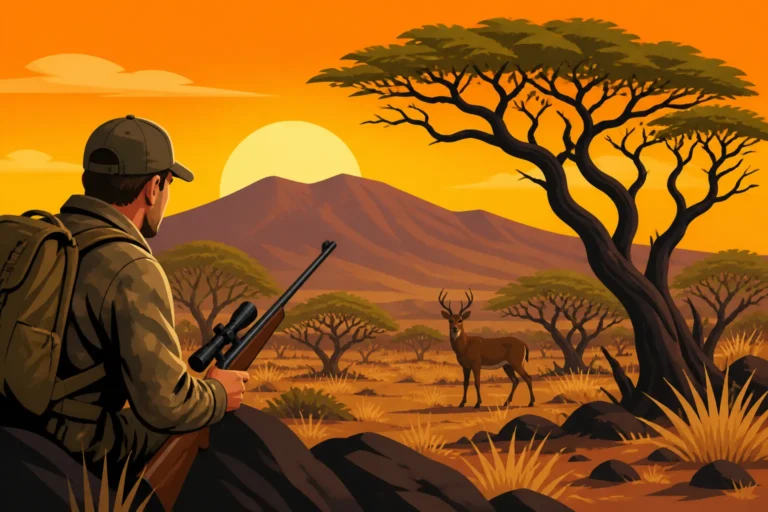
Axis Deer, with their stunning spotted coats, are perhaps the most iconic sight on many Hawaiian pastures. They are primarily grazers and will venture out into the open grasslands, especially in the early morning and late evening, to feed on fresh growth. However, they are also incredibly wary. When they sense danger, or as the day heats up, they'll quickly retreat into the security of the thick kiawe forests or dry brush adjacent to the pasture. When you're Glassing Lanai's Open Ridgelines or similar wide-open cattle country on Maui or Molokai, you'll often see them filtering out of the timber lines or disappearing back into them. Look for fresh tracks where the grass meets the dirt paths, and keep an eye on shaded pockets of trees just inside the forest edge—these are prime bedding areas.
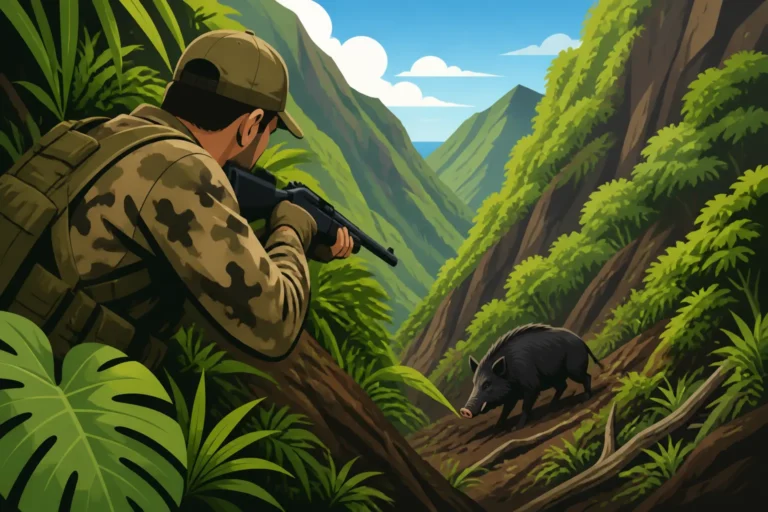
Feral Pigs are opportunistic omnivores, and pasture boundaries provide a smorgasbord for them. They love the soft, damp earth where forest meets field, rooting vigorously for tubers, roots, and insects. You'll often find their tell-tale rooting signs along these edges, particularly after rain. Pigs use the dense cover of the adjacent forest for bedding during the day and will often emerge at night or in low light to feed in the pasture. Keep an eye out for muddy wallows near water sources at the boundary, as well as distinct trails leading into and out of the thickets. If you're Still-Hunting a Guava Thicket for Pigs that borders a pasture, these transitional zones are gold.
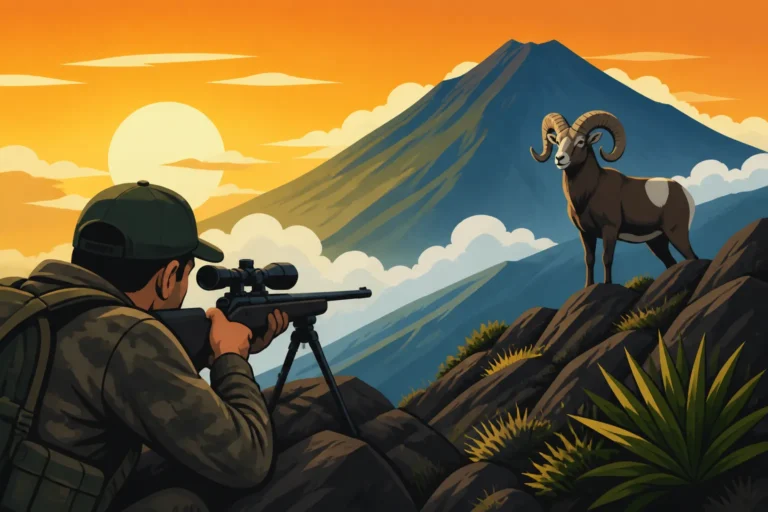
Feral Goats are incredibly adaptable, and while they might not be as eager to graze the open pastures as axis deer, they will certainly utilize the brushy, rocky, and often steep edges that frequently define ranch boundaries. If a pasture transitions into a lava flow or a steep gulch, you can almost guarantee goats will be present. They appreciate the browse offered by the diverse vegetation at the forest edge and use the rugged terrain for easy escapes. When Glassing a Hawaii Coastline for Goats, for example, you're essentially looking for them on the brushy cliff edges above the sea, which often border open, higher-elevation pastures.
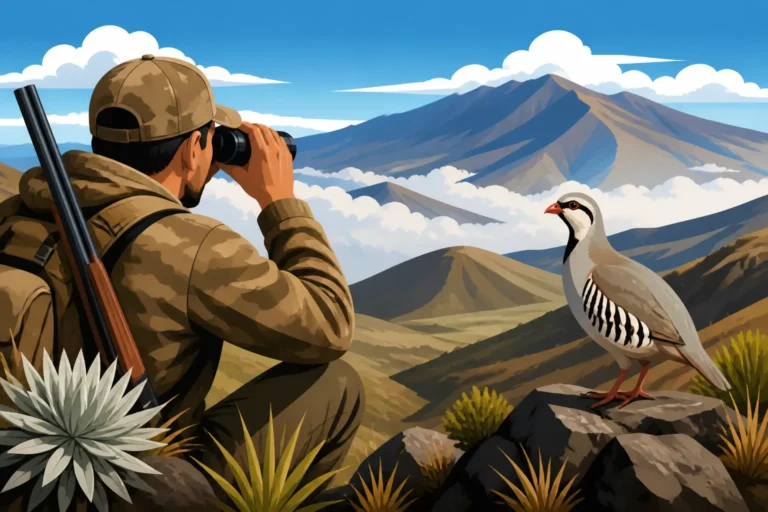
Game Birds, too, can frequent these areas. Species like Francolin (Erckel's, Gray, and Black), Ring-Necked Pheasant, and various quail often feed on seeds and insects found at the interface of open grass and dense cover. They'll use the thicker brush for roosting and hiding, flying out into the pasture to forage. While not necessarily the primary target for most big game hunters, it's worth being aware that these birds might flush, potentially spooking larger game.
Challenges of Pasture Boundary Hunting
While productive, hunting ranch pasture boundaries in Hawaii isn't without its hurdles. These unique challenges require forethought and adaptation.
First, visibility can be a real headache. Even though the pasture itself might be wide open, the actual boundary zone—that strip where the dense forest meets the field—can be incredibly thick. It's often choked with invasive species like guava, gorse, and haole koa, creating an almost impenetrable wall of vegetation. This makes seeing game until they're right on top of you difficult, and it complicates tracking and shot placement. You might spot a deer 300 yards out in the pasture, but if it's only moving along the dense edge, your shooting lanes might be nonexistent.
Second, wind patterns and thermals in Hawaii are notoriously shifty, especially in areas with varied terrain like a ranch pasture bordering a steep gulch or a mountain slope. Trade winds might be consistent higher up, but as they hit gulches, kipukas, and forest edges, they can swirl and eddy, making it incredibly hard to stay downwind of wary animals. Understanding and Hunting Downwind in Hawaii's Shifting Thermals is not just good advice; it's absolutely crucial here, and it demands constant vigilance.
Third, the presence of livestock, primarily cattle, introduces multiple complications. You'll need to exercise extreme caution to ensure you have a safe backdrop and clear shot free of any cattle. Not only is it unethical and illegal to shoot near or at livestock, but the sudden movement or vocalizations of cattle can also spook game you're trying to approach. Cattle also leave a lot of scent and sign that can be confused with game, or they can obliterate game sign altogether.
Finally, fences themselves, while defining the boundary, can be obstacles. Ranch fences are there to contain livestock and mark property lines. You must never cut or damage a fence. Crossing them requires care and respect for private property, and in some cases, you may be prohibited from crossing them entirely if the land beyond is not part of your permitted hunting area. Knowing what's on each side of that fence line is paramount.
Scouting and Strategy for Boundary Hunting
Successful hunting along ranch pasture boundaries in Hawaii demands more than just showing up on opening morning. It requires meticulous pre-hunt planning and smart, adaptable on-the-ground tactics.
Pre-Season Reconnaissance and Map Study
Before you ever set foot in the field, a good chunk of your hunt can, and should, be done from a desk. Start with detailed map study. Tools like online topographic maps, aerial imagery (Google Earth is your friend!), and specialized hunting apps are invaluable. You'll want to identify the exact property lines—especially crucial if public land borders private ranch—and locate access points. Look for natural features that act as funnels: narrow strips of timber connecting larger blocks, saddles between hills, or points where a gulch narrows. These are prime locations where animals are likely to cross from one area to another or congregate. Water sources, whether natural springs, ephemeral seeps, or man-made stock tanks, are also critical to pinpoint, particularly in arid zones.
For designated public hunting units that border ranches, specific maps are often available from the Department of Land and Natural Resources (DLNR) or through apps like GoHunt which can sometimes overlay property boundaries. The OuterSpatial App to Check In also often includes boundary information and check-in stations. Understanding Hawaii's Hunting Units and How They Work will tell you which specific areas are even open to public hunting adjacent to these ranches. Pay close attention to contour lines on topographic maps. Gentle slopes leading into a pasture are often preferred travel routes compared to steep, exposed faces. Look for darker green areas on aerial maps, indicating thicker cover that might serve as bedding areas just off the pasture.
On-the-Ground Scouting for Sign
Once you've done your homework with maps, it's time to confirm your theories on the ground. This is where you become a detective, looking for clues that tell you where animals are moving and when.
Along the fence lines and at the very edge where the forest meets the pasture, look for fresh tracks. Muddy areas, especially near water sources or low spots where water collects, are excellent places to find clear prints from axis deer, feral pigs, or goats. Pay attention to the direction of travel and the size of the tracks to get an idea of the animals using the area.
Beyond tracks, look for other signs:
- Droppings: Fresh droppings indicate recent activity. Learn to differentiate between deer, pig, and goat droppings.
- Rubs (for deer): Especially during the rut or when bucks are polishing their antlers, you'll see saplings and small trees rubbed clean of bark. This tells you bucks are active in the vicinity. Reading Axis Deer Sign in Dry Country can help you understand these details.
- Rooting (for pigs): Freshly tilled earth along the edge of the pasture or just inside the forest is a sure sign of pigs. They'll turn over large sections of ground looking for food.
- Wallows: Muddy depressions where pigs have rolled to cool off or remove parasites. The freshness of the mud indicates recent use.
- Trails: Well-worn paths leading from the thick cover into the pasture are prime spots for an ambush. Look for these paths leading to water or distinct feeding areas.
Another crucial technique for on-the-ground scouting, especially in more open pasture-edge environments, is glassing from a distance. Find a vantage point that overlooks a long stretch of pasture boundary. Use good binoculars or a spotting scope to carefully scan the edges at dawn and dusk. Animals often step out of cover tentatively. This is how you'd typically go about Glassing Lanai's Open Ridgelines for Axis deer or even high-elevation slopes for mouflon. Look for movement, a flash of color, or an unusual shape. The goal is to identify active feeding areas, bedding locations, and precise entry/exit points before your actual hunt.
Effective Hunting Tactics
Once you've scouted, it's time to put a plan into action. Your tactics will depend heavily on the specific animal you're after and the terrain, but some general principles apply.
Still-hunting is a highly effective tactic along these dense boundaries, particularly for feral pigs and sometimes for goats. This involves moving incredibly slowly, stopping often, and scanning every detail of the terrain in front of you. You're trying to spot the animal before it spots you. Focus on areas with fresh sign. If you're Still-Hunting Pigs in Hawaii's Wet Forest, you'll want to move with the wind in your face, listening for the subtle sounds of rooting or movement in the thick undergrowth. Pay attention to shaded pockets and depressions where animals might be bedded during the warmer parts of the day.
For axis deer in more open pasture settings, spot-and-stalk is often the most productive method. This involves finding animals from a distance (often by glassing), planning an approach that keeps you out of sight and downwind, and then slowly closing the distance for a shot. This requires patience, stealth, and a keen understanding of the terrain. Hunting Axis Deer at First Light in Hawaii often means catching them in the open before they retreat.
Timing is critical. Most animals are most active at first light and last light. This is when they feel most secure venturing out of dense cover to feed in the pastures. Set up early in the morning, well before sunrise, and stay until deep into dusk. This also means being prepared for low-light shooting conditions.
Always, always be mindful of the wind. In Hawaii, thermals can be tricky, especially as the sun rises and falls, creating currents that flow up and down slopes. Hunting Downwind in Hawaii's Shifting Thermals is not just a suggestion; it's a rule. If the wind is swirling or unpredictable, it's often better to wait for more stable conditions or choose a different approach. Your scent is your biggest giveaway.
Finally, consider ambush points. If your scouting reveals a consistent trail leading into the pasture, a narrow funnel between two thickets, or a frequently visited water source, setting up in a concealed position downwind can be highly effective. This requires patience, but it allows you to capitalize on predictable animal movement.
Legalities, Access, and Ethical Considerations
Hunting Hawaii's ranch pasture boundaries isn't just about finding game; it’s deeply intertwined with understanding complex land ownership, obtaining proper access, and upholding strict ethical standards. Ignoring any of these can lead to serious consequences, not just for you, but for the future of hunting in Hawaii.
Understanding Public vs. Private Boundaries
This is perhaps the most critical aspect of hunting any boundary in Hawaii: knowing precisely where you are and whose land you're on. Unlike some mainland states where public land is vast and clearly marked, much of Hawaii is private, including extensive ranch operations.
You absolutely must verify land ownership before you even consider approaching a pasture boundary. This can be done through county tax maps, online GIS systems, or specialized hunting apps like GoHunt or onX Hunt, which often show property boundaries. Never assume a fence line denotes the edge of public land. It might be a boundary between two private parcels, or it could be a public unit bordering yet another piece of private property. Ignorance of the law is never an excuse, and trespassing on private land is a serious offense. The penalties for a Hunting Violation in Hawaii can range from hefty fines to the loss of hunting privileges and even criminal charges.
Some ranch pasture boundaries may indeed coincide with designated public hunting units managed by the Department of Land and Natural Resources (DLNR). These are areas where hunters can legally pursue game with the appropriate licenses and permits. However, even on public land, boundaries need to be respected. For example, a public hunting unit might end at a fence, and the land beyond it is private ranch land. Crossing that fence without explicit permission is trespassing.
The distinction between public and private land isn't always obvious on the ground. While some public units might have boundary signs, many do not. This is where your pre-hunt map study becomes invaluable.
Navigating Access and Permits
Once you've identified the land ownership, the next step is securing legal access.
If the pasture boundary falls within a public hunting unit, you'll need to ensure you have your valid Hawaii Hunting Licenses and What They Cost, along with any required permit-tags for the specific game species and unit. Hawaii's Hunting Units and How They Work outlines the various public lands and their specific regulations. For many public units, you'll also need to check in and out, either physically at a hunter check station or digitally using the OuterSpatial App to Check In. It’s crucial to understand these rules as they can vary greatly from island to island and unit to unit.
If the desired hunting ground is on private ranch land, the process is entirely different and often more challenging. The most common way to gain access is by Getting Permission on a Hawaii Ranch. This means directly contacting the landowner or ranch manager. This isn't always easy; many ranches are wary of allowing public access due to liability concerns or ongoing livestock operations.
Some larger ranches may offer Hawaii Private Land Access Permits or have formal Landowner Hunting Agreements Explained, sometimes for a fee. These can range from simple day permits to more extensive lease agreements. Often, these agreements are contingent on helping the ranch with game control, such as removing a certain number of feral pigs or goats that cause damage to pastures and fences. Many ranches also operate as commercial hunting outfitters, in which case you would be booking a guided hunt with them.
When seeking private land access, be prepared to demonstrate responsibility and respect. Offer to share meat, help with fence repairs, or adhere to specific ranch rules. A positive relationship with a landowner can open doors to incredible hunting opportunities.
Ethical Hunting Near Ranch Operations
Ethical hunting isn't just about following the law; it's about upholding a high standard of conduct that ensures the safety of others and the reputation of hunters as a whole. When hunting near ranch operations, these ethics are amplified.
Safety first and always. You must have a safe backdrop for every shot you take. This means knowing exactly what is beyond your target. Never shoot towards ranch buildings, homes, public roads, or, most critically, livestock. Cattle are valuable assets, and accidentally shooting one could lead to severe legal and financial repercussions. Always identify your target unequivocally and confirm your shot path is clear. Hawaii's Rules on Shooting From a Vehicle are strict, and for good reason, especially on ranch roads. You should also be aware of Rules on Hunting Near Homes and Roads.
Respect for property is paramount. This means closing all gates you open, being careful not to damage fences (never cut them), and leaving absolutely no trash behind. If you see something damaged, report it to the landowner or manager. Treat the land as if it were your own, or even better.
Finally, proper field care and meat handling are ethical responsibilities, especially in Hawaii's warm climate. Once you've harvested an animal, particularly something like an axis deer or a feral pig, you need to begin Field Dressing Axis Deer in Hawaii Heat immediately. Rapid cooling is crucial to prevent spoilage and honor the animal. If you're hunting on private land, clarify with the landowner about what to do with the guts or if they have a specific place for field dressing. Always comply with requirements for Tagging an Animal Correctly in Hawaii and any Harvest Reporting Requirements After a Kill. These steps ensure accountability and contribute to responsible wildlife management.
Gear and Techniques for Success
Hunting Hawaii's ranch pasture boundaries presents a unique blend of open-country glassing and close-quarters still-hunting. This requires thoughtful gear choices and adaptable techniques to maximize your chances of success.
Essential Gear for Boundary Hunts
Your gear choices can significantly impact your comfort, safety, and effectiveness when hunting these varied environments.
First up, footwear is absolutely critical. You'll be traversing everything from rough, rocky pasture ground and potentially uneven lava flows to thick, muddy gulches and dense forest. Forget flimsy boots. You need sturdy, ankle-supporting boots with excellent traction that can handle diverse terrain. If you're Walking Rough Lava Without Wrecking Your Boots, you know the value of a durable sole. Waterproofing is also a huge plus, as even dry-looking areas can have unexpected damp spots or morning dew.
Next, optics are your best friends in open country. A good pair of binoculars (10×42 or 12×50) is indispensable for scanning distant pasture edges, identifying game tucked into sparse cover, and spotting movement at dawn and dusk. If you're hunting larger open areas or planning long-range stalks, a spotting scope can also be invaluable for confirming trophy potential or identifying species from afar. Glassing a Hawaii Coastline for Goats or expansive pastures for deer necessitates quality glass.
Your weapon choice will depend on the species and terrain. For big game like axis deer, a rifle in a common caliber (e.g., .270, .30-06, 6.5 Creedmoor) is standard for longer shots across pastures. Muzzleloader Caliber Minimums for Big Game must be met, and if you choose archery, ensure your Archery Equipment Rules for Big Game adhere to regulations, especially for things like arrow weight and broadhead type. For pigs in thick cover, a shotgun with slugs, a powerful handgun, or even a spear might be legal and practical, depending on local rules and your hunting style (especially if Hunting Pigs With Dogs in Hawaii). Always know Hawaii's Legal Rifle Calibers for Big Game.
Finally, don't forget your pack and clothing. A comfortable day pack is essential for carrying water (more than you think you'll need in Hawaii's heat!), snacks, a first-aid kit, game bags, and any personal essentials. Layered clothing is key; Hawaii's weather can shift from cool mornings to hot mid-days, and a sudden shower is always possible, especially on the windward side. Quiet fabrics are a must for still-hunting. And while not always required, having Rain Gear for a Windward Hawaii Hunt can make a miserable day bearable.
Techniques for Different Game
Adapting your approach to the specific game animal is paramount for success.
For Axis Deer, the name of the game is patience and stealth. They often move onto pastures at the very first hint of light, so being in position well before sunrise is crucial. Approach open areas slowly, scanning the tree line and any pockets of cover. In dry kiawe flats, they might browse on fallen pods, offering a chance for a close stalk. Sometimes, a subtle Calling Axis Deer With a Fawn Bleat can pique a buck's curiosity, but use it sparingly and strategically. Judging an Axis Buck's Antlers in the Field takes practice, especially in varying light.
When after Feral Pigs, focus on the thickest, nastiest cover along the pasture edge. Pigs often bed down in dense guava or other impenetrable thickets during the day, emerging to root along the softer ground where the cover thins. Still-Hunting a Guava Thicket for Pigs involves moving at a snail's pace, pausing frequently to listen for subtle sounds of rooting, grunting, or movement. Focus on fresh sign, like overturned earth or tracks, and be ready for a quick, close-range shot if a pig busts out of cover. Pay attention to wind, as pigs have an incredible sense of smell.
Feral Goats typically favor steeper, rockier terrain, even if it's just a small gulch or lava outcrop bordering a pasture. Glassing a Hawaii Coastline for Goats or a rugged hillside above a pasture is your primary tool. They often feed in the cooler hours and retreat to inaccessible ledges during the heat of the day. Patience is key here; find them, plan a meticulous stalk using terrain features for cover, and be prepared for a difficult shot angle on steep ground. Hunting Goats on a Sea Cliff Safely requires extreme caution and careful foot placement.
For Game Birds, like francolin, pheasant, or quail found on pasture edges, the tactic is generally a slow, deliberate walk-up. Flush birds into open areas where you can get a shot. A good bird dog can be a game-changer for locating and retrieving downed birds in the thick cover. Using a Bird Dog in Hawaii Terrain can drastically increase your success rate and prevent lost birds.
Post-Harvest Considerations
The hunt doesn't end with the shot; proper post-harvest care is crucial, especially in Hawaii's warm and often humid climate.
Cooling meat fast is non-negotiable. As soon as an animal is down, begin Field Dressing Axis Deer in Hawaii Heat or any other game. Get the internal organs out quickly to start the cooling process. If you're not far from your vehicle, get the animal into shade, ideally with airflow. If you're deep in a gulch or remote section, having game bags and a plan for Packing Meat Out of a Hawaii Gulch or off a distant pasture is essential. Many hunters bring coolers with ice to immediately get the meat chilled once back at the truck.
Always be aware of any landowner requirements regarding carcasses or gut piles, especially on private ranches. Some may want gut piles moved away from visible areas or out of the pasture. If you've been granted access by a rancher, showing this extra level of respect goes a long way in maintaining a good relationship for future hunts.
Disclaimer
Hunting is an inherently dangerous activity. This guide is for informational purposes only and does not supersede any local, state, or federal laws, regulations, or safety guidelines. Always consult the most current Hawaii Department of Land and Natural Resources (DLNR) regulations, obtain all necessary licenses and permits, and prioritize safety. The author and publisher assume no liability for accidents, injuries, or legal infractions incurred while hunting.