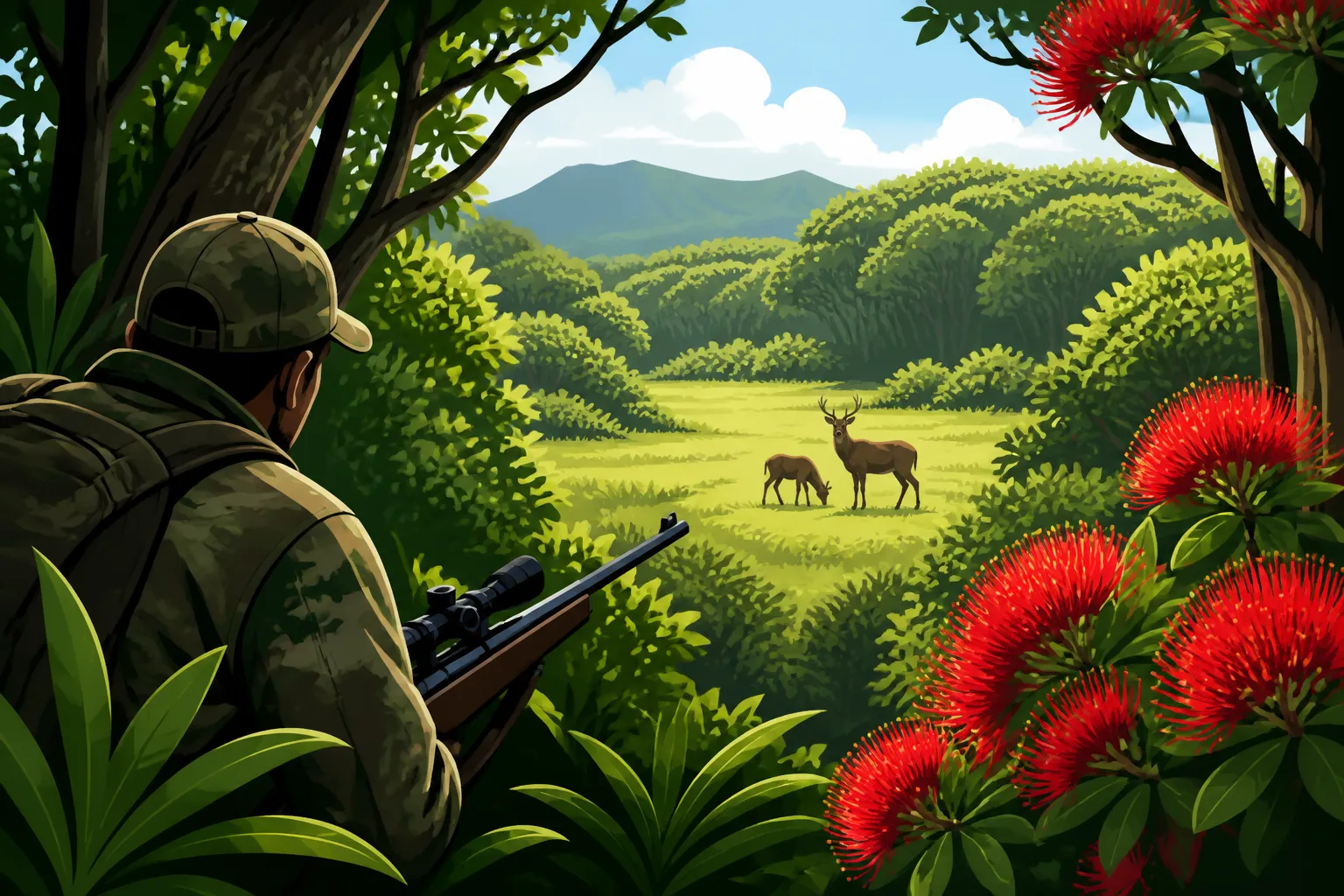
Hunting an Ohia Forest Opening
Stepping into Hawaii’s dense Ohia forests, it's easy to feel swallowed by the thick canopy and impenetrable undergrowth. Many hunters find themselves wondering how they'll ever spot an animal in such a tangled maze. This comprehensive guide will pull back the leaves, so to speak, revealing how to strategically identify and effectively hunt the crucial openings within these unique Hawaiian ecosystems, helping you pinpoint game where they feel most at home.
Understanding the Ohia Forest Ecosystem
Hawaii's Ohia forests, dominated by the iconic Ohia lehua tree, are far from uniform. They stretch across various elevations and moisture gradients, from damp, misty windward slopes to drier, leeward hillsides. Each area presents its own challenges and opportunities for hunters, but understanding the fundamental nature of these forests is your first step to success.
What Makes Ohia Forests Unique for Hunting?
The Ohia lehua (Metrosideros polymorpha) is a pioneer species, often the first tree to colonize new lava flows. This resilience means you'll find it in incredibly diverse environments. What makes it tricky for hunting is its growth pattern: Ohia can form dense, almost claustrophobic stands, especially at lower to mid-elevations. The undergrowth often consists of ferns, ginger, strawberry guava, and various other invasive species that create a visual and physical barrier. Visibility can be severely limited, often to just a few yards, making traditional spot-and-stalk difficult.
However, these dense thickets are precisely why hunting the openings is so productive. Animals, particularly feral pigs and goats, use the thick cover for bedding, security, and travel. The openings provide essential resources that the deep forest often lacks, acting as natural magnets for game. Without understanding this dynamic, you're essentially walking blind through a green wall. For hunters venturing into these verdant labyrinth, recognizing what constitutes an "opening" – whether it's a natural glade, an old roadbed, or a break in the canopy – is crucial.
Why Animals Utilize Forest Openings
Animals don't just randomly wander into these clearings; they seek them out for very specific reasons. These openings are more than just breaks in the trees; they are vital parts of the animal's daily survival.
- Food Sources: Many openings, especially those with more sunlight, allow grasses, forbs, and fruit-bearing plants (like guava) to thrive, which might struggle in the deep shade of the dense canopy. Pigs are notorious for rooting up these areas for tubers and fallen fruit, while goats will browse on the edges. Mouflon sheep, found at higher elevations on Hawaii Island, will graze on grasses in more open areas within or bordering Ohia forests.
- Sunlight and Warmth: After a cool, damp night, especially in the wetter regions, animals will often seek out sun-drenched patches to warm up and dry off. This is particularly true for pigs and goats.
- Travel Corridors: Sometimes, an opening, like an old jeep trail or a natural break, serves as a less strenuous path for animals to move between different feeding or bedding areas. It's a highway through the otherwise impenetrable brush.
- Security and Vantage Points: While they offer less cover, an opening that is close to dense escape cover provides a perfect balance. Animals can feed or rest while still being able to quickly duck back into the thicket if danger arises. Some openings also offer a slightly better vantage point for animals to watch for predators, even if that "predator" is just you.
- Socializing: Larger openings can serve as congregation points for groups of animals, particularly pig sounders or goat herds, before they disperse back into the thicker cover.
Recognizing these motivations helps you anticipate where and when animals will appear in an Ohia forest opening. It’s about thinking like the game, using their needs to inform your hunting strategy.
Scouting and Strategy for Ohia Openings
Hunting Ohia forest openings isn't just about stumbling upon a clearing; it's about intentional scouting and strategic execution. The success often comes long before you even draw a bow or raise a rifle, stemming from thorough preparation and a deep understanding of the landscape.
Identifying Productive Openings
Before you can hunt an opening, you have to find it, and not all openings are created equal. Some are bustling highways of activity, while others are barren and rarely visited.
- Natural Clearings: These can be caused by old landslides, wind damage, or simply areas where soil conditions prevent dense Ohia growth. Look for patches of greener, shorter vegetation.
- Old Logging Roads and Jeep Trails: These are often the most obvious and easiest-to-find openings. While sometimes overgrown, they still offer a linear break in the canopy and are frequently used as travel corridors. Many units throughout Hawaii have remnants of old plantation roads or ranch trails that cut through Ohia.
- Power Line Cuts: If you're hunting near developed areas, power line easements offer long, clear cuts through the forest. These are often regularly maintained, keeping them open and full of browse.
- Lava Flow Edges: On islands like Hawaii Island, where Ohia colonizes recent lava flows, the interface between dense forest and more barren lava can create natural openings and edges that game utilize. Think of it like Hunting a Hawaii Lava Kipuka, where islands of forest are surrounded by open, rough lava. This transition zone is often a hotspot for game moving between cover and more open foraging.
- Water Sources: Any opening with a seep, small pond, or muddy wallow will significantly increase its appeal to pigs and often goats, especially in drier areas.
Leveraging Technology for Scouting: Before you even step foot in the forest, leveraging an app like GoHunt for satellite imagery and topographical maps can be a game-changer for spotting these openings. You can identify potential clearings, old trails, and elevation changes from your couch, saving you countless hours of busting brush. Once on the ground, confirm these spots by reading sign: look for fresh tracks, piles of scat, rubs on small trees, or areas of rooted-up earth. A productive opening will show consistent evidence of animal activity. Pay attention to fresh muddy wallows, especially when Still-Hunting Pigs in Hawaii's Wet Forest.
Approaching and Hunting an Opening
Once you've identified a promising opening, the next challenge is approaching it without alerting game. Ohia forests, while dense, can carry sound remarkably far, and the animals living within them are highly attuned to their environment.
- Wind Direction is Paramount: This cannot be stressed enough in Hawaii. With shifting thermals, especially at dawn and dusk, and the dominant trade winds, maintaining a favorable wind is critical. A slight shift can carry your scent directly into an opening, spooking any game present. Always try to approach with the wind in your face or quartering.
- Slow, Deliberate Movement: This is where the art of still-hunting truly shines. Move five steps, stop, listen, look. Use binoculars or a scope to pick apart every shadow, every cluster of leaves. The animals in these thick environments are often masters of camouflage.
- Glassing Edges Thoroughly: Before you commit to entering an opening, position yourself downwind and out of sight. Spend 15-20 minutes (or more!) meticulously glassing the entire perimeter of the opening, paying close attention to shadows and transition zones. Animals will often stage at the edge of the thick cover before entering or exiting an opening.
- Using Thermals to Your Advantage: In the early morning, cool air drains downhill, creating a downward thermal pull. In the evening, as the air warms, it rises. Plan your approach to use these thermals to keep your scent away from the opening. For example, in the morning, approach from below if possible, and in the evening, from above.
- Ambush Points: If scouting reveals consistent use of an opening, consider setting up an ambush. Find a spot with good cover that offers a clear shot lane into the opening, ideally elevated, and wait. This requires patience, but it can be incredibly effective, especially around dawn and dusk.
- Simulated Movement: Sometimes, a bit of subtle noise can make game nervous enough to move, potentially into your view. A gentle rustle of leaves with your boot, a soft branch snap—just enough to sound like a natural forest disturbance, not a hunter. This is a nuanced tactic, however, and can just as easily send them fleeing.
Specific Tactics for Different Game in Ohia Openings
While the general principles of hunting Ohia forest openings apply to most species, tailoring your tactics to the specific animal you're pursuing will significantly increase your odds. Each species has its own habits and preferences when utilizing these valuable clearings.
Hunting Feral Pigs in Ohia Openings
Feral pigs are arguably the most common and sought-after game animal in Hawaii's Ohia forests. They absolutely love the rich, often damp soil found in these openings, especially those with good forage or access to water.
- Look for Fresh Sign: When hunting pigs, your eyes should be glued to the ground. Fresh rooting is the clearest indicator of recent activity. Pigs use their powerful snouts to dig for roots, tubers, and invertebrates, leaving distinctive turned-over earth. Look for fresh tracks, often accompanied by distinct dewclaw impressions, and wallows where they cool off and rid themselves of parasites. Reading Pig Sign Along a Muddy Trail can give you deeper insights into interpreting these clues.
- Timing is Key: Pigs are often crepuscular (active at dawn and dusk) but will move during the day, especially if the weather is cool or rainy. A light drizzle often brings pigs out into openings to feed. Early morning, just as the sun begins to hit an opening, is prime time. Late evening, as they move from bedding areas to feed, is equally productive.
- Follow the Food: Identify what pigs are likely eating in that particular opening. Is it guava fruit? Wild taro? Certain grasses? Knowing their seasonal diet will help you narrow down the most attractive openings.
- Use the Wind and Stealth: Pigs have an incredible sense of smell. Always approach downwind. Move slowly, quietly, and deliberately. If you hear rooting ahead, freeze, listen, and slowly try to pinpoint their location before moving in for a shot. Remember, they are often in dense cover right next to the opening, so even if you don't see them in the clearing, they might be just a few yards away. You might consider combining your hunt with a dog and knife pig hunting in Hawaii.
Hunting Goats and Mouflon in Ohia Forest Edges
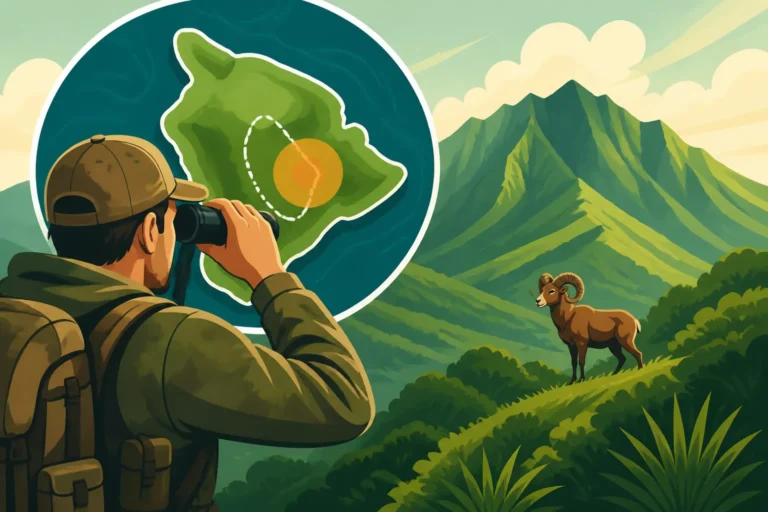
Feral goats and Mouflon sheep (on Hawaii Island and Lanai) often utilize Ohia forest openings, but their preferences can differ from pigs. Goats are often found on steeper, rockier terrain or along the dryer edges of Ohia forests where they can browse. Mouflon, typically found at higher elevations like Mauna Kea's slopes, will gravitate towards grassy openings within or bordering the mamane-naio forest, often moving between thickets and more open grazing land.
- Goats and Edges: For goats, focus on openings that abut steep cliffs, rocky outcroppings, or sharp elevation changes. They use these features for security and will often traverse the edges of Ohia forests, moving into openings to browse on young shoots and grasses. Hunting Goats on Hawaii's Coastal Cliffs can provide specific insights into their behavior in these challenging environments. In lower elevation, drier Ohia forests, they’ll often be found in more expansive clearings or along the forest boundary where it meets drier, more open country.
- Mouflon and Grazing: If you're hunting Mouflon, concentrate on higher elevation openings with good grass. They are primarily grazers and will move out of the denser Hunting Mouflon in Hawaii's Mamane Forest into open pockets to feed. Like goats, they appreciate the sun for warmth. Glassing a Hawaii Coastline for Goats offers valuable lessons in methodical glassing that applies equally to spotting Mouflon in mountain openings.
- Patience and Optics: Both goats and Mouflon can be incredibly wary. Spend extended periods glassing openings from a distance, using good binoculars or a spotting scope. They might be bedded down in plain sight but blend in perfectly with the terrain. Early morning and late afternoon are generally the best times, as they move to feed.
- Elevation Advantage: For both species, if possible, approach from above or at least from a side angle that offers a good view without silhouetting yourself. Goats, in particular, often feel more secure when they can observe below them.
Essential Gear and Safety for Ohia Forest Hunting
Hunting in Hawaii's Ohia forests is a unique challenge, demanding not just hunting skill but also robust gear and a strong emphasis on safety. The dense vegetation, steep terrain, and variable weather can quickly turn a simple hunt into a serious situation if you're not prepared.
Navigating Dense Cover and Terrain
The very nature of Ohia forest hunting—thick, often wet, and undulating—necessitates specific gear choices to ensure both success and safety.
- Footwear is King: Forget your comfortable prairie boots. You need sturdy, waterproof hiking boots with excellent ankle support and aggressive traction. You'll be traversing slippery, uneven ground, often covered in mud, lava rock, or hidden roots. Boots like those from Kenetrek or Crispi are popular for their durability and performance in challenging conditions. Walking Rough Lava Without Wrecking Your Boots is a real concern in many Ohia-lava transition zones.
- Navigation Tools: Cell service is notoriously unreliable in many remote Hawaiian hunting units. While a mapping app like GoHunt is excellent for scouting and pre-hunt planning, do not rely solely on your phone in the field. Carry a dedicated GPS unit or a map and compass as a backup. Even with a powerful app, know that No Cell Signal on a Hawaii Hunt is a common reality. Mark your vehicle, your entry point, and any key landmarks. Learning Staying Found in Dense Hawaii Rainforest is not just a good idea, it's essential for your safety.
- Rain Gear: Even on a clear morning, a sudden shower can blow in, especially on the windward sides. Lightweight, packable rain gear (jacket and pants) is a non-negotiable item. You'll be pushing through wet vegetation, and staying dry will keep you comfortable and prevent hypothermia, even in Hawaii's warmer climate.
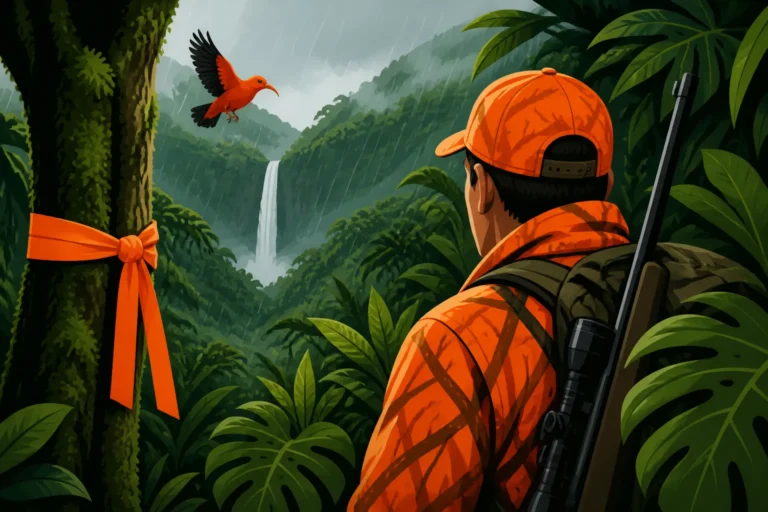
- Blaze Orange: While not always legally required for rifle hunting in all units, wearing blaze orange is a smart safety practice in dense cover, particularly when hunting during general seasons or if there's any chance of other hunters in the area. A vest or hat is usually sufficient.
- Headlamp/Flashlight: Even if you plan to be out before dark, a reliable headlamp with fresh batteries is crucial. Daylight fades quickly under the dense canopy, and if you're packing out game or unexpectedly spend more time than planned, you'll be glad for the light.
Field Care and Extraction Considerations
Successfully harvesting an animal in an Ohia forest opening is just the first part of the challenge. Getting that animal out, especially in Hawaii's climate, requires careful planning.
- Rapid Field Dressing and Cooling: Hawaii's heat and humidity are relentless, and meat can spoil quickly. As soon as you make a kill, get to work on field dressing the animal. Remove the entrails immediately to begin the cooling process. If you have ice packs or game bags, use them to cool the carcass as much as possible. Quartering the animal and putting the meat into breathable game bags is often the best strategy for larger animals like pigs or Mouflon. Read up on Field Dressing Axis Deer in Hawaii Heat and Cooling Meat Fast on a Hawaii Hunt for more detailed guidance.
- Planning Your Extraction Route: Before you even pull the trigger, have a rough idea of how you'll get the animal out. Is the opening near a trail? Will you need to drag it through thick brush, or can you quarter it and backpack it out? If you're deep in a gulch or on a steep slope, getting a pig out of a Hawaii gulch can be an incredibly strenuous and time-consuming task. Consider how much weight you can realistically carry and if you'll need to make multiple trips or call for assistance.
- Water and Hydration: Carrying ample water is non-negotiable. The humidity, strenuous hiking, and high temperatures will dehydrate you rapidly. Bring more than you think you'll need. Electrolyte packets can also be a lifesaver.
- First Aid Kit: A basic first aid kit with bandages, antiseptic wipes, pain relievers, and any personal medications is essential. Cuts and scrapes from sharp vegetation are common, and a twisted ankle on uneven ground is a real possibility.
- Communication: Even without cell service, carry a fully charged phone for emergencies if a signal is found, or consider a satellite communication device like a Garmin inReach for true peace of mind in remote areas.
| Species | Primary Reason for Using Ohia Openings | Best Time to Hunt in Openings | Key Sign to Look For |
|---|---|---|---|
| Feral Pig | Rooting for food, wallowing, travel | Dawn, Dusk, Rainy Days | Fresh rooting, wallows, tracks, scat |
| Feral Goat | Browsing, sunning, security | Early Morning, Late Afternoon | Tracks, scat, browse lines on edges |
| Mouflon Sheep | Grazing, sunning, bedding | Early Morning, Late Afternoon | Tracks, beds, scat, rubs on small trees (higher elevations) |
Hunting Ohia forest openings offers a uniquely Hawaiian hunting experience, blending the thrill of the chase with the challenge of navigating one of the planet's most verdant and dynamic ecosystems. By understanding why animals use these crucial breaks in the canopy, and by meticulously planning your approach and gear, you'll be well on your way to a successful and memorable hunt. Remember, respect for the land and the animals is paramount. Take your time, be safe, and immerse yourself in the wild beauty of Hawaii.
Disclaimer
Hunting in Hawaii involves inherent risks. Always consult the latest rules and regulations published by the Hawaii Department of Land and Natural Resources (DLNR) Division of Forestry and Wildlife (DOFAW) before heading afield. Be aware of local conditions, obtain necessary licenses and permits, and prioritize safety for yourself and others. This guide is for informational purposes only and does not substitute for official regulations or professional guidance.