Hunting a Hawaii Lava Kipuka
Hunting a lava kipuka in Hawaii isn't just a walk in the park; it's often a venture into some of the most challenging, yet rewarding, terrain the islands have to offer. Hunters often find themselves staring at these isolated pockets of green amidst vast, unforgiving lava flows, wondering how to even begin. This guide is here to demystify the art of tracking game within these unique geological formations, helping you navigate the broken rock and dense vegetation to find success.
Understanding the Kipuka Environment for Hunting
Before you even think about lacing up your boots, it's crucial to grasp what a kipuka truly is and why it's such a magnet for game animals. The term "kipuka" itself is Hawaiian, referring to an island of older land surrounded by a newer lava flow. Imagine a forest, pasture, or even a small hill that was spared when a river of molten rock flowed around it, leaving it isolated. These geological anomalies create micro-ecosystems that are profoundly different from the surrounding barren lava.
These pockets of older land typically retain richer soil, which supports a wider variety of vegetation, often much thicker and taller than what might grow on newer flows. This lush growth provides vital food sources, water catchments, and crucially, an incredible amount of cover for animals seeking refuge from the open elements or hunting pressure. For a feral pig, goat, or even a mouflon sheep, a kipuka is an oasis, offering security and sustenance that the harsh lava fields simply cannot. Understanding these dynamics is the first step to unlocking their hunting potential.
The Unique Geology and Vegetation of Kipukas
Kipukas are fascinating geological features, born from the raw power of volcanic eruptions. When lava flows across the landscape, it doesn't always cover everything. Sometimes, a patch of pre-existing land remains untouched, forming an "island" within the sea of hardened lava. These islands can vary dramatically in size, from small, brushy mounds to large, forested areas spanning acres. The age of the lava flow surrounding the kipuka also plays a role; older flows might have more established, albeit sparse, vegetation, while newer flows present stark, almost moon-like landscapes.
The vegetation within a kipuka is often a relic of what the landscape looked like before the eruption. You might find towering ʻōhiʻa trees, dense ʻuluhe fern beds, or thick tangles of invasive guava and ginger. This dense cover provides an ideal habitat for Hawaii's game animals. For instance, pigs will find ample rooting opportunities and bedding areas in the thick undergrowth, while goats might browse on the edges or seek shelter in the more open, rocky sections within. This contrast between the barren, jagged lava and the vibrant, green interior is key to understanding where animals will congregate.
Why Game Animals Gravitate Towards Kipukas
It’s no secret that game animals are creatures of habit, always seeking the path of least resistance to food, water, and safety. Kipukas provide all three in spades. Imagine being a feral pig or a wild goat trying to survive on a vast, rocky lava field where food is scarce and cover is almost nonexistent. A kipuka, with its abundance of forage and impenetrable thickets, becomes an irresistible sanctuary. They offer a concentrated area of resources that can sustain an entire herd or family group.
Moreover, the isolation of a kipuka often means less human disturbance. Animals can feel incredibly secure within these natural fortresses, venturing out onto the surrounding lava fields only when necessary, perhaps at dawn or dusk, to browse on sparse grasses or new growth. This makes kipukas prime locations for hunting, as you're targeting areas where animals feel safest and spend the majority of their time. It’s a strategic advantage for hunters willing to put in the effort to reach and explore them. You'll often find concentrated animal sign within, signaling their presence.
Scouting and Accessing a Lava Kipuka
Successfully hunting a lava kipuka hinges on meticulous scouting and careful planning for access. These aren't your typical roadside hunting spots; they demand a significant investment of time and effort to locate, understand, and eventually enter. Trust me, I've spent countless hours staring at topographic maps and satellite imagery, trying to puzzle out the best approach to these remote green patches. The sheer ruggedness of the surrounding lava can make an otherwise short distance feel like an expedition.
The first step is always digital reconnaissance, using mapping tools to pinpoint potential kipukas that might hold game. Then comes the real work: observing these areas from a distance, perhaps with powerful optics, before attempting to navigate the treacherous ground. Without proper preparation, you could easily find yourself in a dangerous situation, miles from any recognizable trail, with no cell signal, and surrounded by razor-sharp a'a lava.
Identifying Promising Kipukas on Maps and Satellite Imagery
Before you even step foot in the field, modern mapping tools are your best friends for hunting Hawaii's lava kipukas. Programs like Google Earth, Gaia GPS, or onX Hunt (which is fantastic for visualizing land status) allow you to scout from the comfort of your home. What you're looking for are distinct patches of green surrounded by the dark, textured patterns of lava flows. Pay close attention to the size of the kipuka – larger ones often hold more animals and offer more complex terrain within, while smaller ones might be easier to hunt quickly.
Zoom in and look for any clues about the interior of the kipuka. Are there discernible trails? Are there any indications of water sources, like darker green patches that might suggest a wetter microclimate? Also, critically assess the surrounding lava. Is it predominantly pahoehoe (smoother, ropey lava) or a'a (sharp, broken, and extremely difficult to walk on)? This will directly impact your access strategy. Identify potential entry and exit points, looking for any slight depressions or less rugged sections that might offer a path through the lava. Remember, while a map can show you the green, it won't tell you how dense that green truly is, or how tall the surrounding walls of hardened lava might be. For a more detailed look at using digital tools, check out Using onX for Hawaii Land Status.
Navigating the Challenges of Lava Terrain
Accessing a lava kipuka is almost always the hardest part of the hunt. The surrounding lava flows present significant physical barriers. A'a lava, in particular, can be brutally sharp, tearing up boots and skin, and making every step a calculated risk. It's slow going, often requiring you to pick each foot placement carefully. Pahoehoe, while smoother, can be equally deceptive, with hidden cracks, unstable crusts, and undulating surfaces that make for an exhausting trek. Forget about rushing; your pace will be dictated by the terrain.
You'll need sturdy, high-quality boots with stiff soles and ankle support to protect against the constant pounding and sharp edges. Gloves are also a must for handholds. Always carry more water than you think you'll need, as the dark lava radiates heat, and the effort of navigating it will quickly dehydrate you. Cell service is often nonexistent in these remote areas, so a satellite messenger or a GPS device is essential for safety. Be prepared for a long, arduous journey just to get to the edge of your target. Read up on Walking Rough Lava Without Wrecking Your Boots for more specific advice on footwear.
Observational Scouting and Planning Your Approach
Once you've identified a promising kipuka on your map, the next step is observational scouting from a distance, if possible. This might involve driving to a vantage point with good optics and spending time glassing the edges of the kipuka, especially during the early morning or late afternoon when animals are most active. Look for game trails leading into or out of the kipuka onto the lava, or for animals browsing along the periphery. This can give you crucial insights into their movement patterns.
Plan your approach meticulously. Consider wind direction – the wind can swirl unpredictably around cinder cones and lava formations, so hunting downwind in Hawaii's shifting thermals is always a good idea. Identify a safe, manageable route through the lava to the kipuka's edge. Think about where you'll park your vehicle, and if there are any old jeep trails or faint paths you can utilize. Always have an exit strategy, and communicate your plans with someone who isn't hunting. If you're going into an area with No Cell Signal on a Hawaii Hunt, this pre-planning is even more critical.
Hunting Strategies for Kipuka Game
Once you’ve successfully navigated the daunting lava and reached the green oasis of a kipuka, the real hunting begins. The dense, often claustrophobic vegetation within these areas demands a different approach than open-country hunting. You'll need to adjust your tactics based on the species you're pursuing, and be prepared for close-quarters encounters where quick decisions and accurate shooting are paramount.
The thick cover means visibility is often limited to mere yards, forcing you to rely heavily on your ears and nose, and an acute understanding of how animals move through such dense environments. Whether you're still-hunting slowly or employing the aid of dogs, patience and stealth will be your most valuable assets. Don't underestimate the intelligence of animals that call these secure hideouts home; they know their sanctuary intimately.
Still-Hunting and Tracking in Dense Kipuka Cover
Still-hunting within a kipuka is a test of patience and acute senses. The goal is to move as slowly and quietly as possible, pausing frequently to listen and scan for any sign of movement. You’ll be looking for subtle disturbances in the foliage, the flicker of an ear, or the glint of an eye. With limited visibility, every slight sound becomes critical – a branch snapping, a rustle in the leaves, the distinctive "whoof" of a pig.
Focus on fresh tracks, droppings, and feeding areas. Pigs, especially, will leave obvious rooting patterns. As you move, try to anticipate where an animal might be bedded or feeding based on the cover and terrain. The dense vegetation often creates natural tunnels and runways; these are excellent places to focus your attention. You'll need to be prepared for very short-range shots, so ensure your rifle or bow is capable of quick, precise aiming in tight spaces. For more on reading animal sign, check out Reading Pig Sign Along a Muddy Trail.
Dog Hunting for Pigs and Goats in Kipukas
For many local hunters, using dogs is the most effective way to hunt feral pigs in the dense, unforgiving terrain of Hawaii's kipukas. A well-trained team of bay dogs and catch dogs can systematically work through thick cover that would be impossible for a human hunter to penetrate quietly. The dogs flush out and bay the pigs, holding them in place until the hunter can get in for a clean, ethical shot or dispatch with a knife.
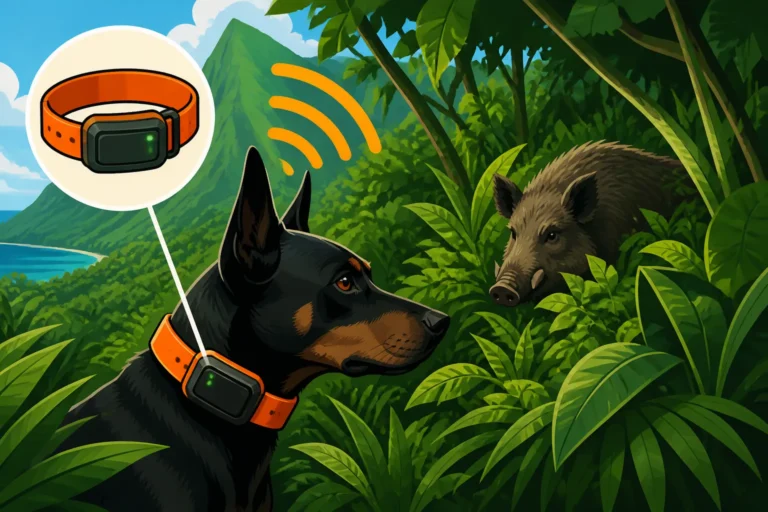
While dog hunting is primarily associated with pigs, some hunters also use dogs to locate and bay feral goats, especially in areas with extremely dense brush. It's a high-energy, fast-paced method that requires excellent physical condition and a deep understanding of dog behavior and safety. This approach minimizes the risk of losing an animal in the impenetrable tangles, as the dogs are often equipped with GPS collars, allowing hunters to track their location. If you're considering this method, it's vital to be familiar with Pig Hunting With Dogs in Hawaii and ensure you understand all local regulations regarding dog hunting.
Shot Placement and Recovering Game in Challenging Terrain
When you do get a shot opportunity in a kipuka, it's often fleeting and at close range. Ethical shot placement is paramount to ensure a quick kill and minimize the chance of a lost animal. For pigs and goats, a shot to the vitals (heart/lungs) is always preferred. With the dense cover, a wounded animal can disappear instantly, making recovery incredibly difficult.
If an animal does run after the shot, immediately mark the exact spot where it was standing and where you last saw it. Begin your blood trail search meticulously, looking for any drops, smears, or disturbed vegetation. The dark, often damp ground within kipukas can make blood trailing tough. Take your time, move slowly, and be patient. Losing an animal in these thick, isolated areas is heartbreaking and a disservice to the animal. A solid hit means a much easier recovery. When it comes to getting an animal out of these tough spots, you might find some useful tips in Getting a Pig Out of a Hawaii Gulch and Packing Meat Out of a Hawaii Gulch.
Gear and Safety Considerations for Kipuka Hunting
Hunting a Hawaii lava kipuka is not for the ill-prepared or faint of heart. The combination of razor-sharp lava, dense, often thorny vegetation, remote locations, and unpredictable weather demands specific gear and a heightened awareness of safety. It's an environment that can quickly turn a memorable hunt into a miserable, or even dangerous, ordeal if you're not equipped to handle its unique challenges.
From protecting your feet and body to ensuring you can navigate and communicate, every item in your pack plays a critical role. Thinking ahead about hydration, potential injuries, and how you'll manage your harvest in the heat and humidity will set you up for success and, more importantly, a safe return.
Essential Gear for Lava and Thick Brush
Your gear choices can make or break a kipuka hunt. First and foremost, invest in the best hiking boots you can afford. They need to be extremely durable, offer excellent ankle support, and have stiff soles to withstand the brutal lava. Think boots designed for mountaineering or heavy-duty backpacking, not lightweight trail runners. Long pants made of tough, rip-resistant material are crucial to protect your legs from sharp lava and thorny plants like kiawe and guava.
A sturdy backpack capable of carrying water, first-aid, food, and emergency supplies is also essential. Due to the limited visibility, a headlamp is a non-negotiable item, even if you plan to be out only during daylight hours. A good, sharp hunting knife, a basic survival kit, and a whistle are also critical. Consider a stout walking stick or trekking poles for stability on the uneven lava and to push through dense brush.
Here's a quick rundown of key gear:
| Item | Importance for Kipuka Hunting |
|---|---|
| Heavy-Duty Boots | Essential for ankle support and protection against sharp lava and thorns. |
| Durable Long Pants | Prevents cuts and scrapes from lava and dense, thorny vegetation. |
| Navigation Tools | GPS device, satellite messenger (e.g., Garmin InReach), compass, and detailed maps (GoHunt often has good ones). |
| Plenty of Water | Lava absorbs heat, leading to rapid dehydration; always carry more than you think you need. |
| First-Aid Kit | For cuts, scrapes, blisters, and other common injuries in rough terrain. |
| Gloves | Protect hands when traversing rough lava or pushing through thorny brush. |
| Headlamp/Flashlight | For early starts, late finishes, or navigating unexpected low-light conditions. |
| Sharp Hunting Knife | For field dressing and general utility. |
| Emergency Whistle | For signaling if you get lost or need help. |
| Rain Gear | Weather can change quickly, especially on larger islands. |
Safety Protocols for Remote and Treacherous Areas
Safety in kipukas goes beyond just having the right gear; it's about a mindset of caution and preparedness. Always hunt with a partner if possible, and stick together. If solo, meticulously share your hunt plan, including your intended route, entry/exit points, and expected return time, with someone reliable who is not hunting with you. Given the frequent lack of cell service in these remote areas, a satellite communication device like a Garmin inReach is a worthwhile investment for emergency communication.
Be acutely aware of your surroundings. Lava can be unstable, and steep banks or hidden crevices can lead to serious falls. Watch for loose rocks, especially on the edges of kipukas where they meet the lava flow. The dense vegetation can also conceal hazards like fallen logs or holes. Stay hydrated, take breaks, and listen to your body. Exhaustion can lead to mistakes. Understanding No Cell Signal on a Hawaii Hunt and having a plan for it is absolutely critical when venturing into these isolated zones.
Field Care and Meat Preservation in Warm Climates
Once you've successfully harvested an animal in a kipuka, the challenge shifts to field care and meat preservation. Hawaii's warm, humid climate means meat can spoil rapidly if not handled correctly. The priority is to gut the animal immediately to allow the carcass to cool. Skinning the animal in the field can further aid cooling, but be mindful of flies and contamination.
If you have a long trek out over lava, consider quartering the animal and packing it out in game bags. This distributes the weight and makes it more manageable than dragging a whole carcass. Bring plenty of ice and coolers in your vehicle to get the meat cooled down as quickly as possible once you reach it. For more in-depth advice on keeping your meat fresh, especially after a tough haul, check out Field Care in Hawaii's Heat and Humidity. This extra effort ensures that your hard-won venison, goat, or pork doesn't go to waste.
Disclaimer
Hunting in Hawaii carries inherent risks. Always consult the latest Hawaii Department of Land and Natural Resources (DLNR) hunting regulations, secure all necessary licenses and permits, and prioritize safety. The information provided here is for educational purposes and personal planning; it does not replace official regulations or professional guidance. Be aware of private land boundaries and respect cultural practices.