Carrying Your License in the Field
We've all been there: that moment of panic when you reach for your wallet or phone, searching for that crucial document, only to realize it might not be where it should be. For hunters in Hawaii, forgetting your valid hunting license when you head into the field isn't just a minor oversight; it can derail your entire day, lead to fines, or even more serious repercussions. This guide will walk you through exactly what you need to carry, the different ways you can keep your license accessible, and how to avoid those heart-stopping moments of "oh no, where is it?"
The Absolute Requirement to Carry Your License in Hawaii
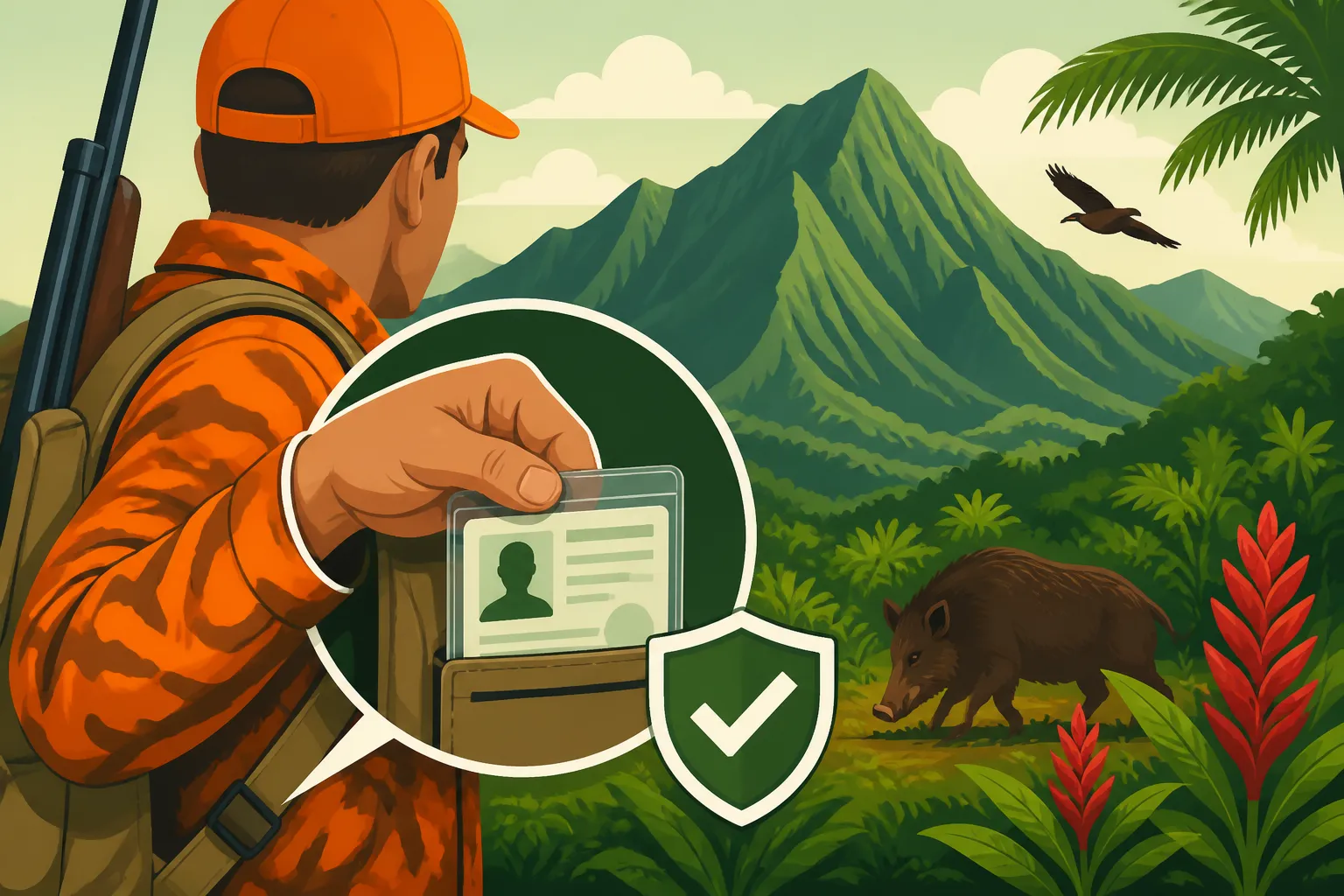
Let's get straight to it: when you're out hunting in Hawaii, whether you're chasing pigs in a wet gulch on the Big Island or glassing for Axis deer on Maui, you absolutely must have your valid Hawaii hunting license on your person. This isn't just a suggestion; it's a non-negotiable regulation set forth by the Division of Forestry and Wildlife (DOFAW). Think of it as your hunting ID card, proof that you've completed all the necessary steps, paid your dues, and are legally authorized to be out there pursuing game.
It's easy to assume that because you bought your license online, or because your information is in some system, you're good to go. But that's not how it works in the field. If a conservation officer approaches you for a compliance check, they need to see that physical or approved digital proof right then and there. They're not going to take your word for it, nor should they be expected to. Their job is to ensure everyone is hunting legally and safely, and having your license readily available is a fundamental part of that. This requirement extends beyond just the general hunting license; if you're pursuing specific game that requires a separate permit-tag, like Axis deer on Lanai or certain Mouflon hunts on Mauna Kea, you'll need those tags on hand, too, and properly attached to any harvested animal. Understanding all the nuances of Hawaii Hunting Licenses and What They Cost is the first step, but remembering to carry it is just as vital.
Why This Rule Exists
The rule requiring you to carry your license isn't just about making your life harder; it serves several critical purposes for wildlife management and law enforcement. First and foremost, it allows conservation officers to quickly verify that you are a legitimate hunter. This helps deter poaching and ensures that only those who have completed Hawaii Hunter Education Requirements and paid the appropriate fees are harvesting game.
Secondly, it's a matter of accountability. Your license ties you to the regulations, seasons, and bag limits specific to the unit you're hunting in. If there's ever an incident, such as an accidental discharge, a boundary dispute, or even just needing identification in an emergency, your hunting license provides official documentation. It helps track hunter activity, which in turn informs future wildlife management decisions regarding Hawaii's Hunting Units and How They Work and population monitoring. Without this simple piece of paper or digital display, the entire system would become significantly more challenging to regulate, opening the door to abuse and unsustainable practices that could harm Hawaii's unique ecosystems and game populations.
Physical Versus Digital: What Hawaii Accepts in the Field
The good news is that Hawaii, like many states, has evolved with technology. You're generally not stuck with just a flimsy piece of paper anymore, though that's still perfectly acceptable. Understanding your options can help you choose the best way to carry your license for your specific hunting style and the rugged terrain you might encounter.
Traditionally, a paper copy of your hunting license has been the standard. Many hunters will print their license, sign it, and then laminate it to protect it from the relentless humidity, sudden downpours, or the sweat of a long trek through thick brush. This method is still highly reliable and accepted by all conservation officers. You can fold it and slip it into a wallet, a chest pocket, or a waterproof pouch.
However, the Department of Land and Natural Resources (DLNR) and DOFAW recognize the convenience of digital options. You can often present your license on a smartphone or other electronic device. This is where apps like GoHunt Hawaii come into play. Many hunters find that storing a digital copy, whether a PDF of your printed license or directly through an official app, is incredibly convenient. Imagine you’ve just hiked into a remote gulch, far from your truck, and suddenly remember you forgot your laminated card. If you have it on your phone, you’re still good to go, provided your device has power and the screen is legible. This flexibility is a huge benefit for those who prefer to minimize clutter or who might be prone to misplacing small paper documents.
The GoHunt Hawaii Platform for Digital Access
The GoHunt platform (which is administered by the State of Hawaii, Department of Land and Natural Resources (DLNR), Division of Forestry and Wildlife (DOFAW), often referred to as Go Hunt Hawaii) has become an invaluable resource for hunters in the islands. Not only is it where you typically purchase your Hawaii Resident Hunting License Cost or Hawaii Nonresident Hunting License Cost, but it also serves as a central hub for managing your hunting profile, including your licenses and permit-tags.
When you purchase your license through GoHunt, you'll usually have the option to print a physical copy right away. But crucially, you can also access your license information directly through the GoHunt website or, in some cases, through an integrated mobile app or by simply saving the PDF to your device. This means your license is just a few taps away on your smartphone. Many hunters find this method particularly appealing because it reduces the chance of losing a physical card, especially when you're Hunting Hawaii's Volcanic Terrain or navigating dense rainforests. Just make sure your phone is charged! There's nothing worse than needing to show your license and your battery dies at the critical moment, especially in areas with No Cell Signal on a Hawaii Hunt.
Electronic Versus Physical Display Comparison
To help you decide which method works best for you, here's a quick comparison:
| Feature | Physical Printed/Laminated License | Digital License (via GoHunt, PDF on phone) |
|---|---|---|
| Durability | Excellent if laminated; susceptible to tearing/damage otherwise. | Depends on device durability; immune to water/physical damage if backed up. |
| Accessibility | Requires carrying a physical card; easily misplaced. | Requires a charged device; accessible if phone is lost/damaged via cloud/backup. |
| Verification | Universally accepted by officers. | Generally accepted, but relies on legible screen and device power. |
| Convenience | Simple, no battery needed. | High convenience if you always carry your phone; can be cumbersome if phone dies. |
| Backup | Can carry multiple copies. | Easily backed up to cloud, email, or other devices. |
| Cost | Cost of printing/laminating. | No additional cost beyond device. |
Best Practices for Ensuring Compliance and Avoiding Issues
Even with digital options, it’s easy to get complacent. That moment of scrambling to find your license when a game warden pulls up is not one you want to experience. Here are some actionable tips to ensure you’re always compliant and ready for any check.
First, make it a habit. Just like you check to ensure you have your truck keys, your rifle, or your bow, add your hunting license to that mental checklist before you even leave the house. Consider it part of your essential What to Pack for a Hawaii Hunt gear. If you use a specific hunting backpack, always keep your license in a dedicated, easily accessible, waterproof pocket. This goes for all necessary documents, including any special permit-tags.
If you opt for a physical license, consider laminating it right after you purchase it. Local print shops or office supply stores can do this quickly and affordably. A laminated card will stand up to the elements – the moisture, the dirt, and the general abuse of being out in the field. Carry it in a secure, waterproof holder. A Ziploc bag inside a pocket works in a pinch, but a dedicated dry bag or a wallet-style case designed for outdoor use is even better. Remember to sign your license, as an unsigned license is often considered invalid.
For those relying on a digital license, preparedness is key. Always charge your phone fully before heading out. If you're going on a multi-day hunt or into an area with no charging capabilities, consider carrying a portable power bank. Ensure the PDF or the GoHunt app is readily accessible on your phone's home screen or in a clearly labeled folder. It’s also a good idea to email a copy of your license to yourself and perhaps a hunting buddy, so you have multiple ways to access it if your primary device fails. While the Using OuterSpatial Instead of a Paper Card option is excellent for checking in and out of units, having your actual license document handy is still paramount.
Creating a Pre-Hunt Checklist
To truly solidify these best practices, I highly recommend creating a physical or digital pre-hunt checklist. This isn't just for first-timers; even seasoned veterans forget things! Your checklist should include:
- Valid Hawaii Hunting License: Physical (laminated and signed) or Digital (on charged phone, backed up).
- Permit-Tags: Any specific tags required for your hunt, ready to be attached.
- Hunter Education Card: While often not required to be carried every time after your first license purchase, it's good to have a digital copy as backup, especially for non-residents using a Nonresident Letter of Exemption.
- Photo ID: Driver's license or state ID to verify your identity.
- Unit Check-In/Check-Out Confirmation: If you're hunting a unit that requires Checking In and Out of Hawaii Hunting Units, ensure you have confirmation or are ready to use the app.
- Pen/Pencil: For filling out tags or check-in cards.
- Waterproof Bag/Pouch: To protect all documents.
By systematically going through this list before each outing, you significantly reduce the risk of forgetting something vital.
Consequences of Not Having Your License in the Field
So, what actually happens if you're checked by a conservation officer and you don't have your license on you? The short answer is: nothing good. The long answer involves a range of potential issues, from minor inconveniences to significant legal penalties, depending on the circumstances and the discretion of the officer.
At a minimum, you'll likely receive a citation. This is a common consequence and usually involves a fine. While the exact amount can vary, these fines are not insignificant and are certainly more costly than taking a few seconds to ensure your license is packed. The officer might also require you to immediately leave the hunting area, effectively ending your hunt for the day, or even the season, depending on the severity of the infraction or if it's a repeat offense. This can be incredibly frustrating if you've put in a lot of effort, time, and money into your hunt.
In more serious cases, or if there are other violations involved (like hunting out of season, hunting without proper tags, or hunting in a closed area), not having your license can complicate things further. It might lead to your equipment being confiscated, and potentially even arrest. While this is less common for a simple "forgotten license" situation, it's a possibility if the officer suspects you're trying to evade identification or if other illegal activities are suspected. Remember, Penalties for a Hunting Violation can range from fines to loss of hunting privileges, and even jail time for severe offenses.
Avoiding Unnecessary Stress and Penalties
The stress of being caught without your license is something no hunter wants to experience. Beyond the legal ramifications, it can damage your reputation as a responsible hunter and create an unnecessary negative interaction with law enforcement. It also reflects poorly on the hunting community as a whole.
The best way to avoid these headaches is simple: always carry your license. If you realize you've forgotten it before you enter the field, turn around and go get it. It's far better to lose a bit of hunting time than to face fines, lose your equipment, or have your hunting privileges revoked. If you've been caught without your license and want to understand what might happen, reading up on What Happens If You Forget to Check Out might give you some insight into how DOFAW handles compliance issues, even if it's not directly related to your license.
In Hawaii, hunting is a privilege, not a right, and that privilege comes with responsibilities. Carrying your license is one of the most basic, yet crucial, responsibilities you have as a hunter. Make it a habit, protect your documents, and you'll ensure your time in Hawaii's beautiful hunting grounds is stress-free and legal.
Disclaimer
Please remember that hunting regulations in Hawaii are subject to change. Always consult the most current regulations published by the Hawaii Department of Land and Natural Resources (DLNR) and the Division of Forestry and Wildlife (DOFAW) before heading into the field. This guide is for informational purposes only and should not be considered legal advice.