Pheasant Bag Limits by Species
Navigating the specific hunting regulations for game birds in Hawaiʻi can feel like trying to track a pheasante through dense 'ohi'a forest – it's often confusing and the details seem to shift with every rustle of the leaves. Many hunters, especially those new to the islands or visiting, struggle to keep track of which pheasant species has what bag limit, and where those rules apply. This guide is here to untangle that, giving you a clear breakdown of the pheasant bag limits by species across the Hawaiian islands, so you can hunt with confidence and stay within the law.
Understanding Hawaii's Pheasant Species for Hunting
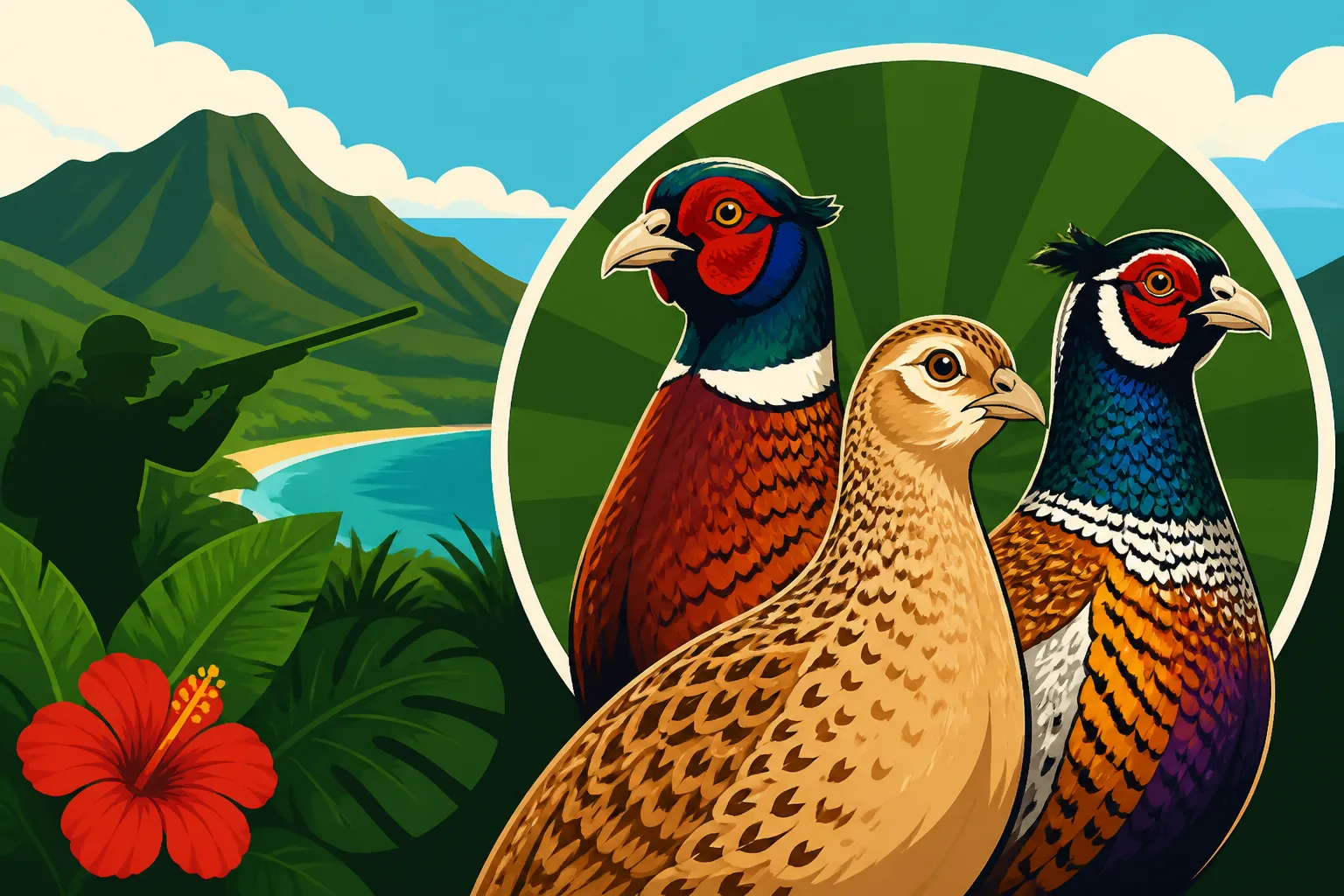
When we talk about pheasant hunting in Hawaiʻi, we're generally referring to three distinct species, each with its own quirks, preferred habitats, and, yes, different bag limits. Knowing what you're looking for before you even step foot in the field is half the battle.
Ring-necked Pheasant: The Classic Upland Challenge
The Ring-necked Pheasant (Phasianus colchicus) is probably the most recognized pheasant worldwide, and it's a popular game bird here in Hawaiʻi too. They were introduced to the islands way back in the late 1800s, primarily for sport hunting. These birds are identifiable by the male's iridescent green head, a distinctive white neck ring (though not all males have it), and mottled brown body plumage. The hens are a more subdued brown, offering excellent camouflage.
You'll typically find Ring-necked Pheasant in the drier, more open upland areas, often near agricultural fields, pastures, and brushy terrain where they can find both cover and food. Think of places with kiawe, buffelgrass, and scattered clumps of haole koa. They're strong runners and can be incredibly challenging to flush, often holding tight until you're right on top of them before bursting into explosive flight. Hunting them often involves covering a lot of ground, either still-hunting slowly through promising cover or, for those with good dogs, working the edges of fields and dense brush. Their wary nature and impressive flight make them a rewarding bird to pursue, especially if you enjoy the classic upland hunting experience.
Green Pheasant: A Distinctive Island Fowl
Less common than the Ring-necked, but present on some islands, is the Green Pheasant (Phasianus versicolor). These beautiful birds are actually considered the national bird of Japan, and they were introduced to Hawaiʻi, primarily the Big Island and Kauaʻi, in the early 1900s. As their name suggests, the males sport a much more vivid, shimmering green plumage over their entire body, especially on the head and neck, compared to the Ring-necked's more muted tones. They typically lack the prominent white neck ring, which is often the easiest way to tell them apart in the field, even at a distance. If you're wondering, "How do I know if I'm looking at a Green or a Ring-necked?", just remember that brilliant, almost metallic green sheen on the body of the male.
Green Pheasant tend to favor similar habitats to Ring-necks—grassy fields, open woodlands, and agricultural edges—but sometimes they can be found in slightly wetter, denser vegetation. Their behavior is also quite similar; they're adept at running and hiding, making them a true test for any bird hunter. Identifying them correctly is crucial, not just for the thrill of spotting a rarer bird, but because the bag limits can sometimes be tied to species. For more on distinguishing between these two, you might want to read our guide on Telling a Ring-Necked From a Green Pheasant.
Kalij Pheasant: The Wet Forest Ghost
Now, if you're looking for a completely different pheasant hunting experience, the Kalij Pheasant (Lophura leucomelanos) is your bird. These are native to the Himalayan foothills and were introduced to the Big Island and Oʻahu, and possibly other islands, in the mid-20th century. Males are striking, with glossy blue-black bodies, red facial wattles, and sometimes a white crest, depending on the subspecies. The hens are a more camouflaged brown. Unlike their upland cousins, Kalij Pheasant prefer the dense, wet, and often steep rainforests and gulches of Hawaiʻi. They thrive in areas with thick undergrowth, ginger, and guava, making them incredibly challenging to hunt. They're often referred to as "the wet forest ghost" because of how quickly and silently they can disappear into the thick vegetation.
Hunting Kalij Pheasant is often a test of patience and stealth. They're more likely to run than fly, navigating the dense undergrowth with surprising speed. A good bird dog that can work through thick cover is invaluable, as is knowing Where Kalij Pheasant Live in Wet Forest. You'll typically find them scratching for food on the forest floor, and their calls, a series of clucking sounds, can sometimes give away their presence. If you've never hunted in Hawaiʻi's wet forests, trust me, it's an experience unto itself – humid, challenging terrain, and the constant feeling that the forest is watching you. For a deeper dive, check out What Hawaii's Kalij Pheasant Looks Like.
Navigating Pheasant Bag Limits by Species
This is where the rubber meets the road. Knowing which bird is which is only half the battle; the other half is understanding how many you can legally take home. Hawaiʻi's hunting regulations, set by the Department of Land and Natural Resources (DLNR) and its Division of Forestry and Wildlife (DOFAW), are designed to manage game populations and ensure sustainable hunting opportunities. These limits can vary not only by species but also by island and even specific hunting unit.
Breaking Down the Daily Limits for Each Pheasant Type
Generally speaking, for most public hunting units across the islands, the daily bag limits for pheasants in Hawaiʻi break down like this:
- Ring-necked Pheasant: The typical daily bag limit for Ring-necked Pheasant is two (2) birds. This applies to units on islands like Kauaʻi, Maui, and the Big Island where they are present.
- Green Pheasant: Similar to the Ring-necked, the general daily bag limit for Green Pheasant is also often two (2) birds. Again, this is relevant for islands where they are found, such as the Big Island and Kauaʻi. It's not uncommon for regulations to combine Ring-necked and Green Pheasant into a single "pheasant" category with a combined limit of two.
- Kalij Pheasant: This is where things often differ. Due to their prevalence and sometimes their impact on native ecosystems in certain wet forest areas, Kalij Pheasant often have a more generous bag limit. On the Big Island and Oʻahu, the daily bag limit is frequently set at five (5) birds. In some specific units, particularly on Oʻahu where they are considered more invasive, there might even be no bag limit for Kalij Pheasant. This encourages more hunters to pursue them, aiding in population control efforts.
It is absolutely crucial to remember that these are general guidelines. Bag limits can change annually, and specific units might have unique regulations. For example, a particular Game Management Area (GMA) on the Big Island might have different rules than a Forest Reserve on Kauaʻi. Always, and I mean always, consult the most current DOFAW hunting regulations specific to the island and unit you plan to hunt. Websites like GoHunt or the official DLNR website are your best friends here for the latest updates.
Here's a quick reference table for general pheasant bag limits:
| Pheasant Species | General Daily Bag Limit | Primary Islands/Habitats | Notes |
|---|---|---|---|
| Ring-necked Pheasant | 2 birds | Kauaʻi, Maui, Hawaiʻi Island (drier uplands) | Can be combined with Green Pheasant limit in some units. |
| Green Pheasant | 2 birds | Hawaiʻi Island, Kauaʻi (drier uplands, open woods) | Often combined with Ring-necked Pheasant limit. |
| Kalij Pheasant | 5 birds | Hawaiʻi Island, Oʻahu (dense wet forests & gulches) | Some specific units may have no bag limit, check local regulations. |
Season Lengths and General Rules Affecting Pheasant Harvest
Bag limits aren't the only thing to keep an eye on. Pheasant seasons in Hawaiʻi are typically open for a defined period, and often only on specific days of the week. Most game bird seasons, including pheasant, are confined to Hawaii's Weekend and Holiday Hunting Rules and run on Saturdays, Sundays, and state holidays within the designated season dates. The season itself usually runs for several months, often starting in early November and continuing through January or February, but again, this can vary by island and unit. For instance, you'll want to know Hawaii Game Bird Season Opening Day and When Hawaii's Game Bird Season Ends for your specific target area.
Hunting hours for game birds are also regulated, typically from "one-half hour before sunrise to one-half hour after sunset," which gives you ample time but still requires adherence to legal shooting hours for game birds.
It's also important to consider the overall health of the bird populations. DOFAW continually monitors game bird numbers, and sometimes, seasons can be shortened, bag limits reduced, or even units closed temporarily if populations are struggling due to drought, disease, or other environmental factors. This happened recently in some areas experiencing severe drought, impacting bird survival. Always double-check for any last-minute announcements or changes before heading out.
Practical Considerations for Pheasant Hunters
Beyond just knowing the numbers, there are several practical steps and ethical considerations every pheasant hunter in Hawaiʻi should keep in mind. The unique island environments demand a thoughtful approach to hunting.
Checking Current Regulations and Permitting
I can't stress this enough: always, always, always check the most current regulations before you hunt. This isn't just a suggestion; it's a necessity. The official DOFAW website is the primary source, but the GoHunt Hawaii portal is also an invaluable resource for hunters. This is where you'll buy your Hawaii Hunting Licenses and What They Cost and your Hawaii Game Bird Stamp Cost and Who Needs It if you're a resident or nonresident. GoHunt also allows you to find unit information, check in and out, and view current announcements.
Here’s why it’s so critical:
- Regulations Change: Bag limits, season dates, and even open units can be modified at any time due to wildlife management needs, weather conditions (like drought affecting bird numbers), or safety concerns. What was true last year might not be true this year.
- Unit-Specific Rules: While there are general statewide regulations, many hunting units have their own specific rules. A unit might be open for pheasant hunting, but perhaps only on certain days, or with an archery-only restriction, or with a different bag limit for a particular species. This level of detail is usually in the individual island hunting guides published by DOFAW.
- Permitting: Make sure you have the correct Hawaii hunting licenses and any necessary game bird stamps. For some units, you might also need a specific permit beyond the general license. GoHunt is the centralized system for all these. Ensuring you're properly licensed and permitted helps fund conservation efforts in Hawaiʻi, which ultimately benefits the game bird populations you're pursuing.
Ethical Hunting and Conservation Practices
Hunting in Hawaiʻi is not just about filling your bag; it's about being a responsible conservationist. With limited land area and delicate ecosystems, every hunter plays a crucial role.
- Positive Identification: Before you pull the trigger, be 100% sure of your target. Misidentifying a bird could lead to taking a species with a lower bag limit, or even a protected species (though pheasants aren't typically confused with protected birds, it's a good habit). This is especially important when distinguishing between the Ring-necked and Green pheasants if their limits differ in your chosen unit.
- Respecting Limits: Adhering strictly to bag limits isn't just about avoiding a citation; it's about ensuring future hunting opportunities. Overharvesting, even accidentally, can negatively impact local populations. If you hit your limit, your hunt for that species is over for the day.
- Minimizing Impact: Hunting in Hawaiʻi often means traversing sensitive landscapes. Stay on designated trails or within your hunting unit boundaries. Be mindful of potential fire hazards in dry areas, and always pack out everything you pack in. Leaving no trace is paramount.
- Using a Bird Dog: If you use a bird dog, ensure it's well-trained and under control. A good dog can significantly reduce crippling losses by efficiently locating downed birds in thick cover. Plus, it just adds to the joy of the hunt! For more on this, check out Using a Bird Dog in Hawaii Terrain.
- Harvest Reporting: While not always mandatory for game birds, reporting your harvest when required contributes valuable data to wildlife managers. This information helps DOFAW make informed decisions about future season structures and bag limits, ensuring sustainable management for generations of hunters to come.
Remember, hunting in Hawaiʻi is a privilege that comes with significant responsibility. By understanding the species you hunt, adhering to the specific bag limits, and practicing ethical conservation, you help ensure that future generations can also experience the thrill of chasing pheasants across these beautiful islands.
Disclaimer
The information provided in this article is for general guidance only and is subject to change. Hunting regulations in Hawaiʻi are complex and can vary significantly by island, specific hunting unit, and time of year. Always consult the most current official regulations published by the Hawaiʻi Department of Land and Natural Resources (DLNR) Division of Forestry and Wildlife (DOFAW) or through the GoHunt Hawaii online portal before planning any hunting trip. Failure to comply with all applicable laws and regulations can result in penalties.