Muzzleloader Caliber Minimums for Big Game
Hunting in Hawaii can feel like navigating a maze, especially when you're trying to figure out the specific regulations for different weapon types. It’s not just about getting a license; it's about understanding the nuances, like what kind of firearm you can even bring into the field for a successful, ethical hunt. If you're looking to chase Hawaii's incredible big game with a muzzleloader, one of the first questions that probably pops into your head is, "What's the smallest caliber I can legally use?" This guide is here to break down those exact muzzleloader caliber minimums for big game in Hawaii, helping you prepare for an unforgettable hunt without any unwelcome surprises from the rules.
Understanding Hawaii's Muzzleloader Regulations
Let's be real, diving into hunting regulations can often feel like reading hieroglyphics. Each state, and sometimes even each island or unit, has its own set of rules, and Hawaii is no exception. When it comes to muzzleloaders, there are specific guidelines in place to ensure both hunter safety and, most importantly, the humane take of game animals.
Why Caliber Minimums Matter for Ethical Hunting
It might seem like an arbitrary rule, but caliber minimums are put in place for a very good reason: ethical hunting. No hunter wants to wound an animal and have it suffer or escape, only to perish later. Using a projectile that is too small or doesn't deliver enough energy on impact increases the risk of a non-lethal hit, causing undue pain and waste. The Hawaii Department of Land and Natural Resources (DLNR), specifically the Division of Forestry and Wildlife (DOFAW), sets these standards to ensure that hunters have the best chance of a clean, humane kill on species like Axis deer, Mouflon sheep, and feral pigs. They’re thinking about the welfare of the animals and maintaining a good reputation for hunting here in the islands. It’s about respect for the game and the land.
The Specific Big Game Muzzleloader Caliber Requirements
For muzzleloading rifles used in Hawaii for big game hunting—which includes Axis deer, Mouflon sheep, feral goats, feral pigs, and Black-tailed deer on Kauai—the regulations are quite clear. You must use a muzzleloading rifle with a minimum bore diameter of 0.45 caliber, and it must fire a single projectile. This means that while smaller calibers might be common in some parts of the mainland for certain game, here in Hawaii, you need to step up to at least a .45 caliber.
This requirement is consistent across the board for all big game species you'll encounter on Hawaii's public lands, whether you're stalking Axis deer on Maui, chasing Mouflon on the slopes of Mauna Kea, or still-hunting pigs in Hawaii's wet forest. It removes ambiguity, so you don't have to worry about different minimums for different animals. It's a simple, straightforward rule to follow. Always double-check the latest regulations on resources like GoHunt or the official DOFAW website before you head out, as rules can occasionally be updated.
Practical Implications for Hunters
Knowing the minimum caliber is just the starting point. Now, let's talk about what that actually means for your gear and your approach to a Hawaii muzzleloader hunt.
Choosing the Right Muzzleloader for Hawaii
When it comes to selecting a muzzleloader that meets Hawaii's .45 caliber minimum, you've got a few options, each with its own advantages and considerations for our unique island environment.
- Traditional Cap and Ball Revolvers / Muzzleloading Pistols: While these are historically interesting, they typically do not meet the "muzzleloading rifle" and "single projectile" requirements for big game, nor do they usually offer the power and accuracy needed for an ethical shot on a large animal. Stick to rifles.
- Traditional Side-Lock or Flintlock Rifles: These classic firearms are certainly legal if they're .45 caliber or larger. They offer a deep connection to hunting heritage, but they come with a steeper learning curve for accuracy and are more susceptible to the elements. Imagine trying to keep powder dry on a wet forest hunt when you're relying on a flintlock in Hawaii's constant humidity – it's a real challenge! However, for those who master them, there's an immense satisfaction.
- In-Line Muzzleloaders: These are by far the most popular and practical choice for modern big game hunting, and they are fully compliant with Hawaii's regulations provided they are .45 caliber or larger. In-lines offer several key advantages:
- Reliability: Their sealed breech designs do a much better job of keeping powder dry, which is absolutely crucial in Hawaii's often damp and humid conditions.
- Accuracy: They often have modern rifling and scope mounting capabilities, allowing for much greater accuracy at longer ranges compared to traditional muzzleloaders. This is a huge benefit when you might be spot-and-stalking Axis deer in Hawaii's dry kiawe forest, where shots can sometimes stretch a bit.
- Ease of Use: They are generally simpler to load and clean, which can make a big difference after a long day in the field.
Most modern in-line muzzleloaders are available in .50 caliber, which not only meets the .45 caliber minimum but often provides a more robust punch and wider selection of projectiles. A .50 caliber is an excellent choice for any of Hawaii's big game. Some might even go up to .54 caliber, offering even more knock-down power, though finding ammunition can sometimes be a bit trickier for these less common bores.
Ammunition and Projectile Considerations
Meeting the .45 caliber minimum is only half the battle; what you load into that muzzleloader is just as important. Hawaii's regulations specifically state "single projectile," which effectively means no buckshot. Beyond that, your choices largely fall into two categories:
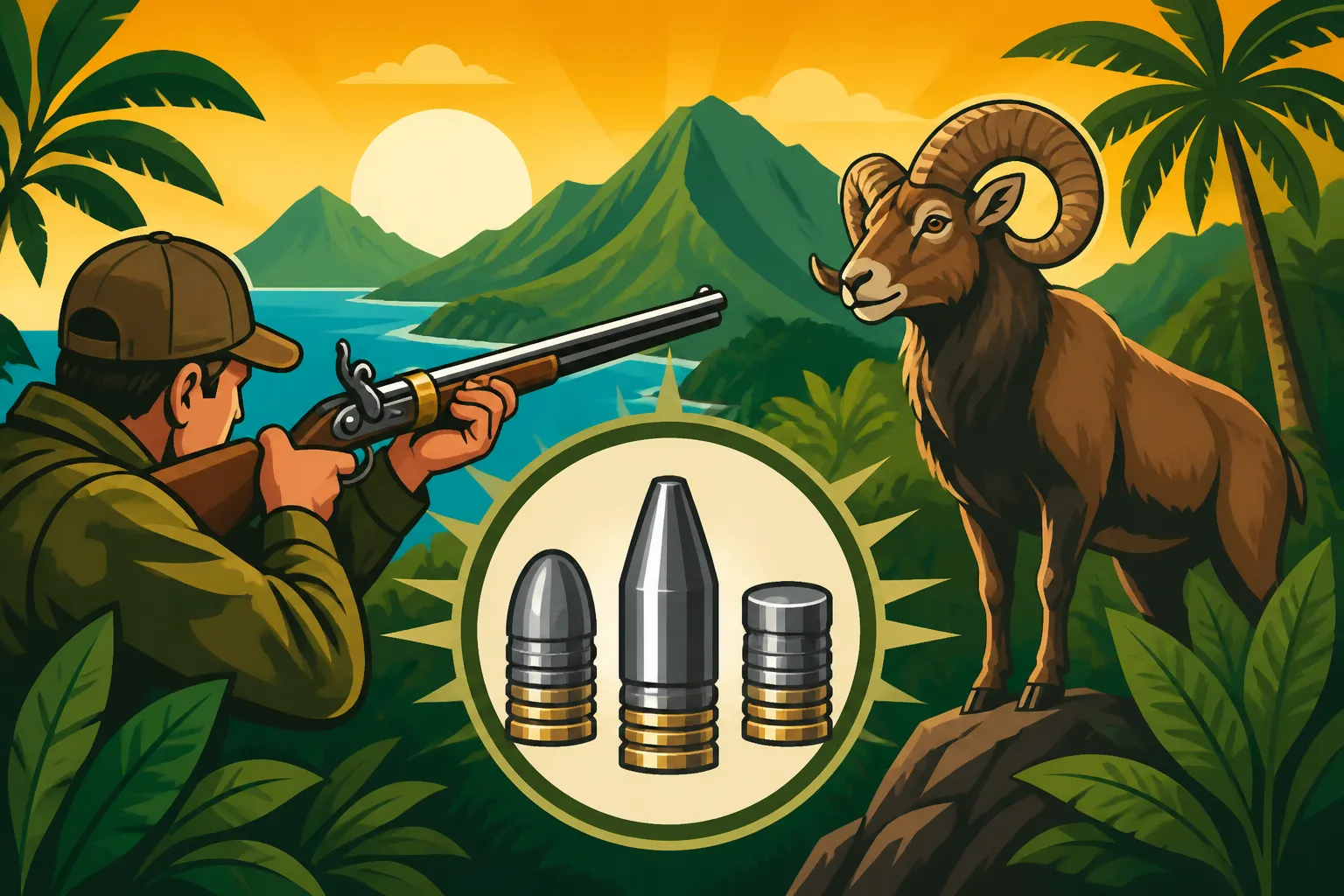
- Conical Bullets: These are essentially lead bullets, often cast, that are loaded directly down the barrel without a sabot. They fit snugly against the rifling. Popular options like Hornady's Great Plains bullets or PowerBelt bullets (though PowerBelt also offers saboted versions) are examples. They're heavy for their caliber and retain energy well, making them excellent for deeper penetration. For example, a heavy .50 caliber conical can be incredibly effective on a tough feral boar, especially when you're looking for deep penetration through thick hide and bone.
- Saboted Projectiles: These consist of a smaller diameter bullet (like a .40, .44, or .45 caliber rifle bullet) encased in a plastic sabot that engages the rifling. Once it leaves the muzzle, the sabot falls away, and the bullet continues on. Saboted projectiles often offer superior ballistic coefficients and accuracy, allowing you to use bullets designed for modern rifles that expand reliably. This can be a game-changer for shots on open country where precision is key, like when you’re Glassing Lanai's Open Ridgelines for Axis deer. You might use a .45 caliber bullet in a .50 caliber sabot, for instance. Just make sure the actual projectile is a single one and that the combination provides enough energy for a clean kill.
When selecting your ammunition, always consider the game you're after. For the smaller Axis deer or goats, a well-placed .45 or .50 caliber conical or saboted bullet will be more than adequate. For the larger, tougher feral pigs, especially big boars, or the robust Mouflon rams, leaning towards heavier-for-caliber projectiles with good expansion and penetration characteristics is always a wise move. Practice, practice, practice with your chosen load to understand its trajectory and terminal performance. There’s nothing worse than getting into a hunting situation and not trusting your shot because you haven’t put in the range time.
Navigating the Nuances of Muzzleloader Hunting in Hawaii
Muzzleloader hunting here isn't just about the gun and the bullet; it's about how you adapt your equipment and techniques to Hawaii's truly unique and often challenging environment.
Muzzleloading in Hawaii's Humidity
Ah, Hawaii's humidity. It's beautiful for the plants, but it can be a real headache for muzzleloader hunters. Keeping your powder dry and your primer fresh is paramount, especially if you're hunting in one of the lush, wet forest units or during the rainy season.
- Modern Muzzleloaders Shine: As mentioned, in-line muzzleloaders with sealed breech systems are your best friend here. They're designed to be more weather-resistant than their traditional counterparts.
- Weatherproofing Your Setup: Beyond the rifle itself, take precautions. Carry extra primers in a waterproof container. Seal your powder vials or pellet containers. A small, waterproof box for your pre-measured charges and primers can save your hunt. Many hunters even keep a small piece of electrical tape over the muzzle and another over the primer cap or breech plug area to prevent moisture intrusion, removing them just before a shot.
- Dealing with Misfires: Despite your best efforts, a misfire can happen. Understanding how to safely clear a fouled or misfired muzzleloader is critical. This typically involves removing the breech plug carefully (after ensuring the hammer/striker is not cocked and the safety is on) and inspecting the powder and primer. Always carry a spare breech plug and a cleaning kit. After a day in the field, especially if it was wet, a thorough cleaning is non-negotiable to prevent corrosion and ensure reliability for your next outing. For more specific tips on dealing with the elements, you might find valuable insights in our article on Keeping Powder Dry on a Wet Forest Hunt.
Preparing for a Muzzleloader Hunt
Preparation is the cornerstone of any successful and ethical hunt, and it's doubly true for muzzleloaders in Hawaii.
- Range Time is Essential: You absolutely must know how your muzzleloader shoots with your chosen load. Spend time at the range, practicing at various distances you might encounter in the field. Understand your bullet drop and how different environmental factors (like wind, which can be a factor when hunting Hawaii's High Elevation Alpine Ground) affect your shot.
- Sighting In: Properly sighting in your muzzleloader is crucial. Many hunters prefer to sight in a few inches high at 100 yards, which can give them a "point and shoot" range out to 150-200 yards for most big game if their projectile is consistent. Know your maximum ethical range – the distance at which you can consistently place a kill shot under field conditions. With a muzzleloader, this range is typically shorter than with a modern centerfire rifle.
- Gear Check: Beyond the firearm, make sure your optics are clear and secure. Pack a reliable rangefinder, a good pair of binoculars for glassing, and all the field dressing tools you'll need. Don't forget ample water, snacks, and a first-aid kit. Hunting Hawaii's volcanic terrain or steep gulches can be physically demanding, so be prepared for a long day.
- Understanding Animal Behavior: Knowledge of the game you're pursuing is just as important as knowing your weapon. Knowing why Axis Deer Rut Timing Is Different or where Mouflon Feed on Mauna Kea will greatly increase your chances of getting within ethical muzzleloader range.
Muzzleloader Caliber Minimums for Big Game in Hawaii
Here's a quick reference for the Hawaii muzzleloader caliber minimums for big game:
| Game Species | Minimum Muzzleloader Caliber | Projectile Type | Notes |
|---|---|---|---|
| Axis Deer | 0.45 caliber | Single Projectile (Conical or Saboted) | Ethical for clean harvest. |
| Mouflon Sheep | 0.45 caliber | Single Projectile (Conical or Saboted) | Recommended .50+ for larger rams. |
| Feral Goat | 0.45 caliber | Single Projectile (Conical or Saboted) | Effective on all sizes. |
| Feral Pig | 0.45 caliber | Single Projectile (Conical or Saboted) | Recommended .50+ for larger boars/sows. |
| Black-tailed Deer | 0.45 caliber | Single Projectile (Conical or Saboted) | Found only on Kauai. |
Common Misconceptions and FAQs
Let's clear up a couple of common questions that often arise when discussing muzzleloaders and Hawaii hunting.
Are Crossbows Legal in Hawaii?
This is a question that often comes up in conversations about "alternative" hunting weapons, especially when discussing archery or muzzleloader seasons. To be very clear: Yes, crossbows are legal for hunting big game in Hawaii during designated archery seasons, provided they meet specific draw weight and bolt/broadhead requirements. However, it's crucial to understand that a crossbow is not considered a muzzleloader. Muzzleloader seasons and archery seasons are distinct, with their own specific rules and dates. So, while you can hunt with a crossbow, it falls under the archery category, not the muzzleloader category, and has its own separate set of legal weapon rules for big game that you need to be aware of.
The Importance of Checking Latest Regulations
I cannot stress this enough: Hawaii's hunting regulations can and do change. While I've provided the current information regarding muzzleloader caliber minimums, it is your responsibility as a hunter to always verify the latest rules and season dates before every hunt. DOFAW regularly updates its Hawaii Game Mammal Seasons and Hawaii Game Bird Seasons and Bag Limits documents, and sometimes even publishes special announcements regarding specific units or hunt conditions.
- Official Sources are Key: The best places to get the most current information are the official DOFAW website and their physical offices. You can also often find consolidated, user-friendly information on platforms like GoHunt, but it's always wise to cross-reference with the primary source.
- Check Unit-Specific Rules: Beyond general state regulations, each hunting unit can have its own quirks. Some units might be open only for Hawaii's Weekend and Holiday Hunting Rules, while others might have different access restrictions or specific weapon allowances. Always check the specific rules for the unit you intend to hunt.
Being a responsible hunter means staying informed. It ensures your safety, the ethical treatment of game animals, and the preservation of hunting opportunities for everyone in these incredible islands.
Disclaimer
Please remember that hunting regulations can change. It is crucial to always consult the most current Hawaii Department of Land and Natural Resources (DLNR) Division of Forestry and Wildlife (DOFAW) regulations and any specific hunt announcements before planning and engaging in any hunting activity. This guide is for informational purposes only and does not supersede official state regulations.