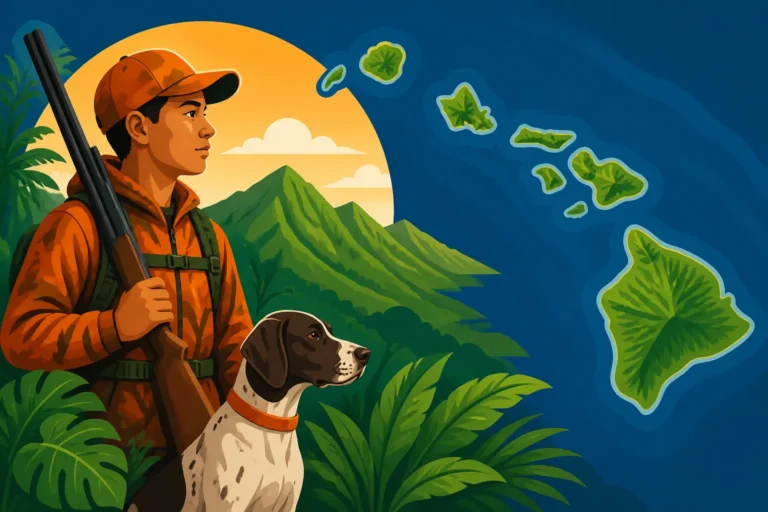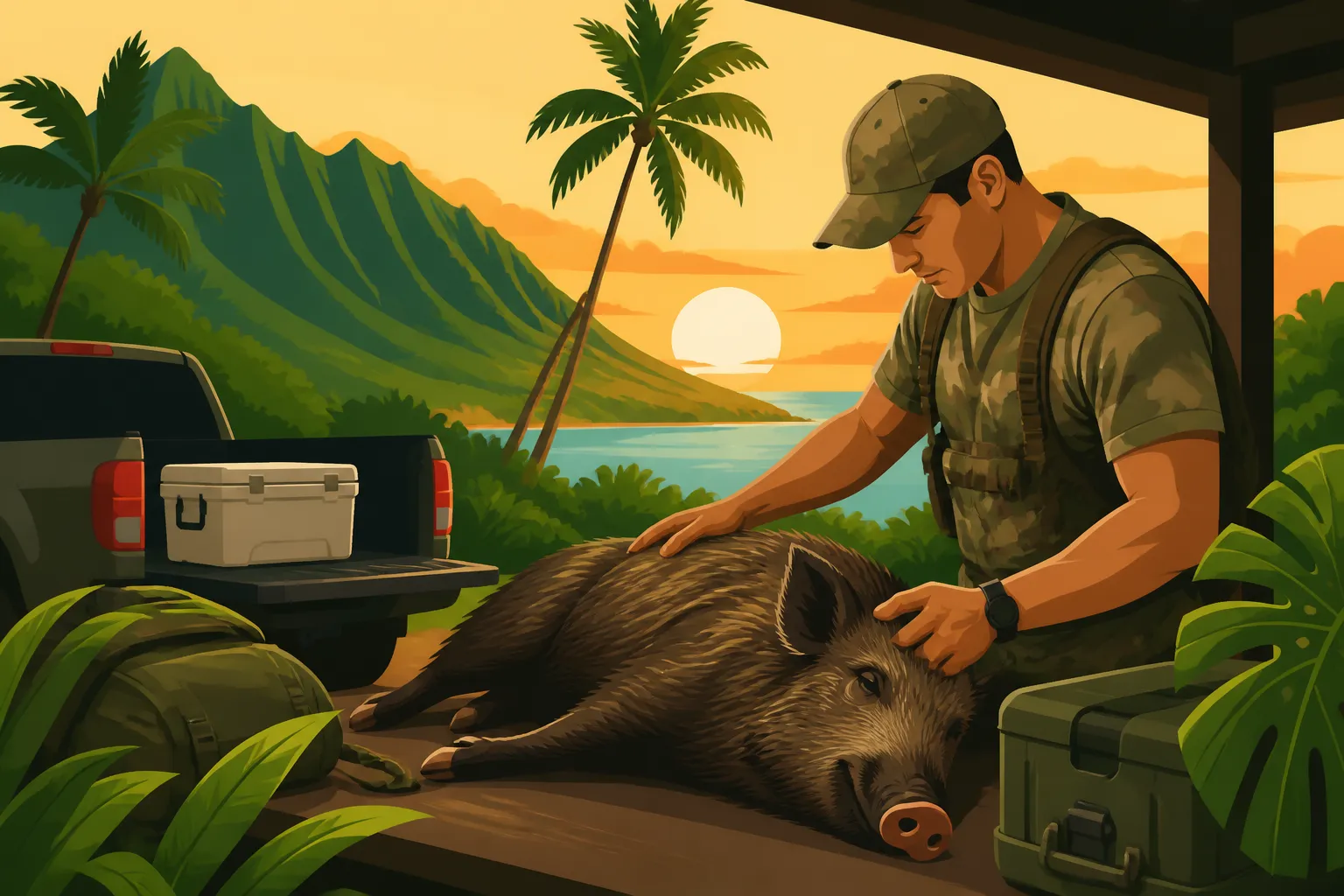
Checking Out After the Hunt
You’ve just wrapped up a long, challenging hunt in Hawaii. Maybe you’ve got a pig on your back, or you’re completely wiped out after glassing for Axis deer all day on a dry kiawe flat. All you want to do is head home, get a cold drink, and start thinking about that delicious venison or pork. But hold on a second! There’s one crucial step many hunters overlook or just plain forget in their exhaustion: checking out after the hunt. This isn't just a minor bureaucratic hurdle; it's a vital part of Hawaii's hunting system, impacting everything from wildlife management to your own legal standing. This guide will walk you through exactly why checking out is so important, how to do it properly, and what could happen if you don't.
The Critical Importance of Checking Out After Your Hawaii Hunt
It's easy to dismiss administrative tasks like checking in and out as just more paperwork getting in the way of your outdoor adventure. But in Hawaii, where hunting opportunities are precious and wildlife management is complex, these steps are anything but trivial. They form the backbone of responsible hunting and conservation.
Why This Isn't Just Bureaucracy
First and foremost, checking out is about accountability and safety. When you check in, you're essentially letting the Department of Land and Natural Resources (DLNR), Division of Forestry and Wildlife (DOFAW) know that you're entering a specific hunting unit. When you check out, you confirm you've left. This isn't just about tracking individual hunters; it's a critical safety measure, especially in remote or rugged areas like many of Hawaii's hunting units. Imagine a situation where a search and rescue operation is launched because a hunter is overdue. Knowing precisely who was supposed to be in a unit, and who has safely checked out, can literally save lives. It narrows down the search area and informs responders.
Beyond safety, the check-out process, especially if you harvested an animal, is a primary tool for wildlife data collection. This is how DOFAW gathers essential information about harvest rates, species distribution, and overall herd health. Without accurate data, it's incredibly difficult for wildlife managers to make informed decisions about seasons, bag limits, and conservation efforts. Every piece of information you provide contributes to the bigger picture that sustains hunting for future generations. It’s part of the commitment we make as hunters to manage the resource responsibly.
The Ethical Hunter's Responsibility
As hunters, we have a profound responsibility to the land and the animals we pursue. This isn't just about respecting private property or following the rules of fair chase; it extends to participating fully in the management system that makes hunting possible. Checking out diligently, and reporting any harvest accurately, is a direct way to fulfill this responsibility. It shows respect for the resource, for the hard work of wildlife biologists, and for the hunting community as a whole.
Think of it this way: when you're done with your day pursuing Axis Deer Hunting in Hawaii or Hunting Hawaii's Feral Pigs, that final check-out is your last act of stewardship. It closes the loop on your hunt and ensures that your activity contributes positively to the overall health of Hawaii's game populations. It's a small step, but it has a ripple effect on how Hawaii Game Mammal Seasons are set and managed.
Navigating the Checkout Process: Stations vs. Digital
Hawaii offers a couple of different ways to check out, catering to both traditional preferences and modern technology. Understanding both methods is key to ensuring you're always compliant, no matter where your hunt takes you.
Traditional Check Stations: The Old-School Way
For many years, and still in some units, the primary method for checking in and out has been through physical check stations. These are typically located at the entrance or exit points of designated hunting units. You'll often find a small box or kiosk with paper cards, pencils, and sometimes a bulletin board with current rules or notices.
The process is usually straightforward: you locate the "Check-Out" section of the card, fill in your hunting license number, permit number (if applicable), the date and time of your departure, and any harvest information (species, sex, unit, etc.). You might also be required to sign the card and then drop it into a designated slot. These stations are usually self-serve, meaning no staff will be there to greet you. It's on you to ensure the information is accurate and legible. While seemingly archaic, they serve their purpose, especially in areas with no cell service. Just remember to always bring your own pen or pencil, as they have a habit of disappearing! This process is essentially the reverse of Checking In at a Hawaii Hunter Station.
The OuterSpatial App: Modern Convenience (and a Must-Know)
In recent years, Hawaii has increasingly adopted digital solutions to streamline the check-in and check-out process, and the OuterSpatial app has become a game-changer for many hunters. This app allows you to manage your hunt details directly from your smartphone or tablet, often eliminating the need for physical paperwork. It’s particularly useful for hunters on the go or those who prefer digital convenience.
To use OuterSpatial for checkout, you'll open the app, navigate to your active hunt, and select the "Check Out" option. The app will prompt you for similar information as the paper cards: your hunter ID, permit details, the unit you're leaving, and crucially, any harvest details if you were successful. The beauty of OuterSpatial is its GPS integration, which can automatically log your location and time, adding an extra layer of accuracy. Even if you're in an area with no cell service, the app can often record your checkout and sync the data later when you regain connectivity. This is a significant improvement over paper cards in remote areas where "No Cell Signal on a Hawaii Hunt" is a common reality.
Many hunters find the OuterSpatial app incredibly convenient. You can also use platforms like GoHunt to stay informed about Hawaii's hunting regulations and units, which often direct hunters to the OuterSpatial app for managing their active hunts. GoHunt is also a great resource for managing your overall Hawaii Hunting Licenses and What They Cost and permits. For those new to the digital system, learning how to use it is crucial for a smooth hunting experience. Check out our guide on Using OuterSpatial Instead of a Paper Card for more detailed instructions.
What Information You'll Need to Provide
Regardless of whether you're using a physical check station or the OuterSpatial app, the information required for checking out is generally consistent. Be prepared to provide:
- Your Hunter ID/License Number: This identifies you as the hunter.
- Permit Number(s): If you had specific permits for the unit or species (e.g., a special Axis deer tag for Lanai), you'll need to reference these.
- Date and Time of Checkout: This records when you left the unit.
- Hunting Unit: The specific unit code you were hunting in.
- Harvest Information (if applicable):
- Species: E.g., Feral Pig, Axis Deer, Mouflon Sheep.
- Sex: Male or Female.
- Age Class: (e.g., adult, juvenile) if specified by regulations.
- Tag Number: If you harvested an animal that required a specific tag, you'll need to confirm that you successfully completed Tagging an Animal Correctly in Hawaii.
- Weapon Used: Rifle, Bow, Muzzleloader, Dog and Knife.
This harvest data is incredibly important. It contributes directly to the larger pool of information used for Harvest Reporting Requirements After a Kill, ensuring that wildlife managers have the most accurate picture possible of game populations.
Here’s a quick comparison of the two main checkout methods:
| Feature | Traditional Check Station | OuterSpatial App |
|---|---|---|
| Availability | Found at unit entrances/exits | Smartphone/Tablet (with service or offline sync) |
| Method | Paper card, pencil | Digital entry, GPS data |
| Convenience | Can be out of the way, weather-dependent | Accessible from anywhere with device, 24/7 |
| Data Collection | Manual transcription, prone to errors | Automated, real-time (with service), GPS-stamped |
| Real-time Status | Not immediate for DOFAW | Immediate for DOFAW (with service) |
| Dependency | Requires physical presence, pen | Requires charged device, cell/GPS signal (or sync) |
| Common Issue | Cards run out, pens stolen, forgotten | Battery dies, no signal, app glitches |
| Mandatory for Some | Yes, if no app option or specific unit rule | Increasingly encouraged/required in many units |
The Unseen Consequences of Forgetting to Check Out
It’s easy to think, “What’s the big deal if I forget to check out just this once?” The truth is, it can be a bigger deal than you might imagine, with repercussions ranging from personal legal trouble to broader negative impacts on Hawaii’s hunting future.
Penalties and Legal Repercussions
Forgetting to check out is more than just a minor oversight; it's a violation of Hawaii's hunting regulations. While the exact penalty can vary depending on the unit, circumstances, and whether you're a repeat offender, it's not something to take lightly. You could face fines, which can quickly add up and put a damper on your hunting budget. More seriously, repeated violations could lead to the suspension or revocation of your hunting privileges. Imagine losing your ability to pursue game in these beautiful islands because of a simple forgotten step!
DOFAW takes these regulations seriously, and a lapse in checking out can trigger an inquiry. It's often bundled with other Penalties for a Hunting Violation if other issues are found. It's always best to be meticulous to avoid any unnecessary run-ins with enforcement.
Impact on Wildlife Management and Future Hunting Opportunities
Beyond the personal legal ramifications, failing to check out (especially without reporting a harvest) has a detrimental effect on the broader efforts to manage Hawaii’s wildlife populations. When hunters don't check out, DOFAW doesn't get a complete picture of hunter activity within a unit. This missing data can skew statistics on hunter pressure and success rates.
Even more critical is the loss of harvest data. If you harvest an animal but fail to report it during checkout, that animal essentially disappears from the management records. This means biologists have an incomplete count of what's being taken from the population, making it harder to accurately assess population numbers, reproductive rates, and overall health. Over time, this can lead to:
- Inaccurate Season Adjustments: If harvest rates appear lower than they actually are, DOFAW might set overly generous seasons or bag limits, potentially leading to overharvesting. Conversely, if hunter activity seems low because of forgotten check-outs, they might restrict access unnecessarily.
- Misguided Conservation Efforts: Resources might be allocated to areas or species based on flawed data, diverting attention from where it's truly needed.
- Reduced Hunting Opportunities: If DOFAW cannot confidently manage a population due to poor data, they may err on the side of caution by reducing hunting days, closing units, or limiting permits to protect the resource. This directly impacts future Hawaii's Drawn Hunts and Lotteries and general access.
Staying current with regulations and potential changes is also important, as management decisions are constantly evolving. Our guide on Hawaii Hunting Rules That Changed This Year can help you keep abreast of updates that might affect your check-out process. Ultimately, every hunter has a part to play in providing the accurate information needed to keep Hawaii's unique hunting heritage alive and well.
Essential Tips for a Smooth Checkout Every Time
After a physically demanding hunt, it’s easy to let your guard down and forget that final, crucial step. But with a little preparation and mindfulness, you can make checking out a seamless part of your Hawaii hunting routine.
Plan Ahead, Always
The best defense against forgetting to check out is to make it an integral part of your hunt plan, right alongside packing your gear and scouting your unit. Before you even head out, confirm the specific check-out requirements for the unit you'll be hunting. Some units might have physical stations, others might rely solely on the OuterSpatial app, and some might offer both. Websites like GoHunt and the official DOFAW portal are excellent resources for checking unit-specific rules and staying informed about Hawaii's Hunting Units and How They Work.
- Know Your Check-Out Method: If it’s a physical station, know its exact location and plan your exit route to pass it. If it’s the app, ensure your phone is charged, and you understand how to use it, especially the offline functionality if you anticipate poor cell service.
- Set a Reminder: Use your phone’s alarm or a sticky note on your dash. A simple reminder, "DID YOU CHECK OUT?" can be a lifesaver when you're tired and focused on driving home.
- Have Information Ready: Keep your license and permit numbers handy. If you anticipate a harvest, mentally (or even physically) prepare the details you'll need to report: species, sex, unit, tag number. This avoids fumbling around when you're ready to leave.
- Check for Unit Closures: Sometimes, units can close unexpectedly due to weather, fire, or other management needs. Always check for current information, including Reading Hawaii Unit Closure Notices, before and after your hunt to ensure smooth entry and exit.
Double-Check Before You Leave the Unit
This is perhaps the most critical tip. As you're packing up your gear, loading your vehicle, and preparing to drive away, take an extra minute to perform a final mental (or physical) checklist.
- Did I Check Out? Ask yourself this question explicitly.
- If Using a Physical Station: Did I fill out the card completely and legibly? Did I drop it in the box? Do I have my own copy (if allowed) for my records?
- If Using OuterSpatial: Did I open the app and complete the check-out process? Did it confirm my checkout? If I was offline, did it prompt me to sync when I got service?
- Harvest Report: If you were lucky enough to harvest an animal, did you accurately report it? Did you correctly attach your tag?
It might seem like a small detail in the grand scheme of your hunt, but making that final check-out a non-negotiable part of your routine will save you potential headaches down the line and ensure you remain a responsible and compliant hunter in Hawaii. It’s the final knot tied in a successful and ethical hunting experience.
Disclaimer
Please remember that hunting regulations in Hawaii can change. Always consult the most current Hawaii Department of Land and Natural Resources (DLNR) Division of Forestry and Wildlife (DOFAW) regulations and official publications before planning and undertaking any hunting activity. This guide is for informational purposes only and does not supersede official state regulations.