When a Hawaii License Expires
It's a frustrating scenario many of us have faced: you're planning an epic hunt, gear is prepped, maps are spread, and then a sudden, sinking feeling hits you – "When does my Hawaii hunting license actually expire?" Hawaii's hunting regulations can feel like a maze, and figuring out the validity period for your license and associated stamps is crucial to avoid a disappointing, and potentially costly, misstep. This guide is here to untangle that knot for you, ensuring you're always legal and ready for your next adventure in the islands.
The Foundations of Hawaii Hunting Licenses
Before we dive into the expiration dates, it’s important to understand the basic structure of Hawaii's hunting licenses. Unlike some mainland states where licenses might be valid for a year from the date of purchase, Hawaii operates on a different system that often catches hunters by surprise. Getting your head around these fundamentals is the first step to staying compliant.
Resident Versus Non-Resident Licenses
Hawaii offers distinct hunting licenses for residents and non-residents, and the primary difference lies in the cost, not the expiration period. As a resident, you'll naturally pay less, reflecting your contribution to the state's resources. Non-residents, on the other hand, face higher fees, which is common across most states. Regardless of your residency status, the type of hunting privileges you acquire (mammal, bird, or combo) and the associated stamps will all generally adhere to the same expiration schedule. You can usually purchase both resident and Hawaii Nonresident Hunting License Options online through the Department of Land and Natural Resources (DLNR) website, or via authorized vendors, including the convenient GoHunt platform that many hunters use.
Essential Stamps: Wildlife Conservation and Game Bird
Beyond the base hunting license, you’ll typically need one or both of Hawaii's mandatory stamps: the Wildlife Conservation Stamp and, if you plan to chase feathered game, the Game Bird Stamp. Think of these as vital endorsements that grant you permission to hunt specific types of animals. The Wildlife Conservation Stamp is generally required for all mammal hunting, while the Game Bird Stamp is, as the name suggests, specifically for game bird seasons. Just like your main hunting license, these stamps are not perpetual. They too have their own expiration date, which aligns with the primary hunting license. For a deeper dive into these, you can explore information on Hawaii's Wildlife Conservation Stamp and its requirements. It's a common mistake to assume that once you have the stamps, you're set forever; always remember they renew annually with your license.
Understanding the Standard License Expiration Date
This is where many hunters get tripped up, especially if they're used to systems in other states. Hawaii has a very specific, non-negotiable expiration date for most of its hunting licenses and stamps. Missing this date can mean anything from a minor inconvenience to serious legal trouble if you're found in the field without a valid license.
The Universal Calendar Year Rule
For the vast majority of Hawaii hunting licenses – including your basic resident or non-resident hunting license, the Wildlife Conservation Stamp, and the Game Bird Stamp – the expiration date is December 31st of the year in which it was issued. This is a critical point: it doesn't matter if you bought your license on January 2nd or October 20th; it will expire on December 31st of that same calendar year. This means you effectively get fewer months of validity if you purchase your license later in the year, but the price remains the same. This can feel a bit unfair if you're only planning a short hunting trip in the fall, but it's the rule everyone operates under. It really emphasizes the need to plan your license purchase strategically, especially if you're trying to maximize your hunting opportunities for the full year.
For example, if you bought your license on March 15th, 2024, it would expire on December 31st, 2024. If you then purchased your 2025 license on January 5th, 2025, that one would expire on December 31st, 2025. There's no pro-rated fee, so many seasoned Hawaii hunters will either buy their license right at the start of the new year, or time their purchase close to their first planned hunt to ensure they don't buy too early and then need another one for a late-year trip.
When a New Season Begins
While your license expires on December 31st, the new licenses for the upcoming year typically become available for purchase in early December or late November, sometimes even earlier. This allows proactive hunters to secure their new license and stamps before the new calendar year even begins. Imagine the peace of mind knowing you're already legal to hit the public lands like the Puu Anahulu Game Management Area on January 1st, instead of scrambling at the last minute! The GoHunt platform usually updates promptly, making it simple to buy your next year's license ahead of time, ensuring you're ready for any early-season opportunities. Always double-check the current year's regulations and announcements from the Department of Land and Natural Resources (DLNR) for precise dates when new licenses become available.
Special Circumstances and Exceptions to the Rule
While the December 31st expiration date is a pretty solid rule for most annual licenses and stamps, Hawaii's hunting system does have a few nuances, especially when it comes to specific permit-tags or the status of certain hunters. Understanding these exceptions is just as important as knowing the general rule, so you don't inadvertently find yourself in a bind.
Permit-Tags for Drawn Hunts
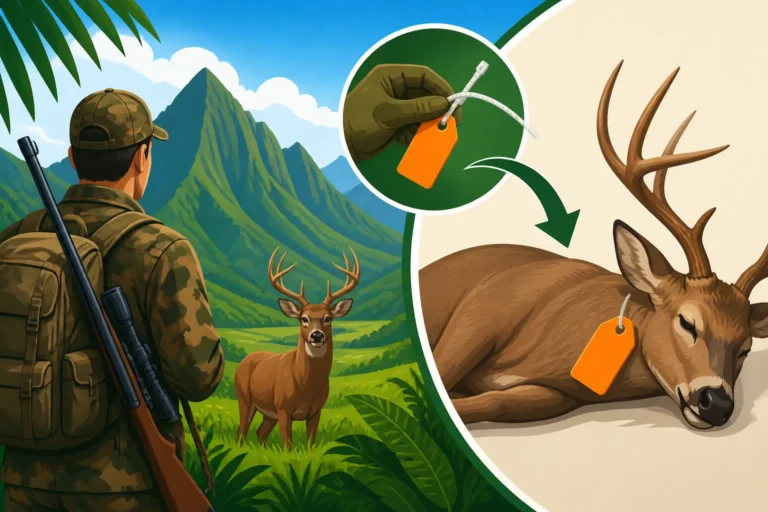
This is a big one. While your annual hunting license (and stamps) will always expire on December 31st, specific permit-tags issued for certain drawn hunts operate on a different schedule. These permit-tags are often for highly sought-after species or units, such as the Lanai Axis Deer Drawn Weekends or the Mouflon Sheep Hunting on Hawaii Island opportunities. When you're successful in a lottery or drawn hunt, you'll receive a specific permit-tag. This tag is only valid for the specific dates, unit, and species detailed on that permit.
For instance, if you drew an Axis deer tag for a specific weekend in March on Lanai, that tag is only good for that precise weekend. It does not magically extend until December 31st. You must have a valid annual hunting license and a Wildlife Conservation Stamp for the current calendar year to even apply for these drawn hunts and to utilize your permit-tag, but the tag itself has its own, much narrower, validity window. This distinction is crucial and often overlooked by hunters, especially non-residents who might think their general license covers everything. Make sure to read the details on any drawn hunt permit very carefully.
Youth Licenses and Hunter Education
Hawaii is committed to fostering the next generation of hunters, and youth hunting opportunities are available. However, youth licenses also fall under the standard calendar year expiration rule. So, if your keiki (child) receives a youth license in July, it will still expire on December 31st of that year. The good news is that once a hunter, young or old, completes the Hawaii Hunter Education Requirements, that certification does not expire. It's a one-time requirement to obtain your first hunting license. However, the actual license you purchase each year, which grants you the privilege to hunt, will always follow the December 31st expiration. So, while their hunter safety card is good for life, the annual plastic card they carry needs renewing.
Military Personnel and Non-Resident Specifics
Military personnel stationed in Hawaii can often qualify for resident hunting license rates, which is a great benefit. However, their licenses are still subject to the same December 31st expiration date as any other resident. The same applies to non-residents. Even if you're flying in for a specific hunt, say, a Hawaii Axis Deer Hunting trip in September, your license will still be good only until December 31st. If you were to, hypothetically, return for another hunt in January, you'd need to purchase a brand new license for that new calendar year. This is particularly relevant for those who plan multiple trips or prolonged stays in the islands. Always ensure you have the correct, current year's license in hand before you step into any hunting unit.
The Imperative of Timely License Renewal
It might seem like a minor detail, but neglecting to renew your Hawaii hunting license on time can lead to a heap of trouble. Beyond the legal ramifications, it can simply ruin your hunting plans and waste valuable time and resources. For passionate hunters, being sidelined by an expired license is a nightmare scenario that's entirely avoidable with a bit of foresight.
Avoiding Legal Ramifications and Penalties
Hunting without a valid, current Hawaii hunting license and the appropriate stamps is a serious offense. This isn't just a slap on the wrist; it can result in significant fines, potential confiscation of your game, your firearm, and even your vehicle. Repeat offenses, or particularly egregious violations, can lead to the suspension or revocation of your hunting privileges, not just in Hawaii but potentially in other states as well through interstate compacts. Imagine being out on a fantastic pig hunt, perhaps dog hunting in Hawaii's wet forest, and encountering a conservation officer. If your license is expired, all the effort, the expense, and the excitement of the hunt can turn into a legal quagmire instantly.
Beyond fines, there's the moral aspect. As hunters, we are stewards of the land and its wildlife. Operating within the legal framework is fundamental to maintaining public trust and ensuring the future of hunting. An expired license signals a disregard for these regulations, which can unfortunately cast a shadow on the entire hunting community. Staying current is not just about avoiding trouble; it's about upholding the integrity of our sport.
Ensuring Continued Hunting Eligibility
An expired license means you are simply not allowed to hunt. This impacts everything from checking into public hunting units to applying for future drawn hunts. Many of Hawaii's public hunting units, like those on the Big Island or Maui, require you to check in before your hunt and check out afterward, often through the Using the OuterSpatial App to Check In or a physical check station. If your license isn't valid, you won't be able to complete this process, effectively barring you from legal access to those areas.
Consider a scenario where you've been planning for months to hunt a specific weekend only to discover your license expired on December 31st, and it's now January 5th. You might miss out on prime hunting conditions, or a special hunt opportunity. The inconvenience of having to find a vendor or get online to renew, sometimes in areas with spotty internet service or limited vendor hours, can quickly eat into your precious hunting time. This is especially true if you are hunting Hawaii on Foot Without a Truck in a remote unit, where access to services is limited. It's far better to renew proactively and ensure you're always eligible than to face the disappointment of a missed opportunity because of an oversight.
Practical Tips for Staying on Top of Your License
Nobody wants to be the hunter caught off guard by an expired license. With a little bit of planning and the right tools, you can ensure your Hawaii hunting license and all necessary stamps are always current. It's about building habits that serve your passion for hunting without adding unnecessary stress.
Utilizing Digital Tools and Reminders
In this digital age, there's no excuse for forgetting important dates. Your smartphone can be your best friend here. Set recurring calendar reminders for early December to prompt you to renew your Hawaii hunting license for the upcoming year. Many hunters find it helpful to set two reminders: one in early December to start thinking about renewal, and another around December 20th as a hard deadline.
Platforms like GoHunt, which is widely used for purchasing Hawaii hunting licenses and applying for drawn hunts, may also offer email notifications or reminders about upcoming renewals. While you shouldn't rely solely on these (always double-check your own records!), they can be a valuable backup. Consider signing up for newsletters or alerts from the Hawaii Department of Land and Natural Resources (DLNR) or their Division of Forestry and Wildlife (DOFAW) to stay informed about season dates and license renewal periods. Staying informed means you're less likely to be surprised.
Carrying Proof: Physical Copies and Digital Backups
Once you've renewed your license, make sure you have it on hand when you're in the field. This might seem obvious, but it's easy to forget a small card. The best practice is to carry your physical license and stamps, preferably laminated or in a waterproof holder, along with your driver's license or other identification.
However, accidents happen – licenses get lost, soaked, or left behind. That's why having a digital backup is incredibly smart. Take clear photos of your valid hunting license and all stamps with your smartphone. Store them in a dedicated album or cloud service that you can access even without cell service. Additionally, the OuterSpatial app, which many Hawaii hunters use for unit check-ins, also acts as a convenient digital record of your hunting permits and check-ins, further cementing its utility in the field. Having multiple forms of proof can save you a lot of grief if you're ever asked by a conservation officer to present your documents and your physical card is missing.
Planning Ahead for Year-Round Readiness
The simplest way to avoid the December 31st panic is to plan ahead. Make it a habit to purchase your new Hawaii hunting license and stamps for the next calendar year sometime in early to mid-December. This ensures that come January 1st, you're already legal and ready for any early-season hunting opportunities, or simply to scout new areas. This is especially important if you're eyeing a specific early-year drawn hunt, where you'll need a current license just to apply.
For those who live on the mainland or are planning a destination hunt, this foresight is even more critical. You don't want to arrive in Hawaii only to find out your license expired weeks ago and then scramble to get a new one before you can even begin your trip. Many hunters on the mainland also forget that What Nonresidents Get Wrong About Hawaii Hunts often involves misinterpreting the license validity period. By renewing in December, you remove that potential headache and can focus entirely on the excitement of your upcoming hunt, whether it's hunting Hawaii's Feral Pigs or aiming for a Hawaii mouflon hunt.
Summary of Hawaii Hunting License Expiration
To help keep things clear, here's a quick overview of when your Hawaii hunting credentials will typically expire:
| Item Type | Expiration Date | Notes |
|---|---|---|
| Resident Hunting License | December 31st | Same year of purchase, regardless of purchase date |
| Non-Resident Hunting License | December 31st | Same year of purchase, regardless of purchase date |
| Wildlife Conservation Stamp | December 31st | Required for mammal hunting, expires with base license |
| Game Bird Stamp | December 31st | Required for bird hunting, expires with base license |
| Special Drawn Hunt Permit-Tag | Specific Hunt Dates | Only valid for the dates and unit printed on the permit, not Dec 31st |
| Hunter Education Certificate | Never (lifetime) | One-time requirement for first license, but actual license renews |
This table highlights the main points, emphasizing that most annual licenses and stamps run concurrently with the calendar year.
Disclaimer
Please remember that hunting regulations can change. While this guide provides comprehensive information based on current regulations, it is always your responsibility to consult the most recent official Hawaii Department of Land and Natural Resources (DLNR) and Division of Forestry and Wildlife (DOFAW) rules and regulations before planning any hunt. This ensures you have the most up-to-date and accurate information.