What Happens If You Forget to Check Out
You've just wrapped up a fantastic day in one of Hawaii's diverse hunting units, tired but exhilarated. Maybe you filled your tag, maybe you didn't, but the sun is setting, and all you can think about is a cold drink and relaxing. In that haze of exhaustion and satisfaction, it's all too easy to let one critical step slip your mind: checking out. Forgetting to check out of a Hawaii hunting unit isn't just a minor oversight; it can actually lead to some pretty significant headaches and consequences. This guide is here to walk you through exactly what can happen if you forget, and more importantly, how to prevent it.
The Importance of Checking In and Out of Hawaii's Hunting Units
It might seem like a bureaucratic formality, another hoop to jump through in a world full of them. But in Hawaii, checking in and out of a hunting unit isn't just a suggestion—it's a critical part of managing our precious wildlife resources and ensuring everyone's safety. When you’re focused on the hunt, the last thing you want to think about is paperwork, but understanding why these systems are in place can make it easier to remember.
Why Check-In/Check-Out Systems Exist
The Hawaii Department of Land and Natural Resources (DLNR), specifically the Division of Forestry and Wildlife (DOFAW), uses these systems for several vital reasons. First and foremost, it's about hunter safety. Imagine a scenario where a hunter goes missing. If DOFAW has a record of who checked into a unit and who hasn't checked out, they have a starting point for search and rescue efforts. It narrows down the search area and tells them who to look for. This isn't just for you; it's for everyone else who might be in the unit, too. It's a layer of accountability that keeps everyone a little safer in our wild, sometimes unforgiving, terrain.
Beyond safety, these systems are crucial for data collection. Every check-in and check-out, especially when combined with harvest reports, helps DOFAW understand hunter pressure, animal populations, and overall success rates within specific units. This data directly influences future season settings, bag limits, and management decisions. Are too many hunters using a certain area, leading to overcrowding? Are game numbers declining in a unit despite high hunter effort? This information is vital for sustainable hunting practices. Without accurate check-in and check-out data, DOFAW is essentially flying blind, making it harder to manage things fairly and effectively for all of us. When we discuss things like Hawaii's Hunting Units and How They Work, this data is the backbone of their operation.
The Role of Hunter Responsibility in Hawaii
As hunters, we share a collective responsibility to uphold the integrity of our sport and the health of the ecosystems we enjoy. This responsibility extends far beyond just ethical shooting and proper field dressing. It encompasses understanding and adhering to all regulations, including the seemingly small ones like checking in and out. Forgetting to check out can be seen as neglecting a fundamental part of that responsibility. It shows a lack of respect for the system designed to protect both hunters and wildlife.
In Hawaii, where public hunting lands are often intertwined with critical conservation areas and unique native habitats, every rule has a purpose. The rules aren't just there to make things difficult; they're in place to manage complex interactions between humans, introduced game animals, and endangered native species. Adhering to these regulations, even when tired or distracted, is a sign of true commitment to conservation and the future of hunting in the islands. It also helps preserve the reputation of hunters as responsible stewards of the land, which is incredibly important for maintaining public support for hunting opportunities.
Immediate Consequences of Forgetting to Check Out
When you forget to check out, it's not like a forgotten grocery item that you can just pick up later. There are actual, tangible repercussions that can range from a slap on the wrist to something much more serious. It's easy to dismiss it as a small thing, but DOFAW takes these administrative rules quite seriously, and for good reason.
Potential Violations and Penalties
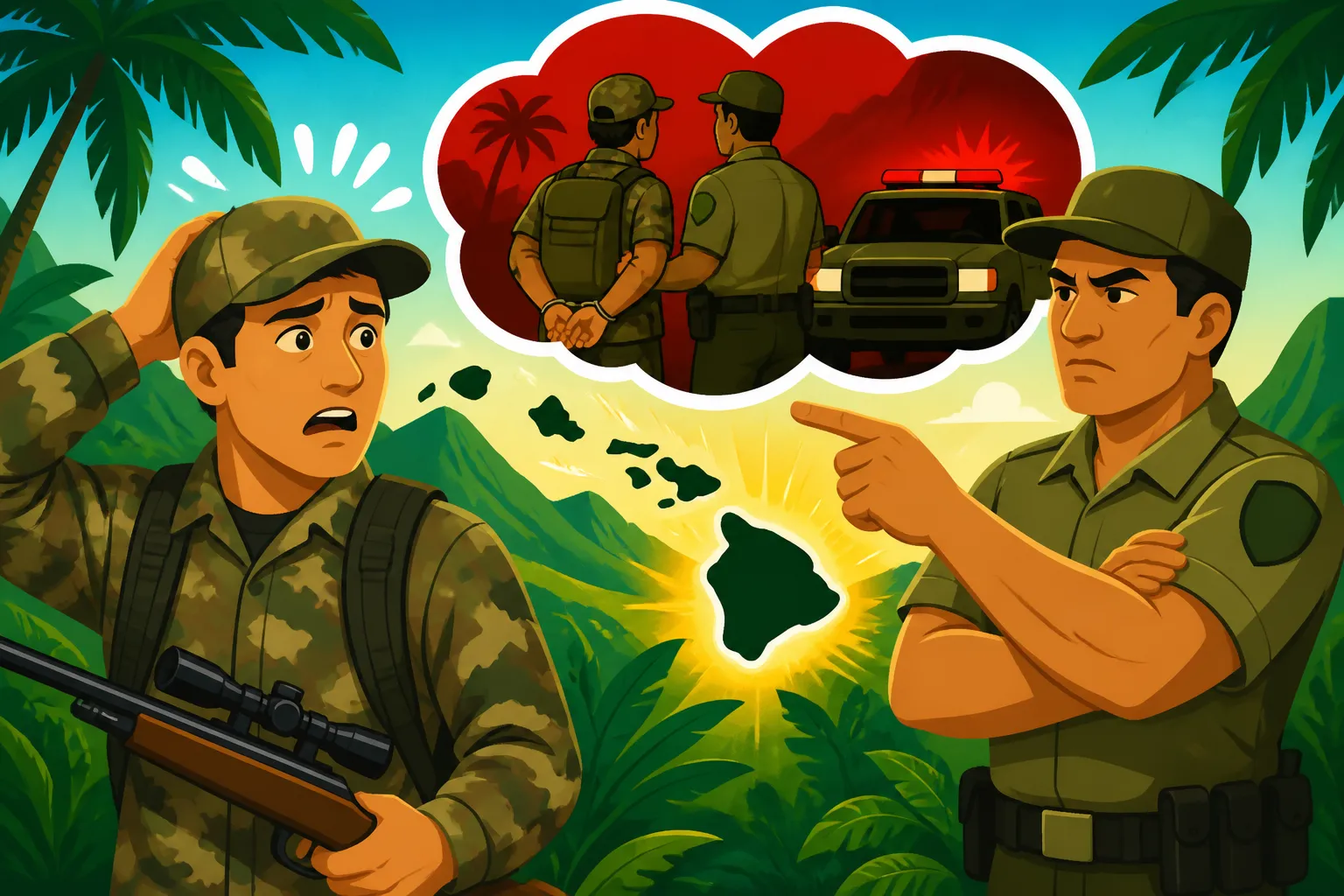
The most immediate consequence of forgetting to check out is that you could be considered to have committed a hunting violation. While it might not be as severe as, say, hunting out of season or without a license, it is still a breach of administrative rules. Chapter 13-123 of the Hawaii Administrative Rules (HAR) governs public hunting areas and activities, and these rules often mandate checking in and out. A violation could result in a fine, typically starting in the hundreds of dollars, depending on the discretion of the enforcement officer and the specifics of the situation. This could be issued by a Division of Conservation and Resources Enforcement (DOCARE) officer, who regularly patrols hunting areas.
Beyond a monetary fine, you could potentially face other administrative actions. For instance, if this isn't your first infraction, or if it's combined with other oversights (like an improperly tagged animal, though that's a different issue), it could lead to your hunting privileges being suspended or even revoked for a period. Imagine losing access to hunting for a year or more because you simply forgot to sign out! That's a huge consequence for what feels like a minor mistake. While it might seem harsh, the state has a vested interest in ensuring compliance to manage public lands effectively. Understanding the various Penalties for a Hunting Violation is crucial for any Hawaii hunter.
Furthermore, failing to check out properly means DOFAW doesn't know you're safely out of the unit. This can trigger unnecessary concern or even a preliminary search effort, wasting valuable resources and diverting attention from actual emergencies. While they might not immediately dispatch a full search and rescue team, a pattern of non-compliance can certainly put a mark on a hunter's record.
Impact on Future Hunting Opportunities
Even if you don't receive an immediate citation or fine, a history of not checking out can quietly impact your future hunting opportunities. While this isn't always publicly disclosed, DOFAW maintains records of compliance. If you're a repeat offender for administrative issues, it could potentially affect your eligibility for future drawn hunts or special permit opportunities. Many of Hawaii's most coveted hunts, like those for axis deer on Lanai or certain mouflon sheep hunts, operate on a lottery system, detailed in Hawaii's Drawn Hunt Application Process. A record of non-compliance, even for minor infractions, could be a factor in how your applications are viewed, or at the very least, flag you for closer scrutiny.
Consider the perception. If DOFAW staff see your name consistently associated with check-out issues, it subtly undermines trust. This trust is vital in a state where hunting access is a delicate balance between public recreation and conservation. Programs like those aimed at Hawaii's Feral Pigs, Island by Island rely on cooperation and adherence to rules from the hunting community.
Moreover, if there's ever a "clean slate" initiative or rule change, those with a good compliance record are often viewed more favorably. While it's rare for a single missed check-out to derail your entire hunting career, consistently neglecting this responsibility can accumulate into a pattern that definitely won't work in your favor when new opportunities arise or when DOFAW makes decisions about unit access or season structures, which are often announced at Where DOFAW Posts Season Announcements.
Steps to Take If You Realize You Forgot to Check Out
Okay, so you’ve left the unit, driven halfway home, or maybe even gotten back to your hotel, and it suddenly hits you: "Oh no, I forgot to check out!" Panic starts to set in. Take a deep breath. It's not the end of the world, but it does require immediate and responsible action. The worst thing you can do is ignore it and hope no one notices. They often do.
Contacting DOFAW Promptly
The absolute best thing you can do is contact the Hawaii Division of Forestry and Wildlife (DOFAW) office responsible for that specific hunting unit as soon as you realize your oversight. Don't wait. Time is of the essence here. The sooner you report it, the better it looks on your part. It demonstrates responsibility and a willingness to correct your mistake, rather than trying to cover it up.
You'll want to call the DOFAW district office on the island where you were hunting. For example, if you were hunting on the Big Island, you’d call the Hilo or Kona DOFAW office. If you were on Maui, you'd call their specific office. Be prepared to provide:
- Your full name
- Your hunting license number (see Hawaii Hunting Licenses and What They Cost for details)
- The specific hunting unit you were in (e.g., Unit A, Puu Waawaa, etc. – refer to Hawaii's Hunting Units and How They Work if needed)
- The date and approximate time you entered the unit
- The date and approximate time you exited the unit
- A brief, honest explanation of why you forgot to check out (e.g., "I was exhausted after a long Hunting Hawaii's Volcanic Terrain trek and simply forgot to use the station.")
The goal here is to be transparent and cooperative. They'll appreciate your honesty far more than any attempt to fabricate a story. You might still face a warning or a minor administrative action, but being proactive significantly improves the situation.
Providing Accurate Information and Cooperation
When you contact DOFAW, make sure the information you provide is as accurate and detailed as possible. If you used a physical check-in card, try to remember any details you filled out. If you used an app like OuterSpatial (which we'll discuss more later), confirm your entry time through the app if possible. The more specific you can be, the easier it is for them to verify your story and update their records.
Cooperation is key. Be polite, apologetic, and listen carefully to any instructions they give you. They might ask you to send an email confirming the details, or they might simply update their system over the phone. They might also remind you of the rules regarding Checking In and Out of Hawaii Hunting Units. Avoid arguing or making excuses. Simply state the facts, express your regret, and assure them you'll be more diligent in the future. This cooperative attitude can go a long way in how your oversight is handled. Remember, the DOFAW staff are trying to do their job and manage the resources; a little understanding on your part can make a big difference.
Preventing Future Check-Out Oversights
Let's be honest, we're all human, and mistakes happen. But when it comes to something as important as hunting regulations, prevention is definitely better than cure. There are some excellent tools and habits you can adopt to make sure you never forget to check out again, keeping you on the right side of the rules and making your hunting experience smoother.
Utilizing Digital Tools Like OuterSpatial or GoHunt
One of the biggest advancements in recent years for Hawaii hunters is the widespread adoption of digital check-in/check-out systems. The official method is through the OuterSpatial app. This app allows you to check in and out right from your smartphone, often eliminating the need for physical cards at remote check stations.
Here's why OuterSpatial is a game-changer:
- Location-Based Reminders: Many users report that because the app uses your location, it can sometimes even send you a reminder if you're leaving a unit and haven't checked out yet. This is a lifesaver when you're tired and distracted.
- Ease of Use: It's usually a few taps on your phone. Much faster than fumbling with a pen and paper, especially in the dark or rain.
- Accessibility: As long as you have cell service (which isn't guaranteed everywhere, especially if you're hunting Hawaii's rainforest gulches or deep in a remote area), you can check out from almost anywhere. Even if you don't have service in the unit, you can often check out as soon as you hit a signal on your way out. Check out our guide on Using the OuterSpatial App to Check In for more details.
Another related tool is the GoHunt Hawaii platform, which is primarily used for purchasing licenses and applying for drawn hunts. While GoHunt itself doesn't handle real-time check-in/check-out, it's the portal for your official hunting records. Ensuring your license is always up-to-date and accessible through platforms like GoHunt makes the entire administrative process smoother. If you have an issue, having your GoHunt details handy can speed up resolution with DOFAW.
Using these digital tools isn't just convenient; it adds a layer of fail-safe. Set a reminder on your phone, or make it a habit to open the OuterSpatial app the moment you get back to your vehicle.
Establishing Personal Check-Out Routines
Beyond the tech, building solid personal habits is your best defense against forgetfulness. Here are some ideas for establishing your own reliable check-out routine:
- The "Vehicle Rule": Make it a strict rule that the very first thing you do when you get back to your truck or ATV is to check out. Before you even open the cooler, before you take off your boots, before you start up the engine – check out. If you're on a Walking In to a Remote Hawaii Unit hunt, this rule still applies as soon as you hit the nearest check station or cell service.
- Post-It Notes/Reminders: Stick a brightly colored sticky note on your steering wheel, dashboard, or even your rifle case that says "CHECK OUT!" This visual cue can be incredibly effective when you're packing up.
- Buddy System: If you hunt with a partner, make a pact. Remind each other to check in and out. "Did you check out?" should be a standard question before you drive away from the unit.
- Alarm on Your Phone: Set a recurring alarm on your phone for around the time you typically finish hunting, specifically labeled "Hunting Check-Out." Even if you're done earlier or later, it serves as a mental jog.
- Pre-Loaded Form: If you're using physical cards, consider filling out most of the "check-out" section (like your name, license number, unit) before you even head out to hunt. This way, all you have to do is add the exit time and harvest details.
- Gear Checklist: Incorporate "Check Out" into your post-hunt gear checklist. Just like you check if you have your keys, wallet, and phone, add checking out to the list before you leave the parking area.
Remembering to check out is a simple but crucial part of hunting responsibly in Hawaii. By understanding its importance, knowing what to do if you slip up, and implementing preventative measures, you can ensure your hunting adventures remain enjoyable and hassle-free.
| Action Item | Why It's Important | Best Practice |
|---|---|---|
| Check In | Safety, population data, legal compliance | Use OuterSpatial app or fill out physical card completely upon entry |
| Check Out | Confirming your safety, accurate hunter effort data, legal compliance | Use OuterSpatial app or fill out physical card immediately upon exit |
| Report Harvest | Essential for species management and future season setting | Submit accurate harvest data via app or card |
| Adhere to Unit Rules | Respect for specific unit regulations, neighboring landowners, and conservation | Familiarize yourself with unit maps and specific rules for Hawaii's Hunting Units and How They Work |
| Carry License/Permit-Tag | Proof of legal authorization to hunt | Always have physical or digital copies readily available |
Disclaimer
The information provided in this guide is for general informational purposes only and does not constitute legal advice. Hunting regulations in Hawaii are subject to change, and it is the hunter's responsibility to consult the most current Hawaii Administrative Rules (HAR) and Hawaii Department of Land and Natural Resources (DLNR) Division of Forestry and Wildlife (DOFAW) regulations and announcements before engaging in any hunting activity. Always confirm current rules with official sources.