Hawaii’s Endangered Forest Birds
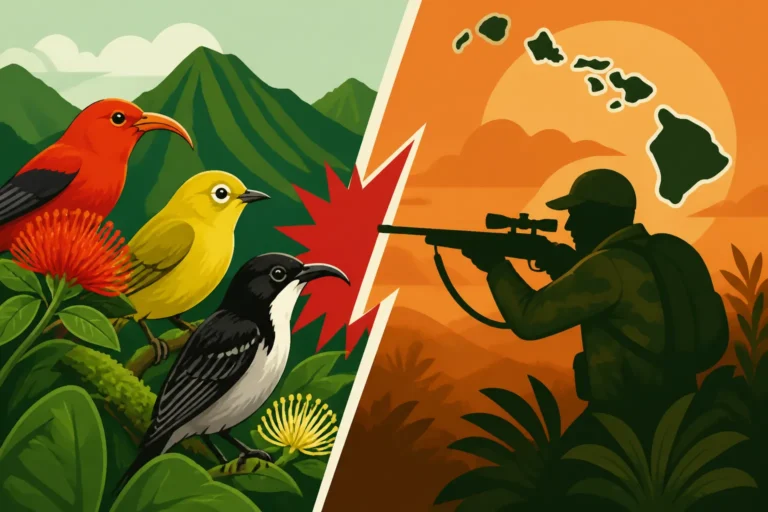
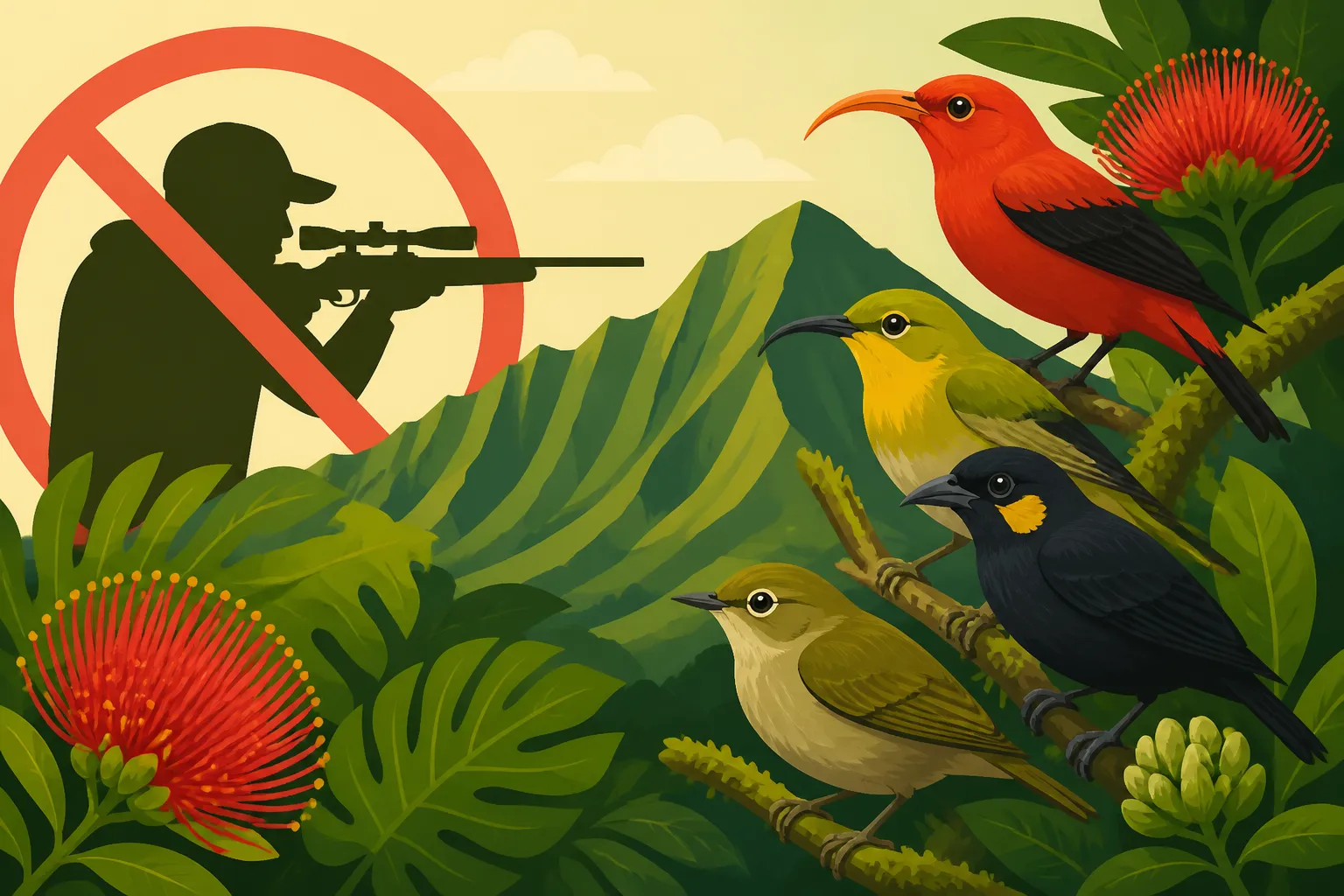
Hawaii’s native forest birds are true living jewels, but their existence hangs by a thread. Many of us who live and hunt in these islands feel a deep connection to the 'āina, and that includes understanding the incredible fragility of our endemic wildlife. This guide will take a thoughtful look at some of Hawaii's most critically endangered forest birds, exploring the unique challenges they face, and recognizing how sound hunting practices for introduced species play an unexpected role in their struggle for survival.
The Silent Forests: Understanding Hawaii's Native Birds
The forests of Hawaiʻi once pulsed with the vibrant songs and movements of birds found nowhere else on Earth. These incredible creatures, isolated for millions of years, evolved into a dazzling array of forms and behaviors. Unfortunately, many of these unique species are now teetering on the edge of extinction, some with only a handful of individuals remaining. Understanding their story is crucial for anyone who cares about the future of our islands.
A Legacy of Isolation and Specialization
Imagine a tiny seed, or perhaps a storm-blown insect, arriving on a barren volcanic island millions of years ago. From such humble beginnings, and over eons of isolation, Hawaii's native bird species blossomed. They specialized, evolving unique beaks to sip nectar from specific flowers, or to extract insects from particular tree bark. This incredible process, known as adaptive radiation, gave rise to species like the honeycreepers, whose beaks diversified into tools perfectly suited for the islands' varied ecological niches.
This specialization, while creating astonishing biodiversity, also made them incredibly vulnerable. Without natural predators like large mammals, they lost their fear of perceived threats and developed traits ill-suited for the rapidly changing world that arrived with human settlement. Their populations were often small and restricted to specific elevations or forest types, meaning any disturbance could have a catastrophic impact on an entire species.
Why They're Vanishing: A Complex Web of Threats
The decline of Hawaii's forest birds isn't due to a single cause but rather a brutal combination of factors that have stripped away their habitat and introduced deadly new pressures. One of the earliest and most profound impacts was habitat loss, as vast tracts of native forest were cleared for agriculture, ranching, and development. This immediately reduced the available space and food sources for birds that depended on specific native plants.
Beyond direct habitat destruction, invasive species have proven to be relentless adversaries. Non-native predators like rats, mongooses (though Molokaʻi and Lānaʻi thankfully lack them), and feral cats prey on eggs, chicks, and adult birds. Perhaps the most insidious threat, however, is avian malaria, carried by introduced mosquitoes. Native birds have no natural immunity to this disease, and entire populations have been decimated when mosquitoes moved into their remaining high-elevation refuges. Learning about the wider challenges facing these species can help hunters understand the interconnectedness of the ecosystem, as detailed in Protected Species Hawaii Hunters Must Know.
Meet the Critically Endangered: Iconic Species on the Brink
While many native Hawaiian birds face serious threats, some are in such dire straits that their very existence is measured in decades, if not years. These are the species that conservationists fight tooth and nail to protect, often requiring intensive, hands-on intervention. Their stories serve as stark reminders of what we stand to lose.
The ʻIʻiwi and Its Crimson Plume
The ʻIʻiwi, with its stunning scarlet plumage and long, curved salmon-colored beak, is arguably one of Hawaii's most recognizable native birds. Its beak is perfectly adapted for sipping nectar from the curved flowers of ʻōhiʻa lehua trees, a foundational species in Hawaii's native forests. The ʻiʻiwi's vibrant presence once graced forests across most of the main islands, its distinctive "squeaky wheel" song a common sound.
Today, while still relatively widespread compared to some others, the ʻiʻiwi is experiencing rapid declines, especially on Maui and the Big Island. Avian malaria is a primary culprit, pushing them to ever-higher elevations where mosquito populations are naturally lower. As climate change warms these higher altitudes, the mosquitoes can extend their range, encroaching further on the ʻiʻiwi's last strongholds. Protecting these delicate ecosystems often involves efforts to control invasive species that damage critical habitat, a process that sometimes includes careful management of game populations.
The Kiwikiu (Maui Parrotbill) and the ʻAkikiki (Kauai Creeper)
These two species represent the extreme end of the conservation spectrum, with their populations tragically small and geographically isolated. The Kiwikiu, or Maui Parrotbill, is found only in a tiny remnant of high-elevation forest on the windward slopes of Maui. With its stout, parrot-like beak, it specializes in tearing bark and branches apart to find insects, a truly unique foraging strategy. As of recent estimates, there are only a couple hundred individuals left, making it one of the rarest birds in the world.
Similarly, the ʻAkikiki, or Kauai Creeper, is endemic to Kauai and faces an equally grim outlook. This small, active bird forages for insects on tree trunks and branches, often moving in mixed-species flocks. Its population has plummeted in recent decades, primarily due to avian malaria and habitat degradation, leaving very few remaining individuals in the deepest, wettest parts of Kauai's forests. Their survival hinges on urgent, innovative conservation interventions to protect their limited habitat from further encroachment and disease.
The Nēnē and Its Resilient Comeback
Not all stories are quite so dire, and the Nēnē, Hawaii's native goose, offers a glimmer of hope. Once found across the archipelago, its population dwindled to fewer than 50 birds in the 1950s, making it one of the most endangered birds globally. Thanks to extensive captive breeding and reintroduction programs, the Nēnē has made a remarkable comeback. You can now see them on several islands, including Hawaiʻi Island, Maui, Kauaʻi, and Molokaʻi.
Despite its success, the Nēnē remains a federally protected species, and its recovery is an ongoing effort. They face threats from introduced predators like mongooses and feral cats, as well as habitat loss and collisions with vehicles. Hunters need to be particularly vigilant and know Hawaii's Nene and Why It Is Protected, especially in areas where Nēnē forage, to avoid any accidental encounters. Their story demonstrates that with dedicated effort, recovery is possible, even for species pushed to the very edge.
The Intertwined Fate: Hunting, Invasives, and Habitat
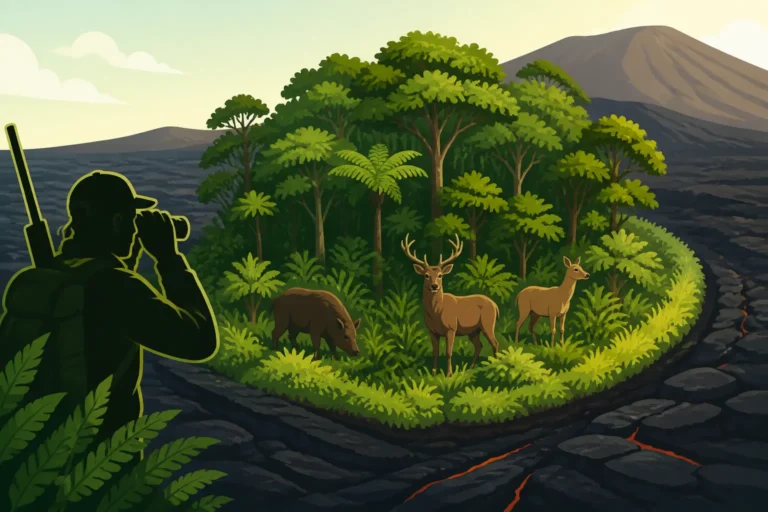
It might seem counterintuitive to link hunting to the survival of endangered birds, but in Hawaii's unique ecosystem, the management of introduced game animals can be directly tied to the health of native bird habitats. Many of the threats to forest birds are exacerbated by feral ungulates, and controlled hunting can be a vital tool in mitigating these impacts.
Feral Ungulates: Habitat Destroyers and Disease Vectors
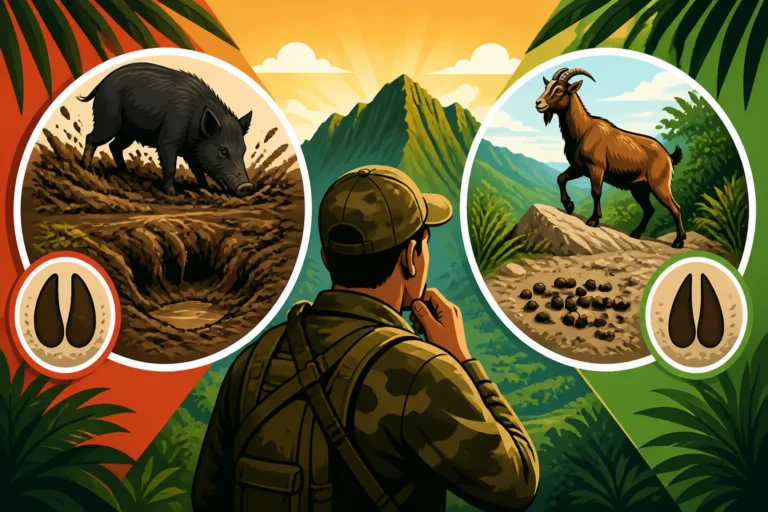
Hawaii's native forests did not evolve with large, hoofed mammals. When European settlers introduced animals like goats, sheep, and pigs, these species found a paradise with abundant food and no natural predators. The result has been an ecological disaster for many native plants and the birds that depend on them. Feral pigs, for instance, root up the forest floor, destroying understory plants, creating wallows that become breeding grounds for mosquitoes (which carry avian malaria), and altering soil composition. To understand more about the impact of these animals, consider reading about What Feral Pigs Do to Hawaii's Forests.
Feral goats and sheep, especially the Mouflon Sheep on Hawaii Island, browse relentlessly, preventing native tree regeneration and contributing to massive erosion on steep slopes. Their presence degrades the very fabric of the native forest, making it less resilient to other threats like invasive weeds and fire. This habitat destruction directly impacts forest birds by removing their food sources, nesting sites, and overall cover. This is why measures like Hawaii's Fenced Conservation Boundaries are so crucial.
How Hunting Management Contributes to Ecosystem Health
Given the profound damage caused by feral ungulates, regulated hunting serves as a critical tool for ecosystem management in Hawaii. By controlling populations of feral pigs, goats, and sheep, hunters help to reduce browsing pressure, minimize rooting damage, and slow the spread of invasive species. This, in turn, allows native forests to recover and provides healthier habitats for endangered forest birds. In many public hunting units, the explicit goal of game management includes ecological restoration.
Organizations like the Department of Land and Natural Resources (DLNR) Division of Forestry and Wildlife (DOFAW) work to balance hunting opportunities with conservation goals. Hunters who participate in these programs are effectively contributing to conservation efforts, whether they realize it or not. Websites like GoHunt often provide up-to-date information on specific unit rules and seasons, which can include details about how hunting quotas contribute to larger wildlife management plans designed to protect sensitive areas. This connection highlights how Hawaii's Hunting Units and How They Work can serve multiple purposes beyond just game harvesting.
Mosquitoes and Avian Malaria: A Silent Killer
While habitat destruction and predation are significant, perhaps the most devastating threat to Hawaii's forest birds is avian malaria, transmitted by introduced mosquitoes. Native birds evolved without exposure to malaria parasites or the mosquitoes that carry them, so they have no natural immunity. A single bite from an infected mosquito can be a death sentence. As temperatures rise due to climate change, mosquitoes can survive at higher elevations, pushing deeper into the last refuges of species like the ʻiʻiwi and kiwikiu.
The spread of mosquitoes is often aided by feral pigs creating wallows and depressions that collect water, providing perfect breeding grounds. This connection reinforces the idea that managing feral animal populations is not just about game, but about breaking critical links in disease transmission that decimate native bird populations. Understanding these complex relationships is key to effective conservation in these islands.
Conservation Efforts: Hope for Hawaii's Feathered Jewels
Despite the dire circumstances for many species, dedicated scientists, land managers, and volunteers are working tirelessly to give Hawaii’s forest birds a fighting chance. These efforts range from landscape-level interventions to highly focused individual bird care, all driven by a profound commitment to preserving Hawaii's natural heritage.
Fencing and Predator Control: Protecting Critical Habitats
One of the most effective strategies for protecting native forest birds is to create "safe havens" within the remaining native forests. This often involves extensive fencing projects to exclude feral ungulates like pigs, goats, and sheep from critical habitat areas. By removing these destructive animals, the native understory can regenerate, and mosquito breeding sites are reduced. For example, the protection of the Palila bird on Mauna Kea is intrinsically linked to the control of feral sheep, a topic explored further in The Palila and Mauna Kea's Sheep.
Within these fenced enclosures, intensive predator control programs are implemented to remove invasive mammals like rats and cats, which prey on eggs and chicks. This combined approach creates small but vital pockets of healthy native forest where birds can find refuge, forage, and breed without constant pressure from introduced threats. While labor-intensive and costly, these sanctuaries offer the best hope for the most critically endangered species.
Captive Breeding and Translocation Programs
For species with critically low numbers, captive breeding programs offer a last-ditch effort to prevent extinction. Birds are carefully collected from the wild, bred in secure facilities, and their offspring are then reintroduced into protected areas. The ʻAlalā (Hawaiian Crow) is a prime example; now extinct in the wild, it survives only in captive breeding facilities with ongoing efforts for future reintroduction.
Translocation, moving birds from one area to another, is another critical tool. This might involve moving birds from a declining population to a newly protected habitat or establishing new populations on islands where a species once thrived but was extirpated. These programs require immense scientific expertise, careful planning, and often depend on the success of prior habitat restoration efforts, showcasing a multi-faceted approach to conservation.
The Role of Public Awareness and Hunter Education
Engaging the wider community, including hunters, is crucial for long-term conservation success. Public awareness campaigns help people understand the unique value and fragility of Hawaii's native birds and foster a sense of shared responsibility. For hunters, this translates into understanding how their activities can support or inadvertently harm these efforts. Hunter education programs, often supported by resources found on platforms like GoHunt, emphasize the importance of identifying protected areas, minimizing disturbance, and adhering to regulations that are designed with broader conservation goals in mind.
Educating hunters about the specific identification of protected species (like the Nēnē) and the locations of sensitive bird habitats ensures that they can enjoy their pursuit while acting as responsible stewards of the land. Many hunters are passionate conservationists themselves, and providing them with clear information and pathways to contribute can turn them into powerful allies for forest bird protection.
Navigating Sensitive Habitats: A Hunter's Responsibility
As hunters, we spend a lot of time in Hawaii’s wild places. This privileged access comes with a responsibility to understand and respect the delicate ecosystems we enter, especially when these areas are home to endangered native forest birds. Our actions in the field can have direct impacts, and being a mindful hunter means being a conservation partner.
Recognizing Protected Areas and Bird Zones
Hawaii has a complex patchwork of public and private lands, and within these are designated conservation areas, Natural Area Reserves, and specific units that are managed with native species protection as a primary objective. It is absolutely vital for hunters to know the exact boundaries of their hunting unit and any adjacent protected zones. Ignoring these boundaries can lead to severe penalties and, more importantly, can disturb or endanger critically rare species. When using resources like GoHunt to plan a hunt, pay close attention to maps and any specific notes regarding bird populations or sensitive habitats. Understanding Reading a Hawaii Unit Boundary Map is not just about staying legal, but about being a responsible land user.
Sometimes, these zones are not always clearly marked on the ground, making advanced map study and GPS navigation essential. Hunters should familiarize themselves with areas known to harbor rare birds, even if these areas aren't specifically "no hunting" zones, to ensure they minimize their impact and avoid any potential conflicts with bird reintroduction or monitoring efforts.
Ethical Practices in the Field
Beyond knowing where not to go, ethical hunting practices within permitted areas are equally important. This includes respecting quiet hours in sensitive zones, especially during dawn and dusk when birds are most active. Minimizing noise, avoiding unnecessary off-trail travel, and packing out all trash are fundamental. Hunters using dogs for pig hunting, for instance, need to be acutely aware of their dog's control and ensure they are not ranging into areas where native birds might be nesting or roosting. Understanding Hawaii Dog Hunting Rules is paramount to protecting both the dogs and the wildlife.
Furthermore, if you encounter a downed native bird, or what appears to be injured or deceased protected wildlife, do not touch or move it. Immediately report the sighting to DOFAW. Knowing the proper protocol for Reporting Your Harvest in Hawaii often includes guidelines for reporting unusual wildlife encounters. Our presence in the field makes us extra eyes and ears, and responsibly reporting observations can be a huge asset to conservation biologists.
Reporting Concerns and Supporting Conservation
Every hunter has the potential to be a frontline conservationist. If you observe anything concerning during your hunt—be it suspicious activity, new invasive species, or signs of habitat degradation that might impact birds—reporting it to the proper authorities can make a real difference. This could be illegal dumping, signs of poaching (for any animal, even game), or an unusual increase in feral animal activity in a sensitive area.
Supporting organizations that are actively involved in native bird conservation, whether through donations, volunteering, or simply spreading awareness, also helps. Many hunters contribute to conservation through the purchase of licenses and stamps, like the Hawaii Wildlife Conservation Stamp, which directly funds wildlife management and habitat restoration. By being informed, respectful, and proactive, hunters play an indispensable role in safeguarding Hawaii's unique and irreplaceable forest birds.
Table: Key Endangered Forest Birds of Hawaii
| Species | Island(s) Primarily Found | Primary Threats | Conservation Status (Approx.) | Unique Feature |
|---|---|---|---|---|
| ʻIʻiwi | Hawaiʻi, Maui | Avian Malaria, Habitat Loss, Climate Change | Critically Endangered | Iconic curved beak for nectar sipping, crimson body |
| Kiwikiu | Maui | Avian Malaria, Habitat Loss, Invasive Predators | Critically Endangered | Parrot-like beak for tearing wood to find insects |
| ʻAkikiki | Kauaʻi | Avian Malaria, Habitat Loss, Invasive Predators | Critically Endangered | Small, active insectivore that creeps on trees |
| ʻAlalā | Hawaiʻi (Extinct in wild) | Disease, Habitat Loss, Invasive Predators, Human Impact | Extinct in the Wild | Highly intelligent native crow |
| Nēnē | Hawaiʻi, Maui, Kauaʻi, Molokaʻi | Invasive Predators, Vehicle Collisions, Habitat Loss | Endangered (Recovering) | Hawaii's native goose, adapted to volcanic terrain |
| Palila | Hawaiʻi | Habitat Loss (mamane forest), Feral Ungulates | Critically Endangered | Yellow-headed honeycreeper, eats mamane seeds |
Disclaimer
This article is for general informational purposes only and does not constitute professional advice. Laws, prices and regulations vary by location and change over time. Consult a qualified professional for guidance on your specific situation.