Hawaii’s Endangered Birds Near Hunting Units
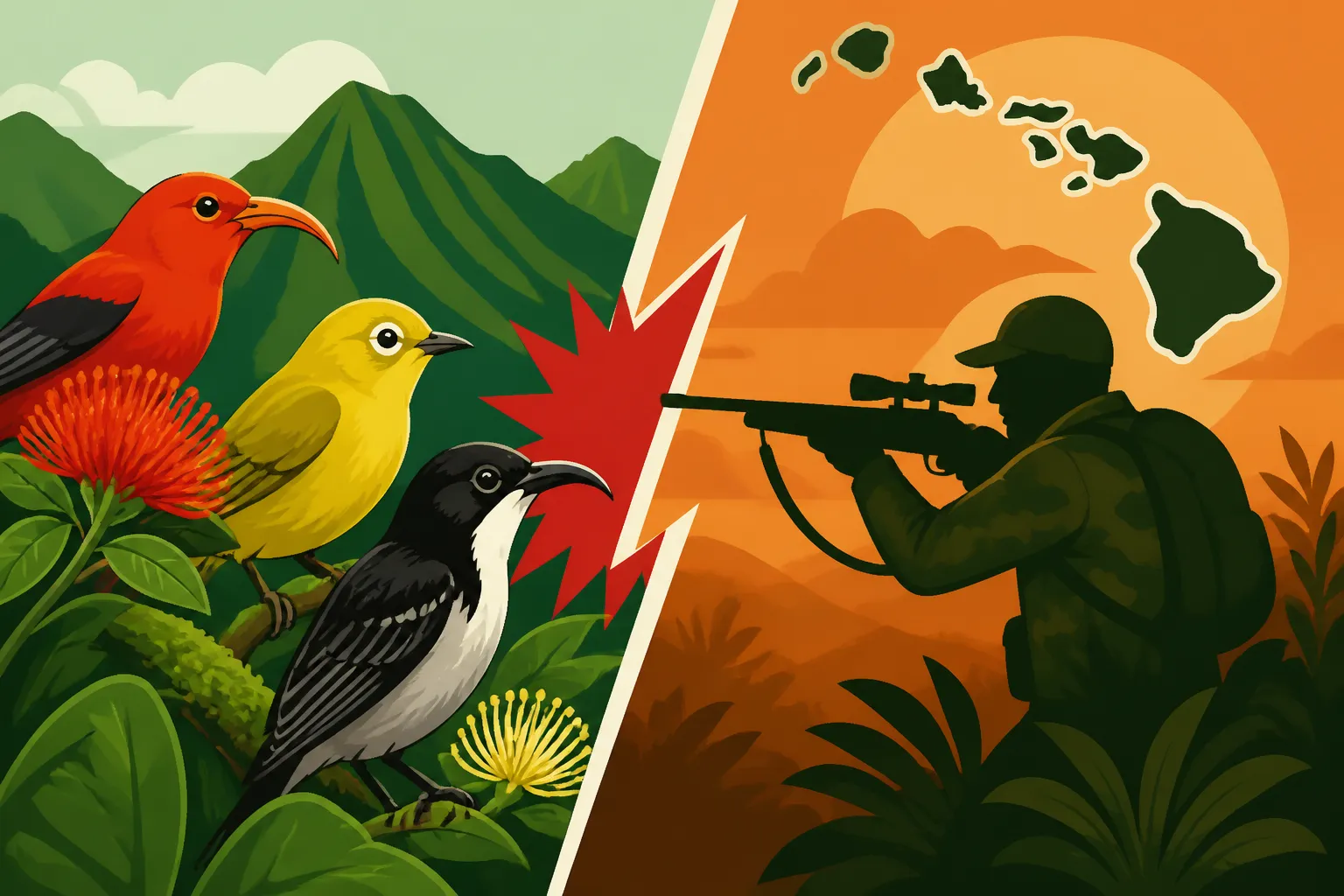
Navigating Hawaii's stunning landscapes for a hunt is an incredible privilege, but it also comes with a unique responsibility: being acutely aware of the islands' incredibly fragile native ecosystem. Hunters often worry about game regulations or finding their target species, but a less obvious, yet equally critical, concern is the potential for an accidental encounter with one of Hawaii's precious, highly endangered native birds. This guide is here to help you understand where these vulnerable species live, how to recognize them, and what you can do to ensure your hunting adventures respect and protect Hawaii's unique avian treasures.
The Delicate Balance: Why Hawaii's Birds Are So Vulnerable
Hawaii's isolation has created a truly unique evolutionary story, one where birds took center stage, evolving into a myriad of forms to fill ecological niches that land mammals occupy elsewhere. This remarkable adaptation, however, also left them incredibly vulnerable to changes.
A Legacy of Isolation and Specialization
Imagine an archipelago millions of years old, born from volcanic activity in the middle of the vast Pacific. For eons, the only land mammals to naturally reach these shores were a single species of bat. Without the presence of predators like wolves, bears, or even large rodents, Hawaii's birds evolved in ways found almost nowhere else. Many lost the ability to fly, like some species of Hawaiian geese and flightless rails, as there was no need to escape ground predators. Others developed highly specialized diets, their beaks perfectly adapted for specific nectars, seeds, or insects found only in certain native plants. They had no natural defenses against the swift, sharp claws of a mongoose or the relentless rooting of a feral pig. This legacy of isolation led to incredible biodiversity, but also extreme fragility. Every native bird species is a unique, irreplaceable branch on the tree of life, and many exist only in tiny, fragmented populations.
When Captain Cook arrived, and especially in the centuries that followed, this delicate balance was shattered. The introduction of everything from goats and pigs to rats, cats, and even invasive plants and diseases, devastated these specialized, defenseless birds. Their populations plummeted, and many species disappeared forever before we even had a chance to understand them. It’s a somber reminder of our impact, and it underscores why vigilance is so important for every person who steps into Hawaii's wild places.
Threats to Native Avifauna
The challenges facing Hawaii's native birds are complex and interconnected, often originating from the very invasive species that hunters are often trying to control. One of the biggest threats comes from introduced predators. Feral cats, often roaming far into remote forest, are devastating to ground-nesting birds and fledglings. Rats, stowaways on early Polynesian canoes and later European ships, consume eggs and chicks. And the mongoose, originally brought in to control rats, ironically preys on ground-nesting birds like the critically endangered Nene.
Habitat loss is another enormous factor. Swaths of native forest have been cleared for agriculture, development, or taken over by invasive plants like strawberry guava, which outcompetes native flora and fundamentally alters forest structure. Even more insidious is avian malaria, carried by introduced mosquitoes. Native Hawaiian birds evolved without this disease, so they have little to no immunity. This is why many of the remaining forest bird populations are confined to higher elevations, above the "mosquito line," where temperatures are too cool for the mosquitoes to thrive. As climate change warms the islands, this mosquito line creeps higher, shrinking safe havens for these already beleaguered birds. For a hunter, understanding these threats means recognizing that your presence, while often beneficial in controlling invasive ungulates, requires an extra layer of awareness to protect these highly sensitive native species.
Key Endangered Forest Birds You Might Encounter
While Hawaii hosts many endangered bird species, a few are more likely to be found in or near public hunting units, particularly in specific habitats. Knowing what to look and listen for is your first line of defense.
The 'I'iwi and 'Apapane: Iconic Honeycreepers
When you picture a vibrant, jewel-toned Hawaiian forest bird, you're likely imagining an 'I'iwi or an 'Apapane. These iconic honeycreepers are among the most recognizable native forest birds, known for their brilliant plumage and specialized beaks. The 'I'iwi is particularly striking with its fiery red body and long, dramatically curved orange beak, perfectly shaped for sipping nectar from the trumpet-shaped 'ohi'a lehua blossoms. The 'Apapane, equally brilliant, is a smaller, crimson-red bird with a black beak, often seen flitting among the canopy.
Both species are intrinsically linked to the native 'ohi'a forests, which are crucial components of Hawaii's watershed. They feed almost exclusively on the nectar of 'ohi'a flowers, playing a vital role in pollinating these trees. Historically, they ranged across all major islands, but due to avian malaria and habitat loss, their populations are now primarily restricted to cooler, wetter, high-elevation native 'ohi'a forests on the Big Island and Maui, with smaller populations on Kauai. If you're hunting in units like the Hilo Forest Reserve country or the Upper Waiakea Forest Reserve on the Big Island, or in Maui's Kula Forest Reserve and Polipoli area, you're likely in their remaining strongholds. Imagine you're Still-Hunting Pigs in Hawaii's Wet Forest on the slopes of Mauna Loa. The air is damp, the 'ohi'a trees are thick, and suddenly you hear a series of unique, fluting whistles and gurgles from the canopy, or spot a flash of scarlet. That's your cue to be extra mindful. These birds are small and quick, and while direct impact is unlikely if you're hunting pigs or goats, simply being aware of their presence and treading lightly through their habitat is part of being a responsible hunter.
The Nene (Hawaiian Goose): A Ground-Nester
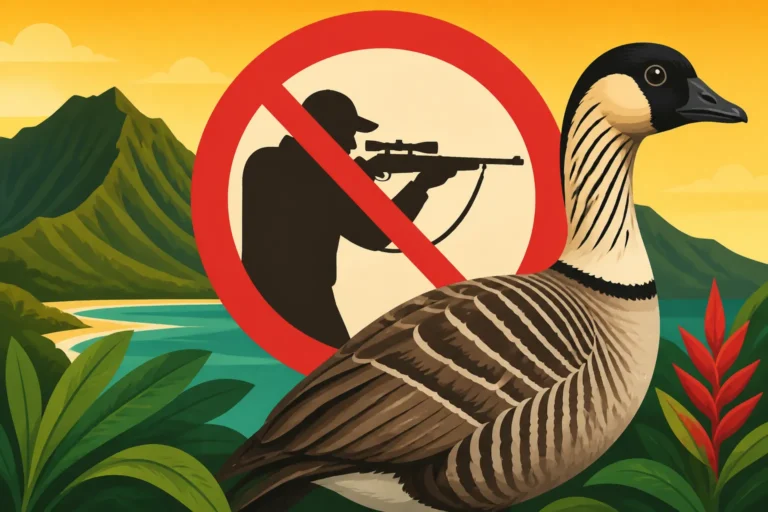
Perhaps the most famous of Hawaii's endangered birds, the Nene (pronounced "nay-nay") is a unique, endemic Hawaiian goose. It's the official state bird, and its story is one of near extinction and ongoing recovery efforts. Unlike most geese, the Nene has adapted to a terrestrial lifestyle, spending most of its time on land rather than water. You'll recognize it by its black head and neck, buff cheeks, and deeply furrowed neck feathers that give it a distinctive striped appearance.
What makes the Nene particularly vulnerable, and why hunters need to be especially cautious, is its ground-nesting habit. Nene lay their eggs directly on the ground, often in shallow scrapes hidden amongst grass or sparse vegetation. This makes them highly susceptible to introduced predators like mongoose and feral cats, as well as accidental disturbance or trampling. Their habitat is more varied than the forest birds, ranging from coastal lowlands to sparse volcanic slopes, and sometimes even surprisingly close to roads and trails within or bordering hunting units. Before heading out, familiarize yourself with How to Recognize a Nene in the Field, especially if your hunt takes you into open grasslands or lava flows. Picture this: you're driving a dirt road into a unit, perhaps Hunting Hawaii's Dry Kiawe Forest on the Big Island, or walking through open country on Maui, and a small flock of goose-like birds slowly walks across your path. That's a Nene. There is absolutely no open season on Nene, and Why Shooting a Nene Is a Serious Offense cannot be overstated; the penalties are severe, and the loss to the species is profound. Give them a wide berth, admire them from a distance, and certainly do not harass them.
Other Species: Pueo, Koloa Maoli, and the Palila
Beyond the well-known honeycreepers and the Nene, several other endangered bird species may inhabit or border Hawaii's hunting units, each with its own unique characteristics and vulnerabilities.
The Pueo (Hawaiian Owl) is a subspecies of the short-eared owl, but with a crucial difference: it's often active during the day. Unlike its mainland relatives that are primarily nocturnal, the Pueo frequently hunts in open fields, pastures, and even along roadsides in daylight hours, especially at dawn and dusk. This makes it more visible to hunters who might mistake it for a non-protected bird. It has distinctive yellow eyes and a mottled brown and white plumage. If you spot an owl hunting over a grassy pasture in the middle of the day, it's almost certainly a Pueo and is fully protected. Be mindful of your surroundings, particularly when Hunting Doves Over a Hawaii Pasture or traversing open country where Pueo might be present. They are vulnerable to habitat changes and secondary poisoning from rodenticides.
The Koloa Maoli (Hawaiian Duck) is another critically endangered species, closely resembling a female mallard. This resemblance is part of its peril, as it frequently hybridizes with feral mallards, leading to a loss of genetic purity. Koloa are found in wetland habitats, taro patches, irrigation ditches, and small streams. Hunters targeting game birds, especially ducks or doves near water sources, must exercise extreme caution. If you are Hunting Pigs Near a Taro Patch or approaching a reservoir, and you see what looks like a small, plain-brown duck, assume it's a Koloa Maoli unless you can definitively identify it as a legal game bird. Positive identification is paramount, as taking a Koloa Maoli would be a significant conservation setback.
Finally, the Palila is a highly specialized honeycreeper found only in the dry, high-elevation mamane-naio forests on the slopes of Mauna Kea on the Big Island. This vibrant yellow, gray, and white bird feeds almost exclusively on the seeds of the mamane tree. Its story is deeply intertwined with the history of hunting feral sheep and mouflon on Mauna Kea, as these ungulates historically devastated the mamane forests, which are the Palila's only food source. The famous The Palila and Mauna Kea's Sheep legal cases significantly reduced ungulate populations in critical Palila habitat, demonstrating how hunting management can directly benefit endangered species. While hunting specifically for Palila is unthinkable, any hunter in the high-elevation units of Mauna Kea, particularly Unit A, must be intensely aware of this bird's presence and its reliance on the mamane forests.
Where to Be Most Vigilant: High-Risk Hunting Units and Habitats
Knowing the birds is one thing, but knowing where you are most likely to encounter them is key to effective prevention. Certain hunting units and habitat types in Hawaii are prime territories for endangered avian species.
Wet, High-Elevation Forests (Big Island, Maui, Kauai)
For many of Hawaii's forest birds, the cooler, wetter, high-elevation native forests are their last bastions of hope. These areas often lie above the "mosquito line," where the vectors for avian malaria struggle to survive, providing a crucial refuge. This means that if your hunting plans take you into units characterized by dense, native 'ohi'a or koa forests, especially those with consistent rainfall and higher altitudes, your vigilance for native birds should be at its peak. On the Big Island, areas like the Upper Waiakea Forest Reserve, sections of the Hilo Forest Reserve, and some areas bordering the vast native forests on the slopes of Mauna Loa are vital. Similarly, on Maui, the high-elevation Kula Forest Reserve, particularly around Polipoli Spring State Recreation Area, is known for its native bird populations. On Kauai, the unique ecosystem of Kokee State Park and the adjacent Alakai Wilderness Preserve, especially the more remote, wet sections, are critical habitats for species like the Puaiohi (small Kauai thrush) and Kauai 'Akialoa.
When you're engaged in Hunting Hawaii's Rainforest Units or exploring Hunting Hawaii's High Elevation Alpine Ground, you are quite literally walking through the living rooms of these rare birds. Consider a scenario where you're focused on Hunting an Ohia Forest Opening for pigs. The dense undergrowth could conceal a ground-nesting bird, or the rustling leaves might not just be a pig, but a rare native thrush. Always be aware of the sounds around you – unfamiliar calls might be a protected species – and keep an eye on the canopy and understory for any unusual movements or flashes of color. These forests are vital watersheds and unique ecological treasures, and every hunter has a role in protecting them.
Open Grasslands and Wetlands (Nene and Koloa Habitat)
While many endangered birds prefer the dense canopy of native forests, species like the Nene and Koloa Maoli thrive in more open environments, bringing them into potential contact with hunters in different types of units. Nene, as ground-nesters, often utilize open grasslands, old agricultural fields (like abandoned sugar cane or pineapple fields), sparsely vegetated lava flows, and even golf courses or ranch pastures that border hunting areas. They are surprisingly mobile and can appear in unexpected places. If your hunt takes you to areas like parts of Maui's Upcountry, the dry leeward slopes of the Big Island, or open plains on Kauai, keep a keen eye out for them.
The Koloa Maoli, on the other hand, is a wetland specialist. Any hunting unit that encompasses or borders marshy areas, stream valleys, taro patches, irrigation ditches, or even stock ponds and reservoirs is potential Koloa habitat. This means that if you're pursuing game birds in general, and especially if you're Hunting a Reservoir Edge for Doves or working a Hunting a Windward Stream Valley, you must be absolutely certain of your target's identity. Game birds like doves and francolin often share these open or semi-open habitats. Before pulling the trigger on any waterfowl or ground-dwelling bird, confirm it's a legal game species and not a Koloa Maoli or a Nene. These habitats are often shared by legal game birds as well, highlighting the need for caution.
Signs, Resources, and Checking Unit Info
The Hawaii Division of Forestry and Wildlife (DOFAW) is the primary resource for all hunting regulations and unit-specific information. They often publish maps and notices that highlight critical habitat areas or specify particular rules for units known to contain endangered species. It's not enough to just know the general rules; you absolutely must check the specific information for the unit you plan to hunt, every single time. Sometimes, specific areas within a unit might have seasonal restrictions or even temporary closures to protect nesting birds.
Beyond paper maps, digital tools can be invaluable. Apps like GoHunt, and others like OuterSpatial, have become incredibly popular for their ability to provide detailed land boundaries, topographic maps, and often, overlay information about specific hunting unit regulations or protected areas. Before any hunt, take the time to use these resources to pull up the map of your intended unit. Look for any areas marked as "critical habitat," "bird sanctuary," "closed to entry," or any specific advisories regarding endangered species. Furthermore, always ensure you complete the required Checking In and Out of Hawaii Hunting Units. At hunter check stations, often physical or increasingly digital via apps, you'll find the most up-to-date information, including any recent changes or alerts regarding protected species. Reading these notices isn't just a formality; it's a crucial step in being a responsible and ethical hunter in Hawaii.
Ethical Hunting and Conservation Practices
Being a hunter in Hawaii means more than just having a license and a tag; it means embracing a profound responsibility for the islands' unique and fragile environment. Ethical hunting practices are not just about following the law; they are about actively contributing to conservation.
Positive Identification and "Know Your Target"
This principle is fundamental to all hunting, but it takes on heightened importance in Hawaii due to the presence of so many endemic, endangered species. "Know your target" means more than just confirming it's an animal you're allowed to harvest. It means confirming it's a legal game animal, that you're sure of its species, and that it is not a protected native bird. This requires patience, good optics, and sometimes, the discipline to simply let an unclear shot pass.
Consider the potential for misidentification: a Koloa Maoli can be mistaken for a mallard hen, especially if seen quickly near water. A Pueo can be confused with a common hawk if you're not used to diurnal owls. A Nene might look like a domestic goose at a distance, especially if you're unfamiliar with its unique features. The consequences of an accidental take are severe, ranging from hefty fines and legal action to the permanent loss of hunting privileges. More importantly, it can deal a devastating blow to already struggling populations of irreplaceable birds. Imagine you're in dense cover, perhaps Hunting Pigs in Hawaii's Rainforest Gulches, and you hear a rustle. You might think it's a pig, but hesitate to confirm. In such an environment, the risk of disturbing or accidentally harming a ground-dwelling native bird is real. Always take the extra second, or even minute, to ensure positive identification before you ever shoulder your weapon.
Minimizing Your Impact
Beyond positive identification, minimizing your overall footprint in hunting units is another critical aspect of ethical hunting. This starts with staying on marked trails or established access routes whenever possible. Venturing off-trail, especially in sensitive forest or wetland areas, can disturb fragile ecosystems, damage native plants, or disrupt nesting birds. This is particularly important during nesting seasons, when birds are most vulnerable to disturbance.
If you hunt with dogs, understanding and adhering to Dog Hunting Rules is paramount. Well-trained dogs are an invaluable asset for pig hunting, but they must be kept under strict control, especially in areas where ground-nesting birds like the Nene are known to occur. A dog running loose and disturbing a Nene nest could have disastrous consequences. Always pack out everything you pack in, including spent casings, food wrappers, and any other trash. This preserves the natural beauty of the area and prevents the introduction of foreign materials that could harm wildlife. Lastly, avoid unnecessary disturbance of native vegetation. Every native plant provides habitat and food for Hawaii's unique creatures, and protecting them is part of protecting the birds that rely on them.
Supporting Conservation Efforts
Hunters are, by their very nature, conservationists. Your purchase of a Hawaii hunting license and the required Hawaii's Wildlife Conservation Stamp directly contributes funds to wildlife management and habitat restoration efforts across the islands. These funds support the very programs that protect endangered species and manage invasive ones. This isn't just a fee; it's an investment in Hawaii's natural heritage.
Actively participate in the health of the ecosystem by reporting any unusual sightings of native birds (especially if they appear sick or injured) or any potential violations you witness to DOFAW. This proactive approach helps authorities monitor populations and address threats swiftly. It's also worth remembering that hunting itself, particularly of invasive species like feral pigs and goats, is a critical conservation tool in Hawaii. These ungulates decimate native forests, spread invasive plants, and create habitat for mosquitoes that carry avian malaria. When you hunt, you are often participating in Hawaii's Feral Animal Control Programs, which indirectly, and sometimes directly, benefits native bird populations by protecting and restoring their vital habitats. By understanding and embracing these roles, hunters become an integral part of Hawaii's delicate conservation mosaic.
Here's a quick guide to some key endangered birds and common game birds you might encounter:
| Species | Status | Key Identification Features | Habitat & Behavior | Hunter Caution |
|---|---|---|---|---|
| Nene (Hawaiian Goose) | Endangered | Black head/neck, buff cheeks, furrowed neck, terrestrial. | Open grasslands, lava flows, pastures, sometimes near roads. Ground-nester. | DO NOT SHOOT. Give wide berth. Very vulnerable to disturbance and predators. |
| Koloa Maoli (Hawaiian Duck) | Endangered | Resembles female Mallard (brown, plain), often shyer. | Wetlands, taro patches, streams, reservoirs. | DO NOT SHOOT. Easy to confuse with feral Mallards; positive ID essential near water. |
| Pueo (Hawaiian Owl) | Endangered | Diurnal (day-active) owl, mottled brown/white, yellow eyes. | Open fields, pastures, grasslands. | DO NOT SHOOT. Distinctive day-flying owl. |
| 'I'iwi | Endangered | Fiery red, long curved orange beak, black wings. | Wet, high-elevation native 'ohi'a forests. Nectivorous. | DO NOT SHOOT. Small, fast-moving forest bird. Be mindful in deep native forest. |
| 'Apapane | Endangered | Crimson red, black beak, black wings. | Wet, high-elevation native 'ohi'a forests. Nectivorous. | DO NOT SHOOT. Small, fast-moving forest bird. Be mindful in deep native forest. |
| Palila | Endangered | Yellow head/chest, gray back, white belly. | High-elevation mamane-naio forests on Mauna Kea. | DO NOT SHOOT. Extremely localized. Avoid disturbing mamane trees. |
| Ring-Necked Pheasant | Game Bird | Large, colorful pheasant, males with iridescent plumage and neck ring. | Open fields, agricultural land, brushy areas. | Legal game bird. Look for distinct size, shape, and color. |
| Erckel's Francolin | Game Bird | Gray/brown with distinctive "tiger stripe" bars on flanks. | Dry, grassy slopes, scrubland, often near kiawe. | Legal game bird. Often found in similar habitats to Nene, requiring caution. |
| Spotted Dove | Game Bird | Larger than most doves, spotted neck patch. | Open areas, pastures, roadsides, urban fringe. | Legal game bird. Compare carefully to any potential small, brown native bird. |
Disclaimer
This article is for general informational purposes only and does not constitute professional advice. Laws, prices and regulations vary by location and change over time. Consult a qualified professional for guidance on your specific situation.