Where Hawaii’s Feral Goats Live
It can be incredibly frustrating to hear about Hawaii's abundance of feral goats, only to find yourself glassing empty hillsides or walking through dense brush without a clue where to start. These wily animals are truly a part of the landscape, but figuring out their specific haunts across the diverse islands is key to a successful hunt. This guide will walk you through exactly where Hawaii's feral goats live, their preferred habitats, and how their distribution impacts your hunting strategy.
Understanding Feral Goat Distribution in Hawaii
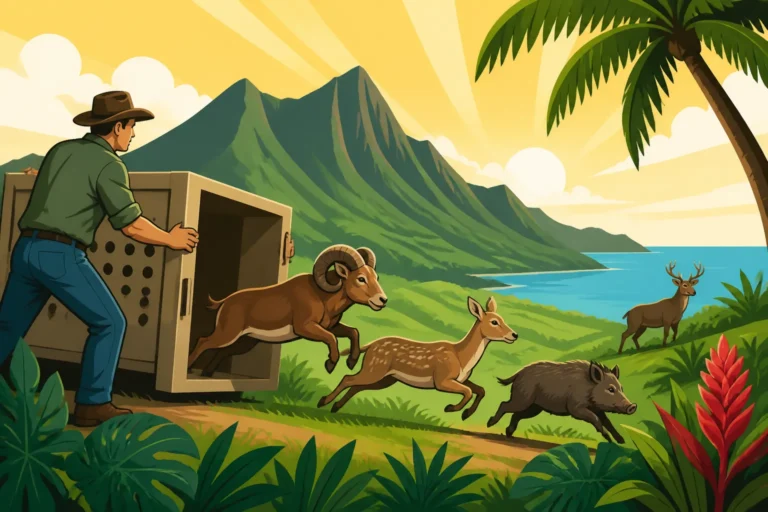
Feral goats, often simply called "goats" by locals, have been a fixture in the Hawaiian Islands for centuries. They were first introduced by Captain James Cook in the late 1700s, and their populations exploded due to the lack of natural predators and an abundance of forage in many areas. Over time, these hardy animals adapted to a wide range of environments, from arid coastlines to high-elevation grasslands and even some wetter forest edges. Understanding their historical spread and how environmental factors now influence where they settle is crucial for any hunter.
Historical Range Expansion and Current Strongholds
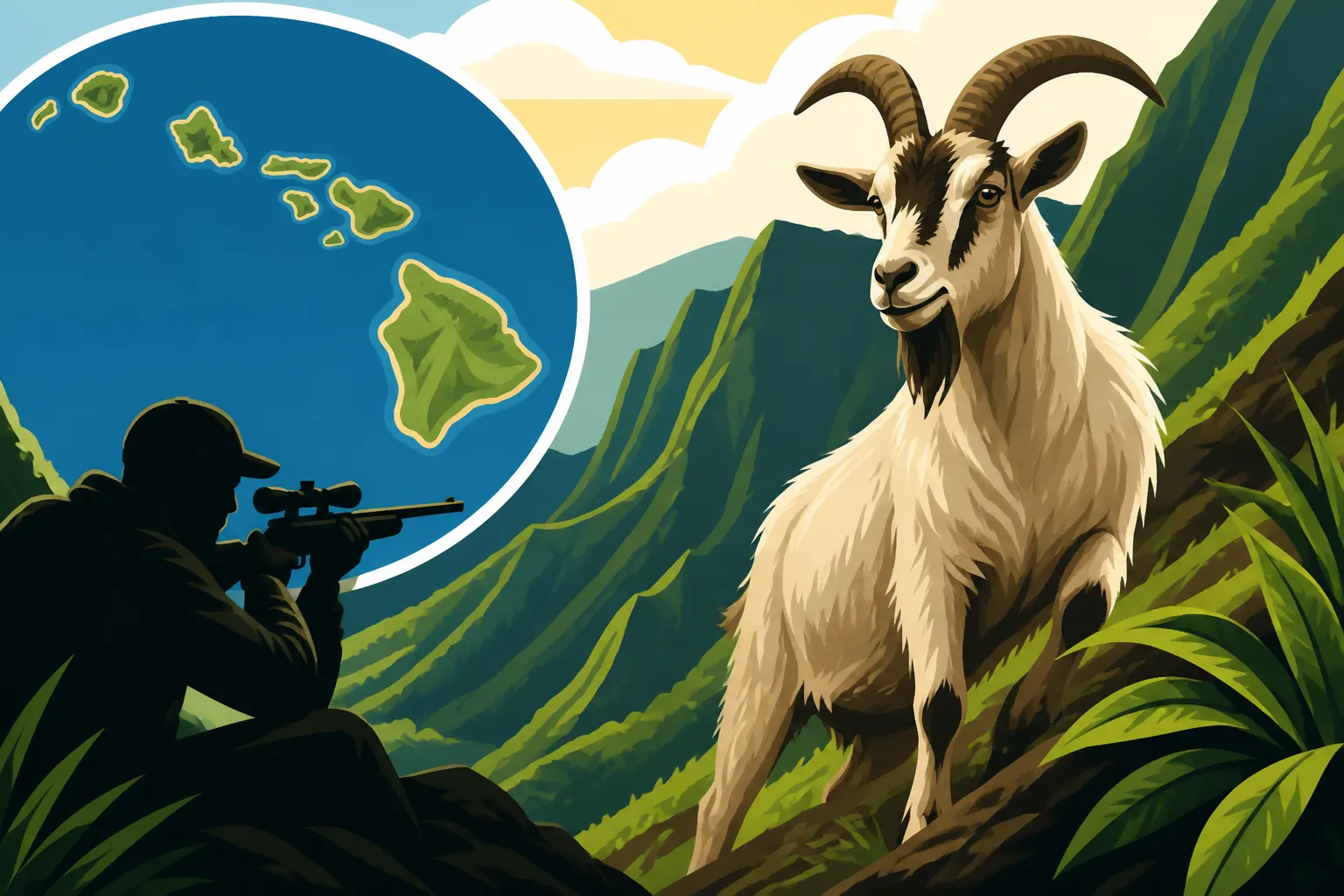
Initially, goats were introduced to several islands, and their numbers quickly grew, spreading into new territories. They are incredibly adaptable, capable of surviving in harsh, dry conditions where other ungulates might struggle. This resilience allowed them to colonize vast stretches of land across the major islands, particularly on the leeward (drier) sides. Today, you'll find significant populations on Hawaii Island, Maui, Kauai, and Molokai, with smaller, more managed populations on Oahu. While they once roamed even more freely, conservation efforts and hunting pressure have concentrated them into specific strongholds.
These strongholds often align with public hunting units and extensive private ranch lands where their impact on native vegetation is less critical or where they are actively managed for hunting opportunities. Knowing that goats thrive in these areas helps hunters focus their scouting. It’s not just about finding any goat, but finding the right kind of country that consistently holds them, whether it’s a bachelor group of billies or a larger nanny-kid herd. Areas that historically supported large numbers continue to do so, though their specific boundaries might shift with land use changes or weather patterns.
Key Environmental Factors Influencing Habitat
Several environmental factors dictate where Hawaii's feral goats choose to make their home. The most significant is undoubtedly water availability. While goats can survive on surprisingly little water, especially if their forage is succulent, they still need access to it, whether from natural springs, seasonal seeps, or man-made stock tanks. During prolonged dry spells, goats will concentrate around reliable water sources, making these areas prime hunting grounds. This is a critical piece of the puzzle when you're Hunting a Water Source in Dry Hawaii Country.
Terrain is another massive factor. Goats are masters of steep, rugged, and broken country. They prefer cliffs, deep gulches, and rocky outcrops that offer both refuge from predators (like humans or hunting dogs) and access to diverse forage. This preference means you're unlikely to find large herds grazing openly in flat, easily accessible pastures for long, unless they are using them as temporary feeding areas before retreating to their fortress-like bedding grounds. Finally, vegetation type plays a role. Goats are browsers, thriving on shrubs, forbs, and even tree leaves, making areas with mixed scrub and sparse trees ideal. They are less common in dense, wet rainforests unless there are rocky clearings or steep slopes within them.
Island-Specific Hotspots for Feral Goats
While goats are spread across multiple islands, their concentrations and the specific types of terrain they inhabit vary significantly from one island to the next. Each island presents its own unique challenges and opportunities for hunting these agile animals. Knowing these nuances can make all the difference in planning a successful trip.
Hawaii Island's Varied Goat Terrain
On Hawaii Island, the Big Island, feral goats are widely distributed, particularly on the drier leeward slopes and coastal areas. You'll find strong populations in the expansive lava fields and rocky, arid rangelands. Areas like the Puu Anahulu Game Management Area (GMA) and sections of the Mauna Kea Forest Reserve, especially on the lower, drier flanks, are well-known for goats. They also inhabit parts of the Kau Forest Reserve and other areas that experience less rainfall. The varied volcanic landscape offers them endless crags, kipukas (islands of vegetation surrounded by lava flows), and sparse kiawe forests to hide and feed.
These goats are incredibly tough, constantly navigating sharp 'a'a and smoother pahoehoe lava flows. If you're planning to hunt here, expect incredibly challenging footing and be sure to check your Boots for Hawaii Lava and Wet Forest. The sheer scale of the Big Island means that while goats are numerous, they can be spread out, requiring extensive glassing and hiking. Look for them particularly in the early mornings and late evenings along the edges of lava flows and in gulches that offer a bit more shade and moisture, making sure to consider Why Hawaii Goats Move at First Light.
Maui's Steep Coastal and Upcountry Herds
Maui is another island with robust feral goat populations. Perhaps most famous are the coastal cliff goats, particularly along the rugged, dramatic coastline of West Maui and the more remote eastern and southern shores like Kahikinui. These animals are truly masters of vertical terrain, clinging to seemingly impossible ledges. Spotting them from a distance is often the first step in Glassing a Hawaii Coastline for Goats. The upcountry slopes of Haleakala also hold good numbers, especially in areas like the Kula Forest Reserve and the dryer sections of the Polipoli Spring State Recreation Area.
The goats on Maui tend to stick to the steepest, most inaccessible parts of the terrain, offering a real test of a hunter's endurance and climbing ability. You'll often find them utilizing deep, brushy gulches that descend from the mountains towards the coast, providing both cover and travel corridors. Hunting these areas requires meticulous planning and often a deep understanding of thermal winds, which can carry your scent surprisingly far up or down the slopes.
Kauai's Famous Canyon Dwellers
Kauai is legendary for its magnificent Waimea Canyon, often called the "Grand Canyon of the Pacific." This immense canyon system is home to some of the densest feral goat populations in Hawaii. The sheer, multicolored cliffs, deep ravines, and extensive system of smaller canyons provide an ideal, virtually impenetrable habitat for thousands of goats. The adjacent Na Pali-Kona Forest Reserve and Puu Ka Pele Forest Reserve also hold significant numbers.
Hunting goats in Kauai's canyons is an experience unlike any other. It involves navigating incredibly steep trails, often with loose rock and unpredictable footing, to reach vantage points where you can spot animals. The goats here are incredibly wary, having learned to use the complex topography to their advantage, disappearing into folds in the landscape with astonishing speed. If you’re considering a hunt here, be prepared for intense physical exertion and focus on Hunting Goats in a Kauai Canyon, which offers unparalleled views and challenging stalks.
Molokai and Oahu's More Concentrated Populations
Molokai, often called the "Friendly Isle," also supports a healthy population of feral goats, particularly along its rugged southern coast and in the dryer western sections of the island. These areas feature dramatic sea cliffs, deep gulches, and sparse kiawe forests, providing ideal goat habitat. Access can be challenging, with much of the prime territory being on private ranch lands, though public hunting units do exist. The terrain here can be very steep and broken, reminiscent of some of Maui's coastal areas but often even more remote.
Oahu, being the most populated island, has fewer widespread feral goat populations in easily accessible public hunting units. However, there are still pockets where goats thrive. The Waianae Mountain Range, particularly in the Waianae Kai Forest Reserve and some of the more remote, rugged ridges, can hold good numbers. These areas are often drier and steeper than the lush windward side of the island, providing suitable habitat. Hunting on Oahu requires careful study of the specific unit regulations and often involves significant hiking into less-pressured areas. For both Molokai and Oahu, understanding the specific unit boundaries and access points is paramount, as goat numbers can be highly localized.
Recognizing Prime Goat Habitat
Understanding where goats generally live is one thing, but knowing how to identify specific pockets of prime habitat within those areas is where true hunting success begins. Goats are creatures of habit, and their choice of terrain is dictated by survival – food, water, and protection.
The Allure of Steep, Arid Slopes and Cliff Faces
Feral goats absolutely thrive in steep, arid environments. They are incredibly agile climbers, capable of navigating treacherous cliff faces, rockslides, and deep, eroded gulches with ease. These vertical sanctuaries offer them a significant advantage: safety from most predators, including human hunters. When you're searching for goats, always gravitate towards the steepest, roughest country you can find. A Hunting Goats on a Sea Cliff Safely strategy means identifying those ledges and pockets of vegetation that seem impossible to reach.
Why do they love it so much? The broken terrain provides countless places to bed down, often on narrow ledges or in shallow caves, giving them a commanding view of their surroundings. This elevation also aids in catching thermals, which can carry scent upwards, alerting them to danger below. The sparse vegetation in these arid zones means they are often less bothered by dense undergrowth, allowing for better visibility and easier movement. While it might look barren to us, these slopes offer a surprising variety of tough, drought-resistant plants that goats relish, like kiawe, haole koa, and various grasses and forbs that cling to rocky soils.
Water Sources and Foraging Areas
Even in arid environments, water is a necessity. Goats are remarkably efficient at extracting moisture from their diet, but they still need to drink, especially when temperatures soar or forage becomes scarce. This makes any reliable water source an absolute magnet for goats. Think about natural springs, seeps on cliff faces, stock ponds used for cattle, or even man-made water catchments. During dry periods, these spots will be hammered, and you'll find abundant fresh sign around them.
Foraging areas usually surround these water sources or are located within easy travel distance from their bedding grounds. Goats are primarily browsers, so they prefer areas with a mix of shrubs, bushes, and trees rather than purely grassy pastures. They'll strip leaves, nibble on young shoots, and even debark certain trees. Look for distinct browse lines on vegetation, especially around the 3-4 foot mark. You might also find heavily worn trails leading from their bedding areas to these feeding zones. The connection between water and food is key to understanding goat movement patterns, and often, hunting a prominent Water and Heat Planning for a Hawaii Hunt strategy will pay dividends here.
Cover and Escape Routes
Despite their love for open, steep terrain, goats still need cover. This isn't always dense forest, but rather pockets of thick brush, deep gulches, rock formations, or even just shadowed areas that offer a sense of security from above. The cover allows them to rest undisturbed and escape quickly when threatened. Their escape routes are almost always uphill, into the most inaccessible parts of the terrain, using their incredible climbing ability to gain distance and elevation.
When scouting or hunting, pay close attention to the transitions between open feeding areas and thicker, more broken country. These transition zones are often where you'll catch goats moving at first light or last light. Understanding How Goat Herds Move Through a Canyon can give you an edge, as they often follow established routes that lead to safety. Look for well-worn trails, fresh droppings, and rubbed vegetation along these routes. Knowing where they'll likely flee to can help you anticipate their movements and position yourself for a shot, or at least cut them off before they vanish into the cliffs.
How to Locate Goats in the Field
Finding feral goats in Hawaii isn't always as simple as driving around. These animals, while often abundant, can be incredibly elusive, disappearing into the vast, broken landscape. Successful goat hunting often comes down to patience, good optics, and an understanding of their daily routines.
Glassing Techniques for Open Country
When you're hunting open, rugged country, your binoculars or spotting scope are your most important tools. Goats, especially billies, love to bed on exposed ledges or rocky outcrops where they can soak up the sun and keep an eye on their surroundings. The key is to find a high vantage point that allows you to systematically pick apart the terrain. Don't just scan; grid the area slowly, looking for any anomaly: a patch of white or brown that doesn't quite match the rocks, a horizontal line where everything else is vertical, or the distinct profile of a goat.
Start glassing at first light, as goats are often active during the cool morning hours before the sun gets too high. Pay particular attention to sunny slopes after cold nights, or shaded slopes as the day heats up. Use a good tripod for your optics to minimize shake and allow for extended periods of glassing. Look not just for whole animals, but for parts of animals: an ear flicking, a tail twitching, or the shine of an eye. Remember, Glassing a Hawaii Coastline for Goats is a patient game, and often the goats you find are the ones you look for the longest. Sometimes, the thermal conditions will be perfect for spotting them with a distant shimmer, while other times, it's about catching them moving slowly across a ridge.
Reading Sign in Less Obvious Terrain
Not all goat habitat is wide open. In areas with more brush, scattered trees, or even denser gulches, you'll need to rely more on reading sign. Look for fresh tracks, especially around water sources or along established trails. Goat tracks are distinct: smaller than pig or deer tracks, with two pointed hooves. Fresh tracks will have crisp edges and no debris in them. Pay attention to how many different sizes of tracks you see, which can tell you if it's a herd or a lone billy.
Droppings are another key indicator. Goat droppings are small, round, and hard pellets, similar to deer but often smaller. Fresh droppings will be moist and dark, while older ones will be dry and faded. Heavily used trails will often have an abundance of droppings. Also, look for rubbed trees or bushes, where goats have polished their horns or scratched themselves. Finally, pay attention to distinctive goat odor, especially in enclosed areas like caves or dense thickets. This musky smell is unmistakable once you learn it and often indicates very recent presence. Understanding the nuances of fresh versus old sign is a skill developed over time, but it’s critical when goats are using thick cover.
Timing Your Hunt Around Goat Behavior
Goats are generally most active during the cooler parts of the day: early morning and late afternoon/evening. During midday, especially in Hawaii's heat, they'll often bed down in shady, secluded spots, typically on ledges, under overhangs, or within thickets. Planning your hunt to coincide with these active periods significantly increases your chances of encountering them. This means being in your glassing position or approaching your hunting area well before sunrise and staying until sunset.
Midday can be a good time for a slow, methodical stalk into areas where you've seen goats bed down, but it requires extreme stealth and knowledge of the terrain. Goats are incredibly wary, and their sharp eyesight and keen sense of smell make them challenging prey. Wind direction is always paramount, as you need to stay downwind to avoid alerting them. Checking the wind frequently using a dust bottle or powder is crucial. Moreover, weather patterns can influence their behavior. After a cool night or a light rain, goats may be more active and out feeding longer. GoHunt's weather tools can be helpful here for planning. Conversely, extreme heat or heavy rain can push them into thicker cover or less exposed areas, so adjusting your strategy based on conditions is key.
Conservation and Management Considerations
Hunting feral goats in Hawaii is not just a recreational pursuit; it's a vital component of the islands' conservation strategy. While these animals are cherished game by hunters, their presence also poses significant ecological challenges to Hawaii's unique and fragile native ecosystems.
The Role of Hunting in Population Control
Because feral goats are not native to Hawaii and have no natural predators, their populations can rapidly proliferate, leading to overgrazing and significant environmental damage. They strip native plants, compact soils, and contribute to erosion, especially on steep slopes. This destructive behavior directly threatens endangered native flora and exacerbates soil loss, which can then impact coral reefs as sediment washes into the ocean. This is Why Goats Cause Erosion in Hawaii is a critical concept to understand for any hunter.
Hunting plays a critical role in managing these populations, helping to keep their numbers in check and mitigate their impact on sensitive ecosystems. The Hawaii Department of Land and Natural Resources (DLNR), Division of Forestry and Wildlife (DOFAW), actively manages hunting seasons and bag limits to encourage harvest. For instance, many units allow multiple goats per hunter, or have year-round seasons in specific areas, reflecting the need for consistent control. By participating in these hunts, we, as hunters, are directly contributing to the health of Hawaii's unique environment, performing a valuable service that benefits native species and habitats. This management is a complex dance between providing recreational opportunities and protecting sensitive areas.
Fenced Conservation Areas and Goat Management
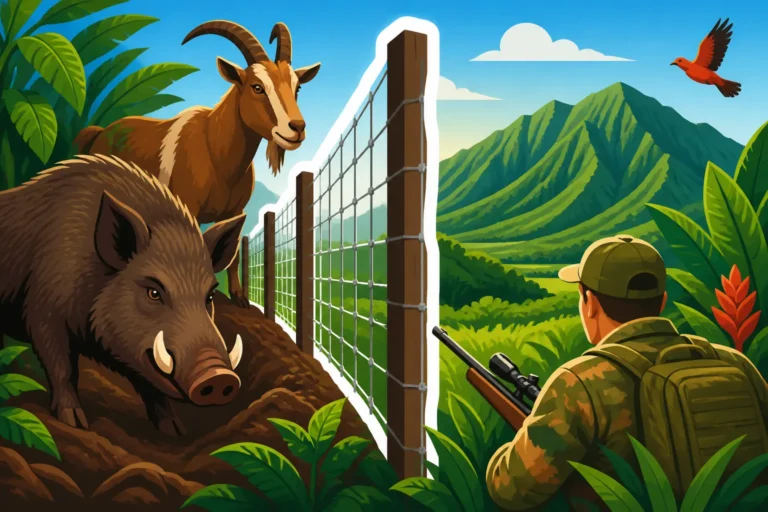
In addition to hunting, another critical management tool employed by DOFAW and various conservation organizations (like The Nature Conservancy and local Watershed Partnerships) is the establishment of fenced conservation areas. These fences are designed to exclude invasive ungulates, including goats, from particularly sensitive tracts of native forest, rare plant habitats, or critical watershed areas. The goal is to allow these fragile ecosystems to recover without the constant browsing pressure of feral animals.
Within these fenced areas, goat populations are often completely removed, sometimes through targeted aerial eradication efforts or intensive ground-based hunts. Hunters might encounter signs indicating these protected zones and are expected to respect these boundaries, understanding their role in preserving native Hawaiian biodiversity. While some hunters may prefer completely open access, these fences are a necessary measure to protect what little native habitat remains. Knowing about Hawaii's Fenced Conservation Boundaries is essential for any hunter venturing into the islands, as these boundaries directly influence where you can and cannot pursue game. It's a balance of resource protection and sustainable hunting, all geared towards preserving Hawaii's irreplaceable natural heritage.
| Island | Primary Goat Habitat Types | Key Hunting Areas (Examples) | General Access Level | Typical Goat Size (Billy) |
|---|---|---|---|---|
| Hawaii Island | Arid lava flows, kiawe forests, dry rangelands, gulches | Puu Anahulu GMA, lower Mauna Kea slopes, Kau Forest Reserve | Moderate to Difficult | 60-120 lbs |
| Maui | Coastal cliffs, steep upcountry slopes, brushy gulches | West Maui, Kahikinui, Polipoli Spring State Recreation Area | Moderate to Difficult | 50-100 lbs |
| Kauai | Waimea Canyon, Na Pali-Kona Forest Reserve, steep ravines | Waimea Canyon, Puu Ka Pele Forest Reserve | Difficult | 70-130 lbs |
| Molokai | Southern coastal cliffs, dry western slopes, kiawe flats | Public reserves, some private ranch access | Moderate | 50-90 lbs |
| Oahu | Waianae Mountain Range ridges, steeper dry slopes | Waianae Kai Forest Reserve, other remote public units | Difficult | 40-80 lbs |
Disclaimer
Hunting in Hawaii involves inherent risks, including navigating challenging terrain, unpredictable weather, and encounters with wildlife. Always prioritize safety, adhere to all local, state, and federal hunting regulations, and obtain all necessary licenses and permits. This guide is for informational purposes only and does not substitute for professional instruction, landowner permission, or thorough personal preparation. Conditions in hunting units can change rapidly, so always check with the Hawaii Department of Land and Natural Resources (DLNR) Division of Forestry and Wildlife (DOFAW) for the most current rules, season dates, and access information before planning any hunt.