Why Pigs Root Up Hawaii Rainforest
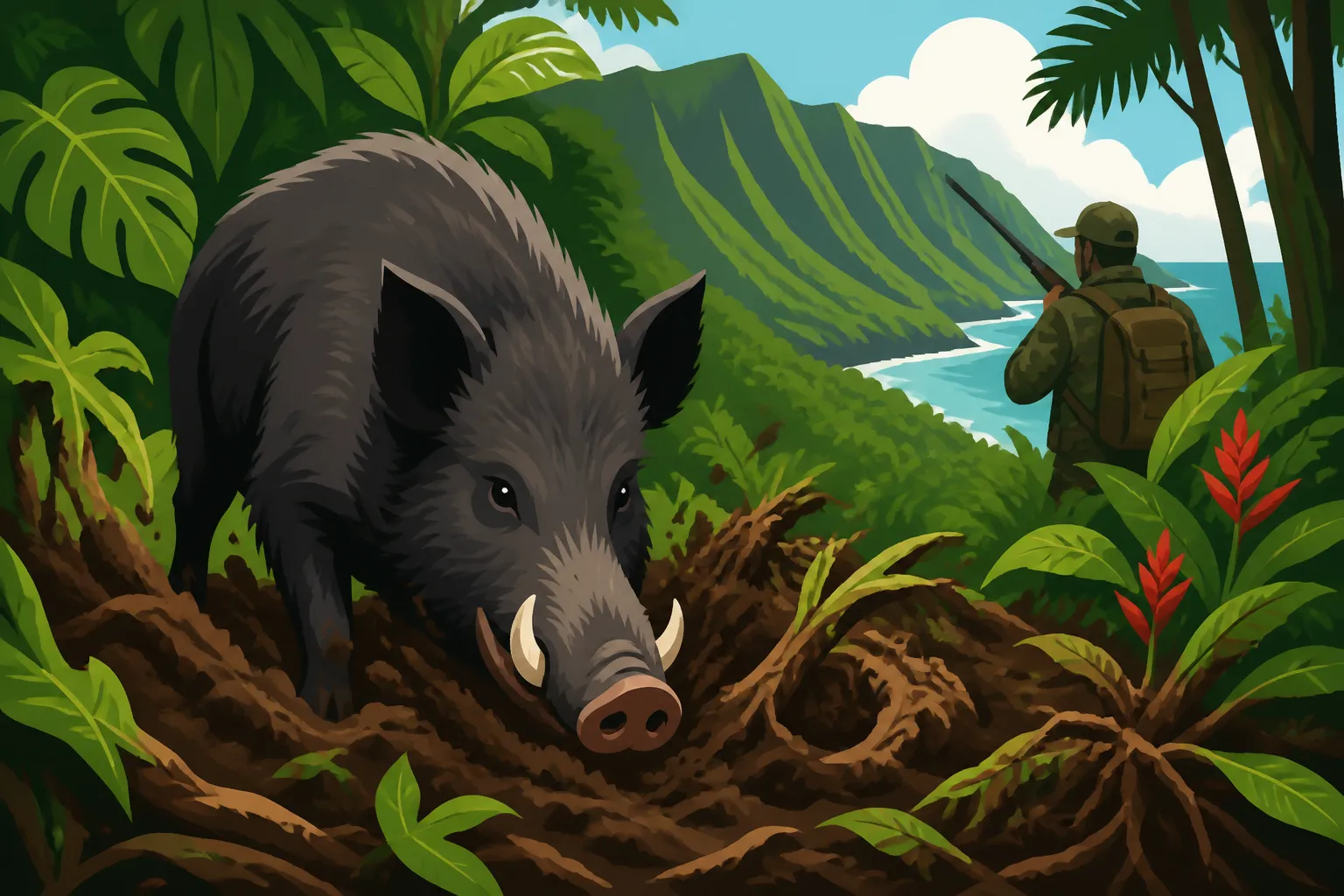
Anyone who has spent time traversing Hawaii's lush, vibrant rainforests has inevitably seen it: patches of earth violently churned, muddy furrows snaking through delicate undergrowth, and once-pristine stream banks turned into a muddy mess. It’s a disheartening sight, and it’s all the work of feral pigs. This extensive rooting isn't just an annoying mess; it’s a critical behavior that profoundly impacts Hawaii's unique and fragile ecosystems, and understanding why these pigs turn the forest floor upside down is key to grasping their overall effect and even finding them.
The Root of the Problem: Why Pigs Root Instinctually
Feral pigs (a mix of the original Polynesian pigs and later introduced European wild boar) aren't just destructive for the sake of it; their rooting behavior is deeply ingrained instinct, driven by their basic biological needs. They are foraging animals, and the moist, rich soil of Hawaii's rainforests offers a buffet of sustenance just beneath the surface. This isn't a casual dig; it's a dedicated search for survival, and their powerful snouts and sturdy bodies are perfectly adapted for it.
Unearthing a Subterranean Feast
Pigs are omnivores, and while they'll eat just about anything – from fallen fruit and seeds to invertebrates and even small vertebrates – a significant portion of their diet in wet, forested areas comes from underground. Their sense of smell is incredibly acute, allowing them to detect food sources buried several inches deep. They use their strong snouts, which are reinforced with cartilage and muscle, like plows to dig and overturn soil. Imagine having a built-in metal detector and a shovel always at the ready; that’s essentially what a pig’s snout is in the rainforest. They're not just rooting randomly; they're following scent trails and detecting changes in the soil that indicate a potential meal.
Consider a mature 'ōhi'a forest floor, rich with decomposing leaf litter and a thick layer of humus. Beneath this lies a network of roots, fungi, and invertebrates, all prime targets for a hungry pig. They might be after the juicy rhizomes of ferns, the tender corms of native sedges, or the nutritious tubers of invasive plants like ginger. Even earthworms and grubs provide a protein-rich snack. This constant quest for buried treasure means that any area with ample subsurface food is fair game for a pig's rooting efforts. The energy they expend is quickly recouped by the calories they consume from these finds, making it a highly efficient foraging strategy in these environments.
The Role of Moisture and Soil Composition
Hawaii's rainforests are, by definition, wet. This consistent moisture keeps the soil soft and workable, making it much easier for pigs to root through than the hard, dry ground found in leeward, arid areas. A pig trying to root in sun-baked lava soil would have a much tougher time, expending far more energy for potentially fewer rewards. But in the saturated soils of a windward gulch or a cloud-shrouded forest, the ground practically gives way under their snouts. This ideal consistency means pigs can cover more ground and extract more food with less effort.
Furthermore, the organic matter content in rainforest soils is typically high, providing a fertile breeding ground for the very things pigs love to eat. As leaves, branches, and even entire trees decompose, they create a nutrient-rich layer that supports a diverse community of fungi and invertebrates. The constant rain and humidity also encourage the growth of a wide array of plants, many of which have edible underground structures. When you see a large, heavily rooted area, it's often a testament to the richness of the soil and the abundance of subterranean food sources it once held. The wet conditions not only facilitate digging but also ensure a steady supply of targets, reinforcing the rooting behavior as a successful strategy for survival and growth for these animals.
Ecological Devastation: The Impact of Pig Rooting in Hawaii's Rainforests
While rooting is a natural instinct for pigs, their presence in Hawaii’s rainforests is anything but natural. These ecosystems evolved over millions of years without large, terrestrial mammals, and certainly not without a creature capable of tearing up the forest floor with such efficiency. The result is a cascade of negative impacts that threaten the very fabric of Hawaii’s unique biodiversity. The rooted areas become wounds in the landscape, opening pathways for invasive species and altering critical ecological processes.
Destructive Cycles: Soil Erosion and Water Quality
One of the most immediate and visible consequences of pig rooting is soil erosion. When pigs churn up the forest floor, they loosen compacted soil, destroy the protective layer of leaf litter, and expose bare earth to the elements. In a rainforest, where rainfall is frequent and often heavy, this exposed soil is easily washed away. This isn't just a minor inconvenience; it leads to significant soil loss, especially on steep slopes. The topsoil, which is rich in nutrients and organic matter, is the foundation of the forest, and its removal can severely inhibit the growth of native plants.
The displaced soil and sediment don't just disappear; they end up in streams and rivers, dramatically impacting water quality. Imagine the clear, pristine mountain streams that are vital for native aquatic life, now choked with mud and debris. This increased sedimentation can suffocate stream beds, destroy the habitats of native gobies (like the 'o'opu), and contribute to murky, polluted nearshore waters, harming coral reefs and marine life further downstream. Furthermore, the loss of the spongy, undisturbed forest floor reduces the land’s capacity to absorb and filter rainwater, leading to faster runoff, increased flash flooding, and less groundwater replenishment. It's a vicious cycle where pig activity directly degrades the water resources that all life on the islands depends on.
Spreading Invasive Species and Outcompeting Natives
Feral pigs are notorious vectors for invasive plant species. As they root, they create ideal conditions for invasive seeds to germinate. Many invasive plants thrive on disturbed soil and direct sunlight, conditions that pig rooting readily provides. Furthermore, pigs often consume the fruits of invasive plants, and their digestive systems don't always destroy the seeds. These seeds are then dispersed widely through their feces, often into newly rooted patches where they have a competitive advantage over native species. Think of a pig eating invasive strawberry guava fruit; later, as it roots up a patch of ground, it deposits guava seeds in a perfectly prepared seedbed.
This process accelerates the displacement of native plants. Native seedlings are particularly vulnerable to being uprooted and trampled by pigs, and they often struggle to compete with fast-growing invasive species in disturbed areas. Over time, areas heavily impacted by pigs can shift from diverse native rainforests to monocultures dominated by invasive plants like ginger, guava, or kāhili ginger, creating a "biological desert" for native species that depend on specific host plants. This constant disturbance also affects the intricate relationships between native plants and pollinators, leading to further declines in biodiversity. Anyone Hunting Pigs in Hawaii's Rainforest Gulches will see firsthand how these pigs have altered the natural flora.
Disease Transmission and Impact on Native Wildlife
Beyond habitat destruction, feral pigs can also transmit diseases and parasites that can impact both wildlife and humans. They can carry leptospirosis, a bacterial disease that can be fatal to humans and dogs, often spread through contaminated water sources or direct contact with infected pig urine. Hunters need to be especially mindful of this risk, particularly when field dressing an animal or working near stagnant water. Another concern for those handling pig meat is Rat Lungworm and Hawaii Game Meat, which is a serious health concern in Hawaii.
While less direct, the ongoing disturbance from pig rooting also affects native ground-nesting birds and invertebrates. Their nests and burrows can be destroyed, and their food sources disrupted. The continuous presence of pigs creates a stressful environment for native wildlife, potentially forcing them into smaller, fragmented habitats. The cumulative effect is a weakened ecosystem, less resilient to further environmental changes and more vulnerable to the relentless march of invasive species. Understanding these impacts is crucial for appreciating why these animals, despite being a valued game species, are considered a significant conservation threat in Hawaii.
Reading the Signs: How Rooting Behavior Informs Hunters
For hunters, understanding pig rooting behavior isn't just an academic exercise; it's a practical skill that can significantly increase your success in the field. Rooting sign tells a story: where pigs have been, what they were eating, and potentially where they're headed. By learning to interpret these clues, you can improve your chances of encountering these elusive animals. This knowledge is especially valuable when you're trying to locate pigs in dense, challenging rainforest terrain where direct sightings are rare.
Interpreting Rooted Areas: Fresh vs. Old Sign
The first step in using rooting to your advantage is distinguishing between fresh and old sign. Fresh rooting will look recent: soil will be moist and dark, often still clumping together, and there might be fresh tracks or scat nearby. If it's been raining, truly fresh rooting will be noticeably darker and more disturbed than the surrounding wet ground. You might even see recent chew marks on exposed roots or tubers. This is the hot sign you're looking for, indicating pigs were in the area very recently, perhaps even within the last few hours. Fresh rooting around a water source in a dry spell is a prime indicator.
Old rooting, on the other hand, will appear dried out, with the disturbed soil having crusted over or washed away. Vegetation might be starting to regrow, or leaf litter might have begun to settle back into the furrows. While old sign tells you pigs use the area, it doesn't give you a current location. Knowing the difference helps you decide whether to slow down and hunt meticulously, or to keep moving until you find fresher activity. Learning to differentiate these signs comes with experience, but it’s a critical part of Reading Pig Sign Along a Muddy Trail and developing your tracking skills.
Table: Interpreting Pig Rooting Sign
| Sign Feature | Fresh Rooting | Older Rooting | Implications for Hunters |
|---|---|---|---|
| Soil Condition | Moist, dark, loose clumps, shiny if wet | Dry, hardened, crusted, lighter color if exposed | Pigs are very close; hunt slowly and quietly. |
| Vegetation | Torn, uprooted, still green/freshly broken | Wilting, yellowing, new sprouts, covered by debris | Pigs used this area, but could be long gone. |
| Tracks/Scat | Clear, distinct tracks; soft, moist scat | Fading tracks; dry, crumbling scat | Direct evidence of recent presence; follow quietly. |
| Smell | Earthy, musky pig scent (sometimes) | No discernible pig scent | Strong indicator of current activity; be ready. |
| Associated Mud | Fresh mud splatters, wet wallows | Dry, cracked mud; old, dusty wallows | Indicates current water usage or bedding. |
Targeting Active Areas with GoHunt Data
Understanding pig behavior means recognizing patterns in their rooting. Pigs will often favor certain areas based on food availability, shelter, and water. A large patch of ginger or wild taro, for instance, is a magnet for rooting. Knowing that pigs return to areas where they've found abundant food can guide your hunting strategy. If you find a heavily rooted area, observe the direction of travel, look for trails leading in and out, and consider setting up a vantage point downwind.
Resources like GoHunt can be invaluable in this regard. While GoHunt primarily focuses on mapping and regulations, the detailed unit descriptions and historical data can help you identify areas known for pig activity, which often correlates with rooting. If a unit is described as having dense rainforest or specific invasive plant populations known to attract pigs, you can bet there will be rooting. Using GoHunt's mapping features, you can also identify potential travel corridors between rooted areas, bedding sites, and water sources, allowing you to anticipate pig movements. For example, if you're looking to hunt pigs in a particular unit on the Big Island, using GoHunt to identify specific gulches or wet forest areas can help you narrow down your search for fresh rooting. These digital tools, combined with your increasing field craft, offer a powerful advantage in locating your target.
Seasonal Changes and Food Sources
Pig rooting isn't static; it changes with the seasons, largely driven by food availability. During wetter periods, pigs might root more broadly as the ground is soft and new growth provides fresh tubers and rhizomes. In drier months, they might concentrate their rooting efforts around remaining moist areas, like stream banks, spring seeps, or deep gulches where moisture is retained longer. This understanding of seasonal shifts is crucial for predicting where pigs will be concentrating their efforts.
For example, after a heavy rain, the forest floor softens, making it easier for pigs to access newly available food sources. Conversely, during a prolonged dry spell, pigs will be drawn to areas that retain moisture, and their rooting might be more focused and intense in those specific spots. Knowledge of What Feral Pigs Eat in the Islands will further enhance your ability to predict where they'll be rooting. By coupling your observations of rooting sign with an understanding of the prevailing weather and seasonal food cycles, you can become a much more effective pig hunter, moving beyond simply reacting to old sign and instead anticipating where the next fresh patch of turned-up earth will appear.
Disclaimer
This article is for general informational purposes only and does not constitute professional advice. Laws, prices and regulations vary by location and change over time. Consult a qualified professional for guidance on your specific situation.