What a Hawaii Feral Goat Weighs
When you’re dreaming of a Hawaii hunting adventure, it’s natural to wonder about the size of the animals you might encounter. Feral goats, tough and elusive residents of these islands, often defy expectations. Hunters frequently underestimate their heft and the sheer challenge of getting one off a steep pali or out of a remote gulch. This comprehensive guide is here to shed light on what a Hawaii feral goat typically weighs, helping you prepare for the physical demands and the immense satisfaction of harvesting one of these resilient creatures.
Understanding Feral Goat Weight in Hawaii
Hawaii’s feral goats are not your average domestic farm animals. They are descendants of domestic stock introduced centuries ago, but generations of living wild in some of the most rugged terrain imaginable have forged them into lean, powerful, and incredibly adaptable animals. Their weight can vary significantly, influenced by a cocktail of factors unique to the islands.
Average Weight Ranges for Hawaii's Feral Goats
When we talk about typical weights for Hawaii’s feral goats, we need to differentiate between the sexes. Generally, a mature billy (male) will outweigh a nanny (female) by a significant margin. A healthy adult billy in Hawaii might tip the scales anywhere from 80 to 150 pounds live weight, with some truly exceptional individuals pushing towards 180 pounds or even a bit more. These are often older, battle-hardened males that have survived countless hunting seasons and thrived in their harsh environment.
Nannies, on the other hand, tend to be smaller and more delicately built. You can expect an adult nanny to weigh in the range of 50 to 90 pounds, though younger females might be closer to 40 pounds. Keep in mind that these figures are for their live weight, out in the field. Once you’ve field-dressed an animal, removing the entrails, the weight you’re actually packing out will be significantly less, often by 25-35%. This difference is important to remember when planning your pack-out strategy.
The specific island and even the particular unit on an island can influence these averages. For instance, goats living on the lush, wetter slopes might carry a bit more fat and muscle than their counterparts scrabbling for a living on the extremely arid, rocky leeward coasts. It’s a testament to their resilience that they thrive in such diverse conditions, but it certainly means there's no "one size fits all" answer to their weight.
Factors Influencing Goat Size
The size and weight of a feral goat in Hawaii are not just random numbers; they are a direct reflection of their environment, their lineage, and their life story. Understanding these factors can give you a better idea of what to expect when you spot one through your binoculars.
One of the biggest influences is habitat and food availability. Goats grazing in areas with more consistent rainfall and richer forage, like certain parts of the Big Island or the moister gulches of Maui, tend to grow larger and carry more body mass. These areas offer a more stable food source, allowing goats to put on weight more consistently. Conversely, goats living in extremely dry, sparse kiawe forests or on barren lava flows, where every bite of vegetation is hard-earned, often appear leaner and might not reach the maximum weight potential seen in more favorable environments. They are survivors, adapting their body mass to the available resources.
Genetics also play a crucial role. Over the centuries, different strains of domestic goats were introduced to the islands, and these populations have since interbred and evolved. Some localized populations might have a genetic predisposition for larger size or more robust horn growth, while others might be naturally smaller-bodied. This genetic soup, combined with the pressures of natural selection in the wild, leads to the wide variation we see today. You might find a heavy-bodied billy in one unit, while a similar-aged animal just a few ridges over appears much smaller, simply due to the specific genetics of that micro-population.
Finally, the age of the goat is paramount. Like most wild animals, goats continue to grow and put on weight for several years. A yearling billy will be considerably smaller than a 5 or 6-year-old ram that has reached its full maturity. Trophy hunters often seek out these older, heavier animals, not just for their impressive horns but also for their sheer size. However, consistent hunting pressure in some easily accessible units can sometimes mean that fewer animals reach old age, potentially skewing the average size downwards in those specific areas. It's a dynamic system, and the balance of these factors constantly shifts.
Beyond the Scale: Assessing a Goat in the Field
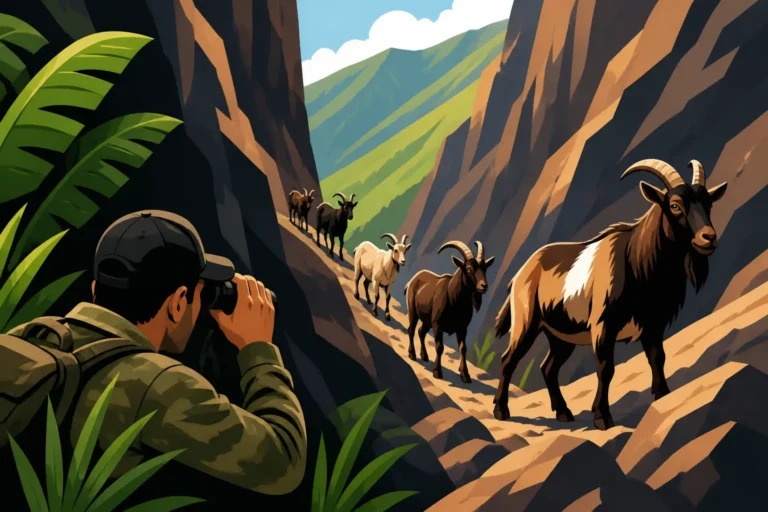
Knowing the average weight is one thing, but being able to quickly assess an animal's size when it's standing on a distant cliff face or bolting through dense brush is a whole other skill set. Hawaii’s terrain often makes judging animals incredibly tricky, adding an exciting layer of challenge to the hunt.
Visual Cues for Judging Size and Age
When you're out in the field, you won't have a scale, so learning to read the animal's body language and physical attributes is key to judging its size and age. One of the most obvious indicators is body mass and overall build. A big, mature billy will have a deep chest, thick shoulders, and a generally robust, blocky appearance, especially compared to the more slender frame of a nanny or a younger goat. Look for a sag in their belly, which can indicate age and condition, particularly in dry areas where they might be carrying more bulk. Their necks will often be thicker and more muscled, particularly as they mature.
Another major clue lies in their horns. While horn length doesn't always directly correlate with body weight, older, heavier billies almost invariably sport larger, thicker horns with more pronounced rings or growth lines. Nannies usually have much shorter, thinner, and straighter horns, if any at all. A billy with a substantial horn base and good mass often suggests an older, heavier animal. Sometimes, it can be deceiving; a long-horned but lean goat might appear massive, but its body might tell a different story. Always try to take in the whole picture: the body first, then the horns. Learning to distinguish Telling a Billy From a Nanny can be crucial in the field, not just for identifying sex but also for estimating potential size.
The Challenge of Estimating Live Weight
Let's be honest, trying to gauge the precise live weight of a wild animal through optics, often across a vast canyon or on a steep, uneven slope, is an art form, not an exact science. The challenging conditions inherent in Hawaii hunting—the steep inclines, the shimmering heat off the lava, the dense vegetation, and the sheer distances involved—all conspire to make accurate estimation tough. A goat that looks like a monster across a gulch might shrink a bit as you get closer, or conversely, a lean animal might surprise you with its sheer length and muscle once you're on top of it.
Many hunters, especially those new to hunting Hawaii's goats, are surprised by how deceptively small a goat can appear against the vast backdrop of a volcanic slope or a massive sea cliff. The rugged landscape distorts perspective. Experience is your best teacher here. Spend time glassing goats, observing them, and trying to guess their size before you commit to a stalk. This practice will sharpen your eye. Also, remember that goats on different islands or even different parts of the same island might have subtle variations in build. For example, goats found Hunting Goats on Hawaii's Coastal Cliffs might be incredibly lean and wiry, built for scrambling, whereas those in a more sheltered valley might carry more weight. It's a learning curve, and the adrenaline of the moment certainly doesn't make it any easier!
Practical Considerations for Hunters
Beyond the thrill of the chase and the satisfaction of a clean shot, every hunter needs to think about the practicalities that follow. When dealing with Hawaii’s feral goats, their surprising weight and the terrain they inhabit create unique challenges that demand careful planning.
What a Hunter Should Expect to Pack Out
Harvesting a goat is only half the battle; the other half is getting it out. This is where understanding their weight really matters. As mentioned, a field-dressed goat will weigh considerably less than its live weight, typically shedding 25-35% of its total mass. So, if you're lucky enough to take down a 150-pound billy, you're likely looking at packing out somewhere in the range of 95 to 110 pounds of carcass, plus the horns and cape if you're keeping them. For a 70-pound nanny, that might mean 45 to 55 pounds.
This is still a substantial load, especially when you consider the typical Hawaii hunting conditions. You'll often be Packing Meat Out of a Hawaii Gulch or ascending steep, uneven slopes that were challenging enough to navigate without a load. The meat yield itself from a feral goat is surprisingly good, and their diet of wild forage gives them a lean, flavorful venison. It’s definitely worth the effort. Always have a robust game bag (or several) on hand, designed to protect the meat from flies and dirt while allowing it to breathe. The tropical heat is no joke, and getting that meat cooled down as quickly as possible is paramount.
Gear and Planning for a Large Goat
To successfully pack out a Hawaii feral goat, particularly a larger billy, you need the right gear and a solid plan. A high-quality frame pack is absolutely essential. Don't skimp here; a cheap daypack won't cut it. Look for a pack with a sturdy external or internal frame that can comfortably carry 80-100+ pounds of uneven weight and distribute it effectively to your hips. Proper fitting is key to preventing discomfort and injury on those long, steep descents and ascents.
Beyond the pack, having heavy-duty game bags is non-negotiable. Not only do they keep your meat clean, but they also help protect it from Hawaii's persistent insects and allow for crucial airflow to begin the cooling process. Consider bringing a lightweight tarp or ground cloth to lay the animal on during field dressing to keep the meat clean. Always pack more water than you think you’ll need. The physical exertion of packing out an animal in the tropical heat can lead to rapid dehydration. Planning your hunt, from checking into the unit (which you can often do through the GoHunt Hawaii portal or directly with local DOFAW offices) to setting realistic goals for how much you can carry, is vital for success and safety. Having a hunting partner is always a smart move, not just for safety but for sharing the load—two hunters can quarter a large billy and pack it out much more efficiently than one. When preparing for your trip, make sure to review guidelines for Checking In and Out of Hawaii Hunting Units and familiarizing yourself with the unit regulations.
Trophy Potential and Horn Size
For many hunters, a Hawaii feral goat isn't just about the meat; it's about the trophy. While weight contributes to the overall impressiveness of a goat, it's often the horn size and shape that truly define a trophy billy. These goats can grow some incredibly gnarly, sweeping horns that are unique to the islands. A good trophy billy will typically have horns that are at least 25 inches long, often with a good amount of mass and a wide spread. Some exceptional rams can boast horns stretching well over 30 inches, with impressive bases and beautiful curls.
When you’re glassing, pay close attention to the thickness of the horn bases, the length of the main beam, and the overall symmetry. The older the billy, the more rings or laminae you'll often see at the base, indicating years of growth. While a heavy body often accompanies impressive horns, it's not always a guarantee. A younger, genetically superior billy might have exceptional horns but not yet have reached his peak body weight. For specific dates and locations for hunting goats, it's always best to check the Hawaii Game Mammal Seasons on the official GoHunt website or your local DOFAW office.
Feral Goats and Their Impact on the Ecosystem
While hunting Hawaii's feral goats offers an exhilarating challenge and delicious wild game meat, it's important to remember that these animals are not native to the islands. Their presence has a significant impact on Hawaii's unique and fragile ecosystems, making hunting them not just a sport, but a crucial part of conservation efforts.
Why Feral Goats are Hunted in Hawaii
Feral goats are recognized as one of the most destructive invasive species in Hawaii. They were originally introduced centuries ago by early European explorers and settlers, a convenient source of food and trade. However, without natural predators to keep their numbers in check, their populations exploded. The problem is, Hawaii’s native flora evolved over millions of years without large grazing mammals. These plants simply don't have defenses like thorns or tough bark that mainland plants developed to cope with herbivores.
As a result, feral goats browse indiscriminately, consuming rare native plants, stripping bark from trees, and preventing the regeneration of vital forest ecosystems. This leads to severe soil erosion, particularly on steep slopes and during heavy rains, as their incessant grazing removes protective vegetation. You can really see Why Goats Cause Erosion in Hawaii first-hand when you compare a heavily grazed area to a fenced-off protected kipuka. Their destructive habits directly threaten endangered species that rely on specific native plants for survival. This is why official government agencies actively promote and manage hunting seasons for them; it’s a necessary tool to mitigate their ecological damage, as explored in Hawaii's Feral Goats and Why They Matter.
Hunting as a Management Tool
Hunting plays an indispensable role in controlling feral goat populations across the Hawaiian Islands. Unlike some mainland species where hunting is primarily for sport and sustainable harvest, here, it's a vital component of ecosystem management. By participating in a goat hunt, you are directly contributing to the protection and restoration of Hawaii's unique natural heritage. Many units have year-round seasons or very liberal bag limits precisely because the goal is to reduce their numbers significantly to protect sensitive areas.
This management approach is a collaborative effort. The state's Department of Land and Natural Resources (DLNR), through its Division of Forestry and Wildlife (DOFAW), sets regulations, opens units, and often employs more aggressive control methods like aerial culling in extremely remote or sensitive areas. Recreational hunting complements these efforts by providing consistent pressure in more accessible areas. Hunters who frequent these units know the specific challenges, such as tracking How Goats Survive on Hawaii Sea Cliffs or understanding How Goat Herds Move Through a Canyon, and their sustained presence helps keep goat numbers in check. Every goat harvested is one less animal impacting Hawaii's delicate native ecosystems, making your hunting experience not just an adventure, but a meaningful contribution to conservation.
Disclaimer
This article is for general informational purposes only and does not constitute professional advice. Laws, prices and regulations vary by location and change over time. Consult a qualified professional for guidance on your specific situation.