Where Gray and Black Francolin Live
It can be incredibly frustrating when you're geared up for a game bird hunt in Hawaii, but you're not quite sure where to even begin looking for specific species. Many hunters come here hoping to find the vibrant francolin, but then realize there are different kinds, and each has its own preferred stomping grounds. This guide is going to clear up that confusion, diving deep into the distinct habitats of both the gray and black francolin across the Hawaiian Islands, so you know exactly where to focus your efforts.
Understanding the Francolin Species in Hawaii
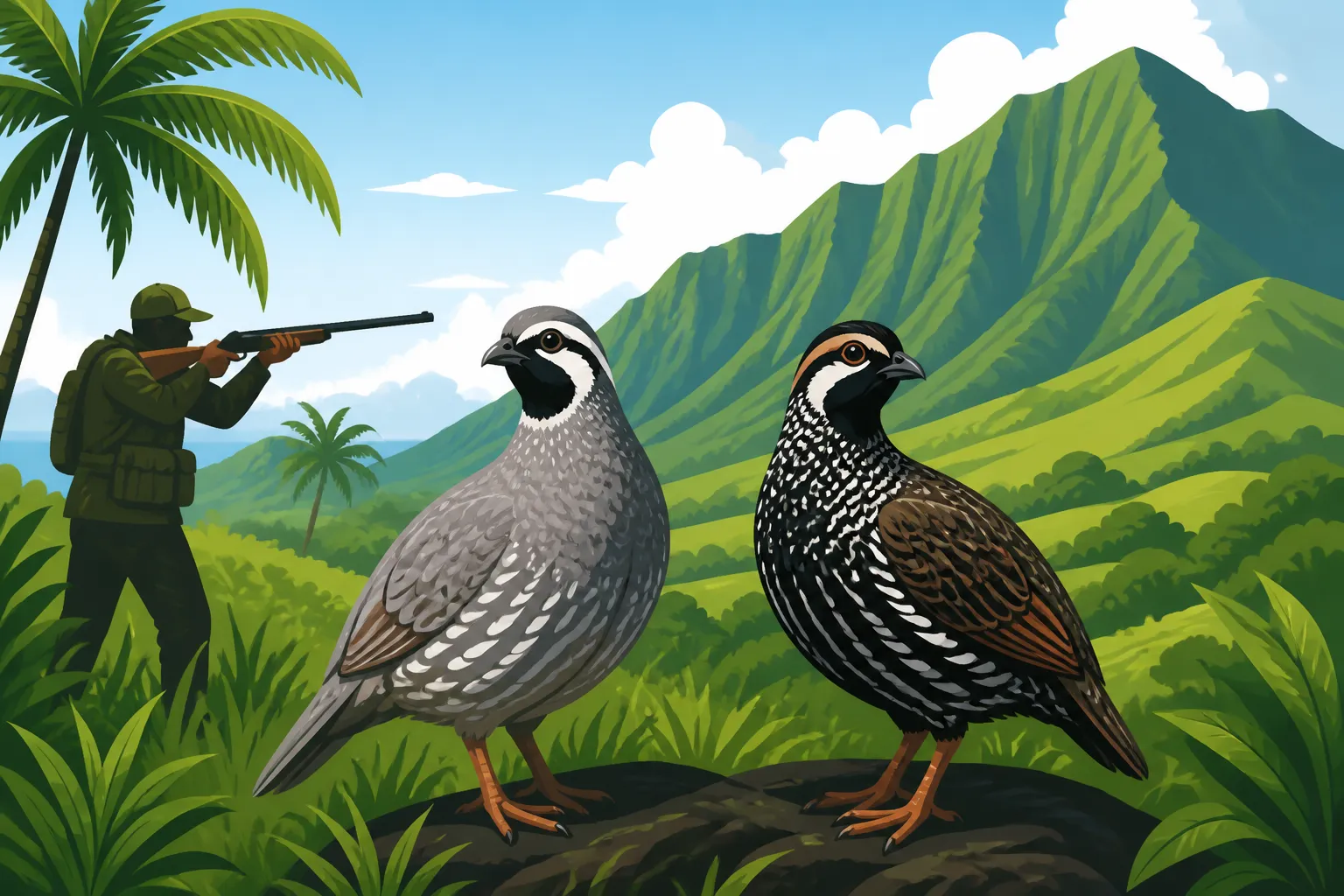
Before we get into the nitty-gritty of their addresses, let's talk a little about francolin in general here in Hawaii. These aren't native birds, like most of our game species. They were introduced, primarily for sport hunting, and they've carved out niches in various parts of the islands. While they’re often lumped together by new hunters, the truth is, the gray francolin and black francolin are different birds with different tastes in real estate. Knowing these preferences is your first step to a successful hunt.
Hunting francolin can be a really rewarding experience, offering a different kind of challenge than pursuing larger game like axis deer or feral pigs. They’re fast, cunning, and their camouflage is surprisingly effective. But if you're looking in the wrong kind of cover, you're just going to wear out your boots for nothing. That's why understanding their specific habits and haunts is so vital. It’s not just about knowing that they are on an island, but which part of that island, and what kind of terrain they call home. Hawaii Game Bird Hunting offers a broader overview, but here we're really drilling down.
The Elusive Gray Francolin: Habitat and Range
The gray francolin, sometimes called the "common francolin" in other parts of the world, is truly a creature of the dry, open country here in Hawaii. If you’ve spent any time on the leeward sides of our islands, you've probably seen the kind of habitat they love, even if you didn't know these birds were living there. They are definitely not fans of the dense, wet rainforests that pigs might call home. Instead, think hot, sunny, and often quite rugged terrain.
You'll find gray francolin primarily on Hawaii Island (the Big Island), and to a lesser extent on Maui and Molokai. On Hawaii Island, their strongholds are typically on the lower to mid-elevation slopes, often between 500 and 4,000 feet, particularly on the Kona and Ka'u sides where the climate is much drier. They thrive in areas with sparse grasses, kiawe forests, and old ranchlands. Imagine rolling hills covered in dry grass, scattered thorny kiawe trees, and maybe some scrubby lantana or buffelgrass. These are the places where gray francolin excel at hiding. Hunting Hawaii's Dry Kiawe Forest is a perfect example of the kind of place you'd find them.
They are incredibly good at disappearing into this seemingly open cover. When flushed, they'll burst out with a distinctive cackle and a powerful, whirring flight, often only to pitch down a short distance away and vanish again. They'll run more than they fly, using their strong legs to navigate the sparse vegetation. Their diet consists mainly of seeds, insects, and tender shoots, which are abundant in these dry environments, especially after a little rain. Look for them along old ranch roads, at the edges of pastures, or near dry stream beds where they might find a bit of water or denser cover. The key is that dry, scrubby, almost desert-like terrain.
Tracking the Black Francolin: Preferred Environments
Now, if the gray francolin is the king of the dry country, the black francolin is definitely a connoisseur of the slightly greener, often more agricultural fringe lands. While they might overlap with gray francolin in some areas, the black francolin prefers a habitat that offers a bit more moisture and denser cover, often associated with human activity or lusher vegetation belts.
You'll encounter black francolin most reliably on Hawaii Island and Kauai, and sometimes in specific pockets on Maui. On Hawaii Island, you'll find them in the transitional zones between very dry and moderately wet areas, often around abandoned sugar cane fields, coffee farms, macadamia nut orchards, or along the edges of cultivated pastures where taller grasses and brush offer more concealment. They like thick, tangled cover that provides both protection and a reliable food source. Think of those wilder edges of a Hunting a Coffee Farm Boundary or an old Hunting a Macadamia Orchard Edge – that’s prime black francolin territory.
On Kauai, they similarly favor the fringes of agricultural areas, along forest edges, and in areas with denser guinea grass or similar tall, thick vegetation. They’re not typically found up in the high-elevation native forests, nor are they as widespread in the most arid coastal zones. They prefer elevations generally below 2,000 feet, often closer to sea level, where there's enough moisture to support dense ground cover. Their call is distinctive, often described as a loud, ringing "chick-a-ree, chick-a-ree," making them easier to locate than their gray cousins if they decide to voice their presence. When hunting these birds, you'll often be pushing through thicker brush, so stout boots and tough pants are a must. They’ll hold tight, sometimes almost letting you step on them before flushing.
Strategies for Locating Francolin in Their Habitats
So, you know where to look – now let's talk about how to actually find these clever birds. Francolin hunting often involves a lot of walking, keen observation, and understanding their daily routines. It's a classic upland bird hunt that can be made even more effective with a few key strategies.
Scouting and Identifying Sign
Before you even step out with your shotgun, spend some time scouting. Drive slowly along those old ranch roads or farm tracks in the identified francolin habitats. Early morning and late afternoon are usually best, as the birds might be out feeding or dusting. Listen for their distinctive calls – the gray francolin’s cackle or the black francolin’s ringing "chick-a-ree" can pinpoint their general location. Look for dusting bowls, which are small depressions in the dirt where they've ruffled their feathers to clean themselves. You might also find droppings or tracks in dusty areas, especially near water sources if they are available. These birds are creatures of habit, so if you find sign in one area, chances are they'll be back.
For planning your trips and understanding unit boundaries, using tools like the GoHunt Hawaii portal or the OuterSpatial app can be incredibly helpful. You can often overlay satellite imagery with hunting unit maps, allowing you to visually identify the dry kiawe flats or dense agricultural fringes we've been discussing. This helps you focus your scouting efforts to areas that genuinely match francolin habitat preferences before you ever step foot on the ground. Scouting a Hawaii Hunting Unit Before Opening will give you more general tips that apply well to francolin.
Hunting Tactics and Timing
Once you're in the right habitat, effective hunting comes down to systematic coverage. For gray francolin in their dry, open country, a slow, methodical walk through the sparse cover is often best. They're masters of holding tight, so don't rush. Walk in zig-zags or wide arcs to cover ground thoroughly. If you have a bird dog, this is where they truly shine, sniffing out birds that would otherwise be invisible. Without a dog, you'll have to rely on flushing them yourself. Expect them to run before they fly, so be ready for a quick shot when they do finally burst into the air.
Black francolin, in their denser cover, require similar patience but perhaps a more aggressive approach to pushing through the thickets. Walking slowly through tall grass, brushy fencelines, and the edges of fields will be key. They will also run, but the dense cover means they are more likely to flush closer to you. Again, a good bird dog is invaluable here. If you're hunting without one, consider having two hunters walk parallel, spaced about 20-30 yards apart, to cover more ground and increase the chances of flushing birds towards one another (always ensuring safe shooting lanes!). Remember, Hunting Hawaii's Game Bird Weekends are usually short, so maximizing your time in prime habitat is critical.
Here's a quick comparison of their typical habitats:
| Feature | Gray Francolin | Black Francolin |
|---|---|---|
| Primary Islands | Hawaii Island (Big Island), Maui, Molokai | Hawaii Island (Big Island), Kauai, (some Maui) |
| Elevation | Lower to Mid-elevations (500-4,000 ft) | Lower elevations (near sea level to 2,000 ft) |
| Climate | Arid, Dry, Leeward | Moderately Moist, Transitional, Agricultural |
| Vegetation | Sparse grasses, kiawe, scrub brush | Tall grasses (Guinea grass), brush, farm edges |
| Cover Type | Open, rocky, dry forest | Denser, tangled, often near cultivated land |
| Vocalization | Distinctive cackle, harsh | Ringing "chick-a-ree" call |
Understanding these distinctions will really help you narrow down your search and increase your chances of finding these wonderful game birds. Good luck out there, and happy hunting!
Disclaimer
This article is for general informational purposes only and does not constitute professional advice. Laws, prices and regulations vary by location and change over time. Consult a qualified professional for guidance on your specific situation.