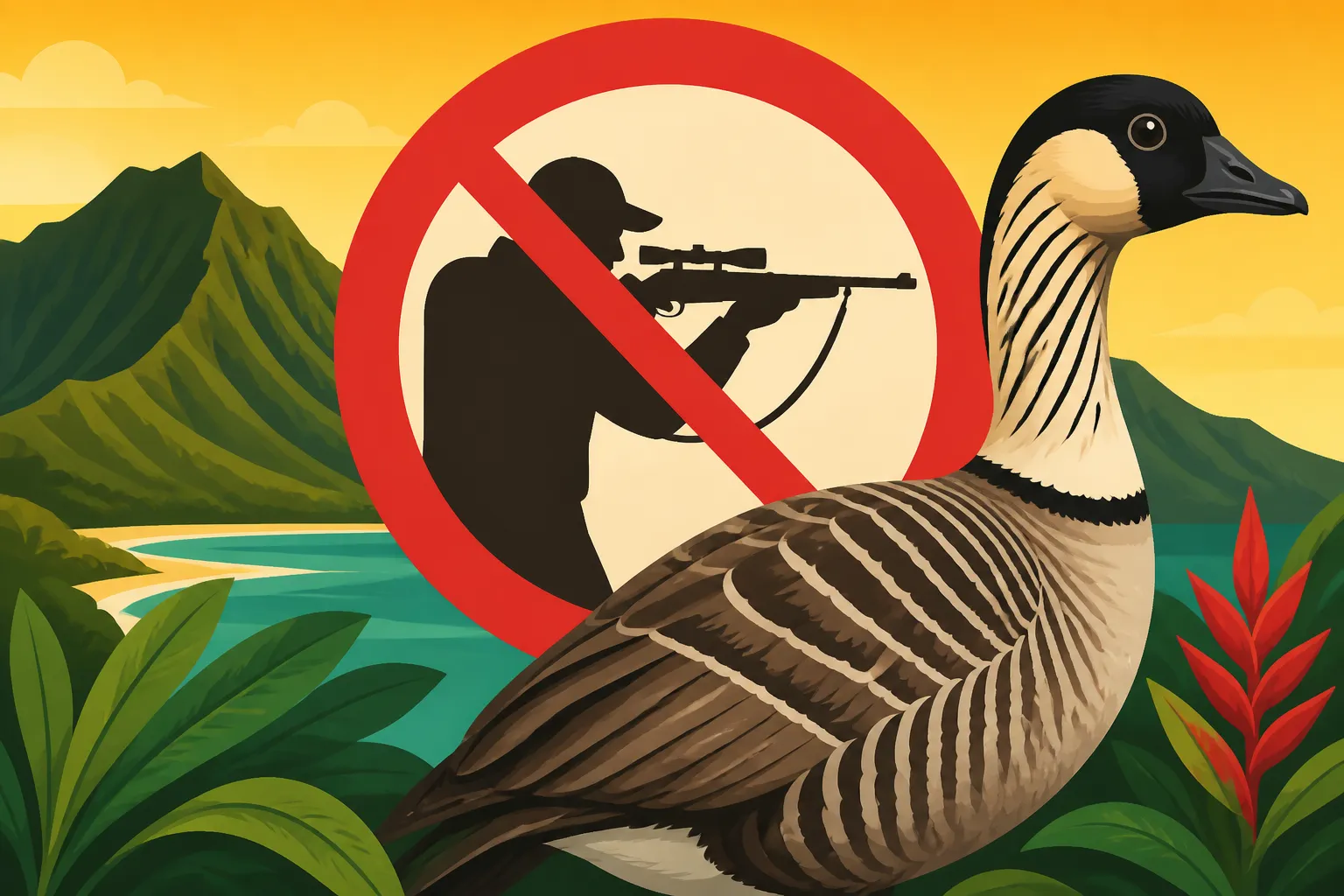
Why Shooting a Nene Is a Serious Offense
Hunters coming to Hawaii, or even seasoned locals, face a unique challenge: the presence of highly protected species living in or near hunting areas. One mistake can be catastrophic, and there are few errors more serious than inadvertently shooting a Nene goose, Hawaii's beloved state bird. This guide will meticulously break down why shooting a Nene is not just a regulatory infraction, but a grave offense with severe legal and ethical repercussions, and how every hunter can prevent such a tragic error.
The Nene: Hawaii's State Bird and a Symbol of Recovery
The Nene, or Hawaiian goose, is more than just a bird; it's a living symbol of Hawaii's natural heritage and the incredible success of dedicated conservation efforts. For hunters, understanding the significance of this species goes far beyond merely identifying it; it’s about respecting the delicate balance of the islands' ecosystems and the collective effort to preserve them. Imagine the profound impact if such a symbol, brought back from the brink of extinction, were to be harmed.
A Species Pulled Back from the Brink
The story of the Nene is one of both tragedy and triumph. Once widespread across the Hawaiian Islands, their population plummeted dramatically after the arrival of Westerners, largely due to introduced predators like mongooses, cats, and dogs, as well as habitat loss. By the mid-20th century, the Nene was critically endangered, with only a handful of individuals remaining in the wild, primarily on the Big Island. It was a dire situation, a stark reminder of how fragile island ecosystems can be.
Through intensive captive breeding programs and dedicated habitat restoration, along with strict legal protections, the Nene population has slowly, painstakingly, begun to recover. They're still not out of the woods, but their numbers are much healthier than they once were, thanks to decades of hard work. This makes every single Nene an invaluable part of an ongoing, fragile recovery.
Consider the amount of time, resources, and passion poured into bringing these birds back. Conservationists, volunteers, and agencies have worked tirelessly for generations. It’s a point of immense pride for many in Hawaii, a testament to what can be achieved when a community rallies around a species. This deep-seated appreciation for the Nene is why any harm to one is felt so acutely, not just by wildlife officials, but by the wider Hawaiian community. Hunters, as stewards of the land, are expected to share in this respect and contribute to their protection, rather than jeopardize their future.
Identifying the Nene in the Field
For a hunter, positive identification is paramount, especially when dealing with a protected species. A Nene isn't always going to be sitting out in the open like a signpost, and sometimes, in the heat of the moment or in poor light, mistakes can happen. This is why knowing their distinct features is absolutely critical. They're about 25 inches long, often larger than the game birds you might be targeting, but size alone can be deceiving, especially at a distance.
Their most distinguishing features are their black head and neck, cream-colored cheeks, and deeply furrowed neck feathers with black and buff barring. This unique neck pattern is often the key identifier, especially when they are standing or feeding. Their legs are another crucial clue: Nene have partially webbed feet, a clear adaptation from their ancestor, the Canada goose, but they spend far more time on land than in water, hence the reduced webbing. Their call is a soft "moo"-like honk, much different from the harsher honks of migratory geese you might be familiar with.
They also tend to be found in drier, more open habitats, often grazing on short grasses, unlike many of Hawaii's game birds that prefer denser cover or agricultural fields. While game birds like francolins or pheasants might flush with explosive speed, Nene often walk away or take flight more deliberately, sometimes in small family groups rather than large, fast-moving coveys. Familiarizing yourself with these details is non-negotiable before heading into any unit where Nene might be present. You might check a resource like How to Recognize a Nene in the Field to solidify your knowledge.
The Legal Ramifications: Why It's a Felony
Mistaking a Nene for a legal game bird isn't just an unfortunate accident; it's a serious criminal offense with potentially life-altering consequences. The legal system doesn't differentiate much between intent and outcome when it comes to protected species, especially those at the federal level. This isn't just a slap on the wrist or a minor fine; we're talking about penalties that can include significant jail time, massive fines, and a permanent loss of hunting privileges across the nation.
Federal and State Protections
The Nene enjoys robust protection under both federal and state laws. Federally, it is listed as an endangered species under the Endangered Species Act (ESA). This act is one of the most powerful and comprehensive pieces of environmental legislation in the world, making it illegal to "take" (which includes harass, harm, pursue, hunt, shoot, wound, kill, trap, capture, or collect) any endangered species. The ESA carries some of the stiffest penalties for wildlife violations, reflecting the national commitment to preventing extinction. This isn't just a local Hawaii rule; it's a nationwide directive that every hunter, regardless of where they're from, is bound by.
In addition to federal protection, Hawaii Revised Statutes (HRS) also provide significant state-level safeguards for the Nene. These state laws often mirror or even enhance federal protections, ensuring a double layer of defense for this iconic bird. The state considers the Nene a protected species, and any unauthorized take is a violation of state wildlife laws. These dual layers of protection mean that prosecutors have multiple avenues to pursue charges, amplifying the severity of any incident. Ignorance of the law is never an excuse, and hunters are expected to know and adhere to all regulations, both state and federal, before stepping foot in the field. This includes knowing which species are explicitly Protected Species Hawaii Hunters Must Know.
The Penalties: Fines, Jail Time, and Hunting Privileges
Let's not mince words: the consequences for shooting a Nene are severe. Under the Endangered Species Act, a federal conviction can result in prison sentences of up to two years and fines reaching into the tens of thousands of dollars, per violation. Imagine facing a criminal record, potential loss of your freedom, and a financial burden that could cripple you for years, all from a single moment of misidentification. This isn't hyperbole; these are the real penalties enshrined in law.
Beyond the federal penalties, state law also imposes substantial fines and potential jail time. On top of that, a conviction almost certainly means the revocation of all hunting licenses and privileges, not just in Hawaii, but potentially nationwide through interstate wildlife compacts. This could mean never being allowed to hunt again, anywhere. Think about the passion you have for hunting, the traditions, the connection to nature – all gone, simply because of one irreversible mistake. It's a stark reminder that responsible hunting demands absolute certainty of your target. Furthermore, any firearm used in the commission of such an offense could be confiscated, adding another layer of loss.
| Offense Type | Federal Penalties (ESA) | State Penalties (HRS) | Impact on Hunting Privileges | Additional Consequences |
|---|---|---|---|---|
| Shooting a Nene | Up to 2 years imprisonment, Fines up to $50,000 | Substantial fines (e.g., $1,000-$10,000+), potential jail time | Revocation (Hawaii & Interstate) | Firearm confiscation, criminal record |
| Harassing/Harming | Fines up to $25,000, potential imprisonment | Significant fines | Possible revocation | |
| Habitat Destruction | Fines up to $25,000, potential imprisonment | Significant fines | N/A | Restoration orders |
This table illustrates just how broadly and severely the law can come down on violations involving endangered species. It’s not just about pulling the trigger; actions that lead to harassment or harm, even if not fatal, can also incur significant penalties.
Avoiding a Catastrophe: Hunter Responsibility and Education
The onus is entirely on the hunter to prevent an incident involving a Nene. There are no excuses for misidentification, especially given the rarity and protected status of these birds. This isn't just about following rules; it's about embodying the highest principles of ethical hunting and responsible stewardship. Every hunter has a moral and legal obligation to know their target, and then some.
Know Your Birds: Education is Key
Before you ever step foot into a Hawaii hunting unit, especially one known to have Nene, you need to be intimately familiar with every species you might encounter, both game and non-game. This isn't just a cursory glance at a picture in a hunting guide. This means studying their physical characteristics, their calls, their typical habitats, and their behavior patterns. Are you going after francolins? Understand how a Nene differs in flight pattern, size, and coloring. Planning a Hunting Hawaii's Game Bird Weekends? Make sure you've also memorized every protected bird species for that specific unit.
Many hunters prepare by watching videos, looking at detailed field guides, and even spending time observing Nene from a distance in non-hunting areas if possible. Some units post specific warnings or identification guides at check stations, and it's your responsibility to absorb that information. The Hawaii Department of Land and Natural Resources (DLNR) provides resources, and organizations like GoHunt often compile regulatory information that can help you cross-reference species. If there's any doubt, any doubt at all, do not shoot. It's that simple. A missed opportunity at a game bird is infinitely better than a tragic mistake involving a Nene. Taking a hunter education course or a refresher, even if not legally required, can often provide specific information on local protected species. You can find out more about the requirements at Hawaii Hunter Education Requirements.
Habitat Overlap and Hunter Vigilance
One of the key challenges is that Nene can sometimes inhabit areas that overlap with game bird units, particularly in grassy, open landscapes or near pastures. While Nene prefer drier, more volcanic slopes and grasslands, they aren't exclusively confined to them. They can be seen in agricultural fields, along old ranch roads, or even in lower elevation areas, especially if seeking out specific food sources or water. This habitat overlap demands extreme vigilance from hunters. You can't just assume a goose-like bird in a hunting area is fair game.
Imagine you're Hunting Francolin and Pheasant in Hawaii in a mixed pasture and scrubland unit. You hear a flush, and a dark-colored bird bursts from cover. In that split second, your training and knowledge are put to the ultimate test. Is it a francolin, or could it be a Nene? Are its neck feathers barred? Is its flight heavy or light? The conditions – light, distance, terrain – all play a role. It requires a conscious effort to positively identify, every single time. This vigilance extends to knowing which areas are historically known Nene territories, and exercising extra caution when hunting near them. Some units might have higher Nene concentrations than others, making pre-hunt scouting and research even more vital. Understanding local weather patterns and how they might affect bird distribution, such as Nene moving to lower elevations during drought, is also crucial. For example, Hunting a Water Source in Dry Hawaii Country might bring you into closer proximity to Nene.
Reporting Sightings and Incidents
Responsible hunting also includes being a proactive partner in conservation. If you see Nene in an area where you might not expect them, or in a hunting unit, it's a good practice to report their presence to the Department of Land and Natural Resources (DLNR) or a local wildlife official. This information can help wildlife managers better understand Nene distribution and even issue warnings or special instructions to hunters for specific units. Organizations like GoHunt might also have community forums where hunters share real-time observations, contributing to collective awareness.
Even more critically, if, heaven forbid, an accidental shooting of a Nene were to occur despite all precautions, your immediate actions are paramount. Do not conceal it. Do not attempt to move the bird. Immediately contact DLNR Enforcement (Division of Conservation and Resources Enforcement, or DOCARE). Staying on site, securing the area, and cooperating fully with authorities can make a difference in how the incident is handled, though the legal consequences will still be severe. An immediate, truthful report demonstrates a commitment to ethical conduct, even in the face of a terrible mistake. It's a test of integrity, and for the sake of the species and the hunting community, it’s a test you must pass.
The Broader Impact: Conservation and Community Trust
The act of hunting doesn't exist in a vacuum. It's part of a larger ecological and social landscape, especially in a place as unique and sensitive as Hawaii. An incident involving a protected species like the Nene reverberates far beyond the individual hunter and the immediate legal consequences. It can damage the reputation of the entire hunting community, undermine years of conservation work, and erode public trust.
Eroding Public Trust in Hunters
One single, highly publicized incident of a Nene being shot can cause irreparable harm to the public perception of hunters. In Hawaii, where conservation is often a contentious issue and where introduced species are often viewed as both a resource and a threat, the optics of such an event are particularly damaging. Many non-hunters already view hunting with skepticism, and a mistake involving a beloved, endangered state bird can fuel negative stereotypes and push public opinion further against hunting in general. This, in turn, can lead to calls for stricter regulations, reduced access to public hunting lands, or even outright bans in certain areas, impacting every law-abiding hunter.
It's a collective responsibility. Every time a hunter demonstrates extreme caution, ethical behavior, and respect for all wildlife, they contribute to a positive image of hunting as a tool for conservation and a responsible outdoor pursuit. Conversely, every major error, especially one that harms a symbol like the Nene, can set back years of advocacy and education. The hunting community must demonstrate that it is capable of self-regulation and a deep commitment to protecting Hawaii's unique biodiversity. This is why resources like GoHunt emphasize education and responsible conduct, aiming to maintain the integrity of the sport.
Funding Conservation Efforts
Hunting, through license fees and excise taxes on equipment, is a major funding source for wildlife conservation across the United States. In Hawaii, hunting license fees and special stamps, like the Hawaii's Wildlife Conservation Stamp and Hawaii's Game Bird Stamp, directly contribute to the management of game species, habitat restoration, and enforcement efforts. However, an incident like a Nene shooting can divert these precious resources. Instead of focusing on proactive conservation, agencies might have to spend more time and money on investigations, public relations damage control, and responding to heightened public scrutiny.
Furthermore, public outrage can sometimes lead to reduced support for hunting-related conservation programs, or even political pressure to redirect funds away from traditional wildlife management towards other conservation initiatives. It's a lose-lose situation. Hunters want their dollars to go towards thriving wildlife populations and healthy ecosystems, which includes the Nene. A major violation can threaten that very funding structure and complicate the relationship between hunters and conservation agencies. It underscores how every action in the field has far-reaching financial implications for the future of wildlife.
Respecting the 'Aina (Land)
In Hawaii, the concept of mālama 'āina — to care for the land — is deeply ingrained in the culture. It's a philosophy that extends beyond legal statutes and into a profound spiritual and practical connection to the natural world. Hunters in Hawaii are often intimately connected to the land, understanding its rhythms and respecting its resources. The Nene, as a native species that has survived and been brought back, is an integral part of that 'āina. To harm it is to disrespect the land itself and the efforts of generations to preserve it.
This cultural context makes a Nene incident particularly sensitive. It's not just about breaking a law; it's about breaking a trust with the land and its people. For many, hunting in Hawaii is an important tradition, a way to connect with ancestors and provide food for family. Doing so responsibly means understanding and honoring these cultural values. A hunter who respects the Nene, and all of Hawaii's unique flora and fauna, demonstrates a true understanding of mālama 'āina and earns the respect of the local community. It reinforces the idea that hunting can be a sustainable and respectful practice when conducted with the utmost care and knowledge. Conversely, any harm to species like the Nene undermines this critical cultural connection and the very spirit of responsible land stewardship.
Disclaimer
This article is for general informational purposes only and does not constitute professional advice. Laws, prices and regulations vary by location and change over time. Consult a qualified professional for guidance on your specific situation.