Agricultural Rules for Taking Meat Off Island
You've just had an incredible hunt in Hawaii, maybe put a big Axis buck on the ground or harvested some delicious feral pig, and that feeling of accomplishment is soaring. But then, almost immediately, the practical questions start to creep in: "How on earth do I get this meat home?" The logistical nightmare of preserving and transporting your hard-won protein, especially between islands or back to the mainland, can feel overwhelming. This guide is here to walk you through the essential agricultural rules and best practices for taking game meat off the islands, ensuring your trophy makes it to your freezer without a hitch.
The Core Challenge: Why Agricultural Rules Matter in Hawaii
Hawaii is a paradise, but it's also one of the most isolated island chains on Earth, and that isolation has led to a truly unique and fragile ecosystem. The state takes its biosecurity incredibly seriously, and for good reason. Every plant, every insect, every pathogen that makes it to the islands has the potential to wreak havoc on native species and agriculture. This vigilance extends directly to wild game meat.
Protecting Hawaii's Unique Ecosystems
Think about it: the wild animals we hunt here – Axis deer, feral pigs, mouflon sheep, and goats – are all introduced species. While they provide fantastic hunting opportunities, they also carry their own set of potential issues, from parasites to diseases, or even just the risk of introducing foreign bacteria that could affect the local environment if not properly managed. The regulations around transporting meat aren't just bureaucratic red tape; they are a critical line of defense for Hawaii's delicate balance. A small piece of uncleaned hide, a bit of soil, or improperly processed meat could unknowingly carry something harmful. This is why agricultural inspections are so thorough and why understanding them is key to a successful journey home for your game.
Inter-Island vs. Mainland Regulations
It's a common misconception that if you're just moving meat from, say, Maui to Oahu, the rules will be the same as flying it all the way back to California. Not so! While both involve careful handling, the specifics can differ significantly. Inter-island transport typically falls under Hawaii's Department of Agriculture regulations, which are designed to prevent the spread of pests and diseases within the state, especially concerning agricultural production. When you're heading to the mainland, however, you're now dealing with federal regulations on top of state rules, involving agencies like the USDA and the TSA. This means more layers of scrutiny, often requiring stricter processing and packaging standards. Knowing your final destination dictates which set of rules you'll primarily need to follow, and it's always wise to check with both state and federal authorities.
Preparing Your Game Meat for Transport: A Step-by-Step Guide
The journey of your game meat home begins literally moments after the animal is down. How you handle it in the field and throughout the processing stages will directly impact whether it passes inspection and arrives in good condition.
Field Dressing and Initial Cooling for Compliance
No matter the species, rapid and thorough field dressing is your absolute first defense against spoilage and against potential issues with agricultural inspection. In Hawaii's often warm and humid climate, bacteria can multiply at an alarming rate. That gut pile, if not removed promptly and cleanly, can quickly contaminate the meat. Every effort should be made to remove the entrails, wipe the cavity clean, and get air circulating around the carcass as quickly as possible. This isn't just about taste; it's about making your meat safe for consumption and transport.
After field dressing, the race against the clock continues to cool the meat down. This might mean quartering the animal and getting it into coolers packed with ice, or hanging it in a shaded, well-ventilated area if conditions allow. The goal is to drop the core temperature as fast as possible. For tips on managing this in Hawaii's conditions, you might find valuable information in our guides on Field Dressing Axis Deer in Hawaii Heat and Cooling Meat Fast on a Hawaii Hunt. Rapid cooling minimizes bacterial growth, which is critical for health and for meeting inspection standards. If the meat arrives at an inspection point looking or smelling off, it will likely be confiscated.
Processing and Packaging for Inspection
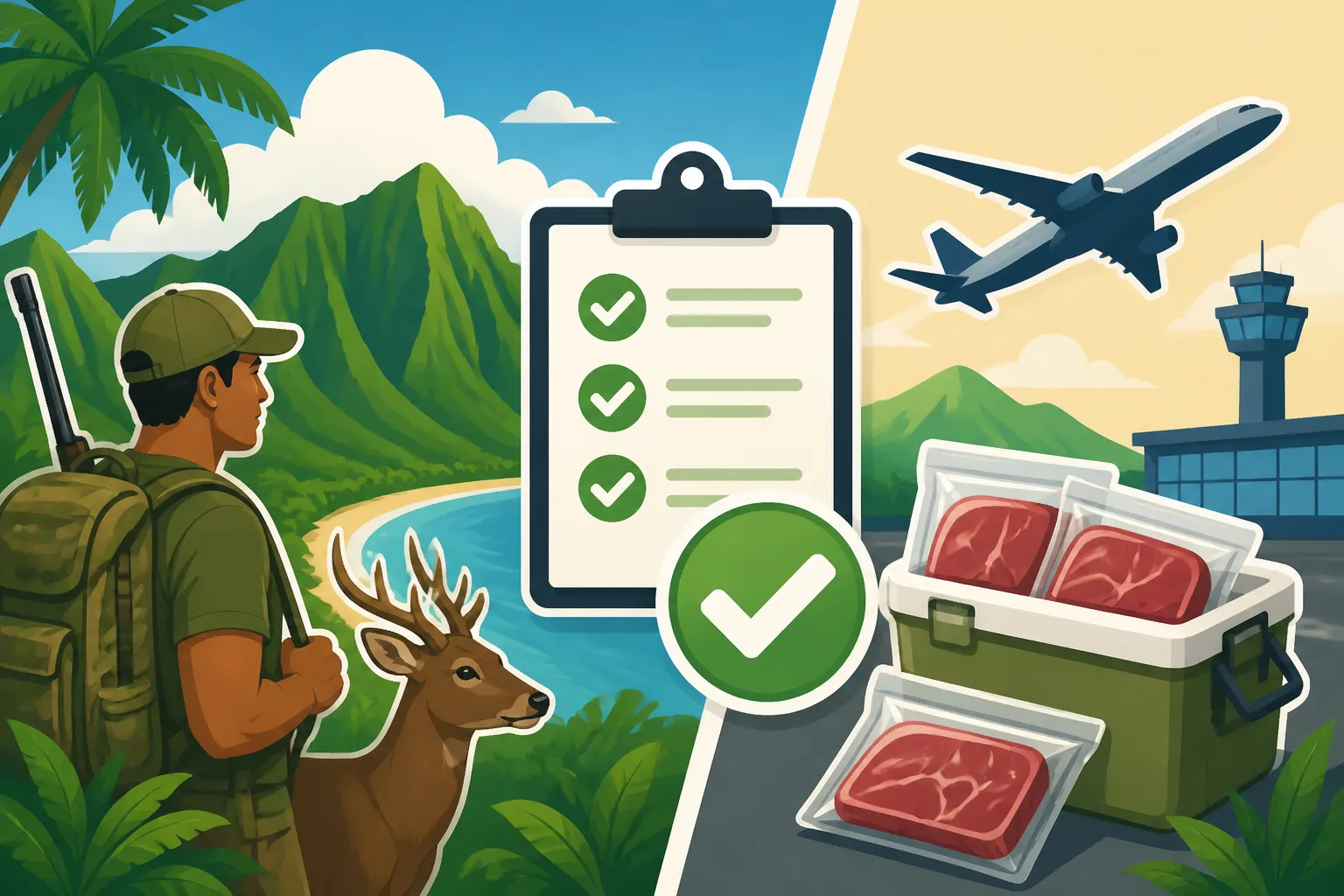
Once the animal is out of the field, the real work of preparing it for transport begins. For interstate travel (to the mainland), deboning is almost always a requirement. This means separating all meat from the bone. Why? Because bones, especially those near joints, can harbor diseases or parasites. Leaving meat on the bone significantly increases the risk profile from an agricultural standpoint. You'll also need to ensure the meat is clean – no hair, no dirt, no plant material. Any foreign biological material can be flagged by inspectors.
Proper packaging is paramount. Vacuum sealing is the gold standard, as it removes oxygen, which significantly extends shelf life and prevents freezer burn. It also keeps the meat contained and clean. If vacuum sealing isn't an option, heavy-duty freezer bags with as much air removed as possible, or multiple layers of freezer paper and tape, are your next best bet. Each package should be clearly labeled with the type of meat (e.g., "Axis Deer Venison"), the date it was processed, and ideally, your name.
Many hunters in Hawaii choose to use a professional game processor. This is often the smartest choice, especially if you're unfamiliar with the detailed requirements. A reputable processor will understand the regulations, ensure the meat is properly deboned and cleaned, and package it to meet airline and agricultural standards. They're often equipped to handle the volumes and specific cuts you might need. Check out resources like Getting Meat Processed on a Hawaii Hunt and Where to Find a Hawaii Game Processor for more insights into finding the right service.
Freezing and Insulation Requirements
Deep freezing your meat is non-negotiable for transport, especially if you're flying. The meat needs to be frozen solid, like a brick, to maintain its temperature for the duration of travel. This often means placing your packaged meat in a chest freezer for several days, or even a week, before your departure. A partially frozen package won't stay cold enough and will start to thaw, potentially leading to spoilage.
For insulation, you'll need a high-quality cooler. Forget the flimsy picnic coolers; you need something that can truly hold ice (or dry ice) for an extended period. Look for coolers with thick walls and good seals. The type of cooling agent you use is also critical and often dictated by your mode of transport.
| Transport Method | Cooling Agent Recommendation | Key Considerations |
|---|---|---|
| Inter-Island Cargo | Gel packs, frozen water bottles, dry ice (check specific carrier rules) | Ensure packages are leak-proof; dry ice may require special labeling. |
| Checked Baggage (Air, Mainland) | Dry ice (most common), gel packs (less effective for long haul) | Crucial: Dry ice limits (often 5-5.5 lbs per passenger), specific packaging for venting, notification to airline is mandatory. No wet ice. |
| Shipping Service (Mainland) | Dry ice (preferred), commercial frozen gel packs | Professional packing often available. Ensure insulated boxes meet carrier specs. |
When using dry ice, remember it's extremely cold and requires careful handling (use gloves!). It also sublimates, meaning it turns directly from solid to gas, so coolers must be vented – not airtight – to prevent pressure buildup. Always confirm dry ice allowances and packaging requirements directly with your airline or shipping company well in advance. Understanding Why Hawaii Game Meat Spoils Fast can further emphasize the importance of these steps.
Navigating Inter-Island and Mainland Travel with Game Meat
Once your meat is perfectly processed, packaged, and frozen, the next hurdle is the actual transportation. The rules and logistics will differ based on whether you're staying within the Hawaiian islands or heading to the mainland.
Specifics for Inter-Island Shipment
If you're lucky enough to live on one island and hunt on another, say you took an Axis deer on Molokai and want to bring it back to Oahu, inter-island shipment is generally less complex than mainland travel, but it still requires diligence. You'll typically use cargo services offered by airlines or dedicated freight companies. These services are familiar with handling perishable goods and agricultural products.
The key is to have your hunting license and harvest tag readily available, as these prove the legality of your harvest. While formal agricultural inspection stations at inter-island cargo facilities might not be as overt as at mainland departure gates, spot checks and requirements for clean, deboned, frozen meat are still enforced. Make sure your cooler is clearly labeled with your name, contact information, and contents. Some carriers may have specific forms for agricultural products. Always call your chosen cargo carrier ahead of time to confirm their specific policies for game meat. This will save you a lot of headache and potential delays. Detailed information on this can also be found in our guide on Shipping Game Meat Between Hawaii Islands.
Taking Meat to the U.S. Mainland (and Beyond)
This is where the rules become much stricter and often involve federal oversight. The U.S. Department of Agriculture (USDA) and the Transportation Security Administration (TSA) both have a say in what leaves Hawaii's airports destined for the mainland. As mentioned, deboning is almost always mandatory for safety reasons to prevent the transmission of animal diseases. This means no bones, no heads, no hides, no feet unless they have been professionally cleaned, treated, and certified (which is a separate, often costly, process usually reserved for taxidermy trophies).
When flying, game meat must typically be transported as checked baggage. Airlines have specific rules regarding coolers, weight limits, and especially dry ice. Most airlines limit dry ice to around 5 to 5.5 pounds per passenger, and the cooler must be vented. You absolutely must declare your dry ice to the airline at check-in. Failing to do so can result in serious delays or confiscation. Flying Home With Game Meat From Hawaii provides an in-depth look at these specifics, and our broader guide on Rules on Transporting Game Meat covers many of the overarching principles. Pack your meat tightly in your cooler, using newspaper or towels to fill any empty space, which helps reduce air pockets and maintain temperature.
Required Documentation and Inspection Points
Regardless of your destination, always carry your Hawaii hunting license and the validated harvest tag for the animal. These are your proof of legal harvest. For mainland travel, while a specific agricultural certificate for deboned, frozen meat isn't typically required at the point of departure from Hawaii, you must be prepared for potential inspection. This usually happens at the airport's agricultural inspection counter or sometimes even by TSA agents. They are looking for compliance: is the meat deboned? Is it clean? Is it properly frozen and packaged?
There are certain items that are generally prohibited or require extensive permitting to leave Hawaii. It's crucial to know What You Cannot Bring Home From Hawaii to avoid issues. This often includes unprocessed animal parts, certain plants, and fruits, which could inadvertently be packed with your meat. Be honest and upfront with agricultural inspectors; they are there to protect the islands, and transparency will always serve you better than trying to hide something.
Avoiding Common Pitfalls and Ensuring a Smooth Journey
The excitement of the hunt can quickly turn to frustration if you hit a snag trying to get your meat home. Knowing what trips up other hunters can help you sail through the process.
Don't Cut Corners on Preparation
This is perhaps the biggest mistake hunters make. Thinking you can skip the thorough cleaning, get away with less-than-solid freezing, or just throw it in a flimsy cooler is a recipe for disaster. Hawaiian agricultural officials and airline staff are well-versed in these rules because they deal with them daily. Any deviation can lead to your meat being confiscated, not just for safety but for administrative non-compliance. Imagine the heartbreak of having your hard-earned Axis venison thrown away because it wasn't deboned or properly frozen. It's not worth the risk. Take the time, follow the steps, and invest in proper equipment. Your future meals will thank you for it. Remember, good Field Care in Hawaii's Heat and Humidity starts right after the shot.
Communicate with Carriers and Agencies
One of the most effective ways to ensure a smooth transport experience is to talk to the right people well in advance. Don't assume anything. Call your airline's cargo department or customer service to confirm their current policies on shipping game meat, especially regarding dry ice limits, cooler size, and labeling. Airlines can and do change their rules, so what was acceptable last year might not be this year.
Similarly, if you have any unique circumstances or are transporting something other than deboned meat (like a cleaned skull for a trophy), contact the Hawaii Department of Agriculture directly. Their staff can provide the most up-to-date and accurate information, helping you avoid any last-minute surprises at the airport or cargo facility.
Plan for Contingencies
Life happens, and travel plans can change unexpectedly. What if your flight is delayed for 12 hours? What if your cooler gets mishandled and sits on the tarmac for too long? Having a contingency plan can save your meat. Consider:
- Extra Cooling Time: Always plan for your meat to be frozen longer than you think necessary. An extra day or two in a deep freezer won't hurt.
- Backup Coolers: If traveling with a large amount of meat, consider breaking it into two smaller coolers rather than one giant one. This offers some redundancy.
- Local Storage Options: Know if there are any cold storage facilities or friendly local freezers you could use in a pinch if your travel is significantly delayed.
- Donation: As a last resort, if you absolutely cannot transport your meat due to unforeseen issues or non-compliance, know your options for donating it. It's a shame to waste it, and local food banks or community organizations might be able to accept properly handled game meat. Our guide on Donating Meat You Cannot Take Home might offer some useful local advice.
By understanding the rules, preparing meticulously, and communicating proactively, you can ensure that the delicious rewards of your Hawaii hunting adventure make it safely from the islands to your table.
Disclaimer
This article is for general informational purposes only and does not constitute professional advice. Laws, prices and regulations vary by location and change over time. Consult a qualified professional for guidance on your specific situation.