Hunting Pigs Near a Taro Patch
Hunting feral pigs near Hawaii taro patches requires recognizing fresh rooting damage and tracking animal behavior patterns.
Close the distance.
Archery, muzzleloader, and firearm techniques — calling, stand placement, still-hunting, spot-and-stalk, and the weapon rules that change at the state line.

Hunting feral pigs near Hawaii taro patches requires recognizing fresh rooting damage and tracking animal behavior patterns.
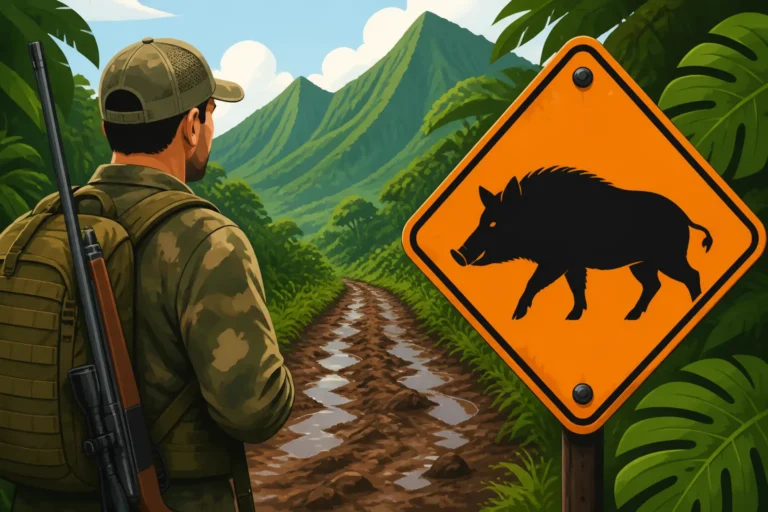
Feral pig signs on Hawaiian muddy trails reveal feeding grounds and travel corridors for hunters seeking tubers and roots.

Still-hunting feral pigs in Hawaii guava thickets requires reading subtle sign and understanding seasonal behavior and food sources.

Hunting feral pigs in Hawaii without dogs requires still-hunting strategies based on animal behavior, terrain, and scouting sign.
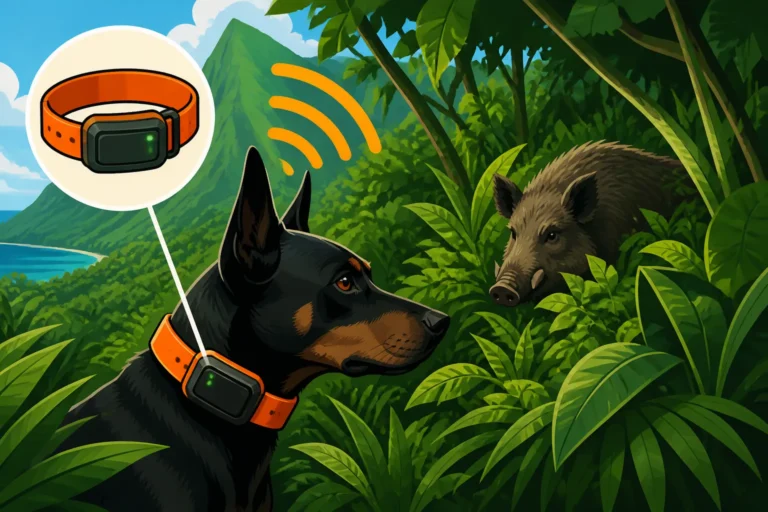
GPS collars for Hawaii pig dogs track hunting hounds through thick jungle cover, lava tubes, and steep ravines during feral pig hunts.

Hawaiian feral pig hunting with knives and spears explains ethical techniques for bayed wild boars in close quarters using six to ten inch blades.
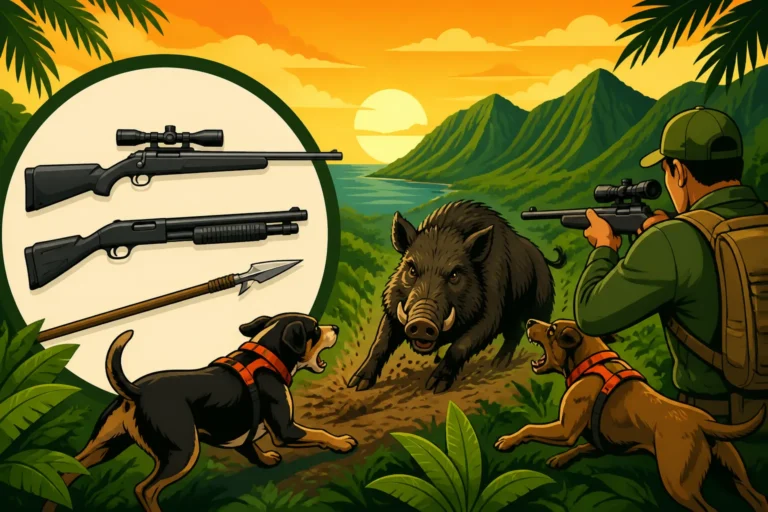
Hawaii DLNR hunting regulations explain legal weapons, knives, spears, and licensing requirements for hunting feral pigs with dogs.
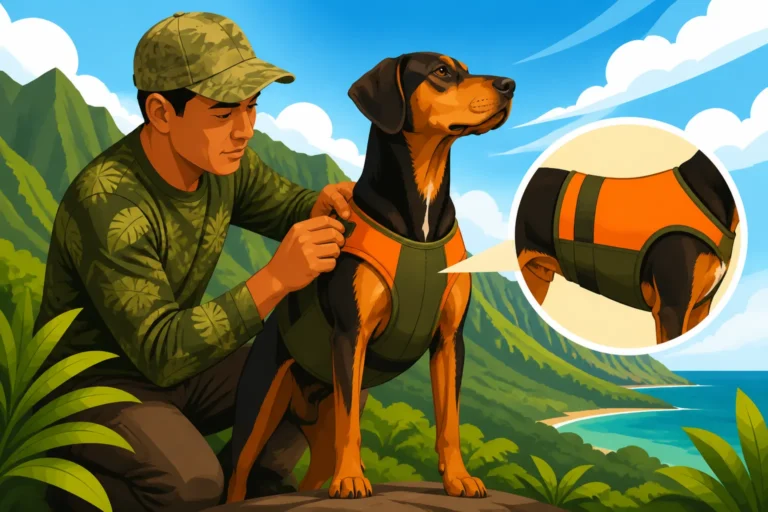
Proper fitting of a cut vest protects your catch dog from feral pig tusks, deep lacerations, and dangerous terrain in Hawaii.

Training pig dogs for Hawaii feral hunts covers handling sharp lava terrain, heat stress, and massive boars up to three hundred pounds.

Hawaiian pig hunting uses agile bay dogs to locate feral pigs and powerful catch dogs to hold them by the ear or shoulder.