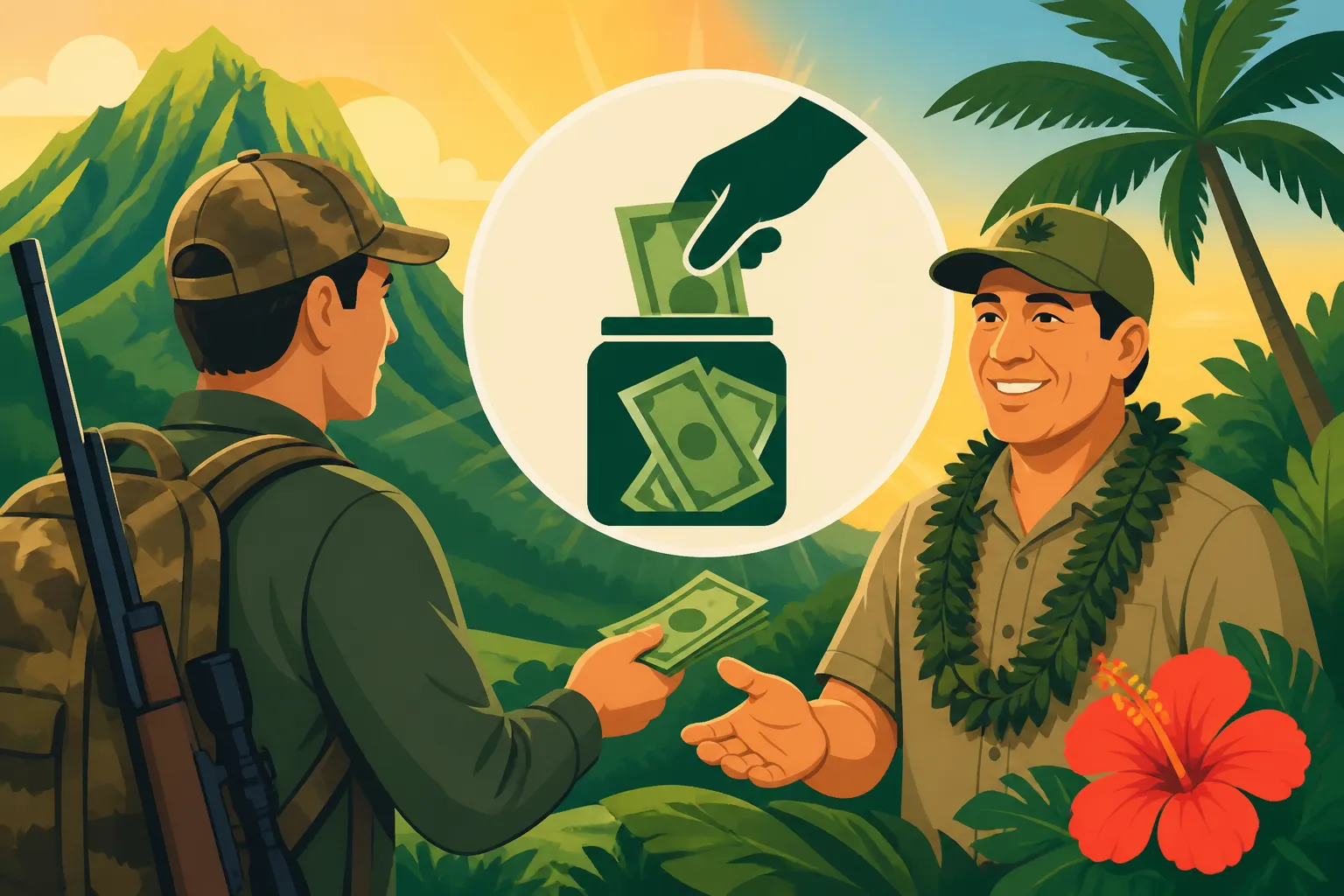
How Much to Tip a Hawaii Guide
Okay, let's talk about tipping your hunting guide here in Hawaii. I know, it's one of those topics that can feel a bit awkward, right? You've just poured your heart, soul, and hard-earned money into a hunt of a lifetime, and then there's that unspoken question of "how much should I tip?" It's a common dilemma, and one that mainland hunters often find especially confusing when coming to the islands. This guide is all about demystifying the ins and outs of tipping your Hawaii hunting guide, ensuring you can show your appreciation confidently and appropriately.
The Foundation: Why We Tip in the Hunting World
Tipping is a long-standing tradition in the service industry, and guided hunts are no exception. But for many, especially those new to guided experiences, the "why" isn't always clear. It's not just an arbitrary extra fee; it's a vital part of the guide's income and a direct reflection of their hard work, dedication, and the overall experience they provide.
Think about it: your guide isn't just pointing you to an animal. They've often spent countless hours scouting, preparing gear, navigating complex permit systems, and understanding the nuances of the local landscape and animal behavior. They are your eyes, ears, and often your legs in unfamiliar territory. When you tip, you're acknowledging all that behind-the-scenes effort and expertise, not just whether you pulled the trigger or not.
It's a way to say "thank you" for their commitment to your safety, enjoyment, and success. A good guide can make or break a hunt, turning a challenging day into a memorable adventure, even if the target animal proves elusive. Understanding this underlying philosophy helps frame the conversation around how much to tip.
What Really Influences the "Right" Amount
There's no hard and fast rule that applies to every hunting trip, and Hawaii is no different. The "right" amount to tip is deeply personal and depends on a combination of objective and subjective factors. It's not just about the kill; it's about the entire journey.
Firstly, consider the guide's effort. Did they work tirelessly, even when conditions were tough? Did they adapt to your physical abilities or changing weather? Were they patient, knowledgeable, and genuinely invested in your experience? Secondly, evaluate the overall professionalism and safety. Did you feel safe and comfortable under their guidance? Was their equipment well-maintained? Did they adhere to all regulations and ensure ethical hunting practices? These foundational elements are critical.
Beyond the basics, think about the small details: the quality of the field lunch, the care taken with your gear, the stories shared around a campfire, or the extra mile they went to retrieve an animal from a Steep Windward Gulch. All these elements contribute to the overall value of the hunt and should factor into your decision. Even if the hunting was slow, a guide who made the experience enjoyable and educational still deserves recognition for their outstanding service.
Common Tipping Percentages and Ranges
While specific figures can vary wildly, a general guideline for tipping a hunting guide often falls within the 10% to 20% range of the total hunt cost. This is a broad spectrum, of course, and where you land within that range will depend on the factors we just discussed.
For a truly exceptional experience—where the guide went above and beyond, provided unparalleled expertise, and delivered incredible service—a tip at the higher end, or even slightly above the 20% mark, is a fantastic way to show profound gratitude. Conversely, if the service was satisfactory but not extraordinary, or if you felt certain aspects could have been improved, a tip in the 10-15% range is still perfectly acceptable. Remember, it's always voluntary.
Many outfitters, especially those that list their services on platforms like BookYourHunt or GoHunt, will often provide a recommended tipping range in their booking information or pre-hunt materials. It's always a good idea to check for these recommendations, as they can offer a helpful starting point specific to their operation and location. However, even with recommendations, the final decision remains yours, based on your experience.
Tipping Your Guide on a Hawaii Hunt – What Makes it Unique
Hawaii presents a truly unique hunting experience, and these distinct challenges often translate into extra effort from your guide. Understanding these local nuances can help you appreciate the value they add and inform your tipping decision.
The terrain itself is a beast: steep volcanic slopes, dense rainforests, jagged lava fields, and relentless heat and humidity. This isn't your typical walk in the woods; it's often a physically demanding trek that requires specialized knowledge and incredible stamina. Your guide is not just navigating; they are often trailblazing, carrying heavy gear, and constantly assessing conditions for your safety and success.
Then there's the game itself. Whether you're chasing elusive Axis Deer, Hawaii's Signature Big Game on the dry leeward side of Maui or tracking Hawaii's Feral Pigs, Island by Island through a wet gulch on the Big Island, these animals are wild, cunning, and perfectly adapted to their environment. Success often hinges on your guide's deep understanding of local animal behavior, feeding patterns, and preferred bedding areas—knowledge that takes years to acquire.
Factors Specific to Hawaii's Terrain and Animals
Hawaii's hunting landscapes are unlike almost anywhere else. Picture this: you're ascending a cinder cone on the Big Island, the loose volcanic rock shifting underfoot, or pushing through thick, tangled strawberry guava in a Molokai gulch, trying to cut off a group of pigs. These aren't easy walks. The humidity can be stifling, the sun relentless, and the vegetation so dense you can barely see a few feet in front of you.
A Hawaii guide often has to work twice as hard just to get you into a position to take a shot, let alone actually finding and recovering an animal. This intense physical effort, coupled with their expertise in reading the land, wind, and animal sign, is a massive part of what you're paying for. If you harvest an animal, the work isn't over. Imagine Packing Meat Out of a Hawaii Gulch in 85-degree heat—that's a monumental task, and your guide is typically right there, sweating alongside you, ensuring your hard-earned venison is cared for properly. They know the shortcuts, the safe routes, and how to protect the meat from spoiling in the tropical climate, which is an invaluable service.
Considering the Services Provided
When you book a guided hunt in Hawaii, you're investing in more than just access to private land or knowledge of public units. You're enlisting a local expert to handle a myriad of details that would be overwhelming for an outsider. A quality guide will often be responsible for:
- Permit Navigation: They understand the specific requirements for Hawaii's Permit-Tag System Works and can ensure you're squared away.
- Scouting: Long before you arrive, they've been out in the unit, monitoring animal movement, checking water sources, and identifying fresh sign.
- Logistics: From picking you up at your lodging to ensuring all necessary gear is available, a good guide handles the complex logistics of a Hawaii hunt.
- Animal Recovery & Field Care: As mentioned, getting an animal out of Hawaii's rugged terrain is a significant undertaking. They're skilled in efficient field dressing and initial cooling to combat the heat, vital for preserving your meat. Field Care in Hawaii's Heat and Humidity is critical.
- Education & Experience: Beyond the hunt itself, many guides share valuable insights into Hawaii's unique ecosystems, history, and culture, enriching your entire trip.
These comprehensive services, often provided with genuine aloha spirit, are what truly define a guided hunt in Hawaii and certainly warrant thoughtful consideration when determining your tip. You're not just buying a kill; you're buying an experience curated by a professional.
When to Tip and How to Present It
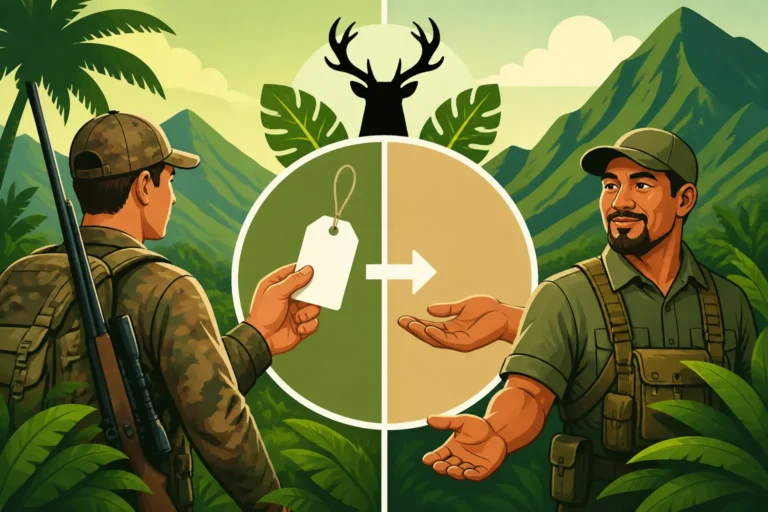
The timing and method of tipping are important for showing respect and gratitude. Generally, the best time to present your tip is at the very end of your hunt, after all the animals have been retrieved, processed, and the final goodbyes are being exchanged. This allows you to reflect on the entire experience and offer a tip that accurately reflects your satisfaction.
For the method, cash is almost always preferred. It's direct, immediate, and ensures the guide receives the full amount without any deductions or delays that might occur with other payment methods. It's also a thoughtful gesture to place the cash in a simple envelope. This provides a discreet way to give the tip, avoiding any awkwardness. You can write a brief "Thank You" note on the envelope, adding a personal touch that shows your appreciation. A handshake and a genuine "Mahalo" (thank you) as you hand it over goes a long way.
It's usually best to present the tip directly to your main guide. If there were other crew members, like a dedicated packer or a driver who was particularly helpful, you can inquire with your main guide if they prefer to distribute a collective tip to the team, or if you should tip individual helpers separately. Some outfitters make it very clear about how their staff shares tips, so always pay attention to any guidance they give.
Beyond the Guide: Other Crew Members Who Deserve Thanks
While your primary guide is the face of your hunt, often there's a team working behind the scenes or alongside them, contributing to your overall experience and success. Acknowledging these individuals is just as important in a place like Hawaii, where hunts can be incredibly labor-intensive.
These team members might include drivers who get you to remote trailheads, packers who help haul out heavy game from steep gulches, or even camp staff if you're on a multi-day expedition with an outfitter. Their contributions, though perhaps less direct than the guide's, are crucial to the smooth operation of the hunt. They are often the unsung heroes who ensure everything runs seamlessly, from a comfortable camp to efficient meat transport.
Thinking about the full team shows a deeper appreciation for the entire operation. It recognizes that a successful and enjoyable hunt is truly a collaborative effort, and everyone involved deserves a share of the gratitude.
Drivers, Packers, and Camp Staff
On many Hawaii hunts, especially those accessing more remote Hawaii's Forest Reserves or Hunting Hawaii's High-Elevation Country, you might interact with various support staff. A driver might drop you off at dawn and pick you up at dusk, navigating challenging dirt roads. Packers, often just as skilled and hardy as the guides themselves, become indispensable if you take an animal deep in a canyon, helping to break it down and carry out the meat and hide. This is particularly true when hunting large animals like Axis deer or a substantial feral pig.
For these individuals, a separate, smaller cash tip is appropriate. A common practice is to give them a portion of what you'd give the main guide, or a flat amount based on their specific service. For example, a dedicated packer who spent hours hauling meat might receive $50-$100 or more, depending on the difficulty and duration of their task. If you're unsure, you can always ask your main guide discreetly what the customary practice is for tipping their support crew. This open communication is better than guessing.
If you're staying at a lodge or camp as part of a multi-day hunt, there might also be cooks or other camp staff who ensure your comfort and provide meals. A general tip jar for the camp staff or a pooled tip given to the camp manager for distribution is often the easiest way to acknowledge their efforts. Again, don't hesitate to ask the outfitter or main guide for their preferred method.
The Role of Outfitters and Why They Aren't Typically Tipped Directly
Outfitters are the business owners who organize and manage the entire hunting operation. They handle bookings, permits, logistics, guide assignments, and ensure all the pieces come together for your hunt. While their role is absolutely crucial, they are generally not tipped in the same way you would tip a guide. Their income is derived from the overall cost of the hunt itself, covering their business expenses and profit.
However, a truly exceptional outfitter, one who communicates well, resolves issues promptly, and ensures a seamless experience, might warrant a different kind of appreciation. This could come in the form of a glowing online review on platforms like BookYourHunt or GoHunt, a personal letter of thanks, or recommending their services to friends. These gestures, while not monetary, are incredibly valuable to a business owner and directly contribute to their future success.
If you feel compelled to offer something extra to an outfitter, perhaps consider a gift that benefits the whole team or a charitable donation in their name, rather than a direct cash tip. The key is to understand that the tipping culture focuses on the direct service providers—your guides and their immediate support staff—who are often working for a base wage plus tips.
When Things Don't Go as Planned: Adjusting Your Tip
It's the reality of hunting: not every trip ends with an animal on the ground. Weather can turn, animals can prove too elusive, or perhaps you just didn't get a shot opportunity. This can make the tipping conversation feel even more complicated. However, it's crucial to remember the core purpose of a tip.
A tip is primarily an acknowledgment of effort, skill, and service, not solely a reward for a successful harvest. A guide can do everything right, put you in prime position, call in an animal, and still, for any number of reasons, the shot might not be taken or connected. This doesn't diminish their hard work or expertise.
It's important to separate the outcome (a kill) from the effort (the guide's performance). If your guide worked tirelessly, remained positive, educated you about the area, and ensured your safety and enjoyment despite the lack of a kill, they still deserve a thoughtful tip. Reducing a tip solely because you didn't bag an animal can be demoralizing for a guide who put in their best effort.
Acknowledging Effort Over Success
Let's face it, hunting is called hunting, not "killing." There are no guarantees in the wild, especially here in Hawaii where animals are incredibly adept at disappearing into thick cover or traversing challenging terrain. Your guide's job is to put you in the best possible position, to interpret the landscape, and to make ethical decisions.
Consider a scenario where your guide took you on an epic multi-day trek, perhaps scouting the Hunting Lanai's Upper Ridgelines for Axis deer, putting in 12-hour days, constantly glassing, tracking, and moving you safely through rugged country. Maybe a big buck slipped past you just out of range, or a sudden downpour on the wet windward side pushed all the pigs deep into the bamboo. Even without an animal, the guide's expertise, physical exertion, positive attitude, and commitment to your experience were undeniable.
In such cases, a tip that reflects a good portion of the standard range is still appropriate. You're tipping for the experience, the adventure, the learning, and the guide's unwavering dedication, not just the poundage of meat in your cooler. This understanding fosters a better relationship between hunters and guides and respects the inherent unpredictability of ethical hunting.
Addressing Poor Service
While most guided hunts are positive experiences, there might be rare occasions where the service truly falls short. This is a different situation than simply not harvesting an animal. If your guide was unprofessional, lacked effort, disregarded safety protocols, or exhibited poor ethical judgment, you are absolutely within your rights to adjust your tip accordingly.
However, this needs to be handled thoughtfully. If you've had a genuinely negative experience, it's often more effective to address your concerns directly with the outfitter or management after the hunt, rather than solely reducing your tip without explanation. They need to be aware of issues so they can improve. It's not fair to the guide to surprise them with a significantly reduced tip if they genuinely believed they performed well.
If you do decide to significantly reduce or withhold a tip due to truly poor service, be prepared to articulate your reasons calmly and respectfully to the outfitter. This transparency helps them understand the problem and potentially take corrective action. But remember, genuine poor service is rare; more often, it's a lack of success that causes hunters to feel hesitant about tipping, and it's important to distinguish between the two.
| Factor to Consider | Higher Tip (15-20%+) | Standard Tip (10-15%) | Lower/No Tip (Rare) |
|---|---|---|---|
| Guide's Effort | Tireless, goes above & beyond, exceptional work ethic in tough conditions | Consistent, professional effort, diligent | Noticeably lazy, disinterested, unprofessional |
| Expertise & Knowledge | Deep local knowledge, excellent tracking, safe navigation, educational | Good knowledge of area & animals, competent | Lacks knowledge, unsafe decisions, unprepared |
| Attitude & Professionalism | Positive, encouraging, friendly, prioritizes safety & ethics | Respectful, punctual, clear communication | Negative, rude, dismissive, unsafe practices |
| Overall Experience | Exceeded expectations, memorable, fun, all logistics handled perfectly | Enjoyable, well-organized, met expectations | Significantly subpar, disorganized, unsafe |
| Harvest Success | Successful hunt and excellent service | No harvest, but guide made best effort & provided great service | N/A (Tip based on effort, not solely success) |
| Game Care | Exemplary field dressing, meat handled expertly in challenging conditions | Proper field dressing and game care | Careless with game, poor preservation |
This article is for general informational purposes only and does not constitute professional advice. Laws, prices and regulations vary by location and change over time. Consult a qualified professional for guidance on your specific situation.