Hunting Goats on Hawaii’s Coastal Cliffs
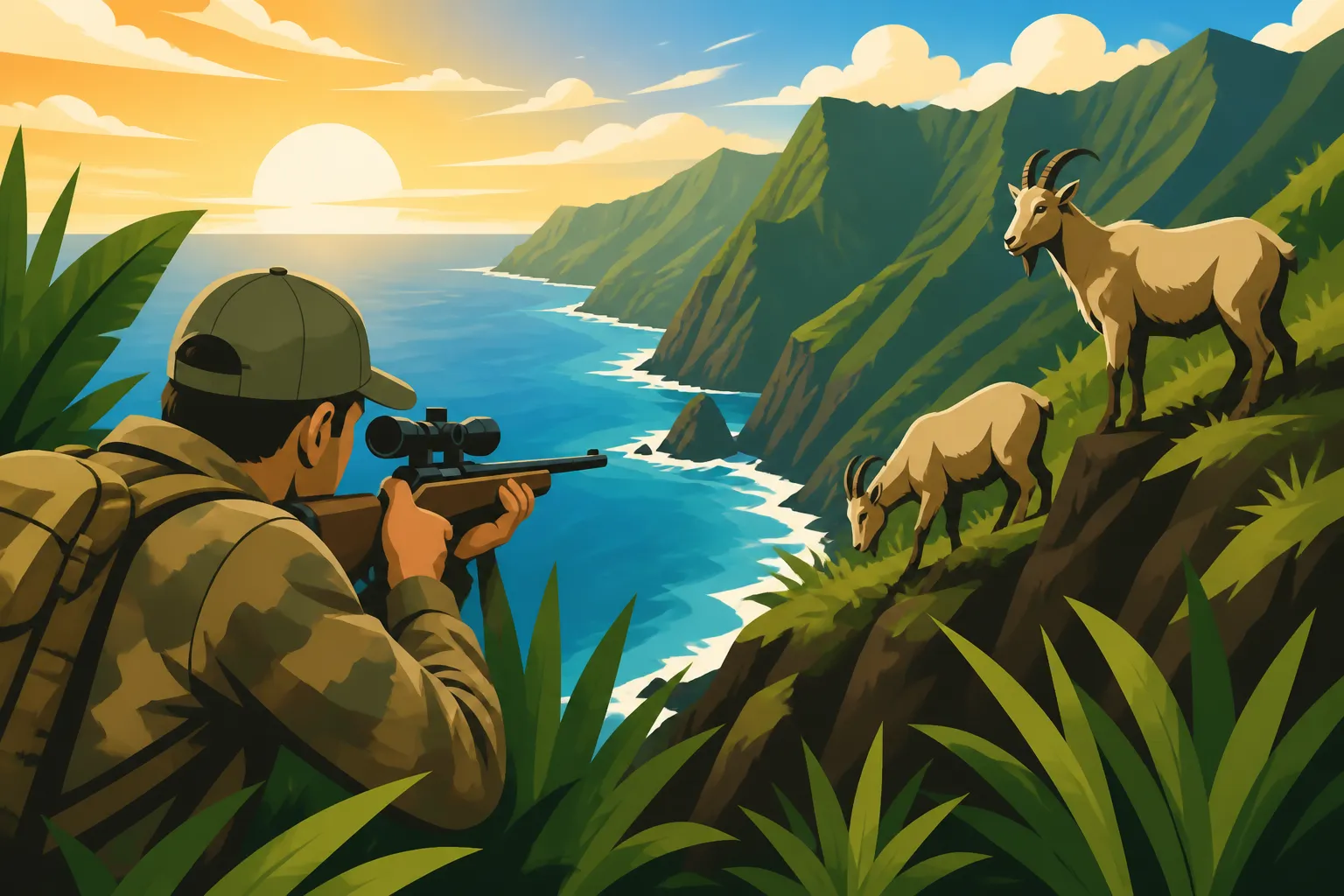
Few hunting experiences can match the sheer exhilaration, and let's be honest, the undeniable challenge, of pursuing feral goats on Hawaii's dramatic coastal cliffs. It's not just a hunt; it's an adventure that tests your physical limits, your mental fortitude, and your ability to navigate some of the most unforgiving, yet breathtakingly beautiful, terrain the islands have to offer. This guide is dedicated to helping you prepare for and successfully execute a coastal goat hunt, ensuring you're ready for the unique demands of these vertical landscapes.
Understanding Hawaii's Feral Goats on the Coast
Before you even think about lacing up your boots, it's vital to truly understand the animal you're pursuing and the specific environments they call home. Hawaii's feral goats are tough, wary, and incredibly adapted to their rugged coastal strongholds.
Where Coastal Goats Live and Thrive
Hawaii's coastal zones, especially those with sheer cliffs and deep gulches carved by centuries of erosion, provide perfect sanctuaries for feral goats. These aren't the gentle, rolling hills you might find elsewhere; we're talking about jagged lava rock, loose scree, and dizzying drops to the ocean. You'll find significant populations clinging to the pali (cliffs) of Molokai, the rugged leeward shores of the Big Island, and parts of Kauai's incredible canyon country that spill out to the sea. They thrive in these areas because the terrain provides both escape from hunters and access to sparse but sufficient forage, often in pockets of hardy grasses and shrubs that cling to the rock faces. Access can be a real hurdle, often requiring long, strenuous walks or even boat drops in some of the most remote sections, adding another layer of challenge.
These areas are often marked by a distinct lack of fresh water, particularly on the leeward sides of the islands, forcing goats to adapt to getting moisture from the plants they eat or finding small, ephemeral seeps after rain. Their movements are largely dictated by these resources and the need for thermal regulation, often seeking cooler, shaded ledges during the hottest parts of the day. Recognizing these patterns and understanding the nuances of the local landscape will be far more beneficial than just blindly traversing the terrain. Every ridge, every shaded pocket, every faint trail could tell you a story about where these animals have been and where they might be headed.
Coastal Goat Behavior and Adaptations
Feral goats are masters of their vertical domain. They possess an uncanny ability to navigate incredibly steep and unstable terrain with surprising speed and agility, making you feel like a clumsy visitor in their world. Their hooves are designed for grip, allowing them to cling to ledges that would make a rock climber think twice. When spooked, they don't just run; they scale seemingly impossible rock faces, vanishing into crevices or over ridge lines in seconds. This means your approach has to be calculated, slow, and utterly silent. You're not just trying to get close; you're trying to outsmart an animal that literally lives on the edge.
Their diet consists of whatever hardy vegetation they can find, from kiawe pods in dry areas to various grasses and shrubs. This constant foraging, however, contributes to significant erosion, especially on sensitive cliff faces, making their control an important part of conservation efforts in Hawaii. They often move in small herds, sometimes with a dominant billy leading the way, and can be quite vocal, especially if they feel threatened. Learning to distinguish their bleats from other sounds can sometimes give you a crucial heads-up. For more insight into these resilient creatures, check out our article on What a Hawaii Feral Goat Weighs.
Why Hunting Coastal Goats Matters
Beyond the thrill of the chase, hunting feral goats on Hawaii's coastal cliffs plays a crucial role in maintaining the delicate ecological balance of these unique ecosystems. Goats, being non-native and highly adaptable, can devastate native plant communities, leading to increased erosion and the degradation of critical watershed areas. Their browsing habits strip vegetation from hillsides, leaving them vulnerable to intense tropical rains and strong winds, which then wash soil and sediment into nearshore marine environments, harming coral reefs.
For the hunter, participating in these hunts is a direct contribution to conservation, helping to mitigate the environmental impact of these introduced species. It’s a way to connect with the land, understanding firsthand the challenges these environments face. Moreover, a successful coastal goat hunt provides a sustainable, wild protein source. The meat from these free-ranging animals is lean and delicious, a testament to their wild existence. It's a chance to fill your freezer while simultaneously aiding the health of Hawaii's precious natural resources.
Essential Gear and Preparation for Cliff Country
Hunting on Hawaii's coastal cliffs isn't just about showing up with a rifle. The terrain demands specialized gear and meticulous preparation to ensure both success and, more importantly, safety.
Footwear and Traction on Treacherous Terrain
Forget your comfortable, worn-out hiking boots for this one. When you're tackling lava rock, loose scree, and potentially wet, slippery dirt on a 60-degree slope, your footwear is quite literally your lifeline. You need boots that provide exceptional ankle support, a stiff sole to prevent foot fatigue over uneven ground, and a deep, aggressive tread pattern for maximum traction. Think mountaineering-grade rather than casual hiking. Brands like La Sportiva or Scarpa with their robust rubber compounds and lug designs are often favored by those who frequent such harsh environments. Water resistance is also a huge plus, as sudden downpours are common, and you might encounter dew-covered grasses or even stream crossings near the ocean.
It’s not just about the boots; your socks matter, too. Invest in high-quality merino wool socks to wick away moisture and prevent blisters, which can quickly turn a challenging hunt into a miserable ordeal. Break in your boots thoroughly before your hunt, preferably on similar terrain, to ensure they fit perfectly and you’re confident in their performance. A hot spot on your heel can mean the difference between a successful stalk and a painful, early retreat from the cliffs. Many experienced hunters also bring a small roll of athletic tape for preventative measures against blisters.
Optics for Spotting Goats on Distant Ledges
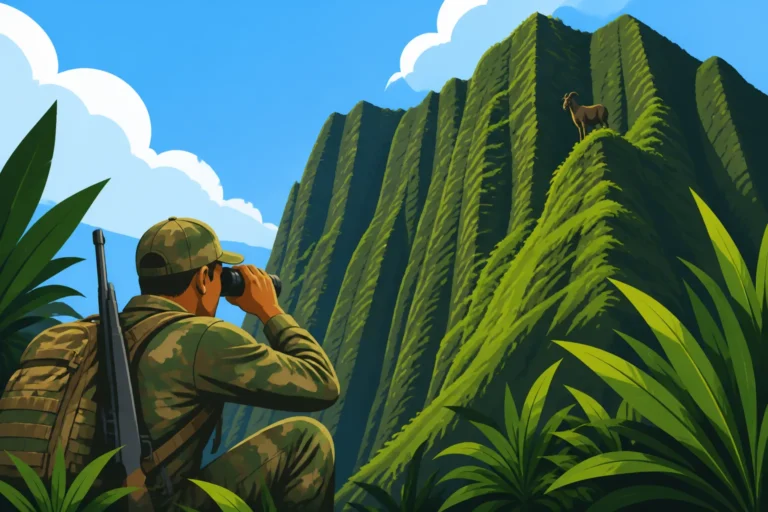
The vastness and broken nature of coastal cliff country make quality optics absolutely non-negotiable. Goats blend incredibly well into the rocky backdrop, and spotting them from a distance can save you hours of unnecessary climbing. A good pair of 10×42 or 12×50 binoculars are essential for long-range scanning. Brands like Zeiss, Swarovski, or Vortex offer excellent clarity and light gathering, crucial for those pre-dawn or last-light glassing sessions. For truly distant animals or for judging an animal's size, a compact spotting scope (e.g., 20-60x60mm) mounted on a lightweight tripod can be a game-changer.
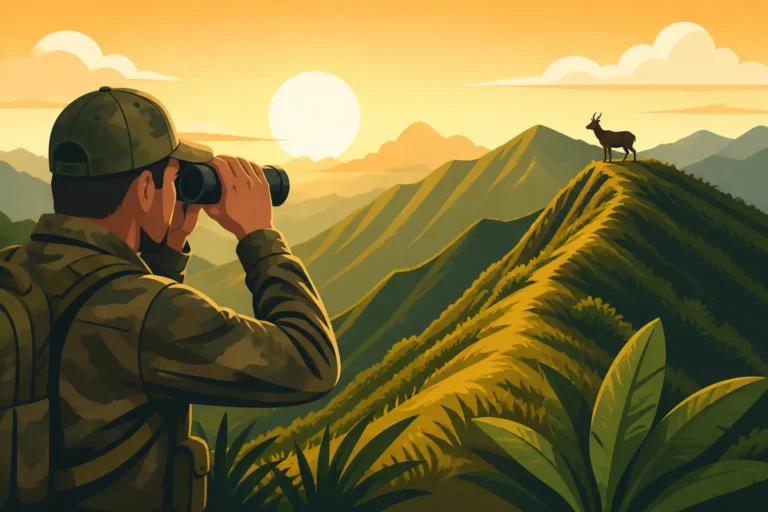
The key is to set up in a vantage point that gives you a commanding view of multiple gulches, ledges, and slopes. Take your time, systematically picking apart the terrain section by section. Don't just glance; scrutinize every shadow, every change in color or texture. Often, what looks like a rock is a bedded goat, or a small patch of movement reveals a foraging herd. Remember, the ocean background can create mirage, so patience and careful observation are paramount. For deeper strategies on this, our article on Glassing a Hawaii Coastline for Goats offers excellent pointers.
Rifle and Ammunition Choices for Steep Shots
When it comes to firearms, precision is paramount. You'll likely be taking shots at varying and often steep angles, sometimes at considerable distances across canyons or up cliff faces. A flat-shooting caliber with good bullet retention is ideal. Think .270 Win, 6.5 Creedmoor, or .308 Win. These calibers offer excellent ballistic performance for the medium-sized goats while being manageable for follow-up shots if needed. Bullet construction is also key; opt for a bullet designed for controlled expansion, such as Barnes TSX or Hornady CX, to ensure clean pass-throughs and minimize meat damage, especially when bone might be involved.
Practice shooting from various positions – prone, kneeling, and even off your pack – as you won't always have a perfect bench rest. Understanding ballistic drop and wind drift, particularly with the unpredictable coastal breezes, is critical. Dialing in your scope or using a good ballistic app is highly recommended. Given the challenging recovery, a well-placed shot is not just ethical, but practical. Carrying enough ammunition for practice and the hunt, but not so much that it's a burden, is a careful balance.
Safety Gear for Extreme Environments
Coastal cliff hunting is inherently risky, and ignoring safety gear is asking for trouble. A reliable first-aid kit, well-stocked with trauma dressings, blister treatments, and pain relief, is non-negotiable. Beyond basic first aid, consider what you'd do if you or a partner took a fall. A sturdy rope, at least 50 feet, can be invaluable for negotiating steep sections or recovering a downed animal from a precarious ledge. Lightweight climbing harnesses for more extreme areas are also not unheard of for guides or very experienced solo hunters.
Communication is another critical component. Cell service is notoriously spotty or non-existent in many remote coastal areas. A satellite messenger device like a Garmin inReach or a Zoleo is a wise investment, allowing you to send emergency messages and share your location even without cell signal. Carry plenty of water—more than you think you'll need—and high-energy snacks. A headlamp with extra batteries is essential for unexpected late exits or early entries. Lastly, a sturdy knife, a saw (for field dressing), and game bags designed for airflow will be needed once you've made a successful kill.
Tactics for Hunting Goats on Sea Cliffs
Hunting goats on sea cliffs requires a blend of patience, acute observation, and often, incredible physical exertion. It's a game of chess played on a vertical board.
Glassing a Hawaii Coastline for Goats
The sheer scale of Hawaii's coastal terrain means that your initial approach will almost always involve extensive glassing. You're trying to locate the animals before they locate you, and ideally, before you expend precious energy climbing unnecessarily. Find a high vantage point that offers an expansive view of the surrounding cliffs, gulches, and any pockets of vegetation. Set up your spotting scope or binoculars on a sturdy tripod. Start scanning early in the morning, right as the first light hits the slopes, as goats often emerge from their bedding areas to feed.
Systematically grid the area, moving your optics slowly, focusing on details rather than sweeping glances. Pay close attention to subtle movements, contrasts in color, or anything that just "looks out of place." Look for white patches on brown rock, the flick of an ear, or the distinct profile of a goat against the skyline. Goats often prefer north-facing slopes in the morning as the sun warms them, or shaded south-facing slopes later in the day to escape the heat. They also frequently use specific trails that crisscross the cliff faces, worn smooth by generations of movement.
Approaching Goats on Vertical Terrain
Once you've spotted a target animal or herd, the real challenge begins: the stalk. This is where the term "vertical terrain" truly comes into play. You’ll be navigating steep ascents, precarious descents, and often loose footing. The wind currents along the coast can be notoriously fickle, swirling unpredictably through gulches and around headlands. Always prioritize staying downwind, even if it means taking a much longer, more difficult route. Goats have excellent noses, and one whiff of your scent will send them scattering.
Movement must be slow, deliberate, and silent. Every foot placement needs to be carefully considered. Avoid dislodging rocks, which can cascade down, alerting animals below. Use the terrain to your advantage: ridges, large boulders, and deep cuts can provide invaluable cover. Sometimes, it's better to make a wide, sweeping arc to get above or below the animals rather than attempting a direct, exposed approach. This might mean adding hours to your stalk, but patience is often rewarded. When Hunting Goats on a Sea Cliff Safely, remember that the path of least resistance isn't always the safest or most effective.
Why Hawaii Goats Move at First Light
Just like many game animals, Hawaii's feral goats are most active during the cooler parts of the day, particularly at dawn and dusk. This is especially true on the hot, exposed coastal cliffs where the mid-day sun can be relentless. At first light, you'll often find them emerging from their sheltered bedding areas to feed on the sparse vegetation found on ledges and in gulches. This is often your best window of opportunity for spotting them and initiating a stalk before they retreat to cooler, more secure bedding locations as the sun climbs higher.
As the morning progresses, their movement tends to slow. They'll seek shade under overhangs, within deep caves, or in the densest thickets they can find. If you're hunting later in the day, you'll likely be glassing these shaded areas, hoping to catch a glimpse of a bedded animal. Understanding these daily patterns, as covered in our specific article on Why Hawaii Goats Move at First Light, will significantly increase your chances of success. It's not just about being there, but being there when and where they are most vulnerable.
Shot Placement and Recovery on Steep Slopes
Taking a shot at a goat on a steep cliff requires extreme precision and a clear understanding of your capabilities and the limitations of the terrain. Due to the angles, your point of impact can shift significantly, so adjusting your hold or dialing your scope for elevation and declination is crucial. Always aim for a vital area—the shoulder/heart-lung region—to ensure a quick, ethical kill. A marginal shot on a cliff face often means a lost animal, a dangerous recovery, or both.
Before you even squeeze the trigger, have a recovery plan in mind. Where will the animal fall? Is it accessible? Is it going to tumble into an abyss or land on a relatively stable ledge? If a goat is shot on a steep slope, it often rolls or slides, sometimes falling hundreds of feet. If it lands in a completely inaccessible area, you've risked a lot for nothing. This pre-shot assessment is vital. If there's any doubt about a safe recovery, it's always better to pass on the shot and wait for a better opportunity. Recovering an animal from a Hawaii gulch or a steep cliff is arguably more challenging than the hunt itself, so planning ahead is paramount.
Navigating the Unique Challenges of Coastal Hunting
Coastal goat hunting isn't just a physically demanding endeavor; it throws a unique array of environmental and logistical challenges your way that demand respect and careful planning.
Dealing with Weather and Ocean Conditions
The weather on Hawaii's coasts can be incredibly dynamic and unpredictable, often shifting dramatically within minutes. You might start your day under clear, sunny skies, only for thick, localized fog or a sudden, torrential downpour to roll in off the ocean. These conditions can severely reduce visibility, make already precarious footing dangerously slick, and even create flash flood risks in narrow gulches. Strong trade winds, common along the exposed coastlines, can also make accurate shooting difficult, requiring careful windage adjustments.
Beyond the immediate weather, consider the ocean itself. While you won't be hunting in the water, the proximity to the ocean brings salt spray, which can corrode gear if not properly maintained. If you're considering a boat drop for access, understanding the ocean swells, tides, and potential for rough seas is paramount for both safety and logistics. Always check the marine forecast in addition to the mountain forecast for your chosen hunting area, and be prepared to hunker down or retreat if conditions turn truly foul.
Physical Demands and Fitness for Cliff Hunting
Let's be blunt: hunting Hawaii's coastal cliffs is a brutal workout. This isn't a stroll through the park; it's an extreme physical challenge that demands excellent cardiovascular endurance, core strength, and strong, stable ankles and knees. You'll be climbing steep, often near-vertical slopes, scrambling over jagged lava rock, and descending treacherous scree fields, all while carrying a pack, a rifle, and eventually, hopefully, a heavy load of meat. Expect to gain and lose thousands of feet of elevation in a single day.
Training should focus on long hikes with weighted packs, stair climbing, and exercises that build leg and core strength. Don't underestimate the heat and humidity, which will amplify the physical strain. Proper hydration before, during, and after the hunt is crucial. If you're not in excellent physical condition, you're not just risking failure; you're risking injury in a remote and unforgiving environment. Being honest about your fitness level is a key aspect of responsible hunting here.
Accessing Remote Coastal Units
Many of the most productive coastal goat hunting areas are, by nature, remote and difficult to access. There aren't usually paved roads leading directly to these prime spots. You might encounter rough, unmaintained 4WD roads that require a high-clearance vehicle, or you might need to park and undertake a long, strenuous hike, sometimes for hours, just to reach the huntable area. Some areas might even require boat access, dropping you off on a secluded beach or cove, which comes with its own set of logistical challenges and safety considerations.
It's vital to meticulously research access points, road conditions, and any landowner permissions needed if you're crossing private property to reach public hunting land. Detailed topographic maps, combined with a GPS device or mapping app like GoHunt, are indispensable for navigation. Always tell someone your plans, your intended route, and your expected return time. Getting lost or stranded in these remote coastal units without cell signal can quickly turn into a serious situation. For more on preparing for these types of excursions, consider reading our article on Walking In to a Remote Hawaii Unit.
Packing Out Game from Steep, Rough Terrain
Successfully harvesting a goat is only half the battle; packing it out from a steep, rugged coastal environment is often the most physically demanding part of the entire hunt. A mature goat, while not massive, can still weigh 50-80 pounds of boned-out meat, plus cape and skull if you're going for a trophy. Dragging an animal down a vertical cliff face is almost impossible and extremely dangerous. You'll need to field dress the animal quickly and efficiently, often boning out the meat to distribute the weight into a sturdy pack.
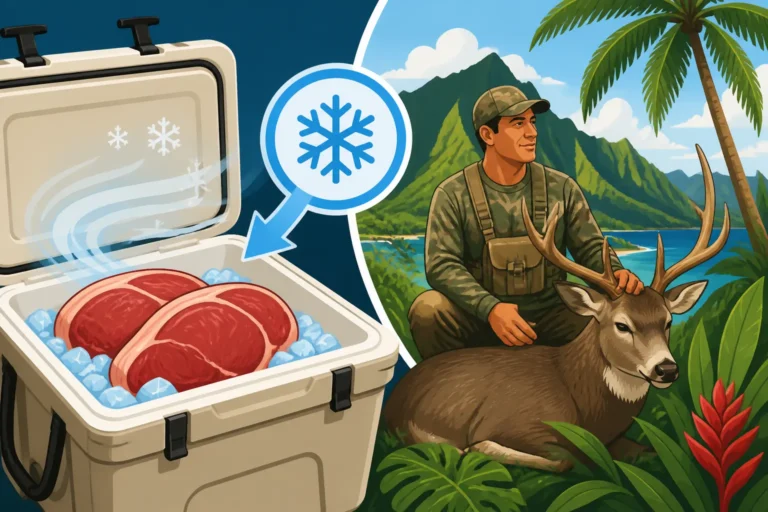
Working with a hunting partner or two is highly recommended for recovery, allowing you to share the load and assist each other over difficult sections. Sturdy game bags are essential to protect the meat from dirt and flies. The heat and humidity in Hawaii also mean you need to cool the meat down as quickly as possible to prevent spoilage. This might involve getting it into a shaded, breezy spot immediately, or if possible, into a cooler filled with ice as soon as you reach your vehicle. Our guide on Packing Meat Out of a Hawaii Gulch offers invaluable tips for this critical stage of the hunt.
Permits, Regulations, and Responsible Hunting
Navigating the rules and regulations is a non-negotiable part of hunting in Hawaii, especially for sensitive areas like coastal cliffs.
Understanding Coastal Unit Specifics
Hawaii's public hunting lands are organized into various units, and the rules, open seasons, and species available can vary significantly from unit to unit, and even within different sections of the same island. For coastal goat hunting, you'll need to research which specific public hunting units allow goat hunting and, more importantly, where within those units the coastal areas are accessible. For example, parts of Molokai's southern coastline or specific areas on the Big Island might have seasonal goat hunting.
Always consult the most current Hawaii Department of Land and Natural Resources (DLNR) Division of Forestry and Wildlife (DOFAW) regulations for the island and unit you plan to hunt. These regulations are updated annually and are the definitive source for season dates, bag limits, and legal methods. Some units might be weekend-only, while others could be open year-round for feral animals. Understanding these nuances is critical to avoiding violations and ensuring a legal, responsible hunt. Our article on Hawaii's Hunting Units and How They Work provides a great overview.
Required Licenses and Permits
Before you can even set foot in a public hunting unit, you'll need to acquire the appropriate licenses and permits. This typically includes a valid Hawaii Hunting License, which can be purchased through the DLNR website or through designated vendors. For certain islands or specific animals, additional permit-tags might be required, though for feral goats on most public lands, often just the general hunting license is sufficient. However, always double-check, as rules can change.
For non-residents, there's often a requirement to demonstrate hunter education certification from your home state or complete the Hawaii Hunter Education Course. You can access the official platform, GoHunt Hawaii, to purchase licenses and permit-tags, and sometimes even apply for drawn hunts. Make sure to complete all necessary paperwork well in advance of your hunt, as processing times can vary. For a comprehensive breakdown of the requirements, refer to Hawaii Hunting Licenses and What They Cost.
Ethical Considerations and Conservation
Responsible hunting in Hawaii extends beyond just following the written rules; it involves a deep respect for the land, the animals, and the local culture. When hunting coastal cliffs, minimizing your impact on the fragile ecosystem is paramount. Stick to established trails where possible, avoid disturbing sensitive vegetation, and always pack out everything you pack in—and then some. Leave no trace of your presence. This includes spent shell casings, food wrappers, and anything else.
Practice good game care to ensure the meat doesn't go to waste. Field dress efficiently and cool the meat quickly, especially in Hawaii's warm climate. Be mindful of others who might be using the coastal areas for recreation, such as hikers or fishermen, and always maintain safe shooting lanes. Remember, your actions as a hunter reflect on the entire hunting community, and demonstrating ethical behavior helps ensure continued hunting opportunities on these beautiful islands.
| Gear Category | Key Features for Coastal Cliffs | Recommended Options/Considerations |
|---|---|---|
| Footwear | Stiff sole, excellent ankle support, aggressive tread, waterproof | Mountaineering boots (e.g., La Sportiva, Scarpa), high-quality merino socks |
| Optics | High clarity, good light gathering, durable, compact, tripod compatible | 10×42 or 12×50 binoculars, 20-60x spotting scope with lightweight tripod |
| Rifle/Ammo | Flat-shooting, precise, controlled expansion bullets | .270 Win, 6.5 Creedmoor, .308 Win with premium hunting ammunition |
| Safety Gear | Comprehensive first-aid, comms, rope, water filter | Trauma kit, satellite messenger (Garmin inReach), 50-ft static rope, LifeStraw |
| Navigation | Detailed maps, GPS, extra power | Topographic maps, handheld GPS or phone with GoHunt/onX, portable charger |
| Pack | Durable, comfortable, ample capacity for meat, external frame | KUIU, Mystery Ranch, Stone Glacier, with meat shelf/hauling capability |
Disclaimer
Hunting is an inherently dangerous activity. This article provides general information and recommendations but does not substitute for personal research, professional training, or strict adherence to all local, state, and federal hunting regulations. Always prioritize safety, inform others of your hunt plan, and be prepared for emergencies. The author and publisher are not responsible for any incidents that may occur.