Hunting a Hawaii Unit After Heavy Rain
Stepping out for a hunt in Hawaii after a real deluge can feel like stepping into a whole new unit, even if it's ground you know well. The trails you expected might be gone, the streams you usually cross could be raging rivers, and the animals? They've definitely changed their routine. This guide is all about helping you understand those shifts and adapt your hunting strategy to successfully navigate a Hawaii unit after heavy rain, turning what might seem like a setback into a real opportunity.
Understanding the Immediate Impact of Heavy Rain on Game Animals
When the heavens open up over Hawaii, especially the sustained, heavy rains we often get on the windward sides or during a Kona low, it completely reshapes the landscape and, critically, how our game animals behave. It's not just about getting wet; it's about a cascade of environmental changes that force critters like pigs, goats, deer, and sheep to adjust their entire day-to-day. Knowing these immediate impacts is your first step to staying productive.
How Rain Affects Animal Movement and Behavior
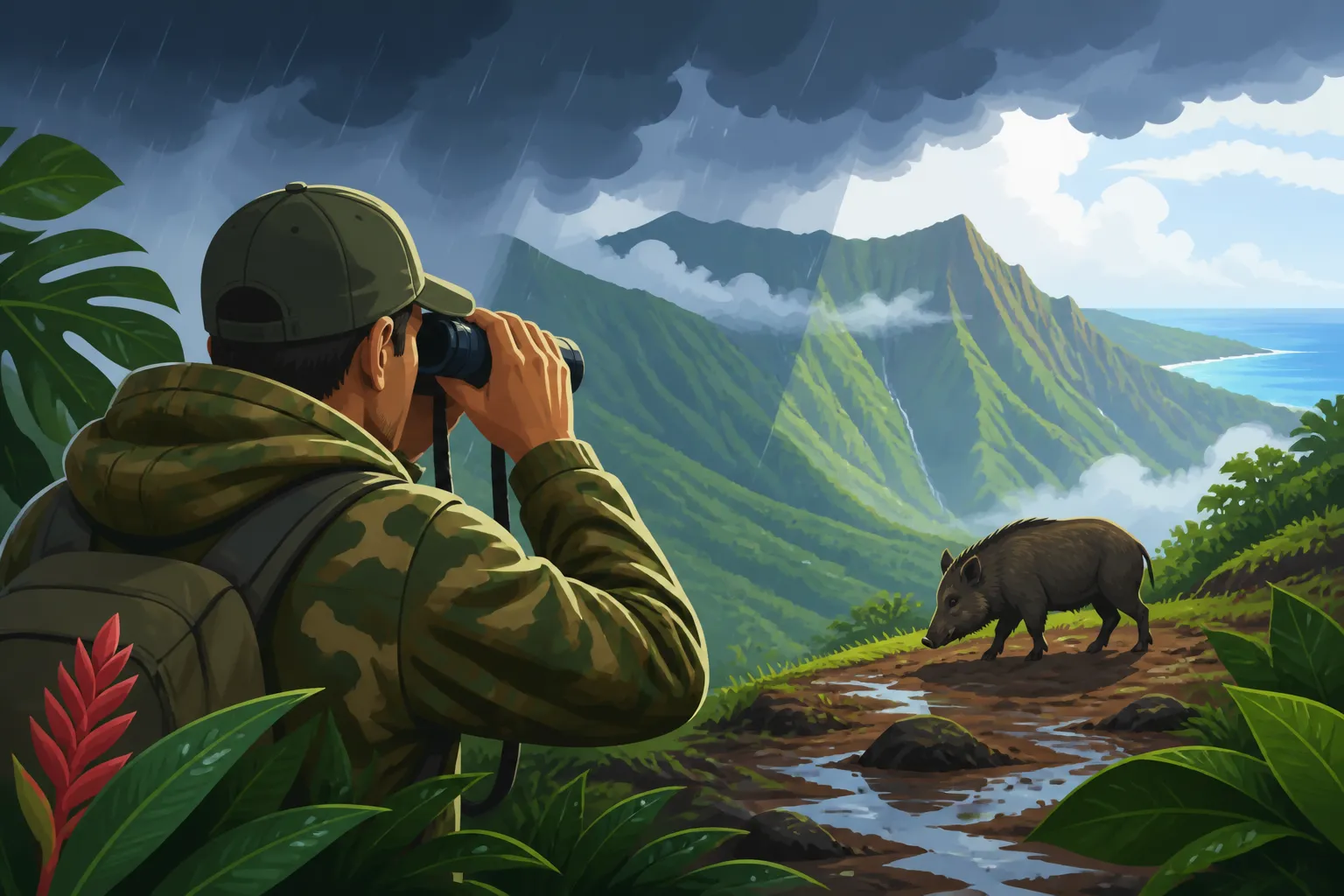
Imagine you're a feral pig or a mouflon sheep. The first instinct when a heavy rain starts might be to seek immediate shelter. For pigs, this often means dense thickets of guava, hau, or fern patches where they can hunker down and escape the worst of the downpour and the associated chill. They'll bed down in these areas, often in groups, waiting for the rain to let up. You might think they'd avoid water, but pigs actually love mud, using it to cool off and protect themselves from insects. So, while the rain is falling, they're typically holed up, but once it eases, those muddy wallows become prime real estate. For Axis deer, especially on drier islands like Maui or Molokai, prolonged heavy rain can actually scatter them. They might move to higher ground to avoid saturated lowlands or shift into deeper, more sheltered valleys or kipuka where the vegetation offers more cover. On the Big Island, mouflon sheep and feral goats are masters of adapting to extreme weather. They’ll seek the lee side of ridges, the protection of lava tubes, or the sparse cover of mamane forests to escape the biting wind and rain that often accompany major weather systems.
What's really key here is understanding the timing. During the actual downpour, movement will be minimal. The animals are just trying to ride it out. But in the hours and days after the rain, that's when their patterns become predictable and exploitable. They'll emerge to feed on fresh growth, seek out new, temporary water sources, and potentially move to areas that were previously too dry or exposed. This post-rain period is where smart hunters can really shine.
Tracking and Sign After a Downpour
One of the most immediate and beneficial effects of heavy rain for hunters is how it cleans the slate and then clearly records new activity. Fresh mud on trails and in bedding areas becomes an open book, showing you exactly when and where animals have moved since the rain stopped. Old tracks are washed away, leaving only the freshest ones to tell the story. This is particularly useful when you're hunting Hawaii's Feral Pigs, as their cloven hoof prints are distinct, and they often leave muddy tracks and rooting signs that are impossible to miss on a wet trail. Look for fresh, clear hoof prints in the mud, especially along established game trails, near water sources, or at the edges of bedding areas. The clarity of these tracks can tell you not only the direction of travel but often the size and recentness of the animal.
Beyond tracks, pay close attention to other forms of sign. Scrapes, rubs, and fresh droppings will be much more apparent against a wet background. Pigs will often churn up mud near wallows, and this activity will be fresh and pronounced. Goats might leave distinct tracks on rocky ledges that are now moist and show their recent passage. Even the disturbed vegetation from animals feeding or traveling will look different—bent grass, broken twigs, or displaced leaves can indicate very recent activity. The heavy rain acts like a reset button, making new sign incredibly easy to spot if you know what you’re looking for. This is especially true for reading pig sign along a muddy trail; the tell-tale rooting and distinct prints become obvious indicators of their post-rain movements.
Navigating Wet and Muddy Terrain Safely and Effectively
Hunting after heavy rain in Hawaii isn't just about finding the animals; it's about surviving the terrain. Our islands are notorious for their steep slopes, dense vegetation, and unforgiving volcanic rock, all of which become exponentially more challenging when saturated. Safety should always be your top priority, but with the right gear and smart tactics, you can still cover ground and get to the game.
Gear and Footwear for Slick Conditions
Your choice of gear, particularly footwear, can make or break a post-rain hunt in Hawaii. Forget your lightweight hiking shoes; you need serious traction. Boots with aggressive, self-cleaning lugs are essential for gripping slippery mud, wet roots, and moss-covered rocks. Brands like La Sportiva, Scarpa, or even some of the more rugged models from Salomon can offer the kind of ankle support and traction you'll need. Waterproofing is non-negotiable. GORE-TEX or similar membranes will keep your feet dry, which is crucial for preventing blisters and maintaining warmth, especially if you're slogging through wet undergrowth for hours. Consider gaiters too; they'll prevent water, mud, and debris from entering your boots from the top, keeping your socks drier and more comfortable.
Beyond footwear, rain gear is paramount. A good quality, breathable rain jacket and pants are not just for during the rain; they're vital for pushing through wet vegetation after the rain has stopped. Expect to get drenched from dew and residual moisture. Layering is also critical. Synthetic or wool base layers will wick moisture away from your skin, even if they get wet, helping you maintain core temperature. Cotton is a definite no-go—it absorbs water and loses all insulating properties when wet, becoming a significant hypothermia risk. Don't forget a waterproof backpack cover, or better yet, line your pack with a heavy-duty contractor bag to protect electronics, extra clothes, and food. A reliable headlamp, even if you plan to be out during the day, is a lifesaver in dense, dark rainforests or if you're forced to pack meat out of a Hawaii gulch after dark.
Strategies for Steep and Slippery Gulches
Hawaii's terrain is defined by its deep, often vertical gulches and valleys, which funnel immense amounts of water during heavy rain. These become treacherous after a storm. What might have been a dry streambed is now a raging torrent, and the surrounding slopes turn into slick, muddy slides. Your normal routes might be impassable or dangerously unstable. When hunting a ridge above a Hawaii valley or trying to get into those productive, low-lying areas, extreme caution is required.
The first strategy is simple: assess the conditions before committing. Don't blindly descend into a gulch you know is typically steep, as heavy rain can erode trails and dislodge rocks. Instead, look for more gradual slopes, natural benches, or even areas with more stable vegetation that can offer handholds. Trekking poles are incredibly useful in these conditions, providing extra points of contact and helping you maintain balance on slippery surfaces. If you're with a partner, communicate constantly and consider belaying small sections if absolutely necessary and you have the proper training and equipment. Sometimes, the safest and smartest move is to find an alternative route, even if it adds significant time and distance to your hunt. Animals will often stick to the more stable ground, so by seeking safer paths, you might naturally find yourself on more productive game trails.
Targeting Specific Game Species in Post-Rain Conditions
Each game species in Hawaii reacts a little differently to heavy rain, but there are general patterns that emerge which, if you understand them, can help you focus your efforts in the most productive areas. Knowing these species-specific nuances is crucial for tailoring your post-rain hunt.
Pigs and Goats: Where to Find Them After a Washout
Feral pigs and goats are incredibly resilient and adaptive creatures, but heavy rain definitely alters their preferred habitats and movement patterns. For Hawaii's Feral Pigs, the immediate aftermath of heavy rain means one thing: mud. Pigs love to wallow, and a fresh supply of rain-soaked earth creates perfect conditions for them. Focus your efforts on low-lying areas, stream beds that have now receded to leave muddy banks, and any depressions in the terrain that hold standing water and have turned into muddy pools. These become prime wallowing spots. They'll also be seeking out soft ground for rooting, as the rain makes the soil much easier to dig up, exposing roots, grubs, and other food sources. Dense, wet forests, especially those with an abundance of strawberry guava or common guava, will still hold pigs, but they might be concentrated in areas where the canopy offers some protection from the lingering moisture. When hunting Hawaii's Feral Pigs, remember that the rain has reset their scent trails, but their immediate need for food and comfort will lead them to predictable locations.
Feral goats, on the other hand, often prefer drier, rockier terrain, but they too need to find shelter from sustained downpours. After the rain, they'll often be found on sun-exposed slopes, trying to dry out and warm up. Look for them on the leeward sides of ridges, or on south-facing bluffs that are catching the first rays of post-storm sun. Steep, rocky faces that drain quickly will be preferred over waterlogged lowlands. If the rain has been prolonged, they might also be seeking new forage in areas that have seen a burst of fresh green growth. However, be cautious when approaching them on wet, rocky terrain; their footing is superior to ours, and a slip could be dangerous for you. Remember that Hunting Goats on Hawaii's Coastal Cliffs means exercising extreme caution, and that applies even more so after heavy rains have made surfaces slick. They’ll move with surprising agility even in wet conditions.
Deer and Sheep: Adapting to Their Post-Rain Habits
For Axis Deer Hunting in Hawaii and Mouflon Sheep Hunting on Hawaii Island, their post-rain behavior can be a bit different from pigs and goats. Axis deer, particularly on the dry leeward sides of Maui or Lanai, rely heavily on available water. After heavy rain, new puddles and temporary seeps will form, and deer will often gravitate towards these fresh water sources. Instead of just hitting the perennial waterholes, expand your search to newly formed pools in lava depressions or temporary streams. They'll also be quick to capitalize on any new flush of green growth. This means targeting open pastures, field edges, or areas where the rain has spurred a burst of tender new shoots. During the rain, they'll often shelter in dense kiawe flats or deep gulches, and as soon as it breaks, they'll emerge to feed and drink. Spot-and-stalk tactics can be very effective as they move through these newly invigorated feeding areas.
Mouflon sheep, living primarily on the high, often stark slopes of Mauna Kea and Mauna Loa, are used to harsh weather. Heavy rain, especially at elevation, can quickly turn into freezing rain or even snow. After such an event, mouflon will typically seek out the most sheltered, sunny slopes to dry off and warm up. They'll often be seen grazing on new growth in the mamane-naio forests or on the sparse grasses of the alpine zone. However, if the rain has been particularly severe or prolonged, they might descend slightly in elevation to find more protected areas. Focus your glassing on sun-exposed rocky ledges, the lee sides of cinder cones, or any areas that offer a quick dry-out. Their dark coats absorb heat well, and they’ll be keen to get as much solar exposure as possible. When hunting Hawaii's High Elevation Alpine Ground, always be prepared for rapidly changing weather, and assume wet conditions will lead to colder temperatures.
Long-Term Effects and Exploiting Opportunities
Beyond the immediate aftermath, heavy rain sets in motion a series of ecological changes that can create long-term hunting opportunities in Hawaii. Understanding these dynamics allows you to plan not just for the day after the rain, but for weeks and even months down the line.
Water Sources and New Green-Up
One of the most significant long-term effects of heavy rain, particularly in Hawaii's often arid leeward regions, is the replenishment of water sources and the subsequent "green-up" of vegetation. Dry stream beds might flow for weeks, creating new game trails along their banks. Seasonal ponds and natural depressions that were bone-dry will now hold water, attracting everything from Axis deer to game birds. This changes the entire game distribution in a unit. Animals that had to travel long distances for water will now have more localized options, potentially spreading them out but also concentrating them in new, temporary oases. Hunters should identify these temporary water sources on their maps or by scouting the unit after a significant rain. Focusing on a water source in dry Hawaii country is always a good strategy, but after rain, those "dry country" animals might not be where you usually expect them.
The flush of new green vegetation, known as "green-up," is also a massive draw. Tender new grasses, shoots, and leaves emerge, providing highly palatable and nutritious forage. This is particularly attractive to deer and goats. Scouting these areas, whether they are old pastures, forest openings, or even volcanic ash fields that now have new growth, can be incredibly productive. Animals will often switch their feeding patterns to exploit these fresh food sources. This can mean they spend less time in dense cover and more time out in the open, grazing in the early morning and late evening, making spot-and-stalk opportunities more frequent. Keeping an eye on weather patterns and predicting where these green-up zones will appear can give you a significant advantage.
Avoiding Washed-Out Trails and Access Points
While heavy rain brings opportunities, it also creates significant challenges, especially for access. Roads, trails, and even entire sections of a hunting unit can become impassable or dangerous due to flooding, washouts, and landslides. This is a critical factor to consider, not just for your safety but for effectively planning your hunt. Always check local Department of Land and Natural Resources (DLNR) or Division of Forestry and Wildlife (DOFAW) announcements before heading out. Sometimes, entire units or specific access points are closed for safety reasons. You can often find updates through the GoHunt platform or the official state websites.
Even if a unit isn't officially closed, assume that conditions will be vastly different. A four-wheel-drive road you used to cruise might now require a winch or be completely gone. Foot trails can be eroded, slick with mud, or obscured by downed trees and debris. Always have a backup plan for access, and be prepared to walk in much further than usual. It might be a good time to consider Walking In to a Remote Hawaii Unit if vehicle access is compromised. Consider carrying a GPS device or using an app like OuterSpatial to monitor your location and potential hazards. While a washed-out trail might seem like a barrier, it can also act as a filter, discouraging other hunters and leaving more undisturbed areas for those willing and able to navigate the tougher conditions. Sometimes, getting to that prime spot just means putting in a bit more sweat and effort to bypass the washed-out sections.
Post-Rain Hawaii Hunting Considerations
To help you quickly reference some of the key impacts and adjustments for hunting in Hawaii after heavy rainfall, here's a table summarizing common changes and effective responses.
| Factor | Impact of Heavy Rain | Hunting Strategy Adjustment |
|---|---|---|
| Ground Conditions | Muddy trails, slick rocks, swollen streams | Wear waterproof boots with aggressive tread, consider gaiters, use trekking poles. Avoid steep, unstable areas. |
| Animal Movement | Seek shelter during rain; increased movement post-rain | Focus on dense cover during rain; target new feeding areas and water sources after. |
| Tracking Visibility | Old tracks washed away; fresh tracks highly visible | Concentrate on fresh tracks in mud and disturbed vegetation. Follow clear paths. |
| Water Sources | New temporary puddles, flowing dry streambeds | Expand search beyond perennial sources to newly formed pools and active stream zones. |
| Vegetation | New flush of green growth | Scout for fresh forage in open areas, field edges, and clearings. |
| Access Roads/Trails | Washed out, muddy, impassable | Check DOFAW updates. Be prepared for longer walks, use 4WD with caution, identify alternative access points. |
| Hunter Pressure | May decrease due to difficult conditions | Take advantage of reduced competition if you're prepared to face the challenging terrain. |
Disclaimer
Hunting in Hawaii comes with inherent risks, and conditions can change rapidly and unexpectedly, especially after heavy rainfall. Always prioritize safety, adhere to all local regulations, and be prepared for challenging terrain and weather. The information provided in this guide is for informational purposes only and should not replace proper preparation, professional guidance, or common sense.