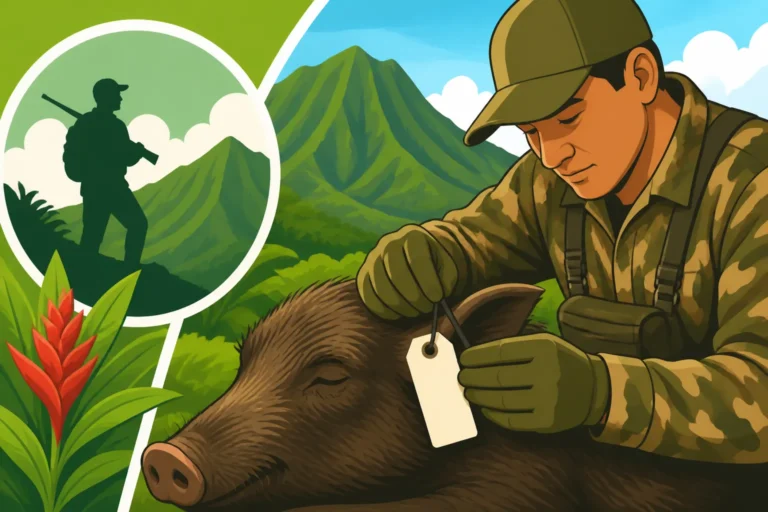
Hunting a Cinder Cone Rim
Hunting Hawaii's unique volcanic landscapes offers some of the most challenging yet rewarding experiences, but finding your way to game in these extreme conditions can feel like searching for a needle in a haystack. The stark, often desolate beauty of a cinder cone rim presents its own set of puzzles: thin air, loose footing, and game animals that seem to vanish into the folds of the earth. This guide will walk you through everything you need to know to successfully hunt these challenging and remarkable formations, turning those frustrations into triumphs.
The Unique Landscape of Hawaii's Cinder Cone Hunting Grounds
Cinder cones, those iconic symmetrical hills found across Hawaii's volcanic terrain, aren't just pretty scenery; they're dynamic ecosystems that offer prime habitat for a surprising variety of game. Formed by explosive eruptions that eject fragments of lava, these cones are characterized by loose, porous rock, steep slopes, and often a distinct rim and crater. While they might look barren from a distance, they frequently hold pockets of vegetation that attract and sustain various species, making them critical hunting areas, especially in the dry regions of the Big Island and Maui.
What Makes Cinder Cones Prime Hunting Territory?
The draw of cinder cones for game animals lies in their unique blend of cover, food, and elevation. Unlike dense rainforests, cinder cones often feature more open, broken ground, which can be advantageous for spot-and-stalk hunting. The loose cinders themselves provide good traction for goats and sheep, and the varied terrain creates natural thermal currents and windbreaks that animals utilize.
Crucially, many cinder cones are home to hardy vegetation. On the Big Island, for instance, you'll often find mamane and naio trees thriving on the slopes of higher elevation cones like those dotting the flanks of Mauna Kea. These plants are a primary food source for mouflon sheep. Lower elevation cones, especially on islands like Maui or Molokai, might feature kiawe or buffelgrass, drawing axis deer or feral goats. The varied topography also offers escape cover from predators (like us hunters!), deep gulches, and shadowed areas where animals can bed down during the heat of the day. This combination creates a natural refuge that supports healthy populations of desirable game.
Identifying Key Game Species on Cinder Cone Rims
While Hawaii offers a diverse array of game, when you're specifically targeting cinder cone rims, a few species tend to dominate. On the Big Island, especially on the higher slopes of Mauna Kea, your primary target will undoubtedly be the mouflon sheep. These majestic animals thrive in the thin air and sparse vegetation of the alpine and subalpine zones, often using the steep, rocky terrain of cinder cones to their advantage for both feeding and evasion. You might also encounter feral sheep, which often interbreed with mouflon, especially in areas like the Mauna Kea Forest Reserve. Hunting Mouflon in Mauna Kea's Thin Air is a truly unique challenge.
On other islands, or at lower elevations, feral goats are highly adapted to the rugged, dry conditions of cinder cones. Their incredible climbing ability allows them to navigate the steepest, rockiest slopes with ease, often feeding on the hardy grasses and shrubs that cling to the volcanic soil. You'll find them using the rims as vantage points and the craters for shelter. While less common right on the exposed rims, especially at high elevation, feral pigs can also be found on the more vegetated slopes and bases of cinder cones, particularly where there's denser cover or water sources. Depending on the island, you might even find axis deer grazing on the lower, gentler slopes where grass is more abundant, perhaps in areas like the Puu Anahulu Game Management Area on Hawaii Island, which has a mix of cinder cone features and open rangeland.
Mastering the Hunt on Cinder Cone Rims
Hunting a cinder cone rim is less about sheer physical strength and more about mental fortitude, patience, and smart strategy. The environment demands respect and careful planning, as a wrong step or a misjudgment of the wind can quickly spoil a hunt.
Spotting and Stalking Tactics in Open Volcanic Terrain
The open nature of many cinder cone areas means that effective glassing is your absolute best friend. Unlike hunting in dense forest where you might only get glimpses of game, cinder cones often afford panoramic views, allowing you to pick apart vast expanses of terrain. Invest in good quality binoculars (10×42 or 12×50 are excellent choices) and a spotting scope if you plan on serious long-range scanning. Position yourself on an elevated point before first light, or in the late afternoon, and systematically glass the slopes, rims, and interior craters of neighboring cones. Look for movement, unusual shapes, or contrasting colors against the gray and red volcanic rock. Glassing a Lava Flow for Mouflon Rams requires patience and a keen eye.
Once you spot an animal, the stalk begins. This is where the challenges truly present themselves. The loose cinder and rock mean every step can create noise, and the exposed nature offers little concealment. Plan your approach carefully, taking into account the wind direction – it often swirls unpredictably around these formations – and any available natural cover, no matter how small. Use the terrain to your advantage: dips, ridges, and scattered vegetation can provide crucial concealment. Moving slowly and deliberately, often on your hands and knees or even belly-crawling, might be necessary for the final approach. Don't be afraid to take a long, circuitous route if it keeps you hidden and downwind.
Navigating the Challenging Topography
The terrain of a cinder cone can be deceptively brutal. While not always incredibly steep, the slopes are almost universally covered in loose volcanic cinder and rock. This translates to incredibly unstable footing, making every ascent and descent a potential ankle-twister. It's not uncommon to take two steps up and slide one step back. You'll quickly discover that walking rough lava without wrecking your boots is a skill unto itself, requiring durable footwear and careful foot placement.
When navigating these areas, always test your footing before committing your weight. Use trekking poles, especially on descents, to maintain balance and reduce strain on your knees. Look for game trails, which, while still challenging, often offer slightly more stable footing than unbroken ground. Be mindful of loose rocks that can tumble, potentially alerting game or causing injury to yourself or others. The volcanic rock can also be incredibly abrasive, so protect your gear and skin. Always choose a route that prioritizes safety over speed; getting injured in these remote areas is a serious concern, especially if cell service is non-existent.
Adapting to Weather and Environmental Factors
Hawaii's weather, particularly in higher elevations, can change in a heartbeat, and cinder cones are no exception. One minute you could be basking in the sun, the next you're enveloped in a cold, dense fog, or battling a sudden downpour. The wind is perhaps the most critical factor. Cinder cone rims are often exposed, acting like natural wind tunnels. Wind not only carries your scent far and wide, making a successful stalk nearly impossible if you're upwind, but it also makes hearing game difficult and can chill you to the bone, even on a sunny day.
Always check the forecast, but be prepared for anything. Pack layers of clothing – a good base layer, insulating mid-layers, and a waterproof/windproof outer shell are non-negotiable. Pay close attention to the wind direction as you hunt, constantly re-evaluating your approach. Thermals, the rising and falling air currents, are also at play; expect air to rise as the sun heats the ground and fall as it cools, influencing scent distribution. Staying hydrated is paramount, even in cooler conditions, as the dry air and physical exertion can quickly lead to dehydration.
Essential Gear and Critical Safety Considerations
Hunting cinder cone rims is an endeavor that demands more than just a rifle and good aim; it requires a well-thought-out kit and a serious commitment to safety. The remote, rugged, and often exposed nature of these areas means you need to be self-sufficient and prepared for any eventuality.
Footwear and Clothing for Volcanic Environments
Your feet will take a beating in cinder cone country, so investing in the right footwear is non-negotiable. You need sturdy, high-ankle hiking boots with excellent ankle support and a stiff sole to protect against sharp lava rock and provide stability on loose cinder. Waterproofing is a plus, as sudden rains or dewy grass can soak through quickly. Brands like Salomon, La Sportiva, or Kenetrek offer models designed for rugged, rocky terrain that can stand up to the abuse.
For clothing, think layers, layers, layers. Even if you start in warmer conditions, the elevation and exposed nature of cinder cones can lead to rapid temperature drops. A moisture-wicking base layer will help manage sweat, followed by insulating mid-layers like fleece or merino wool. An outer shell that is both windproof and waterproof is critical. Choose durable fabrics that can withstand abrasive rock. Blaze orange is often required or highly recommended in Hawaii's public hunting units, so ensure you have a vest or hat that meets regulations.
Navigation and Communication in Remote Cinder Cone Areas
You absolutely cannot rely solely on cell phone service in Hawaii's remote hunting areas; many cinder cone units have significant dead zones. A reliable GPS device, whether a dedicated unit like a Garmin inReach (which also offers satellite communication and SOS capabilities) or a robust smartphone app with downloaded offline maps (like Using the OuterSpatial App to Check In), is essential. Mark your vehicle's location, important waypoints, and any potential escape routes.
Beyond GPS, carry a physical map and a compass and know how to use them as a backup. A fully charged power bank for your electronic devices is also a must. For communication, consider a satellite messenger device if you're heading deep into truly remote areas or hunting alone. Always inform someone of your exact hunting plans, including your intended route and expected return time. This is not just a suggestion; it's a critical safety measure.
Water, First Aid, and Emergency Preparedness
Dehydration and injury are significant risks when hunting cinder cones. Carry substantially more water than you think you'll need – a minimum of 2-3 liters for a half-day hunt, more for a full day. Consider adding electrolyte tablets to your water, especially on hot days or strenuous climbs. Don't rely on finding natural water sources, as many cinder cone areas are incredibly dry.
A comprehensive first-aid kit is non-negotiable. It should include supplies for cuts, scrapes, blisters (which are almost guaranteed), sprains, and basic pain relief. Know how to use everything in your kit. Other emergency essentials include a headlamp with extra batteries, a knife, fire-starting materials, a signaling mirror, and a space blanket. Remember, help can be hours away, even by helicopter, so being able to stabilize yourself or a partner until assistance arrives is paramount. Also, be mindful of Field Care in Hawaii's Heat and Humidity for any harvested game, as even at higher elevations, midday temperatures can climb quickly.
Planning Your Cinder Cone Hunting Adventure
A successful hunt on a cinder cone rim starts long before you ever set foot on the mountain. Diligent planning and understanding the local rules and environment are key to turning your efforts into a memorable experience.
Understanding Unit Regulations and Permits
Hawaii's hunting regulations can be complex, varying by island, unit, and even specific game species. Before you even think about heading out, you need to thoroughly research the specific hunting unit you intend to visit. For example, some prominent cinder cone hunting areas, like Unit A on Mauna Kea for mouflon sheep, often operate on a lottery or drawn hunt system, meaning you can't just show up and hunt. Other units may have specific open seasons, bag limits, and weapon restrictions.
You'll need a valid Hawaii hunting license and potentially specific permits or tags for the species you're pursuing. Make sure to check the Hawaii Department of Land and Natural Resources (DLNR) Division of Forestry and Wildlife (DOFAW) website for the most current regulations. Platforms like GoHunt can also be useful resources for understanding the permit-tag system and various unit rules. Always carry copies of your license and permits with you in the field. Understanding Hawaii's Hunting Units and How They Work is fundamental to a legal and enjoyable hunt.
Scouting and Pre-Hunt Preparation
"An ounce of prevention is worth a pound of cure" perfectly applies to hunting cinder cones. Scouting is absolutely critical. If possible, visit the area before your hunt, even if it's just to drive accessible roads and observe from a distance. Look for signs of game like tracks, droppings, and feeding areas. Pay attention to how the animals use the terrain – where they bed, where they feed, and their travel routes.
If an in-person scout isn't feasible, digital scouting is your next best option. Use satellite imagery on mapping apps to identify potential access points, steep sections, areas with vegetation, and natural funnels or pinch points. Topographic maps will reveal elevation changes and contours that can be used for stalking. Talk to local hunters or guides if you have the opportunity; their insights into animal behavior and specific unit nuances can be invaluable. This pre-hunt preparation allows you to create a detailed plan, including primary and secondary routes, bail-out options, and a clear understanding of the challenges ahead. Knowing which areas are considered Hawaii's High Elevation Alpine Ground is a great starting point for targeting mouflon.
| Game Species | Typical Cinder Cone Location | Key Hunting Considerations |
|---|---|---|
| Mouflon Sheep | High elevation, exposed rims, crater | Excellent glassing, tough climbing, unpredictable winds |
| Feral Goats | Mid to low elevation, steep slopes | Exceptional climbers, cautious stalking, strong scent |
| Feral Pigs | Vegetated slopes, lower elevations | Dense cover hunting, tracking, scent control, often nocturnal |
| Axis Deer | Lower, gentler slopes, grassy areas | Early morning/late evening, long shots, good camouflage |
Disclaimer
Hunting in Hawaii's diverse and challenging environments carries inherent risks. This guide provides general information and recommendations but cannot substitute for individual research, preparation, and adherence to all local and state hunting regulations. Always prioritize safety, inform others of your plans, and be prepared for rapidly changing conditions. The author and publisher assume no liability for any accidents, injuries, or legal infractions incurred during hunting activities. Ensure you have the necessary licenses, permits, and landowner permissions before entering any hunting area.