Hunting a Macadamia Orchard Edge
Finding productive hunting ground in Hawaii can feel like cracking a secret code, especially when you're looking beyond the obvious public units. Many hunters overlook the edges of agricultural operations, but these can be absolute magnets for game animals seeking food and shelter. This guide will take a deep dive into hunting a Macadamia orchard edge, explaining why these unique environments are so appealing to Hawaii’s game mammals and how you can approach them effectively, ethically, and safely.
Why Macadamia Orchard Edges Attract Game
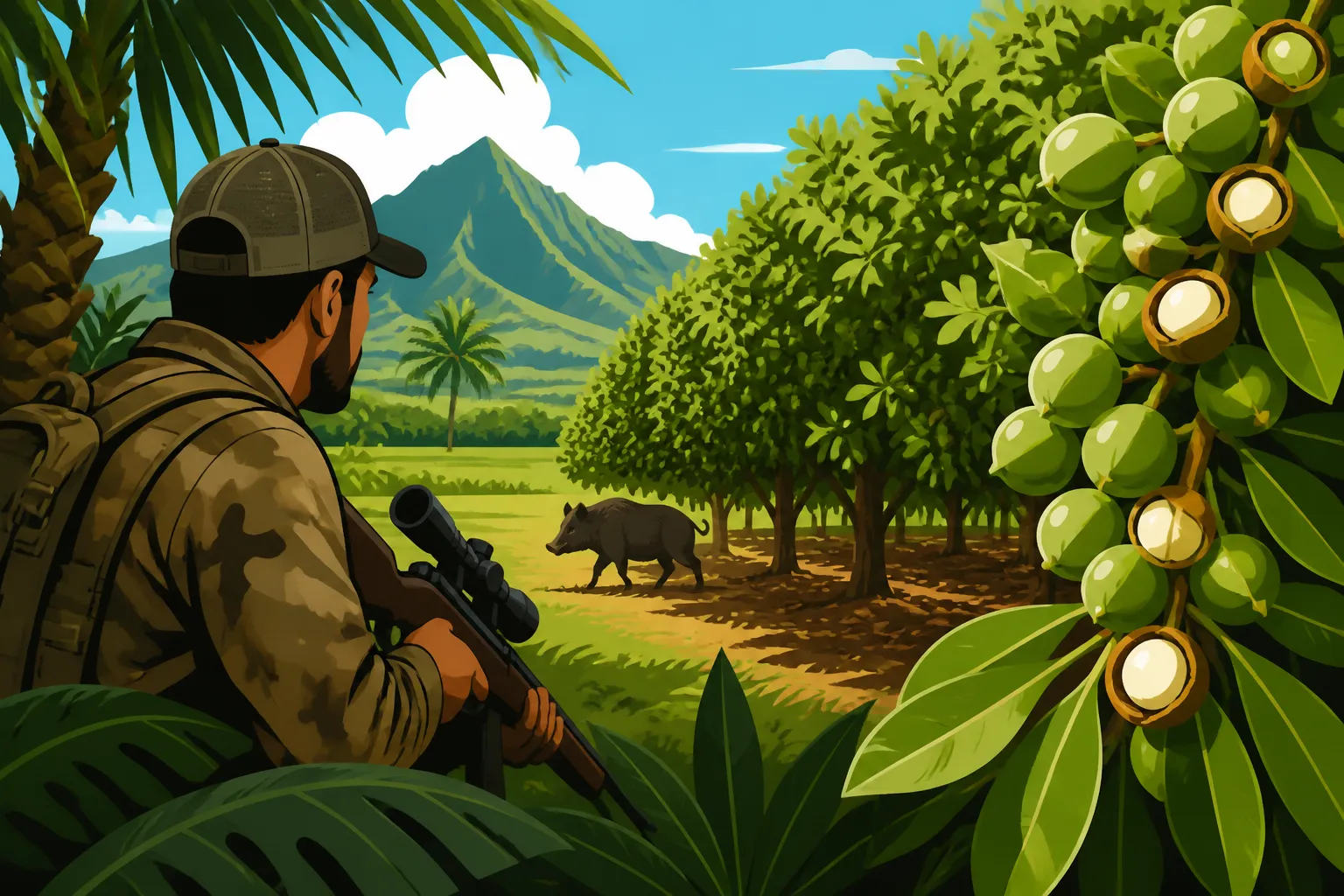
Macadamia orchards, with their distinct trees and often well-maintained surroundings, might not immediately scream "hunting hotspot." However, they offer a trifecta of benefits for Hawaii's feral pigs, goats, and even axis deer, making their edges prime real estate for hunters in the know. It’s all about food, cover, and water, wrapped up in a package that’s often more accessible than dense, untouched wilderness.
Abundant Food Sources and Nutritious Forage
The primary draw of a macadamia orchard, especially for feral pigs, is the nuts themselves. When macadamia nuts fall from the trees, they become a highly sought-after, calorie-rich food source. Pigs, with their keen sense of smell and powerful rooting abilities, will work tirelessly to find and consume these fallen treasures. This isn't just a seasonal feast; macadamia trees often bear fruit year-round, offering a consistent food supply. Beyond the nuts, the edges of these orchards typically feature lush grasses, forbs, and other vegetation that thrive from the irrigation and care given to the trees. This creates a verdant buffet, attracting goats and even axis deer who might browse on the tender shoots and leaves. Think of it as a natural grocery store for hungry animals, always stocked.
Reliable Cover and Shelter
While the cultivated rows of macadamia trees themselves might not offer dense escape cover, the edges where the orchard meets wilder terrain are a different story. These transition zones often feature a mix of invasive shrubs, taller grasses, and secondary growth that provides excellent concealment. Pigs, in particular, love to bed down in thick cover close to their food source, allowing them to feed, retreat, and feel secure without expending too much energy. Goats might use the steeper, rockier sections of these edges for bedding, especially if it offers a vantage point, while deer will often stage in thicker pockets before moving into more open areas to feed at dawn or dusk. The cultivated nature of the orchard means less human disturbance within the rows, creating a sense of safety for animals along the periphery.
Proximity to Water Sources
Another significant factor drawing game to orchard edges is the reliable presence of water. Macadamia orchards require consistent irrigation, which often means an abundance of water lines, catchment ponds, or runoff areas. While these might not be natural springs, they provide easily accessible drinking spots for animals, especially during Hawaii's drier seasons when natural water sources can become scarce. Pigs, notorious for their love of wallowing, will often create muddy depressions near these water sources, offering not just a drink but a cool, insect-repelling mud bath. This combination of constant food, secure cover, and ready water makes the edges of macadamia orchards incredibly attractive for various game animals, turning them into a predictable hotspot for hunters willing to put in the scouting effort.
Reading the Signs: Unlocking the Orchard's Secrets
Hunting macadamia orchard edges isn't just about showing up and hoping for the best; it's about becoming a detective, reading the subtle (and sometimes not-so-subtle) clues the animals leave behind. Knowing what to look for, and where, can significantly increase your chances of a successful hunt. The key is understanding how each species interacts with this unique environment.
Identifying Fresh Tracks and Trails
The soft, often damp soil along the perimeter of an irrigated macadamia orchard is a perfect canvas for animal tracks. Fresh tracks are your primary indicator of recent activity. Look for the distinctive cloven hooves of pigs – they tend to be wider and more rounded than deer or goat tracks, and you'll often see dew claws showing, especially in soft mud. Pig tracks will also often be accompanied by rooting marks. Goats leave narrower, more pointed tracks, often found in steeper, rockier terrain or along fence lines. Deer tracks, if present, will be more heart-shaped and typically spaced further apart, indicating their longer stride.
Follow these tracks to identify well-used game trails that animals use to move between feeding areas, bedding cover, and water sources. These trails will often be worn smooth, especially where they cross fences or narrow through dense brush. Pay attention to the direction of travel – are they coming from deep cover into the orchard, or vice versa? This helps you predict movement patterns. A fresh trail is a warm trail, meaning the animals are likely still in the vicinity or will be returning soon.
Deciphering Rooting, Scat, and Rubs
Beyond tracks, other signs tell a vivid story of game activity. For pigs, rooting is the most obvious indicator. Look for disturbed earth, churned up soil, and overturned rocks where pigs have been digging for fallen macadamia nuts, tubers, and insects. Fresh rooting will still be moist and dark, sometimes with visible nut shells or pieces of roots. The extent of the rooting can tell you about the size of the sounder (group of pigs) and how long they've been feeding there.
Scat is another critical clue. Pig scat varies greatly depending on their diet but is often clumpy and cylindrical, sometimes containing visible plant matter or even nut fragments. Goat scat typically consists of small, round pellets, often found in piles in bedding areas or along travel routes. Deer scat will also be pelleted, but usually larger and more oval than goat droppings, often clumped together. The freshness of the scat—is it moist, shiny, or dry and faded?—can indicate how recently the animal was there.
Finally, look for rubs and scrapes. While less common with pigs, male goats and deer will rub their horns or antlers on saplings and small trees to mark their territory, remove velvet (for deer), or simply relieve an itch. Fresh rubs will expose light wood underneath the bark. Pay attention to fence lines as well; animals frequently pass under or over them, leaving hair or scuff marks. A worn-down section of a fence could indicate a regular crossing point.
| Sign Type | Feral Pig | Feral Goat | Axis Deer (if present) |
|---|---|---|---|
| Tracks | Rounded, wide, dew claws often visible, accompanied by rooting in soft ground. | Narrow, pointed, often found on steep terrain. | Heart-shaped, more elongated, often paired. |
| Rooting | Extensive, disturbed soil, overturned rocks, visible nut shells. | None. | None (deer browse, they don't root). |
| Scat | Clumpy, cylindrical, often with plant/nut fragments. | Small, round, pelleted, often in piles. | Larger, oval pellets, sometimes clumped. |
| Rubs/Scrapes | Minimal to none. | Horn rubs on small trees/shrubs, often higher. | Antler rubs on saplings, lower to mid-height. |
| Wallows | Muddy depressions, often near water. | None. | None. |
Scouting with Technology and Patience
Modern tools like trail cameras can be invaluable when scouting macadamia orchard edges. Place cameras on well-used trails, near fresh rooting, or at natural pinch points where animals are likely to pass. Reviewing photos and videos over several days or weeks will give you a clear picture of when animals are most active (dawn, dusk, night), their travel routes, and the specific species utilizing the area. This data is gold for planning your hunt.
Combine technology with good old-fashioned patience. Spend time observing from a distance, perhaps from a high vantage point, during different times of the day. Use binoculars or a spotting scope to watch for movement, even subtle rustling in the brush. Animals are creatures of habit, and with diligent scouting, you can often predict their movements. Remember, hunting Hawaii's Feral Pigs or even Mouflon Sheep Hunting on Hawaii Island requires a deep understanding of animal behavior, which only comes from thorough scouting.
Effective Hunting Strategies for Macadamia Edges
Once you’ve identified promising macadamia orchard edges and understood the local game movement, it’s time to formulate your hunting strategy. The unique characteristics of these environments—often a mix of cultivated rows and dense wild growth—require a tailored approach. Whether you prefer to move silently or wait patiently, knowing how to leverage the terrain and animal habits is key.
Still-Hunting and Spot-and-Stalk Techniques
Still-hunting is incredibly effective along macadamia orchard edges, especially for pigs, which are often preoccupied with rooting. This involves moving slowly, taking a few steps, then pausing to scan and listen intently for sounds like rustling, grunting, or the tell-tale crunch of nuts being cracked. Use the rows of trees as natural lanes and cover, allowing you to advance quietly with minimal exposure. Always move into the wind, as animals like pigs and deer have an exceptional sense of smell. Pay close attention to subtle shifts in air currents; on some of Hawaii's smaller islands, thermals can change quickly. For more on navigating these conditions, check out Hunting Downwind in Hawaii's Shifting Thermals.
If the orchard edge opens up into more broken terrain, Spot-and-Stalk Tactics on Open Country can be highly productive. Climb to a vantage point early in the morning or late in the afternoon and glass the edges, looking for feeding animals. Once you spot game, plan a careful stalk, using terrain features, trees, and brush to conceal your approach. This requires patience and often a willingness to cover ground silently. For goats, particularly if the orchard borders a canyon or rocky hillside, glassing from a distance and then executing a calculated stalk is often the best method, as they prefer high ground and can spot movement from afar.
Utilizing Blinds and Stands
For those who prefer a more stationary approach, setting up a blind or stand at a strategic location can be very effective. This works particularly well where game trails converge, near a known water source, or overlooking a heavily rooted area. A ground blind, tucked into dense brush along the edge, offers excellent concealment without disturbing the natural environment too much. Just make sure you blend in. A tree stand, if the trees allow for safe placement, can give you a better vantage point, helping you see over the shorter macadamia trees and into adjacent thickets.
When choosing a location, consider the wind direction carefully. You want your scent to blow away from the anticipated animal approach. Setting up a few days or weeks before your hunt allows animals to habituate to its presence, reducing the chances of them being spooked. This method is particularly useful for hunters who want to target specific times of day, like first light or last light, when animals are often most active on the edges. Remember to research Hawaii's Legal Weapons by Season to ensure your chosen method aligns with local regulations.
Dog Hunting Considerations for Feral Pigs
If you're focused on Hawaii's feral pigs and plan on using dogs, macadamia orchard edges present a unique set of challenges and opportunities. The open rows of trees make it easier for dogs to work and track scent, but the quick access to dense adjacent cover means pigs can quickly escape into impenetrable tangles. It's crucial to ensure your dogs are well-trained and equipped with GPS collars, as a pig can disappear in seconds. You might find that the pigs stick closer to the edge cover, making for shorter, more intense chases.
Always be mindful of the orchard owner's property and potential hazards like irrigation lines, fencing, or farming equipment. A bay dog and catch dog team can be very effective in this environment, allowing you to quickly secure a pig once bayed, preventing it from running into private property or damaging trees. For a deeper dive into this exciting method, read about Dog and Knife Pig Hunting in Hawaii.
Navigating the Practicalities: Access, Safety, and Ethics
Hunting macadamia orchard edges isn't just about understanding animal behavior; it also involves crucial practical considerations related to land access, safety, and ethical conduct. Hawaii has specific rules about private land, and respecting these is paramount to a sustainable hunting culture.
Securing Private Land Access
The vast majority of macadamia orchards in Hawaii are on private land. This means that securing explicit permission from the landowner is absolutely non-negotiable. Hunting without permission is trespassing, a serious offense with significant penalties, and it jeopardizes hunting access for everyone. Don't assume that just because an area looks remote or unmanaged, it's public land. Hawaii's land ownership can be complex.
Start by respectfully identifying the landowner. This might involve looking up county tax records, asking around the local community, or checking with a local hunting guide or organization. Once you identify the owner, approach them politely and professionally. Explain your intentions, emphasize your commitment to safety, and offer to share some of your harvest. Building a good relationship with landowners is key. Some landowners may grant free access, while others might charge a fee or require a formal written agreement. Be prepared for either. Sometimes, adjacent public lands can offer limited access to game that spills over from private orchards, but even then, understanding the precise boundary is critical. Using resources like GoHunt or even the state's own Department of Land and Natural Resources (DLNR) website can sometimes provide information on adjacent public hunting units, but for the orchard itself, it's a private conversation.
Safety Zones and Neighboring Concerns
Hunting near any agricultural operation or residential area requires heightened awareness of safety zones and proximity to people and structures. Even if you have permission to hunt an orchard, you must always be aware of where farmworkers might be, where residential homes are located, and where public roads pass. Hawaii has strict rules about shooting within certain distances of occupied dwellings and public roads. Never take a shot if you are unsure of your backstop or if there's any risk to non-target areas.
Communication is vital. If you gain permission to hunt, ask the landowner about active farming operations or other individuals who might be on the property. Inform them of your hunting dates and times. Be respectful of their ongoing business. Macadamia orchards are working farms, and your presence as a hunter should never interfere with their operations or create a safety hazard for their employees. This responsible approach is crucial not only for your safety but also for maintaining good relations and potentially securing future access.
Ethical Hunting and Post-Harvest Practices
Ethical hunting extends beyond legal compliance. It means taking clean, humane shots, understanding the limits of your equipment, and respecting the animals you pursue. When hunting in a working orchard, you must also be mindful of the trees themselves. Avoid damaging irrigation lines or the trees during your hunt or game retrieval.
After a successful hunt, proper Field Care in Hawaii's Heat and Humidity is paramount. Hawaii's tropical climate means meat can spoil quickly. Have a plan for immediate field dressing, rapid cooling, and transport of your harvest. If you're on a multi-day hunt or far from refrigeration, consider how you'll Cooling Meat Fast on a Hawaii Hunt. Respect the animal by utilizing as much of the meat as possible. If you are unable to take all the meat, discuss options with the landowner—they might appreciate the meat, or there might be local programs for meat donation. Hunting is a privilege, and demonstrating responsible, ethical behavior ensures that this privilege can continue.
Disclaimer
Hunting is an inherently dangerous activity. This article provides general information and recommendations only. Always consult the latest Hawaii Department of Land and Natural Resources (DLNR) hunting regulations, which can change frequently. It is your responsibility to understand and comply with all state and local laws, obtain the necessary licenses and permits, and ensure your own safety and the safety of others. Seek professional guidance for firearms safety and outdoor survival skills.