Hawaii Rules on Transporting Game Meat
You’ve done the hard work: put in the time scouting, hiked through challenging terrain, and finally, your efforts paid off with a successful harvest. Whether it’s a plump Axis deer from Maui or a tough feral pig from a Big Island gulch, securing your game is a huge accomplishment. But then the reality sets in: how do you actually get this meat from the field to your freezer, especially in Hawaii’s unique environment with its islands and regulations? It’s a common source of stress for many hunters, both residents and visitors, but this guide will meticulously break down the Hawaii rules on transporting game meat, both within and between islands, and even back to the mainland, so your precious protein arrives safely and legally.
Transporting Game Meat Within the Islands
So, you’ve got an animal down in the field. Fantastic! Now, before you even think about putting it in your truck, you need to understand the initial steps for proper meat handling and local transport. Hawaii’s warm climate and often rugged terrain present specific challenges that need careful planning. You can't just throw a whole carcass in the back of your rig and expect it to be fine, not here.
Field Dressing and Initial Care
The moment your animal hits the ground, the clock starts ticking, especially with Hawaii's ambient temperatures. Proper field dressing isn't just a good practice; it's absolutely critical for preserving the quality of your meat. The goal is to cool the carcass down as quickly as possible to prevent bacterial growth and spoilage. This means getting the guts out immediately.
Don't be tempted to drag the whole animal out before field dressing if it's a long haul, unless it's a very short drag to an accessible spot. Those internal organs hold a lot of heat, and that heat will start to spoil your meat from the inside out. For most game mammals in Hawaii, this initial step is non-negotiable. Consider the advice in Field Dressing Axis Deer in Hawaii Heat – the principles apply to all large game here. For smaller game like birds, quick cooling in a game bag with ice is still paramount.
Once field dressed, the next priority is airflow. Prop open the body cavity if possible, especially for larger animals like Axis deer or feral pigs. If you have any water, a quick rinse of the cavity can help, but ensure it drains completely. Many hunters carry a small spray bottle with a vinegar-water solution to clean the cavity and deter flies. This attention to detail in the first hour can make all the difference in the final taste and safety of your meat.
Getting Your Meat from the Unit to Your Vehicle
Hawaii's hunting units often involve significant hikes, steep gulches, or thick brush. Getting a field-dressed animal out of these areas can be as challenging as the hunt itself. This isn't like hunting the midwest where you might just drive your truck right up to your downed deer. Here, you're likely packing it out on your back, piece by piece.
For pigs and goats, which can be heavy but are often taken in dense areas, hunters frequently quarter the animal in the field. This means breaking it down into manageable pieces – usually four quarters, backstraps, and tenderloins. This not only makes it easier to carry but also accelerates the cooling process. You'll want sturdy game bags to protect the meat from dirt, flies, and debris during the pack out. A good internal frame backpack is invaluable here, especially if you're navigating steep, slippery trails common in Hunting Pigs in Hawaii's Rainforest Gulches. Imagine trying to drag a 150-pound boar through a thick guava patch; it's nearly impossible and will ruin the meat.
For larger Axis deer, especially on islands like Maui or Molokai where access might be more open but distances long, quartering is almost always the way to go. If you're fortunate enough to hunt with a partner, sharing the load is key. Some hunters even use specialized game carts on more accessible trails, but these are rarely practical in Hawaii's truly rugged public lands. The advice in Packing Meat Out of a Hawaii Gulch is incredibly relevant here, emphasizing planning and proper gear.
Local Transport on Roads
Once you’ve successfully packed your meat out to your vehicle, the journey isn't over. You still need to get it home, potentially across an island, and Hawaii's heat can still be a major problem. You can’t just throw game bags onto the bed of your truck in the midday sun and expect the meat to stay cool.
The primary concern for local road transport is maintaining a cool temperature. This means having plenty of ice, coolers, and even insulated tarps. Load your game bags into quality coolers with enough ice to completely surround the meat. Block ice lasts longer than cubed ice, so plan ahead if possible. Even if it's a short drive, a cooler with ice is essential. For bigger animals, you might need multiple large coolers. Make sure your coolers are well-sealed to prevent meltwater from escaping and creating a mess in your vehicle.
It’s also important to remember basic cleanliness. You've been handling an animal, and there's blood and other fluids involved. Have tarps or plastic sheeting in your vehicle to protect your interior. When you get home, clean your coolers thoroughly. It's a smell you don't want to linger. During a long drive on the Big Island, for example, from the upper slopes of Mauna Kea after a successful Mouflon hunt down to Kailua-Kona, your coolers will be working hard. Stopping for more ice if available can be a lifesaver.
Inter-Island Transport of Game Meat
Thinking about hunting on one island and bringing your harvest back to your home on another? This is a common desire, especially for residents, but it comes with its own set of rules and logistical hurdles. You can’t just walk onto an inter-island flight with a bag of fresh venison.
Preparing Meat for Inter-Island Travel
Before your meat can even think about boarding a plane or barge, it needs to be properly prepared for travel. This typically means frozen solid and securely packaged. The general rule of thumb is that if it's going into cargo, it needs to be completely frozen.
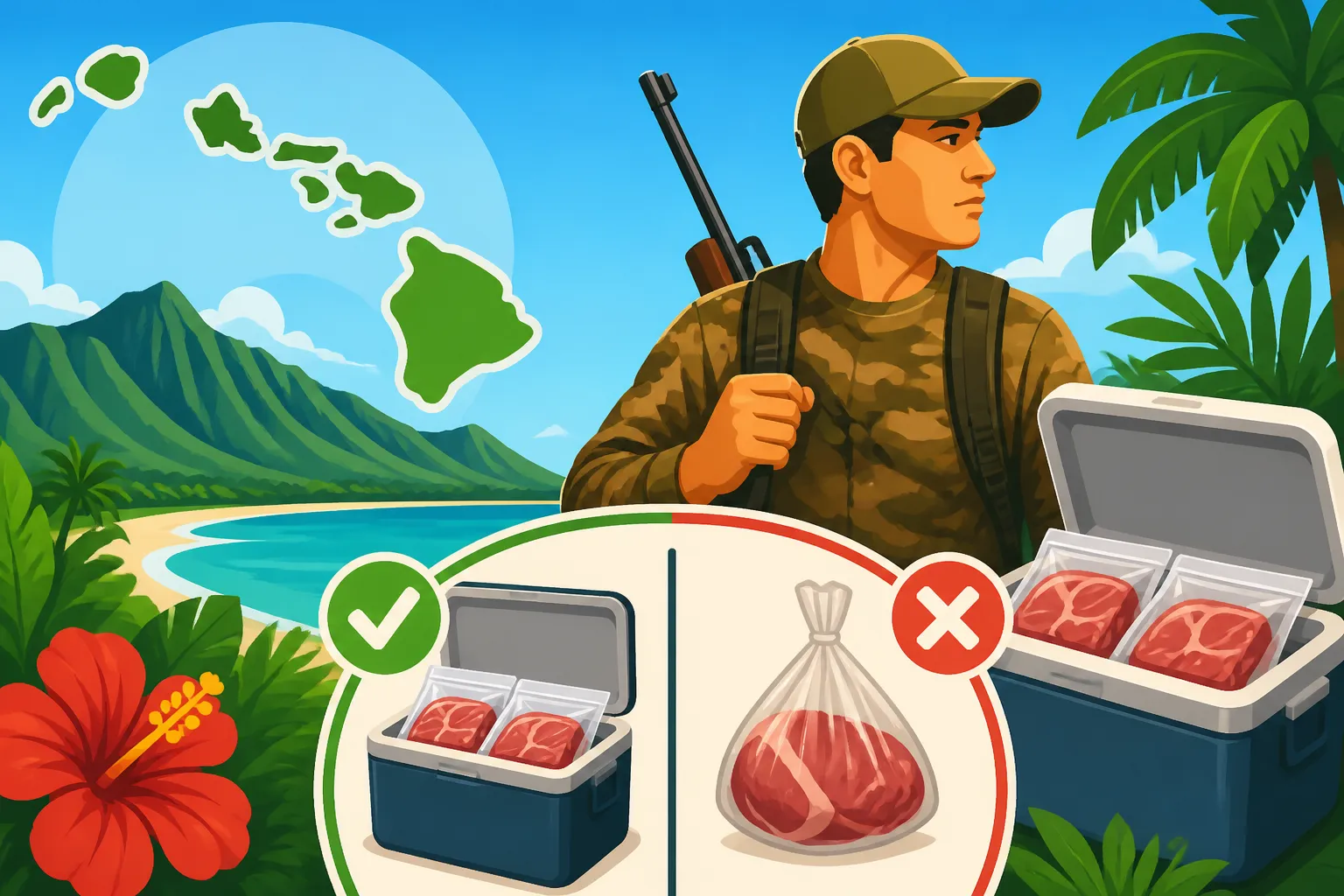
First, your meat needs to be processed. This means butchered into cuts, wrapped, and then flash-frozen. Many hunters will debone quarters and cut them into roasts, steaks, and grind, then vacuum seal or double-wrap in freezer paper. This isn't just for convenience; it protects the meat from freezer burn and contamination. Once wrapped, it should be frozen solid, ideally for at least 24-48 hours, in a deep freezer. A partially frozen piece of meat will thaw faster and cause issues.
For packing, use high-quality insulated containers. Hard-sided coolers are often preferred for durability and insulation. Pack the frozen meat tightly inside the cooler, minimizing air space. You can add dry ice for longer trips, but check with your chosen carrier first, as there are specific regulations for dry ice quantities and packaging. For example, some airlines have limits on how much dry ice you can carry, and it must be vented.
Shipping Meat via Air Cargo or Barge
When you're looking to move your game meat between islands, air cargo or barge services are your primary options. Each has its pros and cons, largely dictated by speed, cost, and the volume of meat you're transporting.
Air Cargo: For smaller quantities or faster transit, Hawaiian Airlines Cargo or Southwest Cargo are often used. You'll need to contact them directly for their specific policies on shipping perishable goods like game meat. Generally, the meat must be frozen solid, packed in a leak-proof cooler (often with a secondary plastic liner inside the cooler), and clearly labeled. They'll also have specific check-in times and pick-up windows. For instance, if you're flying out of Kahului, Maui, after a successful Axis deer hunt and want to send meat to Oahu, you'd coordinate with Hawaiian Air Cargo well in advance. Keep in mind that air cargo can be expensive, especially for heavier shipments. The good news is, it's fast, getting your meat to its destination in a matter of hours.
Barge Services: For larger quantities or if you have more flexible timing, barge services like Young Brothers provide a more economical option. This is often the preferred method for commercial shipments or for hunters with a large harvest. Similar to air cargo, your meat must be frozen solid and well-packed in insulated containers. You'll need to drop off your coolers at their freight terminal, and pick-up will be several days later at the destination island. It's slower, but the cost per pound is significantly lower, making it attractive for bulk transport. Always check current schedules and requirements with Young Brothers, as they can change.
Personal Baggage Rules for Meat
Can you just check a cooler of meat as personal baggage? Yes, but with some very specific caveats and a healthy dose of caution. Most airlines allow perishable items, including frozen meat, as checked baggage, but you must adhere to their specific rules.
Typically, the meat needs to be frozen solid and packed in a leak-proof container – a hard-sided cooler is usually best. The total weight of your cooler (meat included) must comply with the airline's checked baggage weight limits to avoid overweight fees, which can add up fast. For example, Hawaiian Airlines generally allows up to 50 lbs per checked bag. You cannot use dry ice in checked baggage unless it's properly vented and within strict weight limits (usually around 5.5 lbs per package). Wet ice is usually not allowed because it melts and creates a leak risk.
This method is really only practical for smaller amounts of meat, say a cooler with a few day's worth of fillets or roasts. If you've taken a whole Axis deer, checking multiple heavy coolers will be prohibitively expensive and logistically challenging. Always call your airline directly well in advance to confirm their exact policies for transporting frozen game meat as checked luggage. Misunderstanding the rules could lead to your precious harvest being confiscated or, worse, spoiling at the airport.
Taking Game Meat Home to the Mainland (or International)
For visiting hunters, the dream often includes bringing some Hawaiian venison or pork back to the mainland. This is absolutely possible, but it layers on additional federal and state regulations that you absolutely cannot overlook. This is where things get serious, and agricultural rules become a major player.
Federal and State Regulations for Out-of-State Transport
When crossing state lines or international borders with game meat, you're no longer just dealing with Hawaii's Department of Land and Natural Resources (DLNR) or airline rules. The U.S. Department of Agriculture (USDA) and potentially the Fish and Wildlife Service (FWS), as well as the destination state's agricultural department, now have a say.
The most critical regulation to be aware of from Hawaii's side involves agricultural quarantine. All meat leaving Hawaii for the mainland is subject to inspection to prevent the spread of pests or diseases. This means your meat must be clean, free of dirt, insects, or plant material. This is why thorough field dressing and processing are so vital. It's not uncommon for meat to be denied if it's not up to snuff. The USDA generally requires meat to be "visibly free" of soil, animal matter, and other debris. For specific details on what you can and cannot bring, reviewing Agricultural Rules for Taking Meat Off Island is highly recommended.
Furthermore, different states have different rules. While deer and pig meat are generally fine, certain species or specific parts might be restricted depending on the destination state's wildlife management regulations. For instance, some states have specific rules about importing cervid meat to prevent the spread of Chronic Wasting Disease (CWD), even though Hawaii does not have CWD. Always check with the wildlife agency of your home state before attempting to bring any game meat back. It's a double-check that can save you a lot of grief.
Packing and Shipping for Long Distance
Shipping game meat from Hawaii to the mainland requires robust planning and packaging to ensure it stays frozen for the entire journey, which could take several days. This is definitely not a job for your average camping cooler.
Professional meat processors in Hawaii who cater to hunters are your best friend here. They understand the intricacies of proper cuts, vacuum sealing, and flash-freezing to prepare your meat for long-haul shipping. Many will even arrange the shipping for you through specialized cold-chain logistics companies or air cargo services that deal with perishables. If you're considering a guided hunt, many outfitters, like those on Molokai or Maui that cater to Axis deer hunters, include meat processing and shipping assistance as part of their services or can recommend trusted local vendors. This is where investing in an experienced outfitter really pays off.
If you choose to do it yourself, you'll need high-quality, insulated shipping containers – often specialized styrofoam boxes designed for perishables, placed inside a sturdy cardboard outer box. Dry ice is practically a necessity for mainland shipments to keep the meat frozen. Again, adhere strictly to the shipping company's rules for dry ice, including weight limits and proper ventilation. Label your boxes clearly with "Frozen Game Meat" and your contact information. Be prepared for potentially high shipping costs; air freight for perishable goods is expensive, often calculated by weight and volume. For more detailed insights, you might find Shipping Meat Home From Hawaii to be a valuable resource.
Documentation and Inspection Requirements
When transporting game meat out of Hawaii, especially to the mainland, having the correct documentation is non-negotiable. This is where your hunting license and tag come into play, proving the meat was legally harvested.
You should always carry copies of your valid Hawaii hunting license and any specific permit-tags associated with the animal you harvested. While most airline or shipping agents won't ask for it, agricultural inspectors or law enforcement might. This documentation proves legal take and ownership. For example, if you harvested an Axis deer on Lanai, you'd want your Lanai Axis deer permit-tag documentation handy.
Before your flight or shipment, agricultural inspectors may want to visually inspect the meat. This is less common for properly processed and packaged meat, but it can happen. They're looking for signs of pests, diseases, or prohibited items like uncleaned carcasses, heads, or hides (which often have stricter rules due to pest concerns). Ensure your meat is packaged in a way that allows for inspection if requested, but also protects it from thawing. Communication with the agricultural inspection station at the airport or port is key to a smooth process. They can advise you on any specific requirements or potential issues before you even get there.
Common Pitfalls and Best Practices
Navigating the rules and practicalities of transporting game meat in Hawaii can feel like a minefield. Many hunters, both new and experienced, make common mistakes that can lead to disappointment or even legal trouble. Knowing these pitfalls and adopting best practices can save your harvest and your sanity.
Avoiding Spoilage in Hawaii's Climate
Hawaii's beautiful tropical and sub-tropical climate is fantastic for vacationing, but it's a formidable enemy when it comes to preserving fresh game meat. Spoilage is, without a doubt, the biggest concern hunters face here.
The number one best practice is rapid cooling. This starts in the field with immediate and thorough field dressing. Get the hide off quickly if possible, as the hide holds heat. Quartering or deboning the animal in the field significantly aids in cooling by exposing more surface area to air. Once quartered, get the meat into game bags and then into coolers with ice as soon as humanly possible. Don't underestimate how quickly bacteria can multiply in warm temperatures. A few hours of neglect in 80-degree weather can ruin a whole animal. This is why some hunters swear by carrying small, collapsible coolers or insulated bags right into the field, especially for smaller game or for parts like backstraps. Remember the emphasis on Cooling Meat Fast on a Hawaii Hunt for a reason!
Another critical element is hygiene. Use clean knives, gloves, and surfaces when processing your meat. Contamination from dirt, gut contents, or even your hands can introduce bacteria that accelerate spoilage. Pack ice effectively in your coolers, ensuring there's direct contact with the meat. Drain meltwater frequently, as stagnant water can harbor bacteria. Never let your meat sit in a puddle of blood-tinged water; this is a recipe for disaster. Using quality freezer bags or vacuum sealer bags also minimizes air exposure during storage, further protecting against freezer burn and degradation.
Legal and Ethical Considerations
Beyond the practicalities of keeping meat cool, there are important legal and ethical considerations when transporting game meat in Hawaii. Adhering to these principles ensures you remain a responsible hunter and uphold the integrity of the sport.
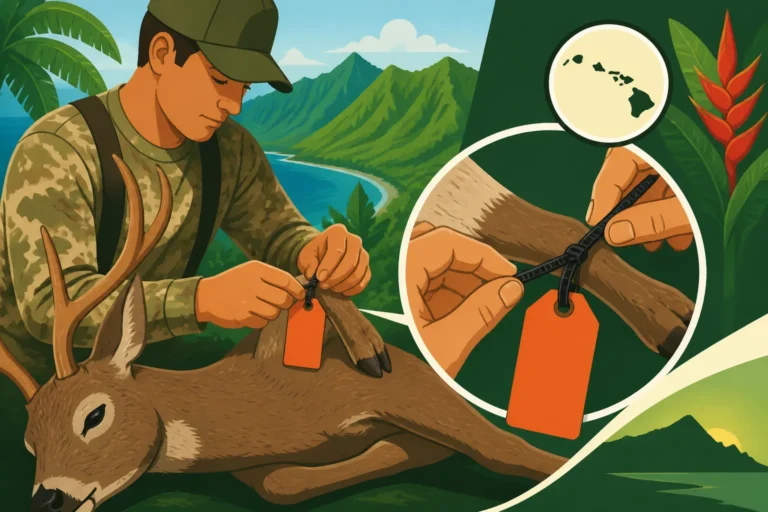
First and foremost, always ensure your animal was legally taken and properly tagged. This includes having a valid hunting license and any required permit-tags for the specific species and unit. The tag must be affixed to the animal immediately after the kill, as specified by DLNR regulations. This tag then accompanies the meat through transport, acting as proof of legal harvest. Any meat without a proper tag could be confiscated and lead to fines or other penalties. This is particularly important for species that require special tags, such as Axis deer on certain islands, where you definitely need to understand How Hawaii's Permit-Tag System Works.
Ethically, remember that hunting is about utilization. Transporting meat safely and efficiently is part of showing respect for the animal and ensuring none of it goes to waste. Donating meat that you cannot personally consume or transport is also an ethical option. There are local charities and food banks that may accept legally harvested game meat, especially if processed by a certified facility. This ensures your harvest continues to provide sustenance for the community. The thought of Donating Meat You Cannot Take Home is a good one to keep in mind, especially for visitors who may have bag limits exceeding their travel capacity. Knowing these rules and options ensures your hunting experience is not only successful but also responsible from start to finish.
Summary Table of Game Meat Transport Considerations
To help you keep track of the different requirements for transporting your Hawaiian game meat, here's a quick overview:
| Transport Scenario | Key Requirements | Recommended Practices | Potential Pitfalls |
|---|---|---|---|
| Within Island (Field to Home) | – Immediate field dressing – Proper tagging (if required) – Basic cooling/protection for transport |
– Quarter in field for easier pack out – Use sturdy game bags – Pack in coolers with ample ice for vehicle transport |
– Spoilage due to heat – Contamination from dirt/debris – Illegally transported untagged game |
| Inter-Island (Cargo/Baggage) | – Meat must be frozen solid – Leak-proof, insulated container – Adhere to airline/barge weight/size limits |
– Professional processing & vacuum sealing – Use high-quality hard-sided coolers – Check carrier's dry ice rules |
– Meat thawing due to inadequate insulation – Exceeding weight limits (costly) – Not following dry ice regulations |
| To Mainland/International | – Meat frozen solid & clean – Meet USDA/destination state ag rules – Proper documentation (license/tag) |
– Use professional meat processor & shipper – Specialized insulated shipping containers – Liberal use of dry ice |
– Agricultural rejection due to contamination – Meat thawing during long transit – High shipping costs – Legal issues without proper documents |
Disclaimer
Please be aware that hunting regulations, including those pertaining to game meat transport, can change. While every effort has been made to provide accurate and up-to-date information, it is the hunter's responsibility to verify all current rules and regulations with the Hawaii Department of Land and Natural Resources (DLNR), the U.S. Department of Agriculture (USDA), your chosen airline or shipping carrier, and any relevant state agencies before engaging in hunting or transporting game meat. This guide is for informational purposes only and should not be considered legal advice.