Ammunition Rules Worth Knowing Before You Fly
Heading to Hawaii for a hunt is an incredible adventure, but let's be real, the logistics can be a headache. One of the biggest sources of anxiety for mainland hunters is figuring out how to fly with ammunition safely and legally. This guide is here to untangle those confusing rules, calm your pre-trip jitters, and make sure your precious hunting rounds make it to the islands without a hitch, so you can focus on the hunt itself.
Navigating Federal Air Travel Regulations for Ammunition
When you’re preparing to fly, the absolute first layer of rules you need to understand comes from the federal government, specifically the Transportation Security Administration (TSA). These aren't Hawaii's rules or your airline's rules, but rather the baseline for all air travel within the United States. Ignoring them can lead to serious delays, fines, or even having your ammunition confiscated, which is the last thing you want before an exciting hunt for axis deer or feral pigs.
Ammunition Must Always Be in Checked Baggage
Let's get this straight right off the bat: you can never carry ammunition in your carry-on luggage or on your person. That's a hard and fast rule, no exceptions. It must be stowed securely in your checked baggage. This might seem obvious to experienced hunters, but in the rush of packing, it's easy to make a mistake. Imagine getting to the security checkpoint, already picturing yourself on a remote Lanai ridge, only to have to abandon your carefully chosen rounds because they ended up in the wrong bag. It's a frustrating scenario that's entirely avoidable with a little planning. This rule is in place for everyone's safety, as ammunition poses a different kind of risk in the pressurized cabin of an aircraft.
Proper Storage and Packaging Requirements
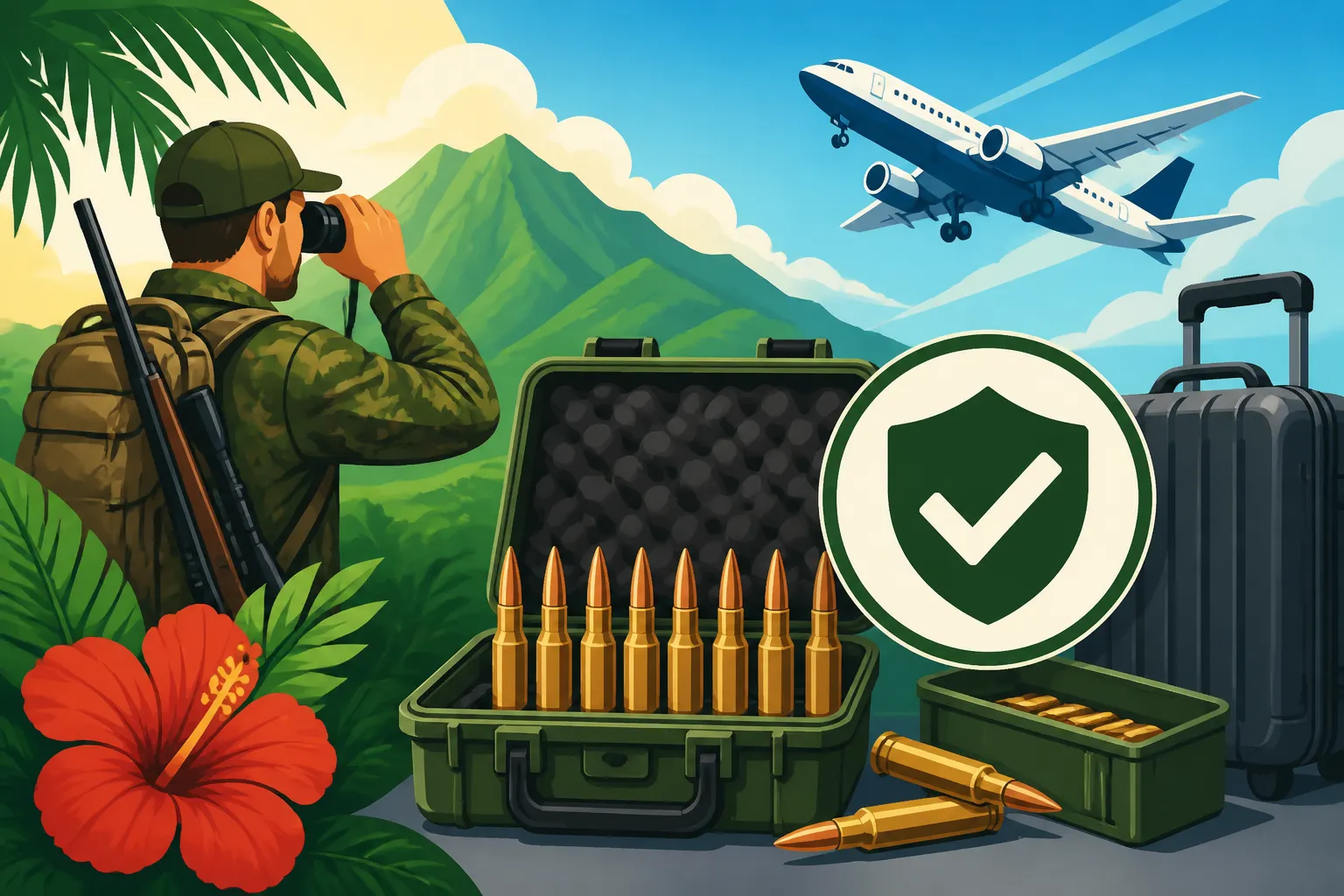
The TSA is very clear about how your ammunition needs to be packed. It's not enough to just throw a box of shells into your duffel bag. Ammunition must be transported in its original manufacturer's packaging or in a securely latched box designed specifically for ammunition. Think sturdy plastic or metal cases, often with individual compartments for each round. These cases prevent the rounds from rattling around, potentially causing primers to strike, or bullets to separate from their casings. Loose ammunition is a huge no-no. It's considered a safety hazard because loose rounds can rub together, or a strong impact could ignite a primer. I've seen guys try to just toss a handful of rounds into a sock, thinking it'll be fine. Trust me, it won't be. Invest in a good, purpose-built ammo case. It's a small expense that saves a massive headache and protects your investment in quality hunting ammunition. You'll want to ensure this is packed carefully, especially if you plan on Flying to Hawaii With Firearms as well.
Quantity Limits: What the TSA Allows
While the TSA doesn't have an explicit weight limit for ammunition, they defer to the individual airlines. However, they do state that the ammunition must be "small arms ammunition" and should be for "personal use." This generally means no crates of military surplus ammo, but rather enough for your hunt. Most hunters find that 11 pounds of ammunition is a common threshold enforced by many airlines, but it's crucial to understand that this is where airline-specific rules really come into play. Always check with your chosen carrier directly, because exceeding their limit could mean you're leaving a good chunk of your ammo behind. Keep in mind that different Hawaii's Legal Weapons by Season might require different types and quantities of ammunition, so plan accordingly for what you anticipate needing.
Understanding Airline-Specific Ammunition Policies
While the TSA sets the federal baseline, each individual airline can (and often does) impose its own, stricter rules regarding ammunition. This is where many hunters get tripped up. What's perfectly fine on one airline might get you denied at the check-in counter for another. You can't just assume; you must verify.
Weight and Caliber Restrictions Vary by Carrier
This is the biggest differentiator. Most major airlines flying to Hawaii — think Hawaiian Airlines, United, Delta, and American Airlines — will allow you to transport ammunition, but their specifics on weight are not uniform. The most common allowance you'll encounter is 11 pounds (5 kg) of ammunition per passenger. However, some airlines might be slightly more generous, while others might be stricter. This weight limit typically includes the weight of the ammunition and the container it's in.
Let's look at a quick example:
| Airline | Max Ammunition Weight (per passenger) | Specifics / Notes |
|---|---|---|
| Hawaiian Airlines | 11 lbs (5 kg) | Must be securely packed in manufacturer's packaging or secure container. |
| United Airlines | 11 lbs (5 kg) | Must be declared, in manufacturer's original box or appropriate container. |
| Delta Air Lines | 11 lbs (5 kg) | Max 11 lbs including packaging. |
| American Airlines | 11 lbs (5 kg) | Ammo must be packed separately from firearm. |
Note: These are general guidelines; always check the airline's official website or call them directly before your flight for the most current regulations.
Beyond weight, some airlines might have specific rules on the caliber or type of ammunition. While rare for standard hunting rounds, it's worth a quick check. For instance, some might prohibit incendiary or tracer rounds, which aren't typically used for hunting anyway, but it underscores the need to be fully informed. This careful consideration of ammo type directly relates to understanding Hawaii's Legal Rifle Calibers for Big Game and Muzzleloader Caliber Minimums for Big Game if you're bringing a modern firearm or a black powder rifle.
Declaration Procedures at Check-In
Regardless of the airline, you are always required to declare your ammunition at the check-in counter. This isn't just a suggestion; it's a non-negotiable step. You'll typically be asked to complete a declaration form stating that you are checking a firearm and/or ammunition. This might involve a quick visual inspection by the agent to ensure your ammo is properly packaged.
Do not try to hide it, or slip it in without mentioning it. That’s a surefire way to get yourself into a heap of trouble. When you declare it, the airline agent will usually provide a small orange tag or sticker that indicates the bag contains a declared hazardous material. This isn't a scarlet letter; it's a safety measure that informs baggage handlers. Be prepared for a brief conversation, answer their questions clearly, and be cooperative. Many hunters find that having all their documentation ready, including their Hawaii Hunting Licenses and What They Cost and any necessary Hawaii Hunter Education Requirements paperwork, helps streamline the process, even if not directly related to ammo.
Considering Common Carriers to Hawaii
The major carriers serving Hawaii from the mainland often have dedicated sections on their websites outlining their firearm and ammunition policies. Hawaiian Airlines, for example, is very experienced with hunters traveling to the islands, given the popularity of Axis Deer Hunting in Hawaii and Hunting Hawaii's Feral Pigs. United, Delta, and American also frequently transport hunters. My best advice: after booking your flight, go directly to your airline's website, navigate to their "Special Baggage" or "Firearms and Ammunition" section, and print out their specific policy. Having a physical copy can be incredibly helpful if you encounter an agent who isn't entirely familiar with their own airline's rules (it happens, trust me). You might also find general travel advisories or booking options for Helicopter Access for Remote Hawaii Hunts through some carriers, though this is less common for civilian hunters.
Hawaii's Local Ammunition Laws: What You Need to Know
Once you've cleared federal and airline hurdles, the next question is: does Hawaii have any unique laws specifically regulating the importation or possession of ammunition once you're on island? The good news is, generally speaking, Hawaii's ammunition laws are less complex than its firearm registration requirements.
General Lack of Specific Import Restrictions
Unlike firearms, which require registration with the Honolulu Police Department or the relevant county police department upon arrival, there are typically no separate, explicit permit requirements or registration procedures specifically for ammunition itself when flying into Hawaii from the mainland. As long as your ammunition adheres to federal (TSA) and airline regulations, and it's intended for a legal hunting firearm that you've either registered or are legally possessing (e.g., if you're renting one from a guide), you should be in the clear.
This doesn't mean you can bring unlimited amounts or any type. You're still bound by those airline weight limits and the general understanding that it's for legal hunting purposes. But you won't typically be filling out a separate form for your hunting rounds at the airport once you land in Honolulu or Kona. This is a common point of confusion for visitors, often overshadowed by the more stringent rules for Registering a Firearm After Arriving in Hawaii or understanding Hawaii Rules on Bringing a Firearm to the Islands.
Implications of Firearm Registration
While ammunition generally doesn't require separate registration, its legality is intrinsically linked to the legality of the firearm it's intended for. If you're bringing your own rifle or shotgun, you must register it with the county police department where you land. This applies to Honolulu (Oahu), Maui County (Maui, Lanai, Molokai), Hawaii County (Big Island), and Kauai County. If your firearm isn't legally registered and possessed, then any ammunition for it could also be considered illegal. This is a critical point that can't be overstated. Always ensure your firearm paperwork is squared away before you even think about the ammunition. Many hunters find that working with a reputable guide or outfitter can simplify this process, as they often have a deep understanding of local laws and can help you navigate Hawaii Hunting Licenses and What They Cost and firearm procedures.
Purchasing Ammunition on Island
Another option, if you're hesitant about flying with ammunition or hit an airline's weight limit, is to purchase your rounds once you arrive in Hawaii. This can be a viable strategy, but it comes with its own set of considerations.
- Availability: Ammunition can be more expensive and less readily available on the islands compared to the mainland. Specialty calibers, especially for less common hunting rifles, might be hard to find, or you might be limited to specific brands. It's not like every small town has a big box sporting goods store with endless shelves of ammo.
- Cost: Expect to pay a premium. Shipping costs and limited supply drive prices up.
- Convenience: It means an extra errand once you arrive, taking time away from your hunting plans or relaxation.
If you plan to buy locally, it's a smart move to call ahead to a sporting goods store in your destination city (e.g., Honolulu, Kahului, Kona, Lihue) to confirm they stock your specific caliber and quantity. Don't assume. Imagine finally getting to Maui for a Hunting Maui's Year-Round Axis Deer Units trip only to find out they're out of .30-06!
Best Practices for a Smooth Journey to Your Hawaii Hunt
Preparing for a hunt should be exciting, not anxiety-inducing. By following a few best practices, you can dramatically reduce the stress associated with flying with your ammunition.
The Essential Pre-Flight Checklist
Before you even start packing, create a detailed checklist.
- Review Airline Policy: Visit your specific airline's website. Print out their exact policy on firearms and ammunition. Highlight key points like weight limits and declaration procedures. Don't rely on what you heard from a buddy or a generic website.
- Inspect Ammunition: Ensure all your ammunition is in factory packaging or a secure, purpose-built container. Check for any loose rounds.
- Weigh Your Ammo: Use a kitchen scale to weigh your ammunition, including the container. Make sure it's under your airline's limit (usually 11 lbs). If you're close, consider reducing the quantity or planning to buy some on island.
- Secure Your Firearm (if applicable): If you're bringing a firearm, ensure it's unloaded, in a hard-sided, lockable case, and separate from your ammunition. Refer to Hawaii Rules on Bringing a Firearm to the Islands for specifics.
- Gather Documents: Have your driver's license, hunting license (obtained through a portal like GoHunt, which simplifies state licensing), and any other relevant permits readily accessible. While not strictly for ammo, a well-prepared hunter looks less suspicious.
- Pack Smart: Place your ammunition container within your checked luggage. It's often recommended to pack it in a bag that isn't oversized or overweight, to avoid additional fees for the bag itself. Many hunters prefer a sturdy hard case for their firearm, then place the ammo securely within another piece of checked luggage.
Navigating Airport Check-In with Ammunition
The airport is where your preparation pays off. Approach the check-in counter confidently.
- Declare Immediately: As soon as you step up to the agent, state clearly, "Hi, I need to check a bag with ammunition." If you're also bringing a firearm, mention that too. Don't wait for them to ask. Proactive declaration shows you know the rules and are serious about safety.
- Be Prepared for Questions: The agent might ask to see the ammunition packaging or confirm quantities. Be polite and cooperative.
- Allow Extra Time: Always arrive at the airport earlier than usual when traveling with firearms and ammunition. The declaration process can add an extra 10-20 minutes, especially if the agent needs to call a supervisor or if there's a line. Missing your flight because you cut it too close is a rookie mistake.
- Know Your Baggage ID: After declaration, you'll get your boarding pass and baggage claim tag. Hold onto these, especially the tag for the bag with your ammunition.
Dealing with Inter-Island Travel Logistics
For many hunters, a trip to Hawaii involves not just flying to one main island, but also Inter-Island Travel on a Hawaii Hunt to reach specific hunting units on islands like Maui, Lanai, Molokai, or the Big Island. This adds another layer to ammunition logistics.
- Repeat the Process: When flying inter-island, you'll generally need to repeat the declaration process. If you're checking a bag with ammunition, declare it to the inter-island carrier. The rules are typically the same as your mainland flight, but it's always good to confirm. Hawaiian Airlines and Southwest are primary inter-island carriers.
- Smaller Planes, Different Limits: Be mindful that inter-island flights often use smaller aircraft. While ammunition limits rarely change, baggage handlers might be more particular about overall bag size or weight.
- No Firearms on the Plane: Just like mainland flights, ammunition (and firearms) cannot be carried onto the cabin on inter-island flights. They must be checked.
By being meticulous and informed, your ammunition will make it to your hunting destination in Hawaii safely and without incident. This allows you to focus on the truly important stuff: planning your Spot-and-Stalk Axis Deer in Hawaii strategy or scouting the best Hunting Molokai's Big-Bodied Axis Bucks terrain, rather than stressing about airport procedures. It's all part of the preparation for a successful and enjoyable Hawaiian hunting experience. Don't forget to pack other essentials, as outlined in What to Pack for a Hawaii Hunt, including any Hawaii Blaze Orange and Safety Rules gear you might need.
Disclaimer
The information provided in this article is for general guidance only and is not legal advice. Ammunition and firearm regulations are subject to change by federal, state, and airline authorities. Hunters are solely responsible for verifying all current rules and regulations with the Transportation Security Administration (TSA), their chosen airline, and the Hawaii Department of Land and Natural Resources (DLNR), and the local county police departments before traveling and hunting. Failure to do so may result in legal penalties.