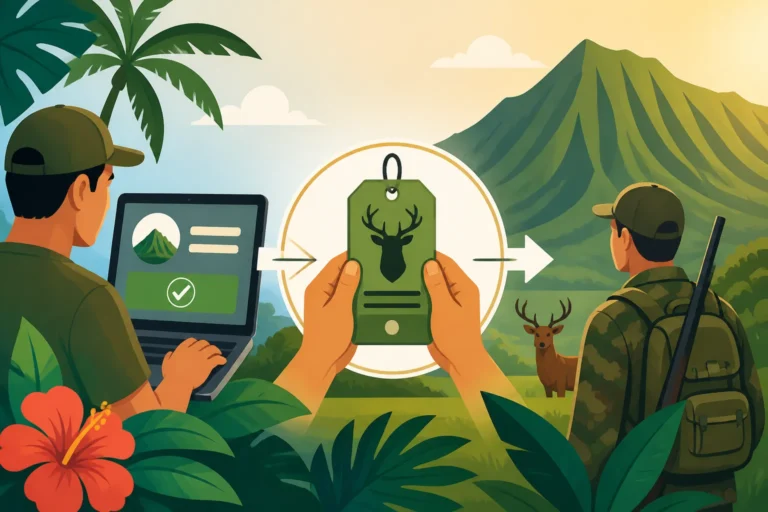
Whether You Can Lend a Tag to Someone
We've all been there, standing in the field with a buddy, maybe they've had a tough season, or perhaps they drew a tag for a different unit than you did. You might look at your unused tag, and a thought might cross your mind: "Could I just let them use my tag? It's just sitting here." It's a natural instinct, born out of wanting to help a friend or ensure a successful hunt for the group. But when it comes to Hawaii hunting tags, this common question has a very clear, and very firm, answer that every hunter needs to understand.
The Absolute Rule Against Lending Tags in Hawaii
Let's cut right to the chase: no, you absolutely cannot lend your Hawaii hunting tag to someone else. Your hunting tag is a deeply personal document, much like your driver's license or passport. It's issued specifically to you, the licensed hunter, and is tied directly to your identity and your hunting privileges. Sharing it, or allowing someone else to use it, is a serious violation of Hawaii's hunting regulations and can carry significant penalties for everyone involved.
Why Your Hunting Tag is Non-Transferable
The reason Hawaii's Division of Forestry and Wildlife (DOFAW) has such strict rules about tag transferability boils down to accountability, game management, and conservation. Every tag issued is part of a carefully managed system designed to ensure sustainable hunting opportunities and protect the islands' unique ecosystems.
Think about it: when you apply for a permit-tag for, say, an Axis deer hunt on Maui, that tag isn't just a piece of paper. It represents one animal that DOFAW has allocated to be harvested from a specific population, within a specific unit, during a specific season. If you could simply hand that tag off to anyone, it would completely undermine their ability to monitor harvest rates, manage herd health, and enforce bag limits. The integrity of the entire How Hawaii's Permit-Tag System Works relies on each tag being unique to the individual hunter it was issued to. These tags are often obtained through competitive lotteries or specific unit permits, and the allocation is based on individual eligibility and draw results, not a general pool that can be shared. Furthermore, many of these tags, especially for sought-after species or areas, are assigned after a hunter has gone through Hawaii Hunter Education Requirements and purchased their Hawaii Hunting Licenses and What They Cost, all of which are personal credentials.
What Happens If You Lend Your Tag
This isn't just about a minor infraction; allowing another person to use your tag, or using someone else's tag, constitutes a serious hunting violation in Hawaii. The consequences are far-reaching and can impact your hunting future for years to come.
First off, if caught, both the person who lent the tag and the person who used it can face substantial fines. We're talking hundreds, possibly even thousands of dollars, depending on the specifics of the offense and the discretion of the enforcement officers. But it doesn't stop there. Beyond the monetary penalties, you could both have your hunting licenses suspended or even permanently revoked. Imagine being told you can no longer participate in a pastime you love, all because you tried to bend the rules for a friend. Moreover, such a violation could lead to criminal charges, particularly if other offenses, such as false statements or misrepresentation, are involved. This isn't just a slap on the wrist; it can be a permanent black mark on your hunting record, making it impossible to apply for future tags or licenses in Hawaii, and potentially affecting your ability to hunt in other states due to reciprocity agreements. It's a high price to pay for what might seem like a simple favor. The importance of accurately following Tagging Rules After the Kill is paramount, as a misplaced or improperly used tag can raise immediate red flags. Every hunter is expected to know and adhere to the Penalties for a Hunting Violation outlined in Hawaii's administrative rules.
Understanding Hawaii's Tagging System
Hawaii's system for managing hunting tags is designed with specific goals in mind: conservation, equitable access, and accurate data collection. Understanding how it works can help you appreciate why the "no lending" rule is so critical.
How Hawaii's Permit-Tag System Works
For many of Hawaii's prized game animals, like Axis deer, Mouflon sheep, and sometimes even feral goats in specific units, hunters are required to obtain permit-tags in addition to their general hunting license. These tags are often distributed through a Hawaii's Drawn Hunts and Lotteries process, especially for popular seasons or units on islands like Lanai or the Big Island. When you apply, your application is linked to your individual hunter identification number. If you're successful in a draw, that specific tag (or set of tags) is allocated to you.
When you actually get out to hunt, checking in and out of a Hawaii Hunting Units and How They Work is often a requirement, and your tags are part of that check-in process. Many units now use the OuterSpatial app for digital check-ins, but whether digital or paper, the system tracks who is hunting where and for what. This data is vital for DOFAW to manage game populations effectively. For example, knowing how many Axis deer were taken in a specific Maui unit helps them decide future season lengths and tag allocations. The system needs to know that you, the licensed hunter, are the one who secured and used that specific tag. If your friend harvests an animal using your tag, the record incorrectly reflects that you harvested it, throwing off critical population management data and undermining the entire regulatory framework. You’ll also need to follow Reporting Your Harvest in Hawaii after a successful hunt, which directly ties back to your personal hunter profile.
The Importance of Personal Responsibility
Hunting in Hawaii isn't just a privilege; it comes with a significant responsibility. Each hunter is expected to know the rules, follow them diligently, and be personally accountable for their actions in the field. This extends beyond just knowing weapon restrictions or season dates; it includes understanding the nuances of the tagging system.
The rules are in place not to make things difficult, but to ensure that hunting remains a sustainable activity for future generations while also managing populations of introduced species that can harm Hawaii's fragile native ecosystems. When you choose to hunt, you're agreeing to uphold these regulations. Part of that agreement is using your own license and your own tags. It demonstrates respect for the wildlife, the land, and the hunting community as a whole. Being a responsible hunter means doing things by the book, even when it feels inconvenient or when you wish you could help a friend out in a different way. It also ensures that the hard work put into Hawaii Game Mammal Seasons and other regulatory efforts is not undermined by individual actions.
Alternatives to Lending Your Tag
While you can't share your tag, that doesn't mean you can't help a fellow hunter or enjoy a shared hunting experience legally and ethically. There are plenty of ways to be a supportive hunting buddy without crossing legal lines.
Helping Another Hunter Get Their Own Tag
If your friend wants to hunt but doesn't have a tag, the solution isn't to lend yours; it's to help them get their own tag. This might mean assisting them through the application process for Hawaii's Drawn Hunts and Lotteries, guiding them on how to buy a license through the GoHunt Hawaii portal, or helping them understand the deadlines for various Hawaii Game Mammal Seasons. You can be an invaluable mentor by walking them through the steps required to become a legal and compliant hunter.
For instance, many units on the Big Island or Maui offer over-the-counter tags or public access permits that don't require a lottery. You could help your friend research these options and ensure they have all their necessary permits and licenses squared away. Maybe they just need a reminder that they can check the GoHunt website or the Hawaii DLNR website for upcoming opportunities. Perhaps they're new to hunting in Hawaii and need guidance on where to even start with Buying a License Through Go Hunt Hawaii or getting their Hawaii Hunter Education Requirements fulfilled. Guiding them through these administrative steps is a much more valuable form of help than risking legal trouble by illegally sharing a tag.
Hunting Together Legally and Ethically
Just because you can't share a tag doesn't mean you can't share the hunt. You can still hunt side-by-side, spotting for each other, calling, packing out meat, and sharing the experience. If you both have valid licenses and tags for the same unit and species, that's perfectly legal and encouraged. For example, if you're hunting Axis deer on Maui's year-round units and both have a valid tag, you can absolutely hunt together.
You can act as a spotter for your friend, helping them locate animals, judge distances, or decide on a shot. You can also assist with the arduous task of Packing Meat Out of a Hawaii Gulch after a successful harvest, regardless of whose tag was used. For youth hunters, the law is clear: while an adult must supervise, the youth hunter must possess their own valid license and tag. This highlights the distinction; supervision is fine, but the legal responsibility and documentation must remain individual. Learning more about Adult Supervision Rules for Young Hunters can clarify how these roles work in practice. The camaraderie of the hunt isn't about whose tag gets filled, but about the shared adventure, challenges, and successes. Ethical hunting practices are about respect for the animals, the land, and the rules that protect both.
| Aspect of Tagging | Your Tag | Another Hunter's Tag | Lending/Borrowing Status | Consequences of Violation |
|---|---|---|---|---|
| Ownership | Personal | Personal | Strictly Prohibited | Fines, License Revocation, Legal Action |
| Purpose | Your harvest quota | Their harvest quota | Undermines game management | Skews data, impacts future seasons |
| Identification | Linked to your license/ID | Linked to their license/ID | Fraudulent Activity | Permanent hunting record black mark |
| Responsibility | Yours entirely | Theirs entirely | Shifts legal accountability | Legal issues for both parties |
| Usage | Only by you | Only by them | Illegal | Potential hunting ban |
Disclaimer
Please remember that hunting regulations in Hawaii can change. While I strive to provide the most current and accurate information, it is always your responsibility to consult the official Hawaii Department of Land and Natural Resources (DLNR) Division of Forestry and Wildlife (DOFAW) regulations directly before planning or engaging in any hunting activities. This guide is for informational purposes only and should not be considered legal advice.