Wild Turkeys in Hawaii, an Unhunted Bird
It’s a common scenario for hunters dreaming of a Hawaiian adventure: you picture stalking Axis deer on dry, sun-baked slopes, tracking pigs through dense rainforest, or even chasing goats along a pali. But then, a thought pops into your head – what about turkeys? Many states offer fantastic turkey hunting, so it's only natural to wonder if Hawaii does too. Unfortunately, if you’re hoping to call in a gobbler in the islands, you're going to face a unique reality: wild turkeys in Hawaii are indeed present, but they are not a huntable species. This comprehensive guide is here to shed light on Hawaii's wild turkey populations, their history, their habitats, and why they remain off-limits to hunters.
The Curious Case of Hawaii's Wild Turkeys: A Hunt That Isn't
For many mainland hunters, the idea of a spring turkey hunt is ingrained in the rhythm of the year. The early mornings, the strategic calling, the heart-stopping gobble that echoes through the woods – it’s a treasured experience. So, arriving in Hawaii and discovering that this isn't an option can be quite the surprise, even a bit of a disappointment. You might see them strutting across a pasture or hear their unmistakable calls, which only compounds the feeling of missing out. This unique situation often leads to a lot of questions, and rightfully so.
Why You Can't Hunt Turkeys in Hawaii
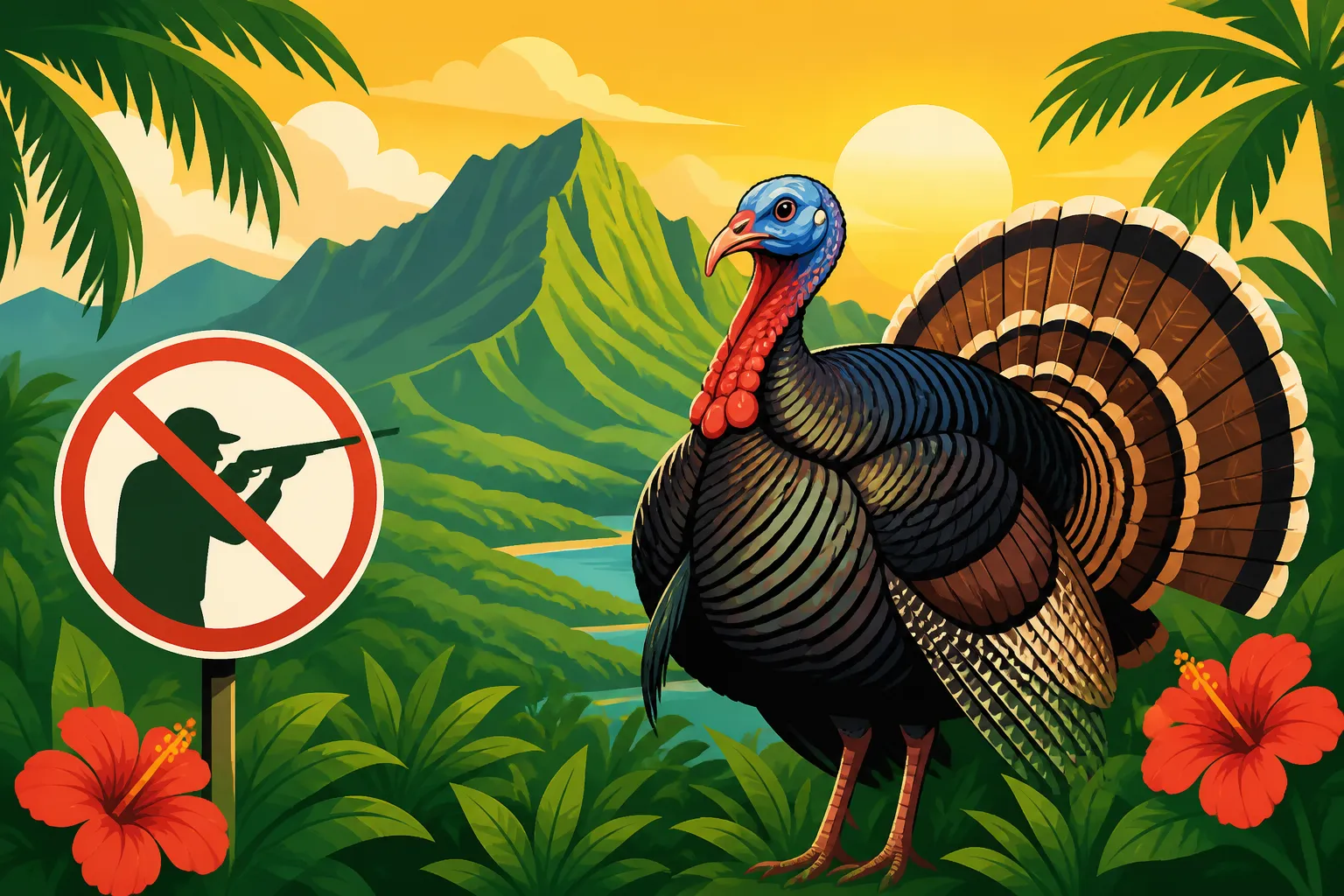
The primary reason you cannot hunt wild turkeys in Hawaii is quite simple: they are not classified as a game bird by the Hawaii Department of Land and Natural Resources (DLNR), specifically its Division of Forestry and Wildlife (DOFAW). Unlike the feral pigs, Axis deer, or Mouflon sheep that are actively managed for hunting, turkeys fall into a different category. While they are a wild, self-sustaining population, the state has never established an open season for them. This means there's no permit, no tag, and no legal method to pursue them as you would in, say, Texas or Missouri.
This isn't necessarily due to a lack of interest from hunters, but rather a long-standing management decision based on various factors that we'll dive into. The state has historically focused its game bird management efforts on species like francolin, pheasant, chukar, and doves, which have larger, more widespread populations that can sustain hunting pressure. Turkeys, while present, have always been considered a more localized and perhaps less robust population from a management perspective, making a sustainable hunting season a challenge to implement.
The Unofficial Status of Hawaii's Turkey Flocks
Despite their unhuntable status, Hawaii's wild turkey flocks are very much a part of the local wildlife tapestry. You'll find them in certain areas, particularly on Hawaii Island (the Big Island), where they can be seen grazing in open fields or roosting in trees. They exist, they reproduce, and they contribute to the ecosystem in their own way, though not always without impact, much like other introduced species. Their numbers, while not officially counted for harvest quotas, are generally considered to be stable in their established strongholds.
These birds live a truly wild existence, often adapting to the unique Hawaiian landscapes. They face natural challenges like predation from feral cats, dogs, and mongooses, and habitat changes due to development or invasive plant species. However, without human hunting pressure, they exhibit behaviors that might seem bolder than their mainland counterparts. You might see them much closer to roads or residential areas in their preferred ranges, seemingly unfazed by human presence. Their "unofficial" status means they are simply there, a testament to their adaptability, but without a formal role in the state's game management programs that involve public harvest.
Where Hawaii's Wild Turkeys Roam: Habitats and Range
When you think of turkey habitat, you might picture sprawling hardwood forests or rolling hills with agricultural fields. Hawaii's turkeys, however, have carved out a niche in a landscape quite different from the mainland. Their distribution isn't island-wide, and even on the islands where they are found, they tend to stick to specific types of terrain and elevations. Understanding where they thrive helps to paint a clearer picture of their limited populations and the challenges of managing them for hunting.
Key Islands and Their Turkey Concentrations
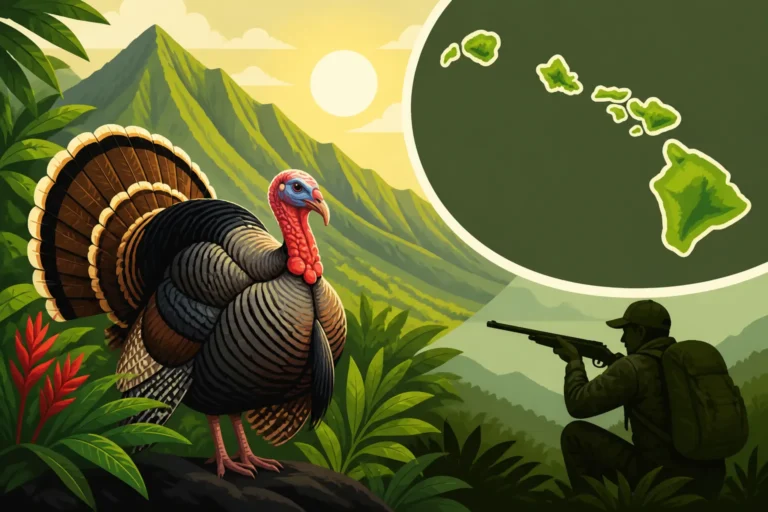
The vast majority of Hawaii's wild turkey population resides on the Big Island, or Hawaii Island. This is where you’ll most reliably encounter them. Specifically, the drier, open ranchlands and forest edges of the island’s leeward (Kona) side, and parts of the Humuʻula Saddle between Mauna Kea and Mauna Loa, are prime turkey country. Areas like those around Waimea, the rolling hills of Kohala, and even sections leading up to the higher elevations are known for turkey sightings. You might even spot them foraging around the edges of cattle pastures in places like the Parker Ranch lands.
While there have been sporadic reports and historical attempts to establish turkeys on other islands like Maui or Kauai, these populations have never truly taken hold or expanded to the extent seen on the Big Island. This concentrated presence on a single, large island further contributes to their unique management status. For instance, you won't find significant turkey populations in the dense, wet rainforests of the Hilo side, which are more suited for creatures like wild pigs. Knowing "Where Hawaii's Wild Turkeys Live" is crucial for anyone trying to understand their ecological footprint and why they're treated differently than, say, the widespread Axis deer.
Ideal Turkey Habitat in the Aloha State
Hawaii's wild turkeys tend to prefer areas that offer a mix of open ground for foraging and scattered trees for roosting. This often translates to the mauka (mountainward) regions of ranchlands, dryland forests, and areas bordering agricultural fields. They thrive where there's sufficient undergrowth for nesting cover, but also clearings where they can dust bathe and feed on seeds, insects, and fallen fruits. The kiawe (mesquite) and koa forests, often interspersed with open grasslands, provide ideal conditions.
Elevation also plays a role. While you might find them from lower elevations up to a few thousand feet, they generally prefer areas below the dense cloud cover of the truly high-elevation alpine zones, which are home to species like Mouflon sheep. These intermediate elevations often provide the right balance of dry climate, diverse vegetation, and minimal human disturbance. Unlike some of the challenging landscapes hunters face, such as the steep gulches where you might be Hunting Pigs in Hawaii's Rainforest Gulches, turkeys seek out more accessible, open-canopy environments. The presence of water, even seasonal springs or cattle tanks, is also a critical factor in their habitat selection, much like it is for other game species in dry Hawaiian conditions.
A Glimpse into the Life of a Hawaii Wild Turkey
Observing Hawaii's wild turkeys reveals adaptations to their unique island environment. Without the distinct four seasons of much of the mainland, their life cycle, from diet to breeding, operates on a slightly different rhythm. While they are still fundamentally turkeys, the subtle differences in their tropical existence are fascinating and contribute to their overall population dynamics.
Diet and Foraging Habits in the Islands
Hawaii's wild turkeys are opportunistic omnivores, much like their mainland cousins. Their diet consists of a wide array of items available in their specific Hawaiian habitats. They'll scratch and peck at the ground for seeds from native plants like 'a'ali'i and grasses, as well as introduced forage species found in pastures. Insects, including beetles, grasshoppers, and centipedes, make up a significant portion of their protein intake, especially for growing poults. You might even see them picking at fruits that have fallen from various introduced trees, like guava or even coffee berries in areas bordering farms.
The lack of harsh winters means they don't face the same seasonal food scarcity issues as mainland turkeys, reducing the pressure to put on heavy fat reserves. This consistent availability of food resources year-round can influence their overall health and reproductive success. However, they also compete with other introduced species like feral pigs and goats for some of these same food sources, adding another layer of complexity to the ecosystem they inhabit. Their ability to adapt their diet to what's readily available is a key factor in their survival and spread within their established range.
Breeding and Nesting in the Tropics
Unlike mainland turkeys that often have a very defined spring breeding season triggered by increasing daylight and warming temperatures, Hawaii's turkeys exhibit a more prolonged breeding cycle, though it still often peaks in spring. Hens will begin nesting, usually in well-concealed spots under dense brush or tall grasses, attempting to hatch broods. The nesting success can be precarious, as ground nests are vulnerable to various predators, including mongooses, rats, and feral cats, all of which are abundant in Hawaii.
The relatively stable climate means that if an early nest fails, a hen might have a better chance at re-nesting compared to areas with shorter nesting windows. Poult survival, however, is still critical. Young turkeys are highly susceptible to predation and disease, and adequate insect protein is essential for their rapid growth. The tropical environment also means that hens and poults need to contend with consistent warmth and humidity, which can be taxing, but also ensures a steady supply of insect food. Understanding these breeding patterns and the challenges they face helps explain why managers are cautious about introducing hunting pressure to populations that might not rebound as quickly as mainland flocks.
The Origins of Hawaii's Wild Turkeys: A Historical Perspective
The story of how wild turkeys came to Hawaii is a fascinating one, part of a broader narrative of intentional and accidental introductions that shaped the islands' ecosystems. Like almost every other game animal in Hawaii, turkeys are not native. Their presence is a direct result of human intervention, driven by various motives over the centuries.
When and How Turkeys Arrived
Historical records suggest that wild turkeys were first introduced to Hawaii as early as the mid-1800s. Early attempts primarily involved domestic turkeys or hybrids, but later, more concerted efforts were made to introduce wild strains for their sporting potential. The most successful introductions for establishing wild populations are generally attributed to species like the Rio Grande wild turkey, brought from the American mainland. These birds were thought to be well-suited to the drier, more open environments found in parts of Hawaii.
These introductions were often carried out by private landowners or government agencies with the goal of diversifying the islands' game animal offerings. It was part of a larger trend of bringing in species that could provide food, sport, or pest control, often without a full understanding of the long-term ecological consequences. This history of introductions is a common theme across much of Hawaii's game species, from the Axis deer to the feral goats. Knowing this context helps us appreciate why Hawaii has such a unique array of huntable and unhuntable species.
Early Attempts at Hunting and Management Challenges
In the early to mid-20th century, there were indeed brief periods when limited wild turkey hunting seasons were attempted in Hawaii. These were often experimental, managed with conservative bag limits and strict regulations, primarily focused on the Big Island where populations were most established. However, these attempts never gained widespread traction or led to sustained, island-wide seasons. The populations never grew robust enough, or spread widely enough, to support consistent hunting pressure year after year.
One of the significant challenges was the localized nature of the populations. While turkeys could thrive in specific pockets, their expansion across diverse Hawaiian terrain was limited. Managers faced issues with monitoring population numbers, ensuring equitable access for hunters, and the general complexities of regulating a species that didn't achieve the high densities of, say, the Axis deer on Maui. These early efforts ultimately demonstrated that while turkeys could survive and reproduce in Hawaii, they weren't destined to become a primary game species under the existing management framework. This historical context is vital to understanding "Why Hawaii's Wild Turkeys Are Off Limits" to hunting today.
Why Turkeys Remain Closed: Conservation and Management Decisions
The decision to keep wild turkeys off the huntable species list isn't arbitrary. It's rooted in a complex interplay of population dynamics, habitat concerns, and the overarching conservation philosophy of DOFAW. While many hunters might express a desire for turkey seasons, the state's responsibility lies in ensuring the sustainability of all wildlife populations, especially those that may be vulnerable to overharvesting.
Population Numbers and Sustainability Concerns
The primary reason Hawaii's turkeys remain unhuntable revolves around their population numbers and distribution. While you can find healthy, localized flocks, these aren't spread across vast tracts of public land in the same density as feral pigs or goats. A huntable population needs to be robust enough to withstand consistent harvest pressure without impacting its long-term viability. For game birds like francolin or pheasant, which are found in larger, more widespread numbers, a carefully managed Hawaii Game Bird Seasons and Bag Limits can be established. Turkeys simply haven't reached that threshold.
DOFAW continually assesses wildlife populations, often through aerial surveys, ground counts, and hunter harvest data for huntable species. For turkeys, these assessments likely indicate that opening a season, even a highly restricted one, could jeopardize localized populations, leading to rapid declines. The goal of wildlife management is not just to provide hunting opportunities, but to ensure healthy ecosystems and sustainable populations for future generations. In the case of turkeys, the most sustainable management approach, for now, is non-intervention through hunting.
Public Interest vs. Resource Management
It’s completely understandable for hunters to express interest in pursuing new species, and Hawaii's wild turkeys often come up in conversations about potential future hunting opportunities. The allure of a unique turkey hunt in a tropical paradise is strong! However, DOFAW's role is to manage natural resources based on scientific data and conservation principles, not solely on public demand. The agency has to balance various factors, including the ecological impact of introduced species, the health of native ecosystems, and the capacity of populations to support recreational take.
For many game species, the "How Hawaii's Permit-Tag System Works" ensures that harvest is controlled and monitored. This system is in place for Axis deer, Mouflon sheep, and even specific goat units. But for turkeys, without robust data supporting sustainable harvest, implementing such a system would be premature and potentially damaging. Furthermore, the limited availability of public land with established turkey populations would create immense pressure on those areas, potentially leading to overcrowding and other management issues. While the desire to hunt turkeys is valid, the current state of the resource doesn't align with responsible resource management for a huntable season.
The Future of Turkey Hunting in Hawaii: Hopes and Hurdles
So, what does the future hold for turkey hunting in Hawaii? Is it a pipe dream, or could conditions eventually change to allow for a season? The path to opening any new game season is a long and winding one, requiring significant biological data, public input, and careful planning. For turkeys, the hurdles are considerable, but understanding them can help manage expectations and direct efforts if hunters wish to see a change.
What Would Need to Change for a Season to Open
For a wild turkey season to ever open in Hawaii, several key conditions would need to be met. First and foremost, there would need to be a significant and sustained increase in turkey populations across wider geographical areas, particularly on public hunting lands. This isn't just about localized increases, but a broader expansion that demonstrates a population resilient enough to handle regular harvest pressure. DOFAW would need to conduct extensive surveys and studies to confirm these numbers.
Secondly, a robust habitat management plan would need to be in place to support this expanded population. This could involve habitat improvements, predator control efforts in specific areas, and monitoring their interactions with other species and native ecosystems. Lastly, a comprehensive management plan for hunting would need to be developed, outlining seasons, bag limits, legal weapons (like those used for Hawaii Game Bird Hunting), and specific hunting units. This process requires significant public outreach, scientific review, and approval from the state's Board of Land and Natural Resources. It's a lengthy and data-intensive undertaking.
How Hunters Can Support Future Opportunities
While you can't hunt turkeys today, hunters who are passionate about the possibility of a future season can certainly contribute to the conversation and support conservation efforts. The most impactful way is to actively participate in the broader hunting community and support organizations that work with DOFAW on wildlife management. Engaging with the process means being informed about proposed changes, attending public meetings, and providing constructive feedback based on sound principles.
Supporting the purchase of a Hawaii Hunting Licenses and What They Cost and the Hawaii's Wildlife Conservation Stamp is also vital, as these funds directly support DOFAW's wildlife management and research programs, which could include future studies on turkey populations. If you encounter turkeys while out hunting other species, respectful observation and reporting significant sightings (without disturbing the birds) to DOFAW can also contribute to their knowledge base, although it's crucial not to sensationalize or mislead. Ultimately, demonstrating a commitment to responsible hunting and conservation, and understanding the complex ecological factors at play, is the best way for hunters to advocate for potential future opportunities.
| Characteristic | Hawaii Wild Turkey (Estimated) | Mainland Rio Grande Wild Turkey (Typical) |
|---|---|---|
| Huntable Status | Currently closed | Huntable with seasons/tags |
| Primary Island Range | Hawaii Island (Big Island) | Texas, Oklahoma, Kansas, etc. |
| Population Density | Localized, lower density | Widespread, often high density |
| Breeding Season | More prolonged, peaks in spring | Distinct spring peak |
| Key Threats | Habitat loss, feral predators | Habitat loss, disease, predation |
| Management Focus | Observation, habitat protection | Population management for harvest |
| Body Size | Similar to average Rio Grande | Variable by region, generally 15-25 lbs |
Disclaimer
Please remember that hunting regulations in Hawaii can change. Always consult the most current regulations published by the Hawaii Department of Land and Natural Resources (DLNR) Division of Forestry and Wildlife (DOFAW) before planning any hunting trip. This guide is for informational purposes only and should not be considered a substitute for official government regulations.