Hawaii’s Quail Species and Their Range
Aloha, fellow hunters and outdoor enthusiasts! There's something truly special about chasing small game in Hawaii, a challenge that's often overlooked amidst the pursuit of bigger animals like axis deer or feral pigs. But for those of us who appreciate the subtle art of upland bird hunting, the islands offer a unique, if sometimes frustrating, experience. Today, we're going to dive deep into the world of Hawaii's quail, exploring where these elusive little birds live, how they behave, and what it takes to find them in our diverse island landscapes.
Understanding Hawaii's Quail Diversity
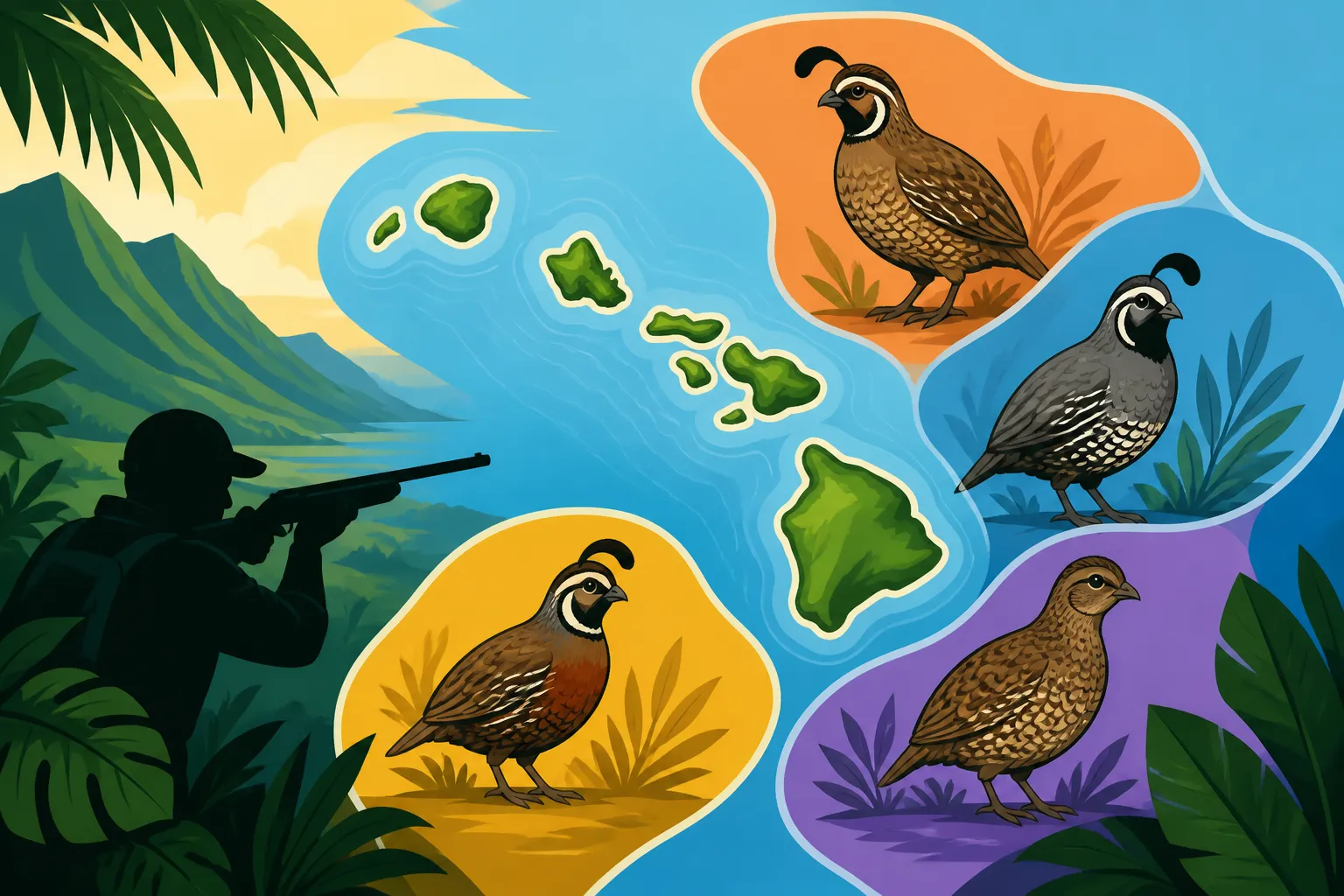
When you talk about quail in Hawaii, you're primarily looking at two distinct species that have made these islands their home: the California Quail and the Japanese Quail. Both offer different challenges and rewards for the hunter, and understanding their unique characteristics is the first step to a successful day afield. They're not native, of course – like most of our game animals, they were introduced here long ago. But they've adapted, and sometimes, thrived in our varied terrain, providing a fast-flying, challenging quarry.
The California Quail: A Familiar Whistle in the Uplands
Ah, the California Quail! Even if you’ve never seen one, chances are you’ve heard its distinctive "chi-ca-go" or "cah-cah-ca" call echoing through the dry brush. These are arguably the most iconic quail in the western United States, and they’ve found a niche in Hawaii’s drier, often brushy uplands, particularly on the Big Island and Maui. They’re a striking bird, with their plump bodies, short tails, and that unmistakable, forward-curving topknot feather on the male's head. The males also sport a bold, black face outlined in white, a truly handsome bird.
Hunting these birds often means traversing some seriously rugged country. We’re talking about areas with kiawe, thorny acacia, and other dense, scrubby vegetation where coveys can seemingly vanish into thin air. They’re masters of camouflage and burst into flight with surprising speed and agility, often in a scattered explosion that can catch you off guard. If you’re looking to get out and experience true upland hunting with a bit of a challenge, these birds offer it in spades. They tend to stick together in coveys, especially outside of breeding season, so if you find one, you're likely to find more.
The Japanese Quail: A Smaller, Elusive Game Bird
The Japanese Quail is a bit different from its more flamboyant cousin. It’s a smaller, more subtly colored bird, often mottled brown and buff, blending seamlessly into the grasses and low vegetation where it prefers to hide. Unlike the California Quail, which often announces its presence with its calls, the Japanese Quail is far more secretive. You'll rarely hear them calling out a bold "chi-ca-go." Instead, they rely on stealth and explosive flushes when approached too closely. They’re often found in more open country – pastures, fallow fields, and areas with short, dense grass, rather than the thick brush of the California Quail.
Because of their smaller size and preference for open habitats, hunting Japanese Quail can feel like a completely different game. They're less prone to running and more likely to hold tight until almost stepped on before erupting into a fast, low flight. This makes them a fantastic target for those who enjoy working with a flushing dog, as they offer exciting opportunities to get shots off quickly. They're a migratory species in their native range, but the populations established here are largely resident, though they might move locally based on food and water availability. If you're looking for Japanese Quail on Open Ranch Land, you'll definitely be putting in some legwork across grassy fields.
Habitat Preferences: Where Each Species Thrives
Understanding where these quail prefer to live is absolutely crucial for any hunter. Hawaii's landscape is incredibly varied, from arid lava fields to lush rainforests, and each quail species has carved out its own niche within this complex ecosystem. It's not a "one size fits all" approach to finding them, and recognizing the subtle cues of their preferred habitats will save you a lot of fruitless walking.
California Quail: Dry Uplands and Brushy Edges
When I think of California Quail in Hawaii, my mind immediately goes to the dry, sun-baked slopes and rolling hills, particularly on the Big Island and Maui. These birds are habitat generalists to a degree, but they definitely prefer areas with a mosaic of dense cover for protection, open areas for foraging, and a water source nearby, even if it's just dew or succulent plants. You'll often find them along the edges of agricultural fields, in old ranch pastures that have grown wild with kiawe and pamakani, or in the transition zones between native forest and drier, disturbed lands.
Think about areas that are a little too rocky or brushy for cattle but still offer good forage. Patches of mamane trees mixed with shorter grasses, or areas where haole koa forms dense thickets, are prime real estate for these coveys. They love to have escape cover readily available, so don't expect to find them in wide-open, barren landscapes. Instead, focus your efforts on the fringes, where one type of cover transitions to another. This is often where they'll feed in the mornings and evenings before retreating to denser areas to roost. We often find them scratching around in the dirt for seeds and insects under thorny bushes.
Japanese Quail: Open Grasslands and Agricultural Areas
Japanese Quail, on the other hand, are creatures of the open country. They are far less dependent on dense woody cover than California Quail and thrive in expansive grasslands, fallow sugar cane fields, pineapple lands, and even active ranch pastures. Their small size and cryptic coloration allow them to blend into short to medium-height grasses, making them incredibly difficult to spot until they flush. They aren't going to be holding tight in a kiawe thicket; they're more likely to be hiding in a patch of guinea grass on a sunny hillside.
These birds are particularly fond of areas that provide a steady supply of grass seeds, forbs, and insects. Therefore, agricultural areas, especially those with undisturbed edges or fields that have been left to go wild for a season or two, can be hotspots. Water sources are still important, but they often get enough moisture from the plants they eat and morning dew. When Hunting Doves Over a Hawaii Pasture, keep an eye out for these little rockets; they might surprise you. If you’re checking out the public hunting units, use the GoHunt platform to look for areas with extensive open grasslands or old farm lands that might hold these birds.
Hunting Strategies for Hawaii's Quail
Hunting quail in Hawaii isn't about sitting in a blind; it's about covering ground, reading the landscape, and being ready for fast action. Whether you're targeting the brush-loving California Quail or the open-country Japanese Quail, a good strategy and the right gear can make all the difference. Remember, these aren't easy birds to bag, and that's precisely what makes the hunt so rewarding.
Walking Up Quail on Varied Terrain
For California Quail, especially in the rocky, brushy areas, a slow, methodical walk-up approach is often the most effective. You'll be doing a lot of hiking, often uphill and through thorny vegetation. Think about how you’d go Walking Up Chukar on a Lava Slope – similar footwork and attention to detail are required. Walk in a zigzag pattern, paying close attention to any changes in cover or any sign of quail activity, like dust baths or droppings. These birds will often run ahead of you before flushing, so being patient and persistent is key. When they do flush, they'll often scatter in different directions, giving you multiple shot opportunities if you're quick. Mark where they land, because scattered quail often hold tighter than a full covey, offering better individual shots.
For Japanese Quail in more open grasslands, you can cover ground a bit faster, but still be prepared for sudden flushes. They tend to hold very tight, making them almost invisible until they explode into the air. Walking with a wide front, if you have hunting partners, can help cover more ground and increase your chances of flushing a covey. Always be ready, shotgun mounted, because the window for a shot is often fleeting. The challenge here is the sheer amount of open space they can inhabit, making it difficult to pinpoint concentrations without significant scouting or a good dog.
The Advantage of a Good Bird Dog
Let’s be honest, hunting quail in Hawaii without a dog is certainly possible, but having a well-trained bird dog significantly elevates the experience and your success rate. Whether you're after California Quail in their dense cover or Japanese Quail in sprawling grasslands, a dog’s nose is simply superior. For California Quail, a flushing dog can help push birds out of the thickest cover where you might otherwise walk right past them. For Japanese Quail, a pointing dog can pinpoint those tight-holding birds, allowing you to walk in for a clean flush and shot.
Choosing a dog suited for Hawaii's unique terrain is important. You need a dog with good stamina, able to handle heat, and tough enough for thorns and lava. Breeds like Brittany Spaniels, English Pointers, or German Shorthaired Pointers are popular choices for their scenting abilities and drive. A good dog can turn a frustrating day into a memorable one, consistently putting birds in the air that you would have otherwise missed. If you’re considering Using a Bird Dog in Hawaii Terrain, make sure they’re properly conditioned and protected from the elements.
Essential Gear and Tactics
Beyond your shotgun and ammunition (typically 20 gauge or 12 gauge with smaller shot, like 7.5 or 8), there are a few other things that will make your quail hunt more successful and comfortable. Blaze orange is always a good idea for safety, especially if you're hunting with partners. Tough briar-proof pants or chaps are almost a necessity for busting through thorny kiawe or other dense brush where California Quail reside. Good hiking boots are paramount when you're navigating the varied and often rugged island terrain.
A small game vest or pack is essential for carrying water, snacks, extra shells, and of course, your birds. Don't forget bug repellent, as mosquitoes and other biting insects can be present, especially if you're near wetter areas, even in generally dry quail habitat. As for tactics, hunting early mornings and late afternoons when the birds are most active and feeding is usually best. Pay attention to wind direction, as birds tend to flush into the wind, giving them lift, and it can also help your dog pick up scent. And always remember to carry your Hawaii hunting license and game bird stamp; you can get started with this on the GoHunt Hawaii portal, ensuring you’re ready before heading out.
Conservation and Management of Quail Populations
While quail hunting provides thrilling opportunities, it's vital to remember that we hunters play a crucial role in the conservation and responsible management of these species. Understanding the regulations, habitat challenges, and the overall status of Hawaii's quail populations helps ensure these birds remain a sustainable resource for future generations to enjoy.
Population Challenges and Habitat Degradation
Hawaii’s unique ecology presents distinct challenges for its introduced game bird populations, including quail. Habitat degradation is a major concern. Invasive plants, like strawberry guava and various grasses, can outcompete native forage plants and create monocultures that offer poor habitat diversity for quail. Development and agricultural shifts also impact available hunting grounds, reducing prime quail habitat. Drought conditions, which are not uncommon in many of the drier areas where California Quail thrive, can also severely impact breeding success and survival rates.
Predation by introduced species like mongooses, feral cats, and rats also takes a significant toll on ground-nesting birds like quail. While these challenges exist, ongoing efforts by the Department of Land and Natural Resources (DLNR) and private landowners aim to manage invasive species and maintain suitable habitats. It’s a continuous balancing act to protect both native ecosystems and provide for game animals, which in Hawaii, often means managing non-native species for sport while mitigating their impact on fragile native flora and fauna.
Regulatory Framework and Bag Limits
To ensure sustainable hunting, Hawaii has a clear set of regulations regarding quail hunting. These rules dictate everything from season dates to Quail Daily Bag Limits. For example, the season for both California and Japanese Quail typically runs on specific dates, often coinciding with other game bird seasons, so it's always best to check the current year's hunting regulations before planning your trip. These regulations are designed to allow hunters sufficient opportunity while protecting the birds during critical breeding periods.
Understanding the bag limits is crucial. Typically, these are set to ensure that over-harvesting doesn't occur, allowing populations to rebound. You'll find these limits clearly outlined in the annual hunting regulations booklet, often available online via the state's wildlife division website or the GoHunt platform. Always remember that these are daily bag limits, and there might also be possession limits. Checking in and out of Hawaii hunting units is often required, even for game bird hunting, so be sure to understand the specific rules for the unit you plan to hunt. Adherence to these rules is not just about avoiding penalties; it's about being a responsible hunter and contributing to the long-term health of Hawaii’s game bird populations.
Here's a quick overview of some key differences to help you plan your quail hunt:
| Feature | California Quail (Callipepla californica) | Japanese Quail (Coturnix japonica) |
|---|---|---|
| Appearance | Plump body, prominent forward-curving topknot (male), patterned plumage. | Smaller, more streamlined, subtle mottled brown/buff, no prominent topknot. |
| Call | Distinctive "chi-ca-go" or "cah-cah-ca" whistle. | Quieter, less vocal, often just a soft "whirr" when flushed. |
| Preferred Habitat | Dry uplands, brushy areas, kiawe thickets, mamane forest edges, ranch edges. | Open grasslands, pastures, fallow fields, short cultivated crops. |
| Behavior | Often run before flushing, covey up in dense cover, scatter widely when flushed. | Hold tight, flush explosively and low, less prone to running. |
| Primary Diet | Seeds, leaves, berries, insects. | Seeds (especially grass seeds), insects, green vegetation. |
| Hunting Style | Requires busting through dense brush, slow walk-up, good dog recommended. | Requires covering open ground, fast reflexes, good dog highly recommended. |
| Islands Present | Big Island, Maui (primary hunting islands). | Big Island, Maui, Kauai, Molokai, Oahu. |
Responsible Hunting Practices
Beyond just following the regulations, responsible hunting means practicing ethical field care and respecting the land. This includes packing out all your trash, leaving no trace, and being mindful of other users of public lands. It also means properly Field Dressing Axis Deer in Hawaii Heat for larger game, but for quail, it means dispatching them quickly and getting them into a cooler as soon as possible, especially in Hawaii's warmth, to preserve the meat. Understanding Hawaii Game Bird Seasons and Bag Limits is crucial, but so is knowing the spirit of the hunt.
Respecting private property boundaries is another critical aspect. Always know where you are hunting and ensure you have permission if on private land. Using resources like GoHunt or other mapping tools can help you understand Hawaii Public Land Near an Airport or other key locations. If you're a nonresident, make sure you understand Hawaii Hunter Education Requirements or how to get a non-resident exemption before you even think about applying for a license. By being prepared, knowledgeable, and respectful, we ensure that Hawaii's unique quail hunting opportunities remain vibrant for all who wish to experience them.
Disclaimer
This article is for general informational purposes only and does not constitute professional advice. Laws, prices and regulations vary by location and change over time. Consult a qualified professional for guidance on your specific situation.