Axis Deer in a Drought Year
Hunting axis deer in Hawaii can be a truly incredible experience, but when the islands face a drought year, everything changes. Those normally lush areas can become parched, and the familiar patterns of deer movement shift dramatically, leaving hunters feeling frustrated and uncertain about where to even begin. This guide is here to help you understand how drought impacts axis deer and, more importantly, how to adapt your hunting strategies to successfully and ethically pursue them during these challenging times.
The Harsh Reality of Drought for Axis Deer in Hawaii
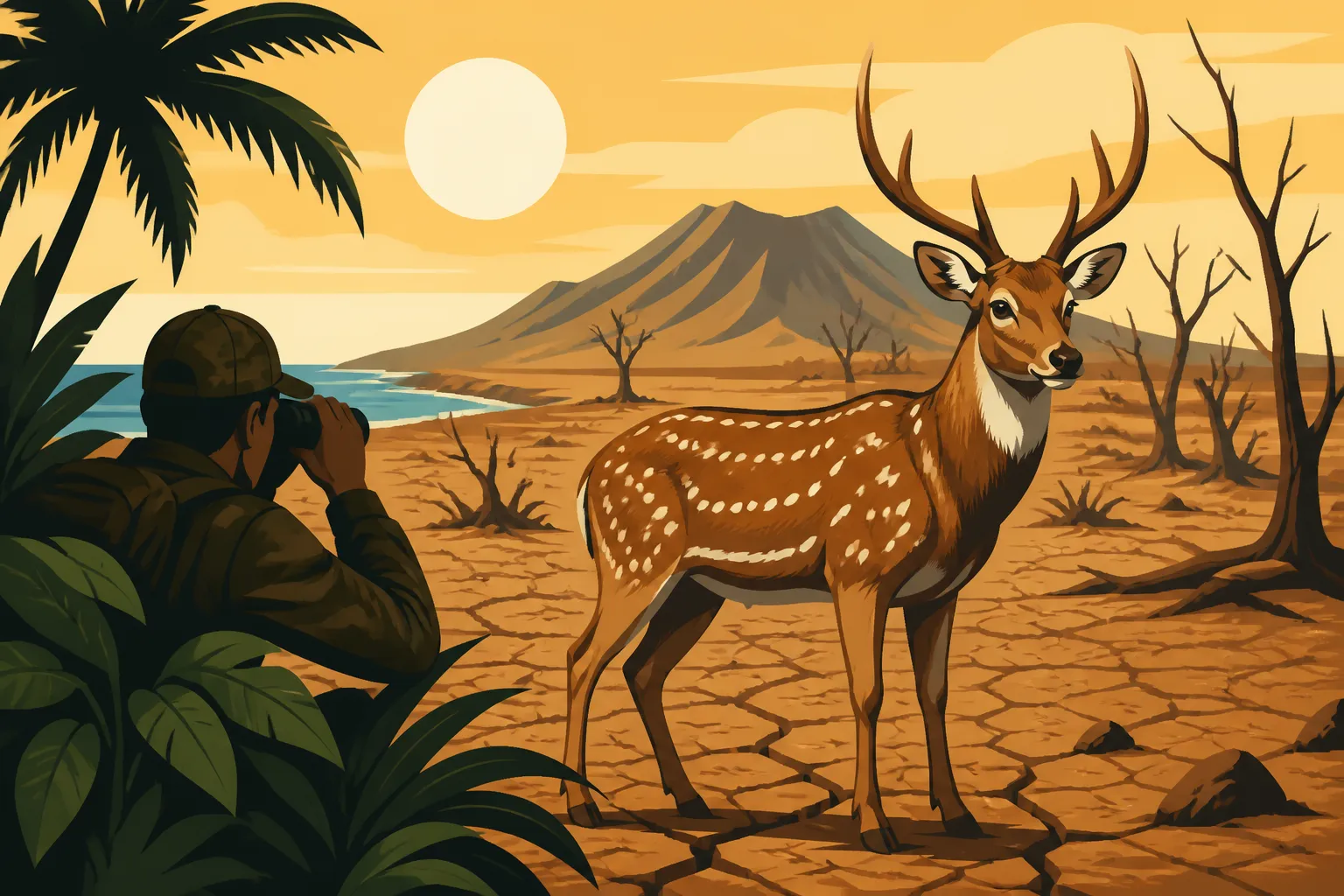
When the rains don't come, or when they come too little and too late, the landscape across parts of Maui, Molokai, and Lanai can transform from vibrant green to a dusty, brittle brown. This isn't just an aesthetic change; it's a profound shift that directly impacts every aspect of an axis deer's life, and consequently, your hunting success.
Water Sources Become Scarce
One of the most immediate and critical effects of drought is the disappearance of water. Those small, hidden seeps in the bottom of a gulch, the seasonal ponds that collect rainwater, and even some of the more reliable springs can simply dry up. Imagine a familiar stream bed that usually trickles year-round, now nothing but cracked mud and sun-baked rocks. Axis deer, like all living creatures, need water daily, and when their usual sources vanish, they are forced to seek it out elsewhere.
This scarcity means that deer will congregate around any remaining viable water source. This could be a deeper pool in a remote canyon, a farmer's stock tank that's still being replenished, or even the dew-soaked grass in an unusually shaded area at dawn. The competition for these precious resources intensifies, making the deer more vulnerable but also incredibly wary. They know they're exposed, and their survival instinct kicks in hard. Understanding Hunting a Water Source in Dry Hawaii Country becomes paramount in these conditions.
Forage Quality and Availability Plummet
Beyond water, drought devastates the very food supply that axis deer rely on. The lush grasses, tender shoots, and nutritious leaves that make up the bulk of their diet simply wither and die. What's left behind is often dry, fibrous, and lacking in vital nutrients. Imagine trying to sustain yourself on stale crackers when you're used to a gourmet meal. It's simply not enough.
This decline in forage quality and quantity directly affects the deer's health. You'll often see animals that are thinner, their coats duller, and young fawns struggle to survive. Antler growth, which requires significant energy and nutrients, can be stunted or delayed in bucks. What Axis Deer Eat on Maui in a normal year might be completely absent during a severe drought. The deer are constantly searching for any green browse, any hint of moisture-rich vegetation, forcing them to move more and expend precious energy. This desperation can make them less cautious, but also less predictable in their movements as they desperately forage.
How Drought Changes Axis Deer Behavior and Movement Patterns
The dramatic environmental shifts caused by drought don't just impact the deer's physical well-being; they fundamentally alter how these animals behave, where they live, and when they move. For hunters, this means throwing out many of your usual assumptions and learning to read a completely different set of clues.
Concentrating Around Remaining Resources
In a typical year, axis deer might be scattered across vast tracts of land, browsing and watering wherever they please. But when drought hits, their world shrinks. They become hyper-focused on the few remaining pockets of survival. This means they will abandon large portions of their traditional range to cluster around dependable water and any area that retains even a sliver of green forage.
Think about those deep, shaded gulch bottoms that might still hold some moisture, or the windward slopes of a mountain that catch a bit more rainfall, creating small, wetter kipukas of vegetation. You might even find them along the boundaries of irrigated farmlands or golf courses, taking advantage of artificial water sources and any succulent growth. While this concentration can make them easier to locate in theory, it also means these areas see increased deer presence, which in turn leads to more caution from the animals. They become incredibly wary, knowing that these vital spots are also where predators—including hunters—will be looking. Hunters need to adapt their Spot-and-Stalk Tactics on Open Country to account for this increased vigilance and lack of cover.
Increased Nocturnal Activity
The combination of intense daytime heat and heightened pressure around limited resources often pushes axis deer to become far more nocturnal during a drought. They'll spend the scorching daylight hours bedded down in the densest cover they can find, conserving energy and staying out of sight. Their primary activity—moving to water and feeding—will often occur under the cover of darkness or in the dim light of dawn and dusk.
This shift means that your prime hunting hours shrink to those precious moments just after first light and just before last light. You might find deer moving back and forth from their bedding areas to water, or making quick forays into open areas to graze on whatever meager forage remains. Successfully hunting these animals requires exceptional stealth, patience, and often, a willingness to be in your stand or glassing spot well before dawn and stay until true darkness settles. Understanding Reading Axis Deer Sign in Dry Country becomes even more crucial, as fresh tracks and droppings from nocturnal movements might be your only clue.
Stress and Vulnerability
A prolonged drought takes a massive toll on axis deer. They are constantly stressed from lack of food and water, the perpetual search for sustenance, and the increased competition within their herds. This chronic stress can lead to weakened immune systems, making them more susceptible to disease and parasites. Their physical condition deteriorates, and you might observe animals that are visibly thinner, with ribs showing or a general lethargy.
While a stressed animal might seem "easier" to hunt due to its weakened state, it also raises ethical considerations. Hunters often aim for clean, swift kills to minimize suffering, and this is even more critical when pursuing an animal already struggling against the elements. Furthermore, the overall health of the herd can be severely impacted, with fawn mortality rates often skyrocketing during severe drought years. Responsible hunters will consider the long-term health of the population and may choose to pass on younger or obviously struggling animals, focusing instead on mature deer that are still in decent condition. It's a reminder of What Would Happen Without Hunting in Hawaii if human management wasn't part of the equation during these natural stressors.
Hunting Strategies for Axis Deer During a Drought
Adapting your approach is key when hunting axis deer in a drought year. The usual spots might be empty, and the familiar patterns nonexistent. You need to think like a deer, and right now, a deer's entire world revolves around survival – finding water and what little sustenance remains.
Focusing on Water Sources
This is, without a doubt, the most critical strategy during a drought. Axis deer must drink, and they will gravitate towards any reliable water source. Your primary scouting mission should be to identify these remaining oases. This includes natural springs, seeps, stock ponds, and even man-made troughs or leaky pipes on ranch lands.
Once you've identified potential water sources, the real work begins. Scout them for fresh tracks and droppings to confirm recent deer activity. Pay close attention to the approach routes deer are using and any nearby cover where they might feel secure. Wind and thermals are paramount around water. Deer will often approach water from downwind to detect danger, and thermals can shift dramatically in the early morning and late evening, dictating your setup. Consider setting up a ground blind or finding natural cover well downwind, giving yourself an unobstructed view of the water and the deer's likely entry and exit points. Patience is your greatest ally here, as deer might only visit water during limited windows of time. You might also find deer in Hunting a Kiawe Flat for Axis Deer, especially if these flats have any residual moisture or shade.
Targeting Green Patches and Gulches
While water is king, deer also need to eat. In a drought, green vegetation is a rare commodity, and deer will expend significant energy to find it. Focus your efforts on areas that naturally retain moisture longer than the surrounding dry landscape. This includes shaded gulch bottoms, north-facing slopes, the edges of wet forest (even if the forest itself is dry), and any low-lying areas where water might collect briefly after a small shower. Sometimes, old farm fields, particularly those near irrigation ditches or reservoirs, can hold pockets of green due to residual moisture or specific drought-tolerant weeds.
These "green patches" will be magnets for deer. Look for heavily browsed plants, fresh droppings, and distinct trails leading into these areas. You'll often find deer intensely browsing in these limited zones, trying to get as much nutrition as possible. This is where a quiet, slow still-hunt, especially at first and last light, can be very effective. Move slowly, glassing ahead, and using the contours of the land for cover. Remember, deer in these concentrated areas will be extremely alert, so any movement or noise will send them scattering. Don't forget to consider areas like Hunting a Fern Gulch at Dawn where a little moisture can make all the difference.
Adapting Your Stalking and Observation
Drought conditions often mean sparser vegetation, making traditional stalking incredibly challenging. The crunch of dry leaves and brittle grass underfoot can give away your position instantly. Instead, lean heavily on long-range observation and patient glassing. Find a vantage point that overlooks a wide area, especially one with multiple suspected water sources or green patches, and spend hours behind your binoculars or spotting scope.
When you do spot deer, planning your stalk requires even greater precision. Utilize every scrap of available cover, no matter how small. Move slowly, deliberately, and be prepared to freeze for extended periods if a deer looks your way. Consider the angle of the sun and the ever-present Hawaii trade winds, which can shift thermals rapidly. In many dry Hawaii areas, the deer are already accustomed to a degree of openness, but they are also incredibly wary. Being able to Hunting Axis Deer at First Light in Hawaii can give you an edge before the heat and pressure build. After a successful hunt, especially in hotter, drier conditions, remember the importance of Cooling Meat Fast on a Hawaii Hunt to preserve your harvest.
Ethical Considerations and Conservation in Drought Years
Hunting in a drought year isn't just about strategy; it also brings important ethical considerations and highlights the crucial role hunters play in conservation. When animals are struggling, our responsibility to hunt respectfully and sustainably becomes even more pronounced.
Respecting Stressed Animals
Imagine living day in and day out with limited food and water, constantly on edge. That's the reality for axis deer during a drought. These animals are already under immense physiological stress. As hunters, it's our duty to minimize any additional suffering. This means prioritizing clean, ethical kills above all else. Pass on shots that feel marginal, even if it means going home empty-handed. A wounded animal in a drought year has a significantly reduced chance of survival, and that's something we want to avoid at all costs.
Consider the condition of the animals you encounter. While the pursuit of a trophy buck is exciting, during a severe drought, a buck might have significantly compromised antler growth due to stress and poor nutrition. Focus on harvesting animals that appear to be in reasonable condition, and consider how your harvest contributes to the overall health of the herd. It's about respecting the animal and the difficult circumstances it faces.
The Role of Hunters in Population Management
While it might seem counterintuitive to hunt during a drought, responsible hunting actually plays a vital role in population management during these challenging periods. In many parts of Hawaii, axis deer populations can swell to numbers that exceed the land's carrying capacity even in good years. When drought hits, this overpopulation exacerbates the problem, leading to widespread starvation, increased disease, and significant habitat degradation.
By selectively harvesting deer, hunters help to bring populations more in line with the available resources. This can alleviate pressure on limited forage and water, allowing the remaining animals a better chance of survival. Wildlife agencies like DOFAW often monitor drought conditions closely and may adjust bag limits or season lengths based on their assessments of the deer population's health and the severity of the environmental impact. Your hunting activity, especially through tools like the GoHunt app for checking in and out, provides valuable data that helps these agencies make informed conservation decisions. It’s part of a larger picture, where hunters contribute to preventing mass die-offs and ensuring the long-term sustainability of the herd, rather than letting nature take its harshest course.
Comparing Axis Deer Behavior: Normal vs. Drought Year
Here's a quick look at how axis deer behavior might shift between a typical year and a drought year, giving you an idea of what to expect and how to adjust your strategies:
| Behavior Aspect | Typical Year | Drought Year |
|---|---|---|
| Watering | Utilizes numerous seeps, springs, streams. | Concentrates heavily on few remaining reliable sources. |
| Foraging | Wide variety of lush grasses, forbs, browse. | Desperately seeks any green, succulent vegetation. |
| Movement | Wider range, predictable patterns between food/water/cover. | Restricted range, driven by scarce water/forage; less predictable. |
| Activity Level | Active early morning, late afternoon; some midday bedding. | Increased nocturnal movement; prolonged bedding during day. |
| Herd Structure | Smaller bachelor groups, doe/fawn groups widespread. | Larger groups consolidating around resources; more competition. |
| Physical Condition | Generally healthy, good coat, strong antler growth. | Thinner, duller coat, stunted antler growth, higher fawn mortality. |
| Waryness | Alert but might tolerate some human presence. | Extremely wary, high vigilance around critical resources. |
Disclaimer
This article is for general informational purposes only and does not constitute professional advice. Laws, prices and regulations vary by location and change over time. Consult a qualified professional for guidance on your specific situation.