Where Hawaii’s Green Pheasant Came From
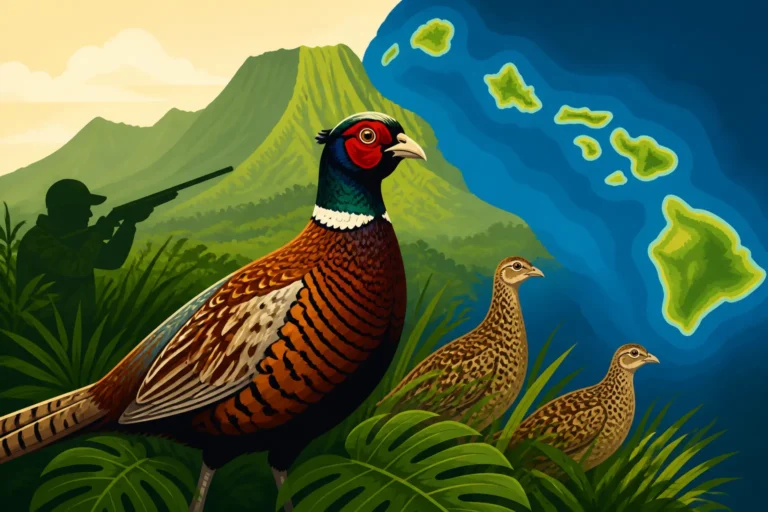
It’s easy to look at Hawaii, with its stunning beaches and lush landscapes, and assume its wildlife is just as ancient and endemic as its volcanoes. But for hunters, and really anyone who takes a moment to think about it, there's a fascinating puzzle: almost all the game animals we pursue here, from pigs to deer to pheasants, were brought in from somewhere else. This guide dives into the specific journey of one such creature, the beautiful Green Pheasant, unraveling the story of how it traveled across the Pacific to become part of Hawaii's unique hunting tapestry.
The Unique Ecological History of Hawaii and Its Game
Hawaii is, in many ways, an ecological anomaly. Born of volcanic activity far from any continental landmass, it evolved with an incredibly fragile and unique set of flora and fauna. This isolation meant that, for millions of years, there were no large land mammals, and very few game bird species that we would recognize today. This fundamental difference from mainland ecosystems is key to understanding why so many of Hawaii's current game populations have roots elsewhere.
A Land Without Native Mammals (and Most Game Birds)
Imagine an island chain forming in the middle of a vast ocean. The only way for creatures to reach it would be by wind, wave, or wing. This meant that while Hawaii developed an incredible diversity of native birds, insects, and plants, large animals like deer, pigs, or sheep simply couldn't make the journey. The same applied to many of the ground-dwelling game birds that are common in other parts of the world. Our unique Nene goose is a fantastic example of a native bird, but it's not a upland game bird in the traditional hunting sense.
This absence created an ecological vacuum. When humans arrived, first the Polynesians and then later Europeans and Asians, they brought with them the animals and plants that were familiar and useful to them. These introductions weren't always for hunting initially; some were for food, some for companionship, and some were simply stowaways. However, over time, many of these introduced species thrived, sometimes too well, and became the foundation of Hawaii's modern hunting opportunities. It’s a complex story, often intertwined with conservation challenges, but it's the reality of hunting in these islands.
The Early Wave of Introductions
The first significant introductions came with the Polynesian voyagers, who brought animals like the pua'a (Polynesian pig) and chickens. These animals became integral to the Hawaiian diet and culture. Fast forward to the 19th and early 20th centuries, and with increasing global trade and immigration, the pace of introductions accelerated dramatically. European settlers brought cattle, goats, and sheep, often releasing them to roam wild. Asian immigrants brought other species, sometimes accidentally, sometimes intentionally for their sporting value or as a food source.
It was during this period that many of Hawaii's now-established game bird populations, including various species of pheasants, francolins, and quail, made their way to the islands. The motivations varied – sometimes it was to create new hunting traditions, other times to control insect pests, and occasionally, it was simply an experiment to see if a species would take hold in a new environment. This rich history of introductions means that understanding "where Hawaii's Green Pheasant came from" isn't just a trivial question, but a deep dive into the very fabric of Hawaii's unique hunting heritage. It reminds us that every shot fired, every game animal pursued, has a story that began far beyond these shores. You can learn more about this broader topic in Why Every Hawaii Game Animal Was Introduced.
The Story of the Green Pheasant's Arrival in Hawaii
Now let's get down to the specifics of our beautiful, iridescent friend, the Green Pheasant. Unlike some of Hawaii's other game species whose origins might be a bit murky, the Green Pheasant's journey is fairly well-documented, pointing to a very particular part of the world and a clear reason for its introduction.
Tracing Their Ancestry: From Japan to the Pacific
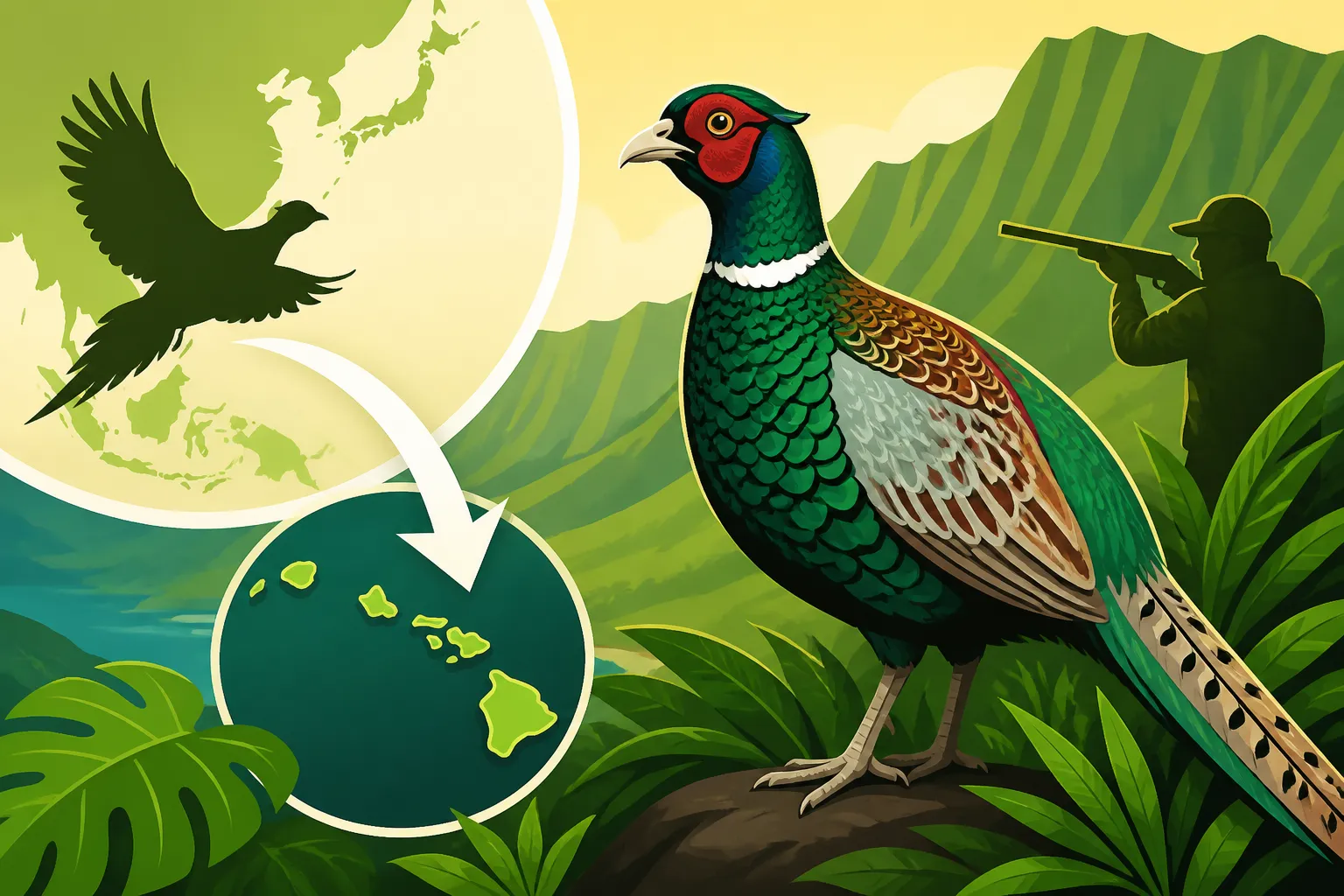
The Green Pheasant, or Phasianus versicolor, is native to Japan. It's often mistaken for its more widespread cousin, the Ring-necked Pheasant (Phasianus colchicus), but the Green Pheasant, as its name suggests, boasts a much more vibrant, metallic green and purple plumage, particularly on its head, neck, and mantle. In Japan, it's considered a national bird and is a popular game species.
The decision to introduce the Green Pheasant to Hawaii was likely influenced by its status as a valued game bird in its homeland and the desire to diversify hunting opportunities in the islands. Game bird stocking programs were a common practice in the late 19th and early 20th centuries across the United States and its territories, aiming to establish huntable populations where none existed or where native species were scarce. The idea was to bring in a hardy, prolific bird that could adapt to the Hawaiian climate and terrain, offering a new challenge and food source for local hunters.
Why They Were Brought to Hawaii
The primary motivation for bringing Green Pheasants to Hawaii was indeed recreational hunting. As the islands grew and developed, so did the interest in sport hunting. The landscape offered ample cover and food sources that seemed suitable for pheasants, and the thought of chasing these beautiful birds through the fields and forests was appealing.
Beyond just sport, there might have been secondary considerations, though less documented. Introduced game birds were sometimes seen as a way to control insect populations, or simply as a viable food source that could proliferate in certain areas. However, the allure of the huntable bird, a creature that could provide both a challenge in the field and a delicious meal on the table, was undoubtedly the driving force. It was part of a broader effort to transform Hawaii into a sporting paradise, echoing similar initiatives seen in other parts of the world where new game species were established to create new traditions. This practice, while providing hunting opportunities today, also highlights a different era of wildlife management thinking.
Establishing a Foothold: From Release to Wild Population
Introducing any new species to an unfamiliar environment is always a gamble. Will they find enough food? Can they withstand new predators or diseases? Will the climate suit them? For the Green Pheasant in Hawaii, the answer was a resounding yes, although their success hasn't been uniform across all islands.
Initial Releases and Adaptation
Early releases of Green Pheasants in Hawaii took place in the late 1800s and early 1900s. While exact dates and locations can be challenging to pin down for all historic introductions, Hawaii Island was a prominent location for many of these efforts, given its varied terrain and extensive ranch lands that mimicked some of their natural habitat. The birds were typically released into areas with a mix of open fields, brush, and forest edges – habitats where they could forage for seeds, insects, and vegetation, and find cover from predators.
Their ability to adapt quickly to different food sources and to utilize the diverse cover found in Hawaii's pastures, forests, and agricultural lands was key to their survival and proliferation. Unlike some introduced species that struggle to establish self-sustaining populations, the Green Pheasant found the islands quite hospitable. The lack of native ground predators that could easily decimate clutches of eggs or young birds also contributed significantly to their success. Over time, these initial small releases grew into self-sustaining populations, adding a distinctive and visually striking bird to Hawaii's emerging game bird roster.
Current Range and Habitat in Hawaii
Today, Green Pheasants are primarily found on Hawaii Island (the Big Island), particularly in the higher elevation grasslands, pastures, and dry forest fringes. Areas like the slopes of Mauna Kea and Mauna Loa, where ranching is prevalent and the landscape offers a mosaic of cover and open ground, provide ideal habitat. You'll often find them along the edges of mamane-naio forests, in overgrown kiawe flats, or scurrying through guinea grass alongside old ranch roads. They prefer areas that aren't too dense but offer enough cover for roosting and escape.
While they are most common on Hawaii Island, smaller populations may also exist on other islands where similar habitats are present, though the Big Island remains their stronghold. Hunters often target them in these upland areas, typically employing flushing dogs or still-hunting tactics along fence lines and field edges. Their vibrant plumage, particularly the males', makes them a sought-after trophy, and their wary nature provides a real challenge. For hunters planning a trip, resources like GoHunt can be invaluable for checking unit boundaries, season dates, and specific regulations for game birds on different islands. Understanding Hawaii's Game Birds and Where to Find Them is crucial for a successful hunt.
The Green Pheasant's Role in Hawaii's Ecosystem and Hunting Scene
The introduction of any species, no matter how beautiful or sport-worthy, always has ripple effects within an ecosystem. The Green Pheasant is no exception, now holding a dual role as both an ecological participant and a cherished game animal in Hawaii.
Ecological Impact
As an introduced species, the Green Pheasant, like many others, inevitably impacts the local ecosystem. They compete with native birds for food sources, particularly seeds and insects, and can potentially spread diseases or parasites that native species may not be equipped to handle. However, compared to some of the larger ungulates like feral pigs or goats, their direct destructive impact on native vegetation is generally considered to be less severe. They primarily forage on the ground, consuming seeds, berries, and invertebrates, acting as both seed dispersers and insect predators.
The long-term ecological consequences of their presence are part of the ongoing conversation about introduced species in Hawaii, where conservation efforts often focus on restoring native habitats by managing or removing non-native animals. However, Green Pheasants have also become a part of the established "feral" wildlife, contributing to the biodiversity in a way that is now accepted within the framework of game management. It’s a delicate balance, where the desire for hunting opportunities meets the critical need to protect Hawaii's unique and fragile native environment.
Hunting Opportunities for Green Pheasants
For hunters in Hawaii, the Green Pheasant offers a fantastic challenge and a rewarding experience. They are known for being exceptionally wary and quick to flush, providing exciting action for bird hunters. Their beautiful feathers make for stunning mounts, and the meat is highly prized.
Hunting seasons for Green Pheasants, like other game birds, are regulated by the Department of Land and Natural Resources (DLNR) and typically fall during specific weekends of the year. Hunters need a valid Hawaii hunting license and, often, a Hawaii Game Bird Stamp to pursue them. The best way to track down specific season dates, bag limits, and unit regulations is by checking the official DLNR documents or using online platforms like GoHunt, which often compile this information for easy access. Hawaii Game Bird Seasons and Bag Limits can give you an overview.
Many hunters use flushing dogs, such as pointers or setters, to help locate and flush these elusive birds from thick cover. Others prefer to "walk up" birds by slowly traversing likely habitats, paying close attention to thickets, tall grass, and the edges of agricultural fields. A good pair of binoculars can also be helpful for spotting them in more open country before they detect your presence. Comparing them to their cousins, Telling a Ring-Necked From a Green Pheasant can be useful for identification in the field, as both might be present in some areas. Hunting Green Pheasants offers a taste of Hawaii's unique, introduced game bird hunting culture, a direct result of their long journey from the fields of Japan to the volcanic slopes of our islands.
| Pheasant Species | Native Origin | Primary Hawaii Presence | Key Distinguishing Feature (Male) | Hunting Status in Hawaii |
|---|---|---|---|---|
| Green Pheasant | Japan | Hawaii Island | Metallic green/purple body, no white neck ring | Huntable Game Bird |
| Ring-necked Pheasant | Asia (widespread) | Hawaii Island, Maui | Iridescent green head, white neck ring | Huntable Game Bird |
| Kalij Pheasant | Himalayas | Hawaii Island, Oahu, Kauai | Bluish-black body, red facial wattles | Huntable Game Bird |
Disclaimer
This article is for general informational purposes only and does not constitute professional advice. Laws, prices and regulations vary by location and change over time. Consult a qualified professional for guidance on your specific situation.