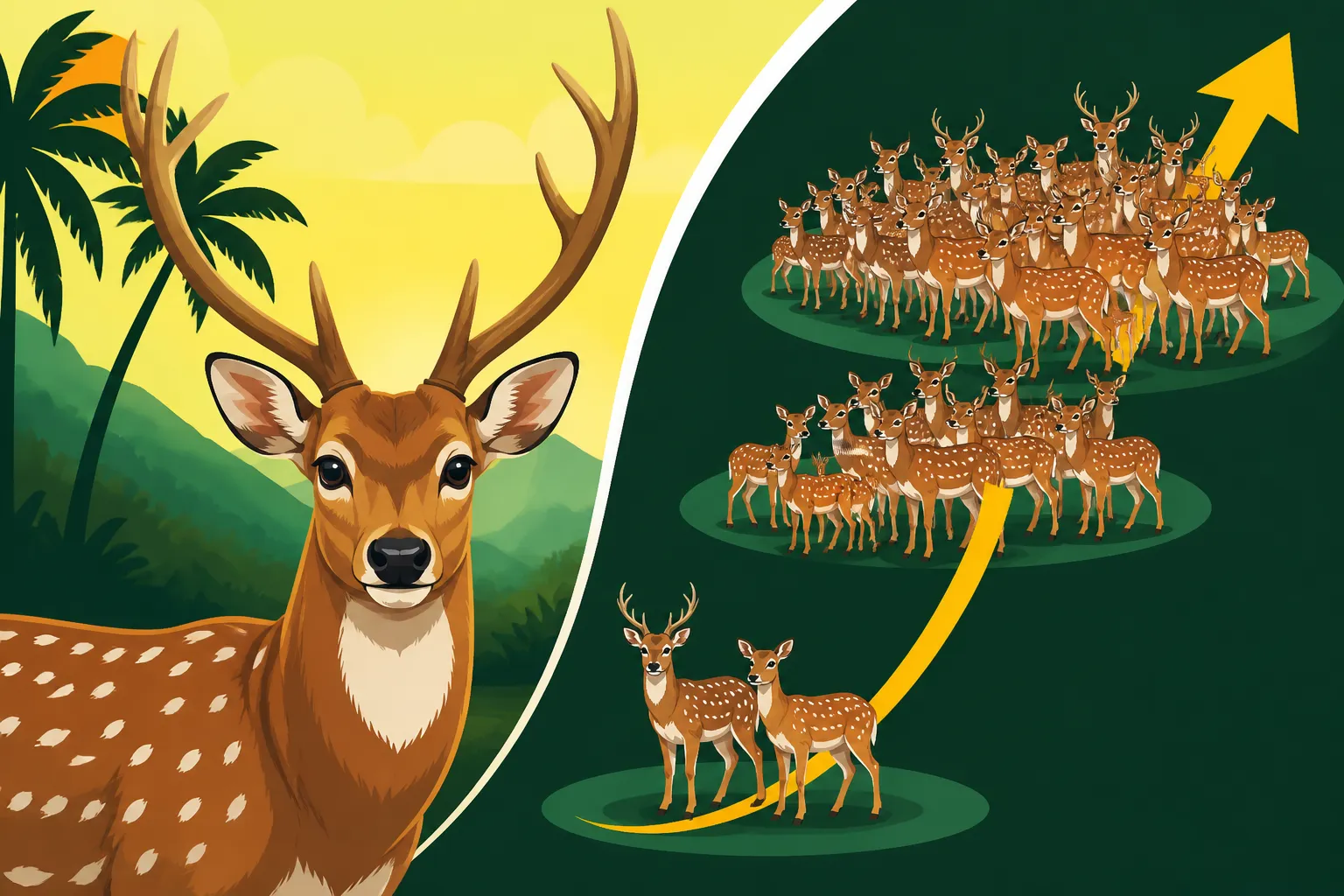
How Fast Axis Deer Multiply
You're out there, glassing a dry gulch on Maui, or maybe working a kiawe flat on Lanai, and suddenly you see them—a whole herd of Axis deer. Then another, and another. It's truly a sight to behold, but for anyone involved in managing Hawaii's fragile ecosystems or trying to protect a struggling farm, the sheer numbers can feel overwhelming. It leaves many hunters and conservationists alike asking: how do these deer multiply so incredibly fast? This guide will dive deep into the fascinating, yet challenging, reproductive capabilities of Hawaii's Axis deer, explaining why their populations explode and what that means for our islands.
The Astonishing Reproductive Biology of Axis Deer
One of the primary reasons Axis deer populations surge so quickly in Hawaii is their unique reproductive biology, which is fundamentally different from many mainland deer species. They've adapted to an environment where the usual biological checks and balances simply don't exist, leading to a relentless cycle of growth.
Early Maturation and Frequent Breeding Cycles
Imagine a young doe on the mainland; she might not even breed until her second year. But here in Hawaii, it's a completely different story. Axis deer does reach sexual maturity remarkably early, often as young as 9 to 14 months of age. This means a doe born in spring could potentially be bred herself by the following year, contributing to the population much sooner than, say, a whitetail deer would. This accelerated timeline is a huge factor in their rapid proliferation.
What truly sets them apart, though, is their ability to breed year-round. Unlike deer in temperate climates that have a distinct rutting season tied to specific times of the year, usually late fall, Hawaii's Axis deer are not constrained by such limitations. Our mild, consistent climate means there's no harsh winter to dictate breeding cycles. A doe can come into estrus at virtually any point in the year, and if a buck is present, breeding can occur. This constant potential for reproduction means that new fawns are being born throughout the year, ensuring a steady influx of new individuals into the population rather than a single, seasonal pulse. There's no "hard" rut here that creates a finite breeding window; instead, it's more of an ongoing, staggered process.
High Fawn Production and Survival Rates
Not only do Axis does breed frequently, but they are also incredibly efficient at producing multiple offspring. Twinning, the birth of two fawns at once, is common among Axis deer, and sometimes even triplets occur. This significantly boosts their reproductive output compared to many other deer species where single births are the norm. A healthy doe can often produce fawns every 7-9 months, meaning she could potentially fawns twice within an 18-month period, or even three times in two years under optimal conditions. This rapid cycling of pregnancies and births is a biological superpower in the right environment.
Furthermore, the survival rate of these fawns is exceptionally high in Hawaii. On the mainland, fawns face a gauntlet of predators, from coyotes and bobcats to bears and wolves, not to mention harsh winter conditions that can claim weak youngsters. Here, Hawaii's ecosystem lacks any large native predators capable of keeping Axis deer numbers in check. While feral dogs might occasionally take a fawn, their impact is negligible compared to the natural predation pressure seen elsewhere. Combine this with a consistent, year-round food supply—thanks to Hawaii's lush vegetation—and mild weather that rarely stresses young animals, and you have a recipe for nearly every fawn born to survive to adulthood. This lack of natural attrition means that almost all new life added to the population sticks around, perpetuating the rapid growth.
Environmental Factors Fueling Population Growth
Hawaii's unique environment provides the perfect cocktail of conditions that allow Axis deer to not just survive, but thrive and reproduce at an almost unbelievable rate. It's a land of plenty, without the natural checks that define most ecosystems.
Hawaii's Ideal Climate and Abundant Forage
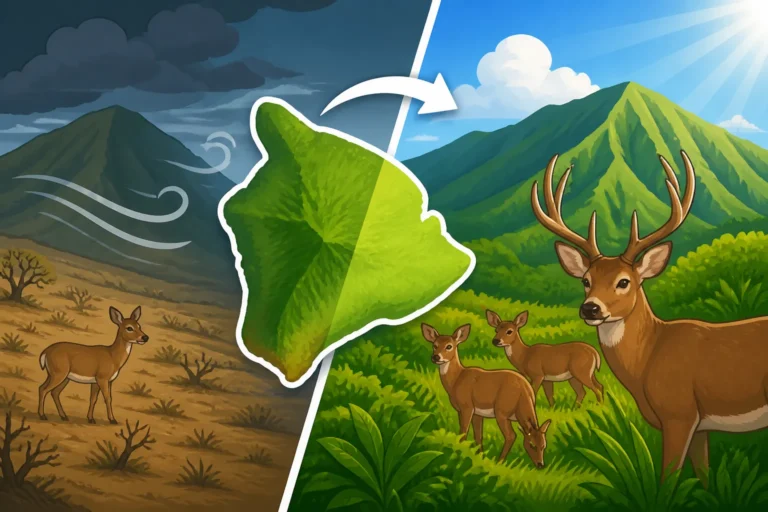
Imagine a place where the grass is always green, and food is available every single day of the year. That's Hawaii for an Axis deer. Our tropical and subtropical climate boasts a year-round growing season, meaning there's a constant supply of diverse vegetation for them to browse and graze. From lush grasses in pastures to the leaves and fruits of various shrubs and trees in the forest understory, Axis deer have an endless buffet. This stands in stark contrast to deer living in temperate zones, where winters mean scarce food, frozen ground, and the constant threat of starvation.
This abundance of food, combined with the mild climate, significantly reduces the energy expenditure and physiological stress on the deer. They don't need to dedicate huge amounts of energy to finding food in a snow-covered landscape or to staying warm in freezing temperatures. This saved energy can instead be diverted to reproduction and growth. Does remain in excellent physical condition, allowing them to cycle into estrus more quickly after fawning and support multiple healthy pregnancies. Bucks can maintain good body condition, contributing to successful breeding efforts throughout the year. The lack of seasonal hardship truly supercharges their ability to reproduce continuously.
Absence of Natural Predators
Perhaps the single most critical environmental factor contributing to the explosion of Axis deer populations is the glaring absence of natural predators in Hawaii. On the North American mainland, species like wolves, cougars, bears, and even coyotes play a vital role in regulating deer numbers. They selectively remove the old, the weak, and the sick, and they keep healthy populations from overshooting their carrying capacity. This natural predation helps maintain a balance within the ecosystem.
Hawaii, however, evolved in isolation, without any large native mammalian carnivores. When Axis deer were introduced, they landed in a paradise devoid of anything that could effectively hunt them. While a feral dog pack might occasionally bring down a deer, this impact is localized and minimal on a population scale. Human hunting, though important, often isn't consistent or widespread enough across all accessible and inaccessible areas to fully mimic the pressure of a diverse predator guild. The complete lack of natural checks means that every Axis deer born has a high chance of living a full life and reproducing, leading to unchecked population growth. It's this fundamental ecological imbalance that truly drives their rapid multiplication, creating a major challenge for the islands' native flora and fauna.
The Exponential Impact on Island Ecosystems
When you have an animal that reproduces as quickly as the Axis deer, in an environment as delicate and unequipped to handle them as Hawaii's, the ecological consequences are profound and often devastating. It's not just about seeing more deer; it's about seeing the landscape transform and native species struggle.
Overgrazing and Habitat Degradation
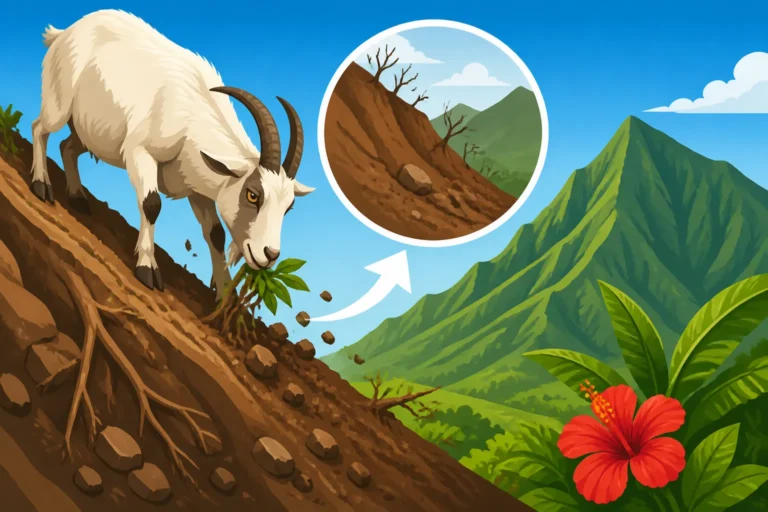
The most visible and immediate impact of rapidly multiplying Axis deer is widespread overgrazing. Imagine hundreds, even thousands, of deer constantly browsing and grazing across the landscape. They aren't just taking a little nibble here and there; they're systematically stripping native vegetation, especially the palatable understory plants and the tender seedlings of trees. This relentless pressure prevents native plants from regenerating, leading to a slow but sure decline in biodiversity. What was once a diverse forest understory might become bare earth or be replaced by invasive, unpalatable weeds that the deer avoid.
This habitat degradation has a domino effect. With the protective plant cover gone, the soil is exposed to Hawaii's often heavy rainfall and strong winds, leading to significant soil erosion. This eroded soil then washes into streams and coastal waters, degrading water quality, smothering coral reefs, and impacting marine ecosystems. Beyond the environmental damage, these teeming herds also cause immense frustration and economic hardship for local farmers and ranchers, who watch their crops, pastures, and orchards decimated. The struggle to protect livelihoods from these prolific grazers is real, and it’s a constant battle that ties directly into the broader issue of Axis Deer Damage to Hawaii Farms.
Competition with Native Species and Agricultural Strain
While Hawaii doesn't have many large native herbivores for Axis deer to directly compete with, their sheer numbers mean they consume vast quantities of forage that would otherwise support other, often smaller, native insects, birds, and even some unique plants that evolved in the absence of large grazers. Every mouthful an Axis deer takes is a mouthful denied to another species in this delicate ecosystem. This competition can disrupt food webs and stress native populations that are already facing threats from other invasive species and habitat loss.
The agricultural strain is perhaps the most acutely felt impact by human residents. From small family farms on Maui to large cattle ranches on Lanai, the economic losses from Axis deer are staggering. They'll decimate pineapple fields, graze down young macadamia nut trees, destroy vegetable patches, and consume valuable pasture grass meant for livestock. The cost of fencing, deer deterrents, and crop loss is a heavy burden. It forces farmers to spend considerable resources and time on mitigation, often feeling like they're fighting a losing battle against an ever-growing tide of hungry deer. For communities heavily reliant on agriculture, this isn't just an ecological problem; it's a direct threat to their way of life and food security.
Management Challenges and Conservation Efforts
The rapid multiplication of Axis deer presents one of Hawaii's most pressing wildlife management conundrums. It's a complex dance between conservation, public land access, and trying to keep a wildly successful invasive species in check.
The Difficulty of Control and Management Strategies
Controlling an animal that reproduces so quickly in such a favorable environment is a monumental task. Traditional hunting, while critically important, often struggles to keep pace with the birth rate, especially in vast, rugged, or inaccessible areas. The Department of Land and Natural Resources (DLNR) and its Division of Forestry and Wildlife (DOFAW) employ a multi-faceted approach. This includes regulated public hunting seasons, which are essential, but also more intensive measures like strategic fencing to protect critical native habitats and, controversially, aerial control programs in certain zones where deer numbers are overwhelming and ground access is difficult. For example, the Hawaii's Maui Nui Deer Control Program is a significant effort to manage deer populations across Maui, Molokai, and Lanai, recognizing the severe impact on these islands.
The challenge isn't just about reducing numbers; it's about doing so sustainably and effectively across varied landscapes. Even with these efforts, deer populations can rebound quickly due to their high reproductive rates. Hunters play a vital role in this management, and platforms like GoHunt provide essential information and access to permits, helping to channel hunting pressure where it's most needed. Without consistent, widespread management, these populations would truly spiral out of control, causing irreparable harm to Hawaii's unique ecosystems.
Hunter Access and Public Perception
While hunters are often seen as part of the solution, the reality of hunting in Hawaii comes with its own set of frustrations and complexities. Limited public land access, intricate permit-tag systems, and short season lengths in some units can make it difficult for hunters to exert consistent pressure across all areas where deer thrive. Many hunters express frustration that there isn't more consistent access to help reduce numbers, especially when they see the damage firsthand. Understanding the rules for Hawaii Hunting Licenses and What They Cost and navigating Hawaii's Permit-Tag System can be a hurdle for new or visiting hunters, potentially limiting participation.
Public perception is another significant hurdle. While many recognize the need for deer control due to environmental and agricultural damage, methods like aerial culling often spark emotional debates about animal welfare. This highlights the delicate balance that state agencies must strike between effective population control and community values. Educating the public about the ecological damage caused by unchecked Axis deer populations is an ongoing effort, aiming to garner support for management strategies that might otherwise be controversial. Ultimately, a successful management strategy relies not only on effective techniques but also on broad community understanding and support.
Understanding the Axis Deer Lifecycle for Effective Hunting
For hunters seeking to engage with Hawaii's Axis deer, understanding their unique, year-round lifecycle is paramount. It dictates everything from when a buck is in his prime to how herds are structured, and ignoring these differences will significantly hamper your success.
Continuous Rut and Antler Cycles
One of the most defining characteristics of Axis deer in Hawaii is their continuous breeding cycle, often referred to as a "perpetual rut." Unlike temperate deer species that breed during a specific period, typically in the fall, Axis deer does come into estrus and bucks seek to breed throughout the entire year. This means that at any given time, you can find bucks in various stages of antler growth: some will be in velvet, actively growing their racks; others will be in hard antler, ready for breeding and sparring; and still others may have already dropped their antlers. This phenomenon is a direct consequence of Hawaii's consistent climate and abundant food, which remove the seasonal cues that trigger synchronized breeding elsewhere.
This continuous cycle has major implications for hunting. It means there isn't a single "best" time to hunt for a hard-antlered buck, though certain periods might see increased activity. Instead, hunters must be prepared for the possibility of encountering bucks at any stage of their antler development. It also means that you're less likely to observe intense, massed rutting behavior common in other deer species. Understanding Why Axis Deer Rut Timing Is Different is crucial; it teaches you to look for signs of breeding activity throughout the year, rather than focusing solely on a traditional fall rut. This constant state of readiness makes Axis deer unique and requires a shift in mindset for hunters accustomed to seasonal patterns.
Observing Herd Dynamics and Behavioral Patterns
The year-round breeding also profoundly influences Axis deer herd dynamics and behavioral patterns. Because fawns are born continuously, herds often consist of does with fawns of various ages – from tiny, spotted newborns to nearly yearlings. You won't typically see a synchronized fawning period where all does drop their fawns within a narrow window. This diverse age structure within the herd means that mothers are always tending to young, which can influence their movements and their wariness.
Hunters need to pay close attention to these dynamics. While Axis deer are known for their strong herd instinct, the presence of young fawns can sometimes make a doe more skittish or, conversely, more focused on protecting her offspring. Observing the composition of a herd – how many mature does, how many fawns, the presence of different-aged bucks – can give you clues about their recent activity and their current priorities. Learning to decipher these subtle clues is part of the art of hunting these animals. Moreover, these continuous cycles mean that signs of deer activity, such as fresh rubs, scrapes, and tracks, can be found year-round. Learning to identify and interpret these signs, especially when Reading Axis Deer Sign in Dry Country, is vital for locating these elusive animals, regardless of the calendar month.
Comparing Reproductive Rates: Axis Deer vs. Mainland Deer
To truly grasp how fast Axis deer multiply, it's helpful to see their reproductive traits laid out next to a familiar mainland species like the Whitetail deer. This table highlights the key differences that allow Axis deer to proliferate so rapidly in Hawaii.
| Feature | Axis Deer (Hawaii) | Whitetail Deer (Mainland, e.g., Texas) |
|---|---|---|
| Sexual Maturity (Does) | 9-14 months | 1.5 – 2 years (sometimes 1 year with excellent nutrition) |
| Breeding Season | Year-round (continuous estrus) | Seasonal (typically Oct-Dec in most regions) |
| Gestation Period | ~7.5 months (approx. 225-240 days) | ~7 months (approx. 200-205 days) |
| Fawning Frequency | Potential for 2 fawns in 18 months (every 7-9 months) | 1 fawn per year (or none for young does) |
| Typical Fawn Numbers | 1-2 (twinning common, triplets possible) | 1 (for first-time mothers), then usually 2 |
| Fawn Survival Rate | Very High (due to lack of predators & mild climate) | Moderate (significant predation & winter mortality) |
| Antler Cycle (Bucks) | Year-round (velvet, hard horn, shedding throughout) | Seasonal (velvet in spring, hard horn late summer/fall, shed winter) |
As you can see, the ability of Axis does to mature younger, breed year-round, and consistently produce twins, combined with high fawn survival, creates a biological growth engine that most other deer simply cannot match. This is why their populations can explode so dramatically in an unchecked environment.
Disclaimer
Hunting is a challenging and potentially dangerous activity. This guide is for informational purposes only and does not substitute for proper training, adherence to all local, state, and federal laws and regulations, or professional guidance. Always prioritize safety, respect wildlife, and obtain all necessary licenses and permits before engaging in any hunting activities. Conditions in Hawaii's hunting units can change rapidly, so always check with the Hawaii Department of Land and Natural Resources (DLNR) Division of Forestry and Wildlife (DOFAW) for the most current rules, seasons, and access information before planning your hunt.