What Would Happen Without Hunting in Hawaii
Hawaii hunting cessation causes unchecked invasive species population growth, habitat destruction, severe erosion, and agricultural devastation.
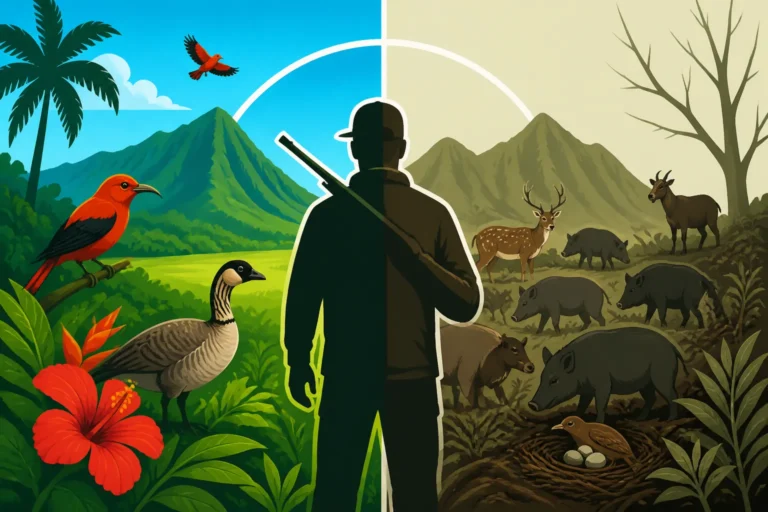
Hawaii hunting cessation causes unchecked invasive species population growth, habitat destruction, severe erosion, and agricultural devastation.
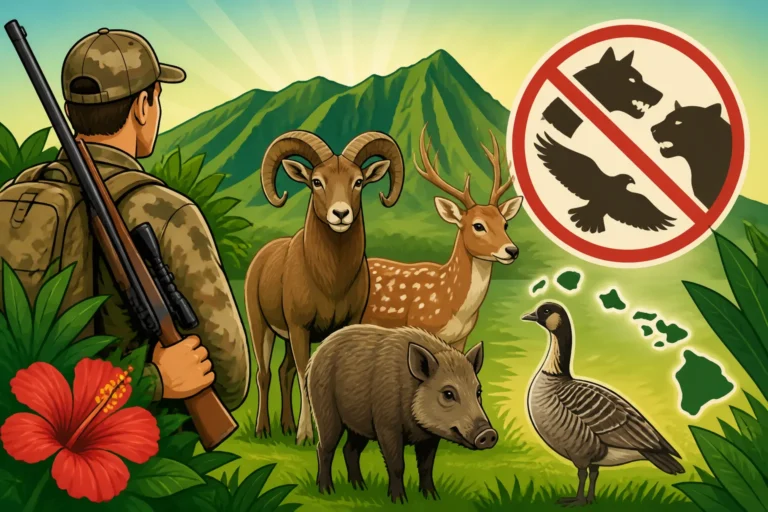
Geographic isolation and historical introductions explain why Hawaii game animals evolved without natural predators on the islands.
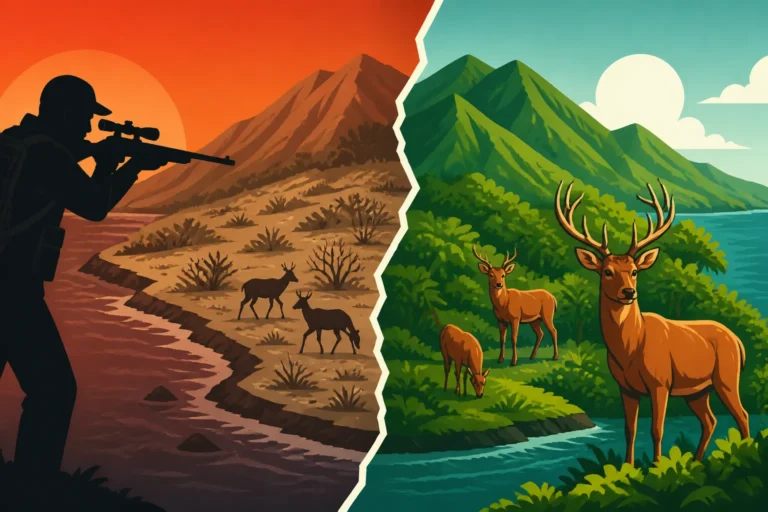
Hunting pressure on Hawaii islands changes feral animal behavior and forces wildlife into dense cover and escape routes.
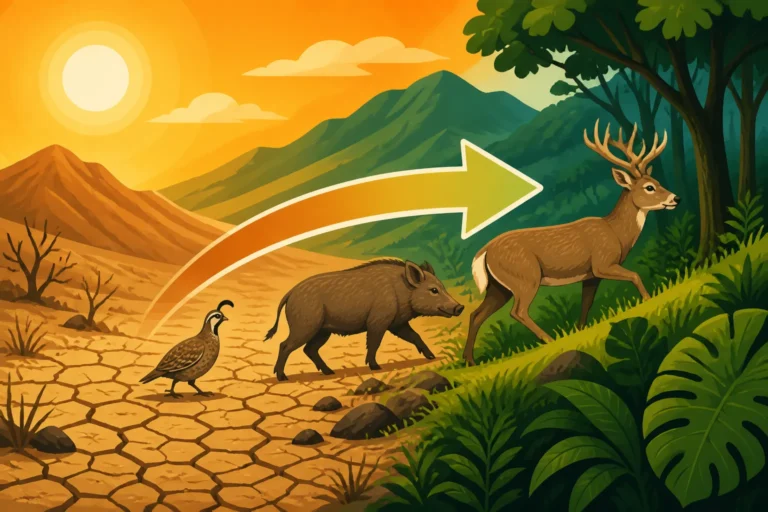
Drought alters Hawaii game animal movement patterns, forcing Axis deer and feral pigs toward hidden water and sparse forage.
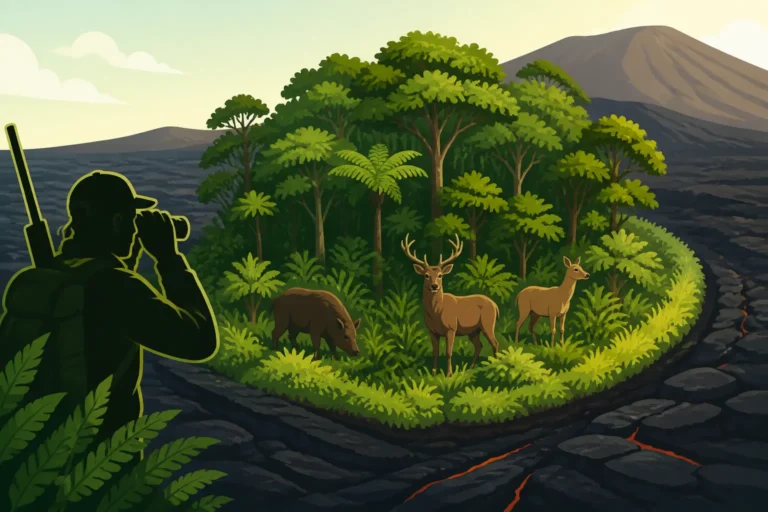
Kipukas are isolated islands of vegetation amid lava flows that provide food and shelter for Hawaii deer, pigs, and goats.
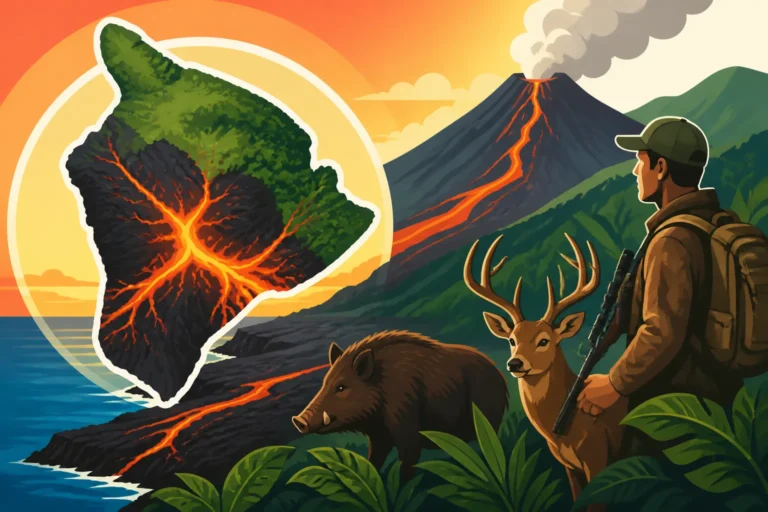
Volcanic lava flows in Hawaii shape where pigs, goats, and deer live, dictating how hunters track game across rough terrain.
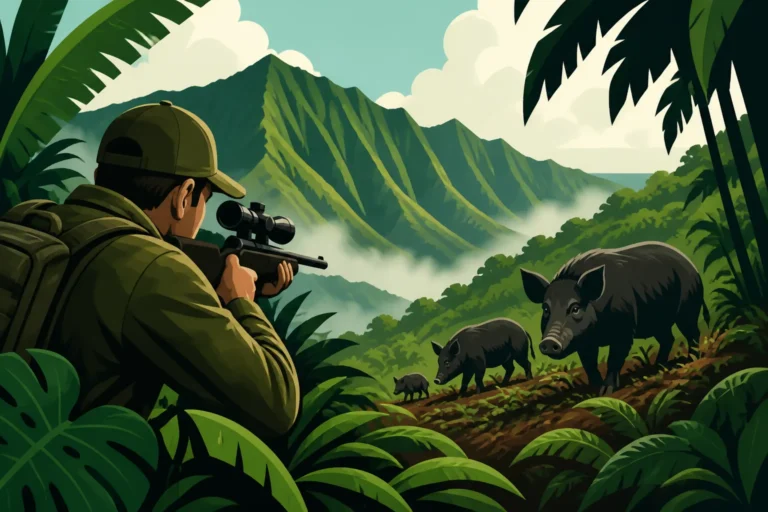
Feral pig behavior in Hawaii windward forests explains why these animals thrive in dense, wet rainforest gulches and steep terrain.
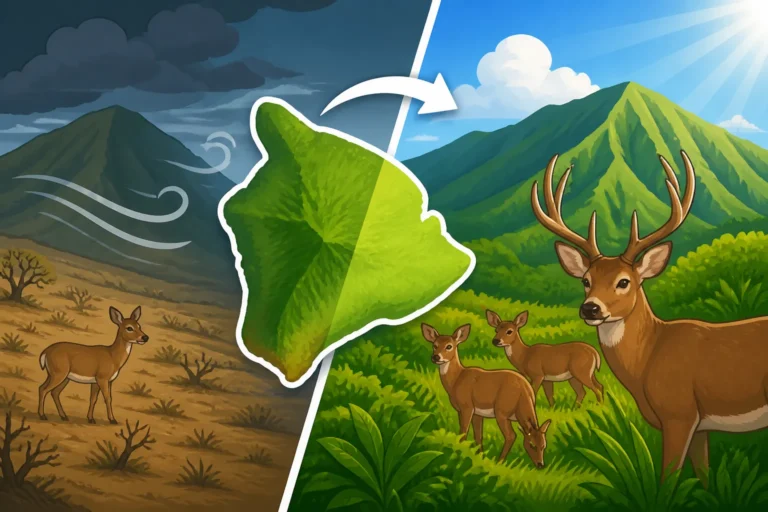
Hawaii deer distribution and the rain shadow effect explain why arid leeward slopes hold more wildlife than lush windward valleys.
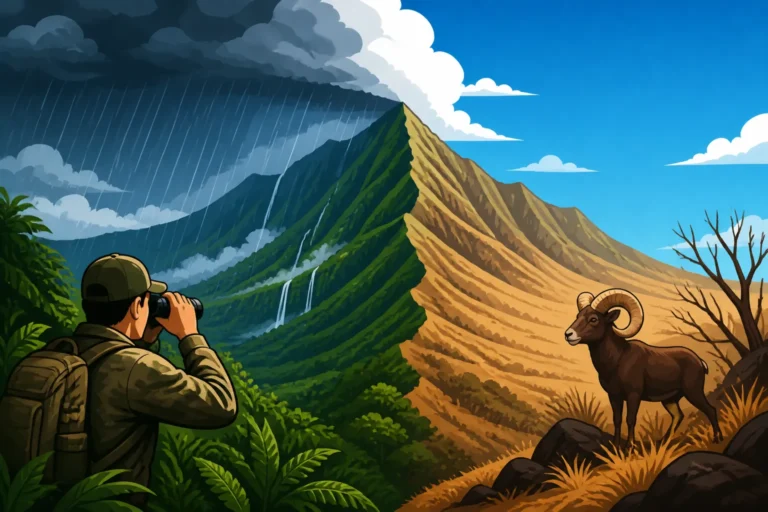
Hawaii rain shadows create wet windward forests and dry leeward slopes, dictating the distribution of game animals across islands.
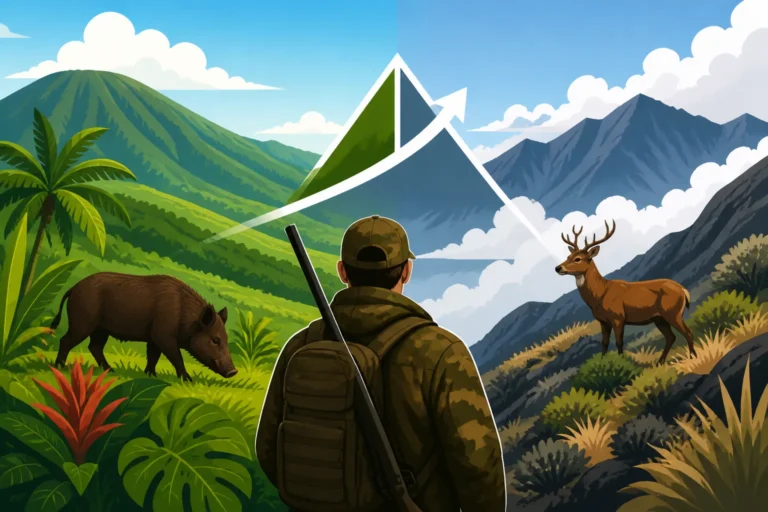
Hawaii elevation changes alter game animal behavior, routines, and habitats across coastal lowlands, wet forests, and alpine zones.