What Feral Pigs Do to Hawaii’s Forests
Feral pigs destroy Hawaii forests by rooting soil and creating wallows that cause severe erosion and damage native ecosystems.
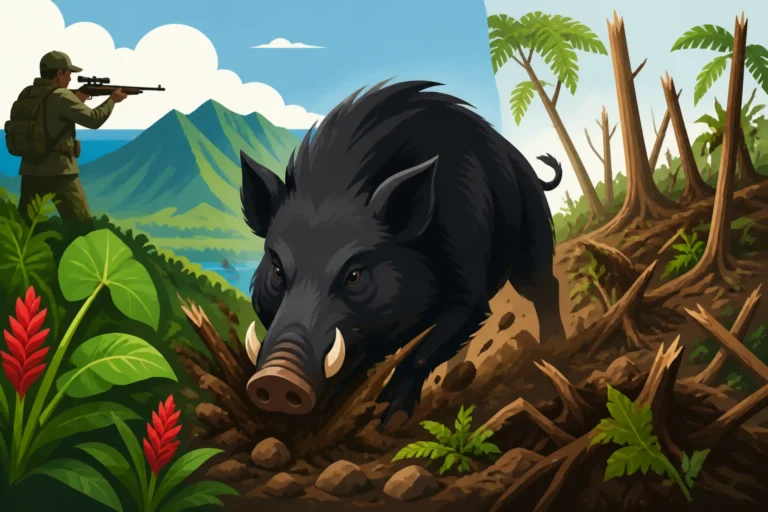
Feral pigs destroy Hawaii forests by rooting soil and creating wallows that cause severe erosion and damage native ecosystems.
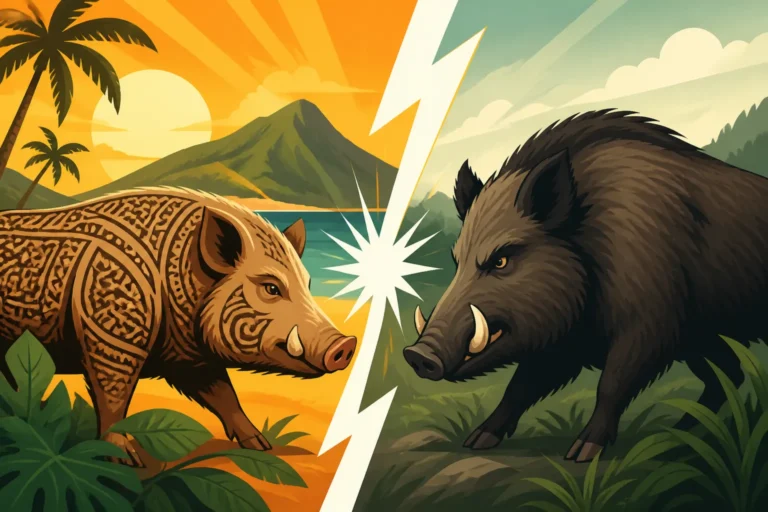
Hawaii feral pig lineages include small Polynesian ancestors and large European boars, creating hybrid animals that impact hunting strategies.
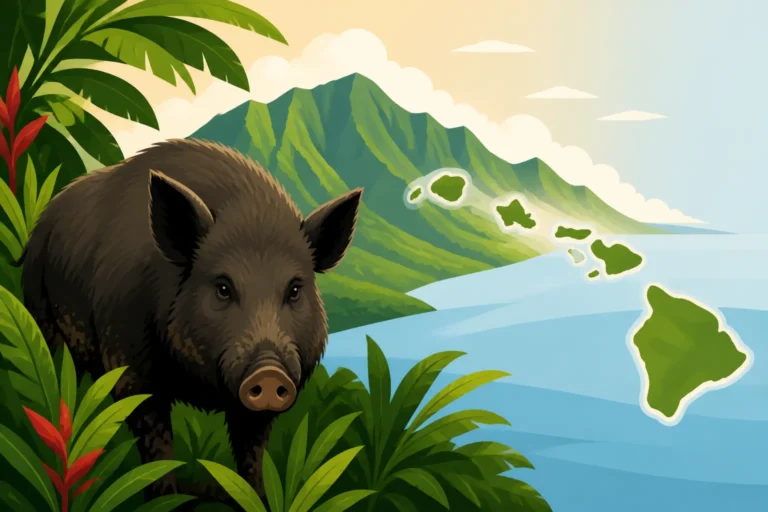
Hawaii feral pig distribution spans rainforests, dry flats, and major islands except Niihau, driven by food, water, and cover.
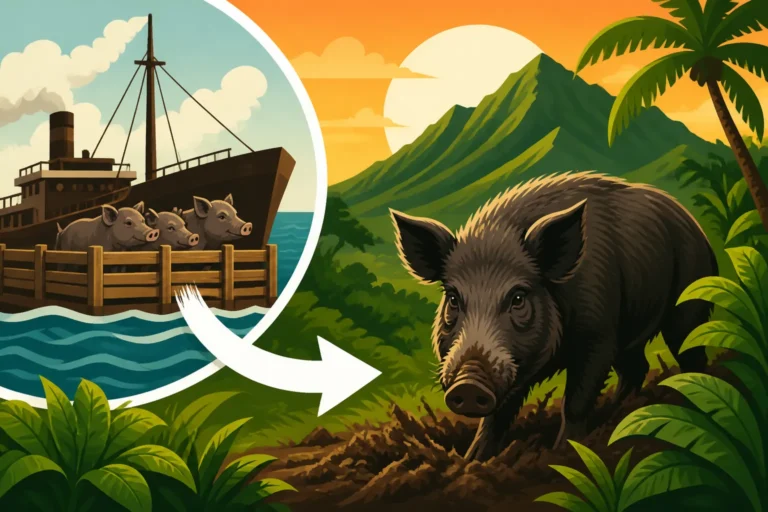
Polynesian navigators brought pigs to Hawaii in ancient canoes as a crucial survival strategy for new island settlements.

The Maui Nui Deer Control Program explains axis deer population growth, agricultural crop losses, and dangerous roadway collisions.
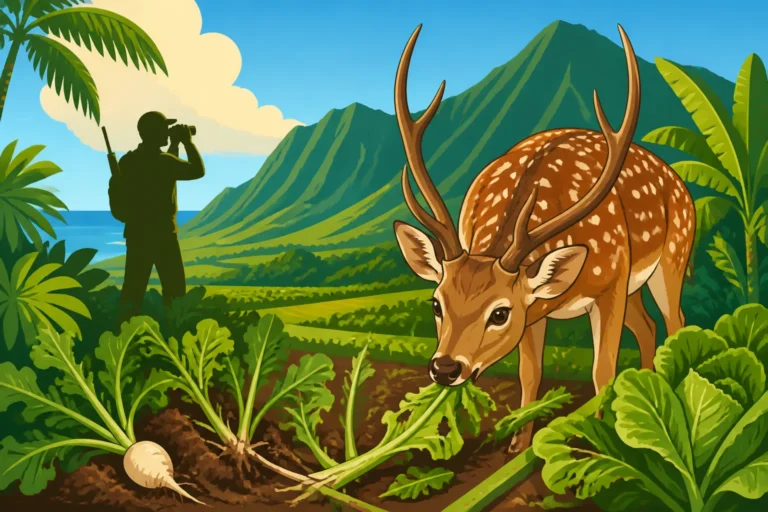
Axis deer damage to Hawaii farms creates severe financial strain by consuming valuable crops and destroying vital irrigation systems.
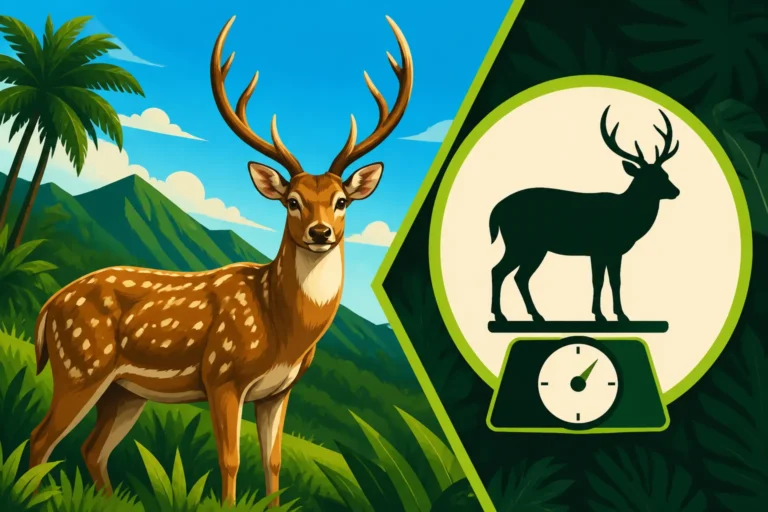
Mature Axis bucks in Hawaii generally carry a live weight of 150 to 200 pounds, while does weigh between 90 and 130 pounds.
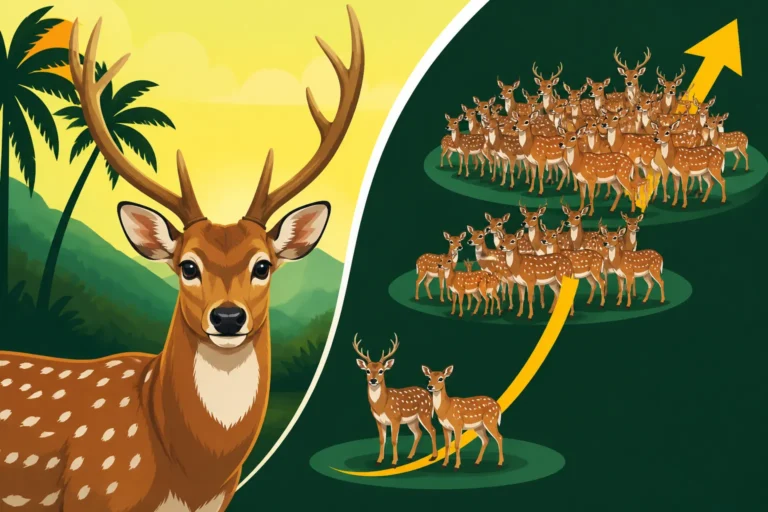
Axis deer populations in Hawaii multiply rapidly due to early maturation, year-round breeding, and high fawn survival rates.
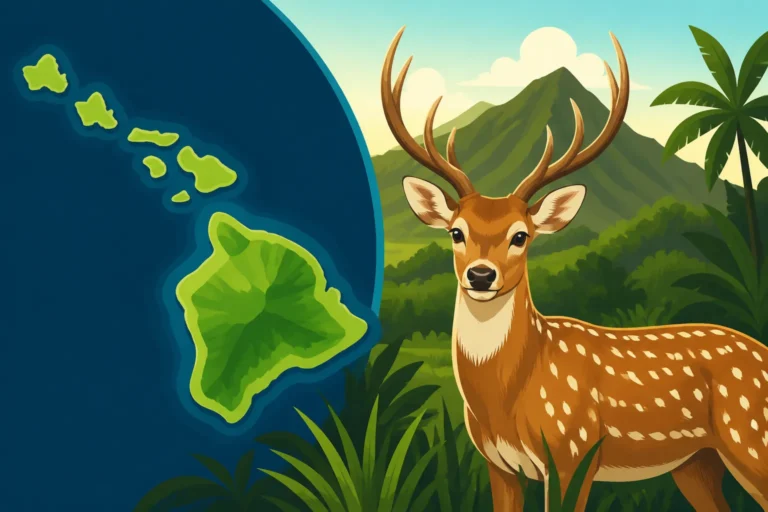
Hawaii Axis deer populations, their habitats on Molokai, Lanai, and Maui, and the 1867 introduction by King Kamehameha V.
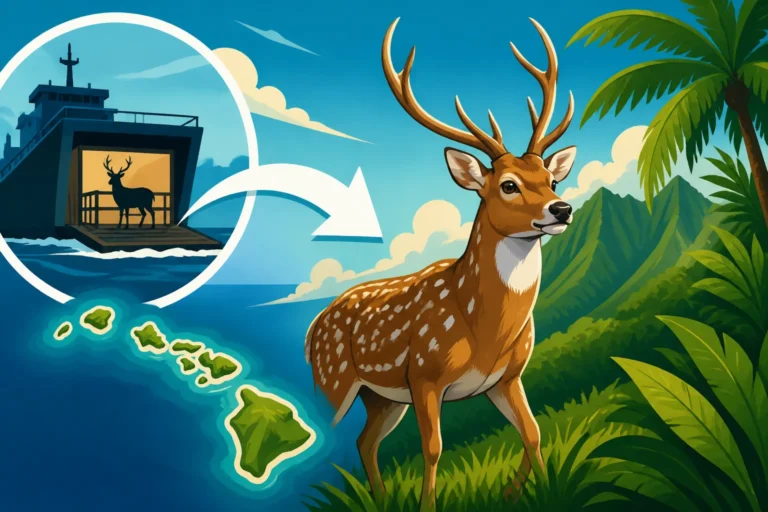
King Kamehameha V received the first eight to twelve Axis deer from Hong Kong in 1867 to establish hunting on Molokai.