How Feral Pigs Reached Hawaii
If you've spent any time hunting in Hawaii, or even just exploring our incredible wilderness, you know feral pigs are a force to be reckoned with. These incredibly adaptable animals are deeply entrenched in our island ecosystems, and while they offer a challenging hunt and delicious table fare, their presence tells a much longer story. Understanding how these resilient creatures first arrived on our shores is key to appreciating their role today, both as game animals and as a significant management challenge. This guide will walk you through the fascinating journey of Hawaii's feral pigs, from ancient canoes to modern-day forests.
The First Voyage: Polynesian Introductions
It’s easy to think of Hawaii’s feral pigs as simply "wild pigs," but their lineage here actually stretches back to the earliest human arrivals. Long before Captain Cook sailed into view, Polynesian navigators brought these animals with them as a crucial part of their survival strategy on new islands. This first wave of pig introductions laid the groundwork for the animals we know today.
Canoes, Culture, and Pua'a
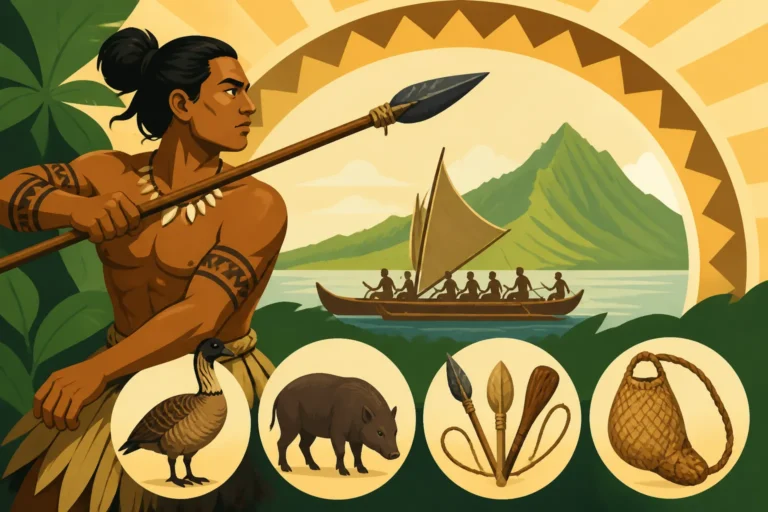
Imagine the immense effort and planning that went into those epic voyages across the Pacific. Polynesian voyagers weren't just skilled sailors; they were incredible agriculturalists and cultural bearers. When they set out to discover new lands, they brought with them a carefully curated collection of "canoe plants" – essential food crops like taro, breadfruit, and sweet potato – and valuable livestock. Among these animals were chickens, dogs, and, critically, pigs, known as pua'a in Hawaiian. These pigs weren't simply food; they were a living larder, a source of protein and fat that could reproduce and sustain a new settlement. They were intertwined with daily life, cultural practices, and religious ceremonies. Landing on a new island, these pigs were released or managed, quickly adapting to the lush, predator-free environments of ancient Hawaii.
Initially, these pigs likely roamed semi-wild, living off the land but perhaps occasionally rounded up for specific purposes or festivals. Their impact on the pristine native forests was probably less severe than what we see today, as their numbers were likely controlled by human populations and natural limitations. They were part of the new, settled ecosystem, fitting into the existing landscape in a way that modern pigs simply don't. The relationship was one of necessity and careful management within the confines of island resources.
The Traits of the Early Polynesian Pig
The pua'a that arrived with the Polynesian settlers were quite different from the robust, bristly wild boar many mainland hunters envision. These were typically smaller, leaner animals, often dark-colored, with a more agile build suited to navigating dense undergrowth. Their genetic lineage traces back to Asian domestic pigs, and they carried traits that had been selected over generations for manageable size, relative docility, and efficient conversion of forage into meat. They weren't built for brute force, but for survival and propagation.
These smaller, slighter pigs primarily foraged on fruits, roots, and invertebrates they could find in the fertile lowlands and forest edges. They played a role in distributing seeds and disturbing soil, though the delicate balance of Hawaii's unique ecosystems meant even this early disturbance had an impact. Compared to their European counterparts, they were less aggressive in their rooting habits and likely didn't grow to the massive sizes that became common later. Their population growth was probably kept in check by the limited resources of the smaller islands and, as mentioned, by human consumption. Their presence was a testament to the ingenuity of the Polynesian people, a living resource transported across vast oceans to ensure the survival and prosperity of their new home.
Captain Cook and the Arrival of European Hogs
Centuries after the Polynesian canoes made landfall, another pivotal moment in Hawaii's pig history arrived with the sails of European explorers. Captain James Cook's arrival in the late 18th century marked the beginning of significant cultural exchange, but it also ushered in a new era for Hawaii's wildlife, irrevocably altering the genetic makeup and ecological impact of its pig populations.
New Ships, New Swine
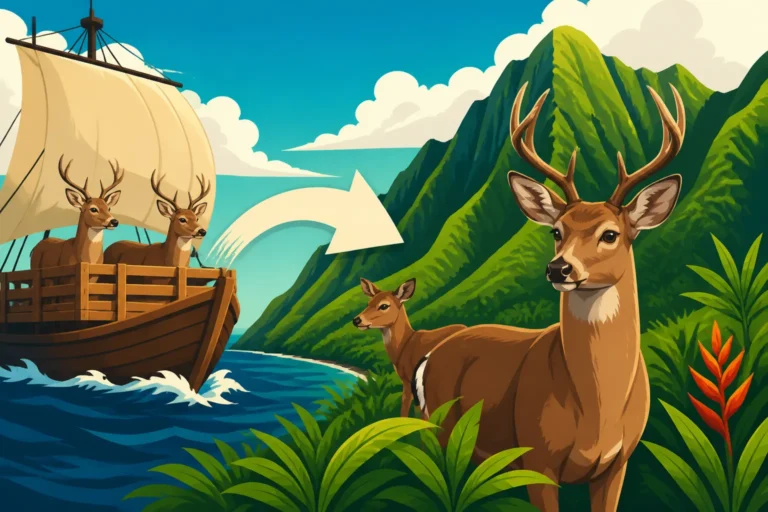
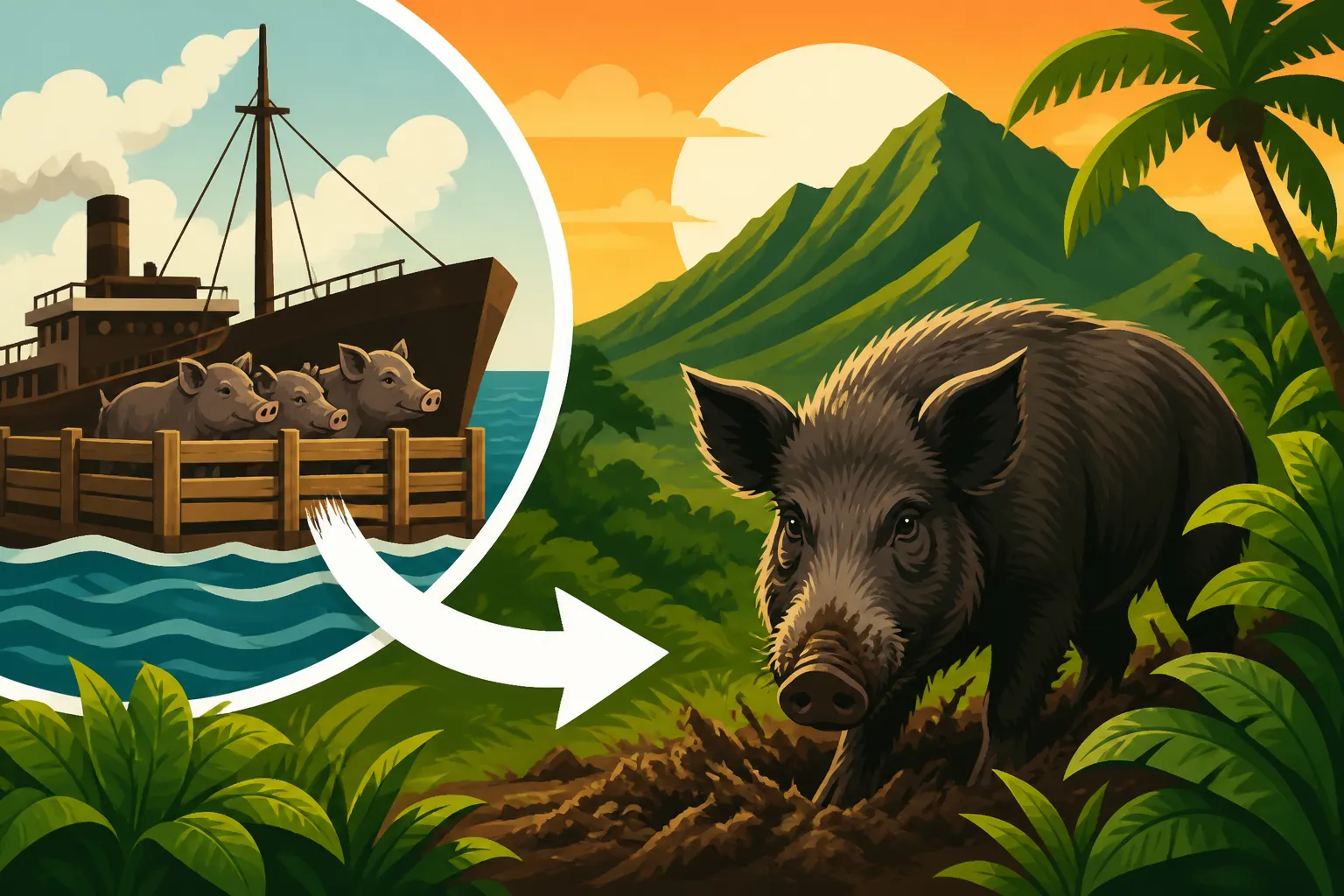
When Captain Cook first encountered the Hawaiian Islands in 1778, his ships carried not only new technologies and ideas but also new species. Among these were domestic European pigs, which were larger, more robust, and bred for different purposes than the Polynesian pua'a. The intention behind these introductions was often benevolent: to provide a better food source for both the visiting sailors and the islanders, and to establish new livestock for future trade and sustenance. Cook and subsequent Western explorers and traders often gifted pigs to Hawaiian chiefs, hoping to foster good relations and expand agricultural capabilities. These European pigs quickly found their footing in the islands, thriving in the abundant forage and mild climate.
These pigs, often breeds like Berkshire or Yorkshire, were significantly different from the Polynesian variety. They were stockier, possessed a thicker hide, and had a higher growth rate, making them more productive for meat. This "improvement" was seen as a benefit at the time, but it brought with it unintended consequences for the local pig population and the fragile Hawaiian environment. The release or escape of these animals into the wild began a process of interbreeding that would forever change the characteristics of Hawaii's feral pigs.
The Interbreeding of Lines
The introduction of European pigs wasn't just about adding a new type of swine to the islands; it was about mixing bloodlines. Over time, escaped European domestic pigs began to interbreed with the already established Polynesian feral pigs. This genetic blending created a hybrid animal that possessed a unique combination of traits from both ancestries. The resulting offspring often inherited the larger size and robustness of the European stock, combined with the hardiness and adaptability of the Polynesian lines that had already adapted to the island's wild conditions for centuries. This hybridization created an even more formidable feral animal.
These hybrid pigs were larger, more prolific, and often more aggressive in their foraging behaviors. They had larger litters and reached reproductive maturity faster, leading to a rapid population explosion. You can often see the results of this blending today – some Hawaii pigs still exhibit the leaner, more "Polynesian" look, especially in remote areas, while others are clearly the result of European boar genetics, with broader shoulders, thicker bristles, and impressive tusks. This mix of Polynesian Pigs Versus European Boar created the ultimate survival machine, perfectly equipped to exploit Hawaii's diverse habitats, from high-elevation forests to coastal lowlands, making them an incredible challenge for both conservationists and hunters.
From Domesticated to Wild: The Spread Across the Islands
Once both Polynesian and European pigs were on the islands, their journey from managed livestock to widespread feral populations was swift and impactful. Hawaii's unique environment, devoid of natural predators, created a perfect storm for these adaptable animals to thrive and multiply, spreading their hoofprints and impact across nearly every major island.
Escapes, Releases, and Rapid Adaptation
The transition of pigs from domesticated animals to feral inhabitants was a multi-faceted process driven by a combination of deliberate actions and accidental occurrences. Early Polynesian settlers certainly managed their pua'a, but some undoubtedly escaped into the wild, forming small, localized populations. With the arrival of European explorers and later, Western settlers, the number of escapes increased. Pigs were often kept in less secure enclosures, and some were even intentionally released by whalers or sailors on remote islands to serve as a future food supply. Ranching operations also contributed, with pigs breaking out of fences and quickly reverting to a wild state.
Once free, these pigs found Hawaii to be an ecological paradise. The islands offered an abundance of food sources, from native plants to introduced species, and crucially, a complete absence of large terrestrial predators like wolves or bears that would naturally control their numbers. This lack of predation, combined with their rapid reproductive rate and incredible adaptability, allowed populations to explode. They quickly learned to forage on native fruits, roots, and even insects, becoming highly opportunistic omnivores. Their ability to reproduce quickly and survive in diverse habitats meant that small, initial populations could rapidly expand their range and numbers, overwhelming native ecosystems.
Island by Island Dispersal
The spread of feral pigs across the Hawaiian Islands wasn't uniform, but it was remarkably effective. Starting from initial landing points, pigs rapidly colonized the major islands, adapting their behaviors to the unique conditions of each. On the Big Island, for example, they expanded into the vast koa and ʻōhiʻa forests, and even into drier, higher elevations. Maui, Molokai, and Lanai also saw significant populations take hold, with pigs rooting through dense guava thickets and utilizing varying water sources. Oahu, despite its urbanization, still harbors substantial pig populations in its mountain ranges and more remote valleys. Kauai also has its share, with pigs inhabiting its lush, wet forests and deep canyons.
The pigs' natural tendency to move and forage, combined with human activities like hunting (which can sometimes push populations into new areas) and illegal introductions, facilitated their dispersal. Today, you'll find Hawaii's Feral Pigs, Island by Island, each population displaying slight variations in size, coloration, and behavior depending on their specific island habitat and dominant genetic influences. This widespread presence underscores the incredible resilience and reproductive success of these animals, but also highlights the immense challenge they pose to Hawaii's native flora and fauna.
The Physical and Behavioral Evolution of Hawaii's Feral Pigs
The mixing of bloodlines and the challenges of island survival have sculpted Hawaii's feral pigs into truly unique animals. They are neither purely Polynesian nor exclusively European; rather, they are a testament to adaptation and resilience, presenting distinct characteristics and survival strategies that are fascinating to observe and important for hunters to understand.
What Makes a Hawaii Feral Pig Unique
When you encounter a feral pig in Hawaii, you’re often looking at a mosaic of genetic history. These aren't your grandpa's domestic hogs, nor are they simply European wild boar. The interbreeding has created a hybrid with traits selected for rugged survival in a varied, often challenging environment. Physically, they can vary widely in size and appearance, but many exhibit a lean, muscular build. While some can be massive, especially the older boars – and if you're curious about their impressive size, you'll want to read about What a Hawaii Feral Boar Weighs – they generally maintain an agile frame that allows them to navigate steep gulches and dense vegetation with surprising speed. Their coats range from black to various shades of brown, often with some red or spotted markings, a clear indicator of their mixed heritage. Bristles are usually coarse and thick, providing protection as they push through undergrowth.
Perhaps the most striking feature on a mature boar is its tusks. While Polynesian pigs generally had smaller tusks, the European influence brought genes for significant dental weaponry. Older boars develop impressive, razor-sharp tusks that curl out and often upward, capable of inflicting serious damage. These tusks are not just for fighting rivals but are essential tools for rooting and defense. Unlike mainland pigs, which might show more uniform traits from a single dominant lineage, Hawaii's feral pigs truly embody a unique island evolution, making each encounter a bit of a surprise and always an adventure.
Survival Tactics in Diverse Terrain
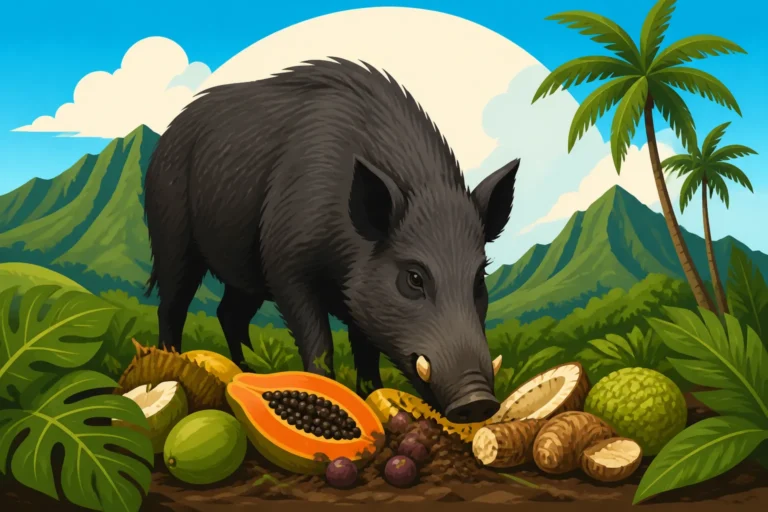
Hawaii's pigs are masters of adaptation, capable of thriving in an astonishing array of habitats, from the super-wet, tangled rainforests of the windward slopes to the dry, rocky kiawe flats on the leeward side. This versatility is a key reason for their widespread success. In the dense, wet forests, they create intricate tunnel systems through thick guava and ʻōhiʻa, allowing them to move silently and remain hidden. Here, they'll feast on fallen fruits, fern roots, and insects, a varied diet that supports their robust health. To really understand What Feral Pigs Eat in the Islands, you have to recognize their opportunistic nature.
On the drier sides of the islands, pigs become highly dependent on water sources, often traveling considerable distances to find small springs or seeps. They'll root extensively for succulent roots and bulbs, sometimes creating large disturbed areas that are a clear indicator of their presence. You can often tell a lot about pig activity by examining these disturbances; if you're keen to learn more, delve into Pig Wallows and What They Tell You. They've even learned to navigate difficult lava fields, using the cracks and vegetation pockets for cover and sustenance. This ability to exploit every ecological niche, whether it's high-elevation mamane-naio forests or lowland coastal shrublands, underscores their extraordinary resilience and the deep challenges they pose to managing Hawaii's fragile native ecosystems. They are truly built for survival in paradise.
The Ecological Impact and Management Challenges
The very traits that have made Hawaii's feral pigs so successful—their adaptability, rapid reproduction, and omnivorous diet—also make them one of the most destructive invasive species in the islands. Their presence has profound and often devastating effects on Hawaii's unique and fragile native ecosystems, necessitating ongoing and often complex management strategies, with hunting playing a crucial role.
Damage to Native Ecosystems
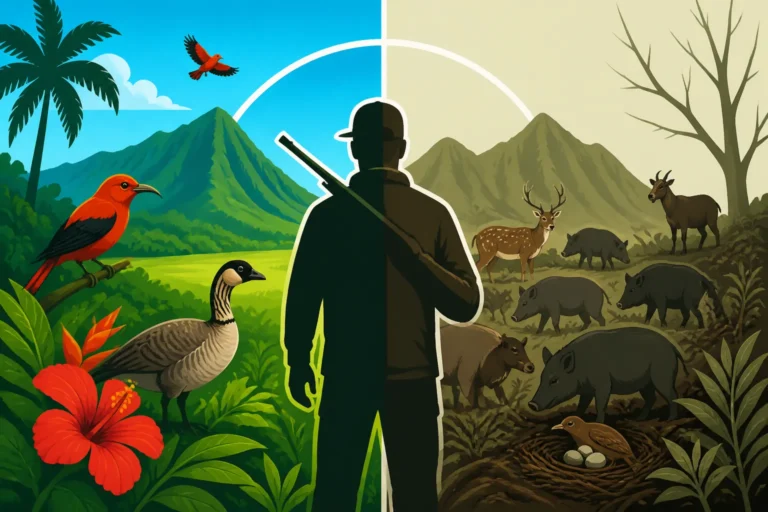
The impact of feral pigs on Hawaii's native environment is nothing short of catastrophic. Unlike mainland ecosystems that evolved with large mammals and natural disturbance, Hawaii's native flora and fauna are incredibly delicate and have no defenses against the rooting, trampling, and eating habits of pigs. As they root through the forest floor searching for food, pigs destroy native plant seedlings, exposing bare soil to erosion and creating prime areas for invasive weeds to take hold. This constant disturbance fundamentally alters the forest structure, preventing native plants from regenerating and outcompeting invaders. If you want to dive deeper into this, you should check out What Feral Pigs Do to Hawaii's Forests.
Beyond direct plant destruction, pigs also indirectly harm native bird populations by preying on their eggs and chicks, and by creating muddy wallows that become breeding grounds for mosquitoes, which, in turn, spread avian diseases like avian malaria to vulnerable native forest birds. Their wallowing compacts soil, reduces water infiltration, and contaminates streams, impacting the delicate balance of freshwater ecosystems. The sheer scale of their destructive activities means that vast tracts of pristine native forest can be degraded rapidly, leading to a cascade of negative effects that threaten endangered species and critical watershed areas.
The Role of Hunting in Control
Given the severe ecological damage caused by feral pigs, active management and population control are essential. While large-scale fencing and professional control efforts (like aerial culling) are employed in critical conservation areas, hunting plays a vital role in reducing pig numbers across broader landscapes and is a cherished tradition for many local residents. Without consistent hunting pressure, pig populations would rebound even more rapidly, exacerbating their destructive impact. Hunters contribute significantly to population control by removing animals and reducing breeding stock.
Various hunting methods are employed in Hawaii to target feral pigs. Traditional methods like Pig Hunting With Dogs in Hawaii are highly effective in the dense, tangled terrain where pigs often hide. This involves using bay dogs to locate and hold a pig, and often catch dogs to secure it. Other hunters prefer methods like Still-Hunting Pigs in Hawaii's Wet Forest, moving quietly and deliberately through the vegetation, or ambushing pigs near water sources or food patches. For those who brave the challenging topography, Hunting Pigs in Hawaii's Rainforest Gulches can be incredibly productive, as these steep, wet areas often provide ideal pig habitat. These efforts, combined with ongoing conservation initiatives, are critical in mitigating the relentless pressure feral pigs exert on Hawaii's unique and irreplaceable natural heritage.
Navigating Hunting Regulations and Opportunities
Hunting feral pigs in Hawaii is not just a recreational pursuit; it's an important conservation tool. But like all hunting activities, it comes with a set of rules and opportunities that vary by island and unit. Understanding these regulations and where you can hunt is crucial for a successful and legal outing. It takes a bit of homework, but the reward of a challenging hunt and delicious, wild-harvested meat is well worth it.
Public and Private Land Access
Access to hunting land in Hawaii falls into two main categories: public hunting units managed by the Department of Land and Natural Resources (DLNR), Division of Forestry and Wildlife (DOFAW), and private lands, which usually require landowner permission or a guided hunt. Public hunting units are found on most major islands, offering a range of terrain from dense rainforests to arid rangelands. These units often have specific open seasons, legal hunting days (often weekends or designated weekdays), and sometimes require check-in/check-out procedures. It's imperative to consult the current hunting regulations for the specific island and unit you intend to hunt, as these rules can change year-to-year. The GoHunt Hawaii website is an excellent resource for accessing maps, seasons, and checking in/out of public units, simplifying the bureaucratic steps before you hit the trail. For example, if you plan to hunt in a specific unit like the Ka'u Forest Reserve on the Big Island or the Makawao Forest Reserve on Maui, you'll need to confirm its current status and requirements through the official channels.
On private lands, opportunities often come through personal relationships with landowners, or by booking a guided hunt with an outfitter. Many private ranches have significant pig populations and offer hunts for a fee. These private land hunts can sometimes offer more flexibility in terms of dates and methods, but always require explicit permission. Whether public or private, always respect land boundaries and local customs. Knowing where you stand, geographically and legally, is the first rule of responsible hunting here.
Different Hunting Styles and Their Nuances
Hawaii's diverse terrain and the nature of feral pigs themselves lend themselves to a variety of hunting styles. For many, Pig Hunting With a Bay Dog and Catch Dog is the quintessential Hawaiian pig hunt. This method relies on specially trained dogs to locate and corner a pig, allowing the hunter to move in for a quick, humane dispatch, often with a knife or spear. It’s physically demanding, requiring hunters to navigate thick cover rapidly. This style is deeply rooted in local tradition and is incredibly effective in areas where pigs can be hard to spot.
For those who prefer a more solitary approach, spot-and-stalk or still-hunting with a rifle or bow is also popular. This involves carefully moving through the terrain, looking for fresh pig sign like rooting, tracks, and wallows, and then attempting to get within range for a shot. Early mornings and late evenings are often the best times, as pigs tend to be more active during cooler parts of the day. Reading pig sign is an art form; understanding things like Reading Pig Sign Along a Muddy Trail can tell you how recently a pig passed and in what direction. Additionally, understanding pig behavior, such as Why Feral Pigs Move Mostly at Night, can significantly impact your hunting strategy. Regardless of the method, ethical hunting practices, shot placement, and proper field care are paramount, especially in Hawaii's often hot and humid conditions.
| Characteristic | Polynesian Pig (Historical) | European Pig (Introduced) | Modern Feral Pig (Hybrid) |
|---|---|---|---|
| Origin | Southeast Asia (via Polynesian voyagers) | Europe (via Captain Cook/Western settlers) | Mix of Polynesian and European genetics |
| Size | Smaller, leaner | Larger, stockier | Variable, often robust and muscular |
| Coat Color | Primarily dark (black/dark brown) | Varied (black, white, spotted, red) | Highly variable (black, brown, ginger, spotted) |
| Tusk Size | Generally smaller | Variable, can be significant | Can develop large, impressive tusks |
| Reproduction Rate | Moderate | High | High; prolific breeders |
| Foraging Behavior | Less aggressive rooting | More aggressive rooting | Highly aggressive and destructive rooting |
| Habitat | Lowland forests, coastal areas | Adapted to various habitats | All habitats: wet, dry, high, low |
| Key Impact | Initial habitat disturbance | Increased size, rapid breeding | Severe ecological damage, widespread |
Disclaimer
Hunting in Hawaii requires adherence to all local, state, and federal regulations. This content is for informational purposes only and does not constitute legal advice. Always consult the Hawaii Department of Land and Natural Resources (DLNR) Division of Forestry and Wildlife (DOFAW) for the most current rules and regulations before planning any hunt. Safety should always be your top priority in the field.