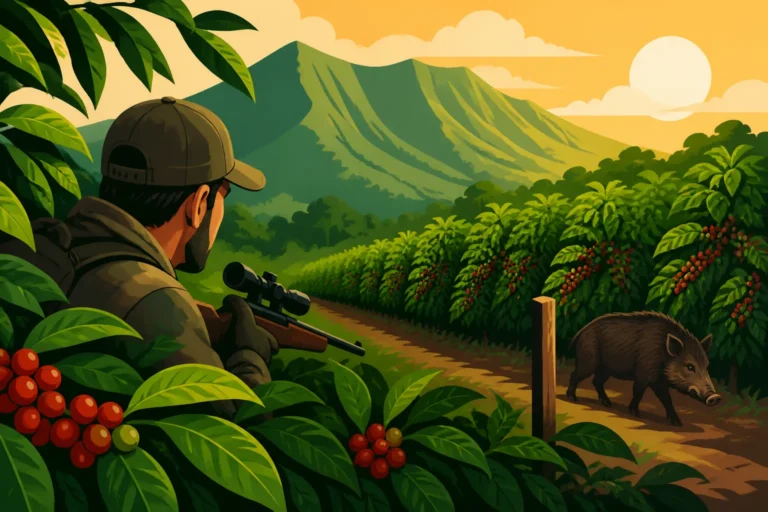
Hunting Hawaii’s Feral Goats
Hunting feral goats in Hawaii is an adventure unlike any other, often pushing hunters to their physical limits across some of the most unforgiving yet stunning landscapes imaginable. Many aspiring hunters face the daunting challenge of understanding the unique terrain, elusive nature of these animals, and the specific regulations that govern their pursuit in the islands. This comprehensive guide is designed to equip you with the knowledge, strategies, and insights needed to successfully and safely hunt Hawaii's feral goats, turning those frustrations into rewarding experiences.
Understanding Hawaii's Feral Goats
Feral goats (Capra hircus) are a widespread species throughout the Hawaiian Islands, thriving in diverse environments from arid coastlines to high-elevation rangelands. While they offer fantastic hunting opportunities, it’s crucial to understand their origins, ecological impact, and behavior to become a successful and ethical hunter.
History and Impact on the Islands
Feral goats are not native to Hawaii; they were introduced to the islands by Captain James Cook in 1778, along with other livestock like pigs. These animals quickly adapted to the new environment, and without natural predators, their populations exploded. Initially seen as a valuable food source, their numbers soon became a significant concern for the delicate Hawaiian ecosystems.
The impact of feral goats on Hawaii’s unique flora and fauna is profound and largely negative. They are highly destructive grazers and browsers, consuming a wide variety of native plants, including rare and endangered species found nowhere else on Earth. Their incessant feeding patterns strip vegetation, leading to severe soil erosion, especially on steep slopes and coastal cliffs. When heavy rains follow, these denuded areas are prone to massive landslides, further degrading habitat and polluting nearshore marine environments. They also compete with native species for resources, fundamentally altering the natural balance of these fragile island ecosystems. For these reasons, hunting feral goats is not just a recreational activity; it's a vital component of conservation efforts to protect Hawaii's precious natural heritage.
Biology and Behavior
Hawaii's feral goats are robust and incredibly adaptable, a testament to their survival in such varied terrain. They typically weigh between 50 and 150 pounds, though large billies can push over 200 pounds, especially those found in areas with consistent forage. You can learn more about what a Hawaii Feral Goat Weighs in a dedicated resource. Their coats vary widely in color and pattern, from solid blacks, browns, and whites to intricate spotted and patched designs, offering natural camouflage in their diverse habitats.
These animals are primarily herbivores, grazing on grasses, forbs, and browsing on shrubs and tree leaves. Their diet allows them to thrive in everything from the sparse, dry kiawe forests of the leeward sides to the more lush, but still challenging, uplands. Goats are highly social animals, typically forming herds that can range from a few individuals to dozens, led by an older, experienced nanny. However, mature billies often form bachelor groups or may be found solitary, especially during the rut. The rutting period can vary, but generally occurs in late fall and winter, which is when billies are most aggressive and visible, making them prime targets for hunters.
Identifying a billy from a nanny in the field is important for both management and trophy considerations. Billies typically have much larger, more impressive horns that are thicker at the base and often sweep back in a scimitar-like curve. Nannies, while still horned, have smaller, thinner horns. Behavioral cues also help: billies tend to be more solitary or in smaller, all-male groups, while nannies are usually with kids and other females. Pay attention to body size and muscle mass, as billies are generally more heavily built, particularly in the shoulders and neck.
Preferred Habitats in Hawaii
Feral goats are incredibly versatile when it comes to habitat, making them accessible in many different parts of Hawaii, but also requiring varied hunting tactics. You’ll find them in a broad spectrum of environments, each presenting its own unique challenges and rewards.
One of their most iconic habitats is the steep, rugged coastal cliffs that plunge into the Pacific. Here, they navigate precarious ledges with astonishing agility, feeding on sparse vegetation. Hunting Goats on a Sea Cliff Safely is an article you’ll want to review before attempting these challenging areas. The sheer drops and unstable footing demand extreme caution and specialized skills, but these areas often hold some of the biggest, most isolated billies. These high-risk, high-reward spots require excellent physical conditioning and a keen understanding of wind patterns and goat movement along the pali (cliffs).
Further inland, especially on islands like Kauai and the Big Island, goats inhabit deep canyon country. These intricate networks of gulches and ridges provide ample cover and escape routes, making them incredibly difficult to hunt. The goats use the steep walls and dense vegetation for bedding during the day and move to more open areas to feed at dawn and dusk. Hunting Goats in a Kauai Canyon, for instance, requires patience and a good understanding of thermals, as the wind often swirls unpredictably within these deep cuts in the landscape.
You'll also encounter them in the dry, rocky forests dominated by kiawe and other drought-resistant plants, particularly on the leeward sides of the islands. These areas often feature lava flows and scattered cinder cones, where goats find shelter and browse. On the Big Island, for example, they can be found across vast lava fields, moving surprisingly fast over the rough terrain. Additionally, they often range into more open agricultural lands or neglected pastures, especially if there's sufficient cover nearby. Their adaptability means that even if one area is hammered by hunting pressure, they can quickly relocate to a less accessible part of their range, making consistent scouting vital.
Essential Gear for Hawaii Goat Hunting
Successful goat hunting in Hawaii is as much about preparation as it is about skill. The diverse and often extreme terrain demands specific gear choices to ensure your safety, comfort, and effectiveness in the field. Skimping on quality here can mean the difference between a successful hunt and a miserable, or even dangerous, outing.
Weapon Choices and Considerations
The weapon you choose for goat hunting in Hawaii will largely depend on the specific unit you plan to hunt, the terrain, and your personal preference. Hawaii's regulations are quite clear on legal weapons, and it's essential to check the current rules for your chosen hunting unit, as they can vary.
For rifle hunters, calibers typically range from .243 up to .30-06 or .308. Goats, while not heavily built, are incredibly tough, and shot placement is paramount. Often, shots can be long, particularly in open, arid country or when glassing a distant ridge, so a flat-shooting caliber is advantageous. You'll want a rifle that you're proficient with, capable of consistent accuracy at extended ranges. Consider a scope with good light-gathering capabilities and a ballistic reticle or turret system for dialing in those longer shots common on the steep, open slopes. Keep in mind the importance of a reliable sling for carrying your rifle across miles of rough terrain.
Archery hunting for goats is an exhilarating challenge. Bowhunters should use compound bows or recurves with sufficient draw weight to generate enough kinetic energy for a clean kill. A minimum draw weight of 40 pounds is generally recommended, but checking specific regulations for big game is crucial. Arrow setups should include sharp, durable broadheads (fixed blade or mechanical, depending on personal preference and legal allowances) that can penetrate bone if necessary. Shot distances for archery are usually much closer, requiring stealthy spot-and-stalk tactics. Bowhunting Hawaii's Long Archery Windows often align with goat seasons, offering ample opportunity for those who prefer the stick and string. Crossbows are a point of discussion; check if Are Crossbows Legal in Hawaii? for the latest rules.
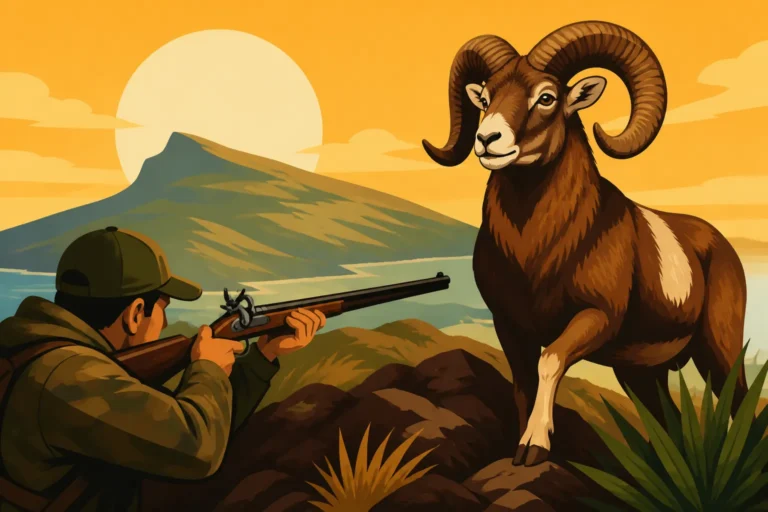
Muzzleloaders also present a unique challenge and are legal in many units. If you're going the muzzleloader route, a .50 caliber or larger is typically recommended. Keeping powder dry in Hawaii's sometimes humid or rainy conditions can be a challenge, so proper equipment and sealing are important. Muzzleloading in Hawaii's Humidity requires extra attention to detail. Regardless of your weapon choice, practice, practice, practice! Know your rifle's capabilities, your bow's trajectory, and your own effective range.
Optics and Rangefinding
When hunting Hawaii's feral goats, especially in vast, open, or broken terrain, quality optics are not just helpful; they're absolutely essential. Without them, you'll spend far too much time walking and far too little time hunting effectively.
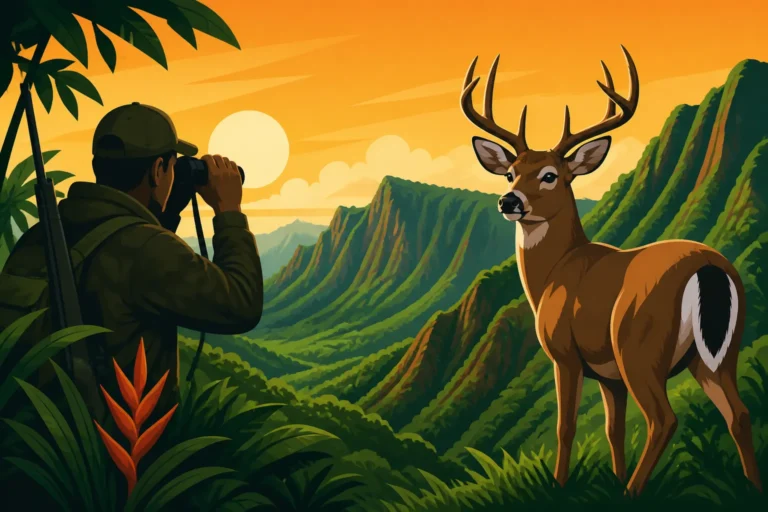
Binoculars are your primary scouting tool. A good pair of 10×42 or 12×50 binoculars will allow you to systematically pick apart distant hillsides, identify herds, and spot individual animals bedded in sparse cover. Look for models that offer excellent light transmission for those crucial early morning and late evening hours when goats are most active. You'll be spending a lot of time behind glass, so comfort and a wide field of view are also important. Consider a binocular harness to keep them secure and easily accessible while navigating steep slopes.
A spotting scope, though heavier, can be invaluable for confirming the sex and quality of a goat at extreme distances, saving you precious time and energy on unnecessary stalks. A 60-80mm objective lens with 20-60x magnification is a versatile choice. This is particularly useful when Glassing a Hawaii Coastline for Goats, where animals might be hundreds or even thousands of yards away across a gulch or on a distant cliff face. It allows you to make an informed decision before committing to a grueling approach.
Finally, a reliable rangefinder is non-negotiable. Hawaii's terrain is often steep and broken, leading to deceptive distances. A goat that looks like a 200-yard shot might actually be 300 yards due to elevation changes, or vice-versa. A rangefinder with angle compensation is highly recommended, as it will give you the "shoots-like" distance, which is critical for accurate ballistic calculations on steep upslope or downslope shots. This precision can mean the difference between a clean kill and a missed opportunity.
Footwear, Clothing, and Backpacks
The rugged and varied terrain of Hawaii demands serious attention to your footwear, clothing, and packing system. The wrong gear here can quickly turn an exciting hunt into a miserable experience, or worse, put you in a dangerous situation.
Your boots are perhaps the most critical piece of equipment. You'll be traversing everything from sharp, abrasive lava fields that can shred lesser soles, to slippery, wet grass on steep hillsides, and loose scree. Invest in high-quality, sturdy hiking boots with excellent ankle support and aggressive traction. Waterproofing is a huge plus, as you can encounter unexpected rain or dewy conditions even in dry areas. Break them in thoroughly before your hunt to avoid painful blisters, which can quickly end your trip. Walking Rough Lava Without Wrecking Your Boots highlights the specific challenges of volcanic terrain and why durable footwear is paramount.
For clothing, think layers and durability. Hawaii’s weather can be notoriously unpredictable, shifting from blazing sun to sudden downpours, often within minutes. Lightweight, breathable long-sleeved shirts and pants will protect you from the sun, thorny vegetation like kiawe, and insects. Quick-drying synthetic fabrics are far superior to cotton, which stays wet and can chill you. A good quality rain jacket and pants are essential, even if the forecast looks clear. Blaze orange is often required in Hawaii's hunting units for safety; make sure you have a vest or hat that meets the state's requirements. Remember that temperatures can drop significantly at higher elevations, so a warm mid-layer or jacket might be necessary depending on your unit and time of year.
Your backpack needs to be comfortable and robust enough to handle the weight of water, food, extra layers, and potentially pack out meat. For day hunts, a 25-45 liter pack is usually sufficient. If you anticipate packing out an animal, ensure it has a strong frame and good compression straps. Consider a pack with an external frame or a meat shelf for larger animals, as getting a Pig Out of a Hawaii Gulch or similar large game can be incredibly challenging. Hydration is key in Hawaii's heat; look for packs that accommodate a hydration reservoir or have ample pockets for water bottles. A small first-aid kit, headlamp, knife, and navigation tools (GPS or map and compass) are also non-negotiable additions to your pack.
Hunting Strategies for Feral Goats
Feral goats are masters of their environment, combining incredible agility with a keen sense of their surroundings. To consistently find and harvest them, you'll need a range of strategies tailored to Hawaii's diverse landscapes and the goats' inherent wariness.
Spot and Stalk in Open Country
The spot-and-stalk method is arguably the most effective and widely used strategy for hunting feral goats in Hawaii, especially in the more open, arid, and broken terrain that they often inhabit. This technique demands patience, keen observation skills, and disciplined movement.
It all begins with extensive glassing. Find a vantage point that offers expansive views of goat country – a ridge, a hill, or a high lava outcropping. Systematically scan every rock, every shadow, and every patch of vegetation with your binoculars and spotting scope. Goats often blend surprisingly well with their surroundings. Look for movement, distinct shapes (the curve of a horn, a horizontal backline), or color contrasts. Pay particular attention to shaded areas on hot days, or sunny spots on cooler mornings, and areas near water sources in dry country. Why Hawaii Goats Move at First Light is a crucial piece of knowledge here; they are often most active and visible at dawn, feeding before the day's heat drives them to seek shelter.
Once you’ve spotted a goat or a herd, the real challenge begins: the stalk. This is where your ability to read the terrain, wind, and animal behavior comes into play. Analyze the wind direction meticulously; goats have an excellent sense of smell, and a shifting thermal can quickly give away your position. Plan your approach to stay downwind, using natural contours, kiawe thickets, or lava formations for concealment. Spot-and-Stalk Tactics on Open Country emphasize slow, deliberate movement. Avoid skylining yourself on ridges, and move only when the goats are looking away or have their heads down feeding. Be prepared for long, arduous stalks, often involving crawling over rough ground or making wide detours to maintain cover. Getting into shooting position without alerting them is the ultimate test of your stealth and fieldcraft.
Hunting Goats on Coastal Cliffs and Steep Terrain
Hunting goats on Hawaii’s coastal cliffs and incredibly steep, pali (cliff) country is an experience that combines breathtaking scenery with extreme physical demands and inherent risks. This isn’t a hunt for the faint of heart or those unprepared for serious exposure.
Safety must be your absolute top priority. These areas often feature loose rock, crumbling edges, and sheer drops of hundreds of feet. Always hunt with a partner, inform someone of your exact route, and consider carrying a satellite communication device like a Garmin inReach, as cell service is usually non-existent in these remote areas (No Cell Signal on a Hawaii Hunt). Proper footwear with excellent ankle support and aggressive tread is non-negotiable. Avoid attempting these hunts in wet or rainy conditions, as slippery rock and mud dramatically increase the risk of a fall. Hunting Goats on a Sea Cliff Safely is not just a suggestion; it's a requirement for survival. Be mindful of falling rocks dislodged by goats above you or by your own movements.
Goats on these cliffs are incredibly agile and seem to defy gravity, moving effortlessly across ledges that would give a mountain climber pause. They utilize every crease and crevice for cover, making them blend seamlessly into the rock face. Your best strategy is often to glass from a distance, identifying trails and key bedding areas. Then, plan an approach from above or below, using the contours of the cliff to your advantage. Hunting a Pali Face From Below can offer concealment, allowing you to slowly work your way up to eye level with animals. Patience is key; sometimes, the best approach is to wait for goats to move into a more accessible position, rather than forcing a dangerous stalk. Be prepared for steep uphill and downhill shots, and always have a secure footing before taking a shot. Retrieval can be as dangerous as the stalk itself, so always consider how you will recover a downed animal before you pull the trigger.
Canyon Hunting Tactics
Hawaii's islands are crisscrossed with numerous canyons and gulches, from shallow depressions to deep, winding chasms carved by ancient rivers and erosion. These intricate drainages are prime habitat for feral goats, offering them shelter, water, and escape routes. Hunting these areas requires a distinct set of tactics compared to open country or cliff hunting.
Canyon hunting is often a game of patience and understanding thermals. In the morning, cooler, heavier air will flow downhill, carrying your scent into the canyon. As the sun warms the slopes, the air currents reverse, and thermals will begin to rise. This constant shift means you need to be acutely aware of wind direction, often moving in short bursts and then pausing to re-evaluate. Hunting Goats in a Kauai Canyon, for example, demands this kind of nuanced understanding, as the deep and twisting geography can create highly localized wind currents that differ significantly from the general atmospheric flow. It's often best to hunt these areas during periods of stable winds, if possible, or time your movements to coincide with favorable thermal shifts.
Goats will often bed on sheltered ledges or in dense pockets of vegetation within the canyon walls during the middle of the day, seeking shade and security. At dawn and dusk, they will move more freely, grazing on the slopes or near the canyon bottom. Your strategy should involve carefully glassing these areas from a high vantage point, looking into the canyon, or slowly still-hunting along the rim, peering into likely bedding areas. Be prepared for close-range encounters in the thicker pockets of brush, and longer shots if an animal is spotted across the canyon. Always consider your shot angle; steeply angled shots into a canyon can be tricky. Getting a Pig Out of a Hawaii Gulch, though about pigs, uses similar principles for animal retrieval from steep, confined spaces. When stalking, use the broken terrain and dense brush to mask your movement and sound. Often, the best approach is to enter a canyon and work your way up or down, paying close attention to fresh sign like droppings, tracks, and browse marks.
Key Hawaii Goat Hunting Locations
Hawaii offers a variety of locations for goat hunting, each with its own character and challenges. Knowing where to focus your efforts and understanding the unique features of each area will significantly increase your chances of success.
Public Hunting Units by Island
Feral goats are found on several of the Hawaiian Islands, with the most significant populations and hunting opportunities generally occurring on Hawaii Island (the Big Island), Maui, and Kauai. Understanding Hawaii's Hunting Units and How They Work is the first step, as specific regulations, access rules, and season dates vary considerably by unit and by island.
On Hawaii Island, goats can be found in a range of units, often overlapping with mouflon sheep habitat in the higher, drier regions or in the rugged coastal areas. Units like Mauna Loa's upper slopes or some of the drier Kau Forest Reserve areas might hold goats. The Puu Anahulu Game Management Area is well-known for Axis deer and sometimes holds goats. The key is that many Big Island units offer year-round hunting for goats with a valid license, making it flexible for residents and visitors alike. Hunting Hawaii's Game Management Areas on the Big Island provides more specific details about these public lands.
Maui also offers goat hunting, particularly on the arid, rugged slopes of Kahikinui and in parts of the Kanaio region. These areas are characterized by vast, dry plains, steep gulches, and dense kiawe forests. Hunters often spot goats from vehicle accessible roads and then plan a long, challenging stalk. Maui's public hunting units can be found through the Department of Land and Natural Resources (DLNR) Division of Forestry and Wildlife (DOFAW) resources.
On Kauai, feral goats are abundant, especially in the western and southwestern regions, including the dramatic Waimea Canyon. Units like Kekaha Game Management Area and the Na Pali-Kona Forest Reserve are prime goat habitat. The deep canyons and steep, rocky terrain here are ideal for goats, but also extremely challenging for hunters. Hunting Goats in a Kauai Canyon is a specific article addressing the unique difficulties of this terrain. Kauai typically has designated weekend hunt dates for goats, often requiring a permit.
Molokai and Lanai also have populations of feral goats, but access is often limited to private lands or specific drawn hunts. Always check the latest Hawaii Game Mammal Seasons and unit-specific announcements from DOFAW for the most current information. The GoHunt website (GoHuntHawaii.com) is an excellent resource for checking regulations, unit maps, and applying for permits and licenses.
Private Land Opportunities
While Hawaii boasts extensive public hunting land, securing access to private ranches and properties can open up some truly exceptional goat hunting opportunities, often in areas with less pressure and potentially larger animals. Many private landowners view feral goats as a nuisance due to the ecological damage they cause, making them amenable to hunters.
The process for Getting Onto Hawaii Private Land usually involves direct communication with the landowner or booking through a local outfitter. Some large ranches offer guided or unguided day hunts for a fee, which can range from a few hundred dollars to over a thousand, depending on the services included and the quality of the animals. These private land hunts often provide better access, sometimes allowing vehicle use deeper into hunting areas, and can offer a more controlled hunting experience compared to busy public units. Hawaii Private Ranch Hunting Access details the nuances of these opportunities.
Outfitters often have established relationships with multiple ranches across different islands, providing hunters with diverse options. They can handle all the logistics, from securing permits (where required) to providing guides, transportation, and even accommodations. For non-residents or those unfamiliar with Hawaii's unique hunting challenges, a guided hunt on private land can be a fantastic way to maximize your chances of success and gain invaluable local knowledge. Always ensure that any private land agreement is clearly understood regarding access, fees, bag limits, and any specific rules the landowner might have. Ethical behavior and respect for private property are paramount to maintaining these valuable hunting relationships.
Understanding Habitat-Specific Challenges
Hunting feral goats in Hawaii isn't a one-size-fits-all endeavor; the animals adapt to their specific habitats, and so must your approach. Understanding these habitat-specific challenges is key to effective planning and execution.
For instance, hunting in Hawaii's Canyon Country presents unique tactical puzzles. The steep, broken terrain can make judging distances difficult, and shots often involve extreme angles. Wind patterns in gulches are notoriously fickle, with thermals rising and falling unpredictably, making scent control a constant battle. Goats in these areas are adept at using the canyon walls for cover, often bedding on shaded ledges or in dense brush where they are nearly invisible. Hunters need to be prepared for vertical climbs and descents, and slow, meticulous glassing is crucial. Retrieval of a downed animal from the bottom of a deep canyon can be an arduous, multi-hour task, potentially requiring a dedicated packing plan.
Conversely, hunting in dry, open plains or lava fields, common on the leeward sides of the islands, offers different challenges. While visibility might be excellent for glassing, cover for stalking can be minimal. Goats here are often more skittish due to greater exposure, requiring extremely long stalks and careful use of sparse terrain features like kiawe bushes or lava formations. The heat can be intense, and water sources are few and far between, impacting both goat movement and hunter endurance. The rough, abrasive lava can quickly wear out boots and test even the toughest hunter. How Drought Moves Hawaii Game Animals is a critical read, as dry conditions heavily influence where goats will congregate (often near remaining water sources) and their general activity patterns.
Understanding these environmental nuances allows you to choose appropriate gear, develop tailored strategies, and mentally prepare for the specific physical and logistical demands of your chosen hunting area. It's about respecting the land and adapting your methods to its distinct challenges.
Regulations, Permits, and Logistics
Navigating the administrative side of hunting in Hawaii can be as challenging as the hunt itself, especially for first-timers or non-residents. Understanding the regulations, obtaining the correct permits, and planning your logistics carefully are crucial steps to a legal and successful hunt.
Obtaining Licenses and Permits
Before you even think about stepping foot in Hawaii's goat country, you need to ensure you have all the necessary paperwork. This starts with a valid Hawaii hunting license. For residents, Hawaii Resident Hunting License Options are available at different price points, usually for a one-year period. Non-residents will need to obtain a Hawaii Nonresident Hunting License Option, which typically costs more but grants the same hunting privileges.
You can purchase your hunting license through the State of Hawaii, Department of Land and Natural Resources (DLNR) Division of Forestry and Wildlife (DOFAW) website, or often through their partners. A convenient way to do this is through the GoHunt Hawaii portal (GoHunt.Hawaii.gov), which streamlines the process for both residents and non-residents, allowing you to purchase licenses, apply for permits, and get information all in one place. Make sure to buy your license well in advance of your trip to avoid any last-minute delays.
In addition to the basic hunting license, Hawaii operates a permit-tag system for certain game animals and units. For feral goats, while often not requiring a specific "tag" like Axis deer on Lanai, many public hunting units still require a no-cost entry permit. You'll need to check in and out of these units. How Hawaii's Permit-Tag System Works provides a broader overview of this system. It's imperative to check the specific regulations for the island and unit you plan to hunt, as these can change annually. Some specific areas, particularly those with limited access or special management objectives, might require applying for a drawn hunt or special permit.
Finally, all hunters in Hawaii, regardless of residency status, must complete a hunter education course unless they qualify for an exemption. Hawaii Hunter Education Requirements detail what’s needed. Non-residents who have completed an equivalent hunter education course in another state or country can often apply for a Letter of Exemption from DOFAW. Make sure to carry your hunting license and any required permits or exemptions with you at all times while in the field.
Season Dates and Bag Limits
Understanding Hawaii's hunting seasons and bag limits for feral goats is critical for planning your trip and ensuring a legal harvest. Unlike some mainland species, feral goats often have very generous, and sometimes year-round, seasons in many units, reflecting their status as an invasive species.
Many public hunting units across Hawaii Island, Maui, and Kauai offer year-round hunting for feral goats. This extended season provides significant flexibility for hunters, allowing them to plan their trips around other commitments or preferred weather conditions. However, it's vital to remember that "year-round" can still have nuances, with specific units or zones having temporary closures or weekend-only access. Always consult the most current Hawaii Game Mammal Seasons regulations provided by DOFAW. These are typically updated annually and published on the GoHunt Hawaii website.
Bag limits for feral goats are also usually quite liberal, often allowing for "unlimited" take in many units, or at least a very generous daily limit. This reflects the state's ongoing efforts to control populations and mitigate their environmental impact. For example, some units might state "no bag limit" or "How Many Goats You Can Take in a Day," implying you can harvest as many as you ethically can. However, even with liberal limits, always confirm the specific rules for your chosen unit. While some units allow year-round access, others, especially on islands like Kauai, might be restricted to specific weekend hunt dates, which often require obtaining an online permit prior to hunting. Additionally, be aware that Hawaii's Weekend and Holiday Hunting Rules may dictate when public land can be accessed, often concentrating hunting pressure on those days. Always check the DOFAW website or GoHunt portal for unit-specific schedules and any last-minute changes or announcements.
Field Care and Transport
Harvesting a goat in Hawaii is only half the battle; proper field care and understanding the rules for transporting your meat are essential, especially given Hawaii's warm climate and inter-island travel considerations.
Once you’ve successfully harvested a goat, immediate field dressing is paramount. Hawaii's tropical temperatures mean meat can spoil rapidly if not cooled quickly. The goal is to get the hide off and the guts out as soon as possible to allow the carcass to cool. Skin the animal, quarter it if necessary, and remove all internal organs. If you're deep in a gulch or remote area, Packing Meat Out of a Hawaii Gulch will be a serious physical undertaking. Having a sturdy game bag to protect the meat from flies and dirt is highly recommended. For longer hauls, consider using a game cart or having a plan for multiple trips.
Cooling the meat immediately after processing is crucial. If you’re hunting in a remote area without quick access to a cooler, try to hang the quarters in a shaded, breezy spot, off the ground, to allow air circulation. However, the best practice is to get the meat into a cooler with ice as soon as possible. Drain the meltwater regularly and replenish the ice. For multi-day hunts, this becomes a critical part of your daily logistics.
Transporting game meat in Hawaii, particularly between islands, requires adherence to specific agricultural regulations. You can transport meat between islands as personal baggage, but it must be properly packaged, labeled, and usually declared. The state agricultural department may have specific requirements regarding inspection or documentation. Always check the latest Hawaii Rules on Transporting Game Meat and Shipping Game Meat Between Hawaii Islands, especially if you plan to fly your harvest home or send it to another island. Generally, meat should be frozen solid and packed in an insulated cooler or container. Be aware that most airlines have specific policies on flying with game meat, so check with your carrier in advance.
| Island | Typical Goat Habitat | Season Length (General) | Bag Limit (General) | Access Type (General) |
|---|---|---|---|---|
| Hawaii Island | High-elevation rangelands, dry lava flows, coastal areas | Year-round in many units | Unlimited in many units | Public lands, some private outfitters |
| Maui | Arid leeward slopes of Haleakala, deep gulches, kiawe forests | Year-round in many units | Unlimited in many units | Public lands, private ranches/outfitters |
| Kauai | Waimea Canyon, Na Pali-Kona region, Kekaha uplands | Seasonal (weekend hunts) | Often 2-3 per day (check specific unit) | Public units, some private access |
| Molokai | West End dry forests, deep valleys | Limited (private land focus) | Check with landowners/outfitters | Primarily private land, some limited public |
| Lanai | Dry plains, deep gulches, cooperative areas | Limited (private land focus) | Check with landowners/outfitters | Primarily private land, some limited public |
Note: This table provides general information. Always confirm specific season dates, bag limits, and access rules with the Hawaii DLNR DOFAW or the GoHunt Hawaii website before your hunt.
Safety and Ethics in Hawaii Goat Hunting
Hunting feral goats in Hawaii offers an unparalleled experience, but the unique environment demands an unwavering commitment to safety and ethical conduct. These are not just guidelines; they are fundamental principles for respecting the land, the animals, and fellow outdoor enthusiasts.
Navigating Challenging Terrain Safely
Hawaii's goat country is breathtakingly beautiful but can also be incredibly dangerous. The terrain often involves steep, unstable slopes, jagged lava fields, and dense, thorny vegetation. Prioritizing safety is paramount.
Firstly, never hunt alone in truly challenging terrain. Always have a hunting partner, and if that's not possible, ensure someone knows your exact route, anticipated return time, and contingency plans. Carry a reliable form of communication, such as a satellite messenger (Garmin inReach, Spot X), as No Cell Signal on a Hawaii Hunt is a common reality in remote areas. A well-stocked first-aid kit is essential for dealing with cuts, sprains, and other common injuries encountered on rough ground.
Footing is a constant concern. Loose scree, wet grass, and crumbly rock faces are common hazards, especially on steep ascents and descents. Good quality, high-ankle support boots are crucial for stability and preventing sprains. Walking Rough Lava Without Wrecking Your Boots is not just about boot durability; it's about personal safety. Test every step, especially on descents, and use hiking poles for added balance. Be mindful of falling rocks, both from animals above you and those you might dislodge yourself. When traversing cliffs or extremely steep sections, maintain three points of contact (two feet, one hand, or two hands, one foot) whenever possible. Know your physical limits, and don't push yourself into situations where a fall could be catastrophic. Fatigue can lead to poor judgment, so stay hydrated and nourished throughout your hunt.
Ethical Hunting Practices
Ethical hunting in Hawaii extends beyond simply following the rules; it's about upholding a deep respect for the animals, the land, and the hunting tradition itself. Given the unique context of hunting introduced species for conservation, ethics take on an even more profound meaning.
A core tenet of ethical hunting is to ensure a clean, humane kill. This means taking only shots within your effective range, with a clear understanding of your weapon's capabilities and the animal's anatomy. Practice regularly to ensure your proficiency, especially for angled shots or those at varying distances common in Hawaii's terrain. A wounded animal that escapes often suffers unnecessarily, so make every effort to place your shot accurately. After a shot, always wait a sufficient amount of time before pursuing, and then follow up diligently until the animal is recovered. Retrieving every animal you shoot is a non-negotiable ethical obligation.
Respect for the land and other users is equally important. Pack out everything you pack in, leaving no trace of your presence. This includes spent shell casings, food wrappers, and any other trash. Be mindful of private property boundaries and always adhere to Hawaii's Trespass and Closed Area Rules. When encountering other hunters or hikers, extend courtesy and give them ample space. Furthermore, adhere strictly to all Hawaii Blaze Orange and Safety Rules, which are designed to protect everyone in the field. Remember that while feral goats are an introduced species, they are still living creatures deserving of a quick and clean harvest. Your actions reflect not only on you but on the entire hunting community in Hawaii.
Conservation and Impact of Hunting
Hunting feral goats in Hawaii is intrinsically linked to the broader conservation efforts of the islands. Unlike hunting native game on the mainland, hunting introduced species in Hawaii serves a critical ecological purpose: protecting the unique and fragile native ecosystems.
As discussed, feral goats are highly destructive invasive species. Their unchecked populations lead to severe overgrazing, causing widespread soil erosion, the destruction of native plant species (many of which are endangered and found nowhere else), and degradation of critical watershed areas. By removing feral goats through hunting, you are directly contributing to the recovery and health of Hawaii’s native forests and landscapes. This is why bag limits are often liberal and seasons are extensive, as the state actively encourages hunters to help manage these populations.
Understanding that Why Every Hawaii Game Animal Was Introduced helps put this into perspective. None of Hawaii’s game mammals are native; they were all brought to the islands by humans. This makes hunting them a vital tool in the conservation manager's toolkit. It’s a pragmatic approach to mitigate the damage caused by these animals while also providing a recreational opportunity for hunters. Your participation helps reduce browsing pressure on vulnerable plants, allows native vegetation to regenerate, and ultimately supports the overall biodiversity of the islands. This ecological rationale underpins the hunting culture in Hawaii, making every goat harvested a contribution to the islands' natural heritage.
Disclaimer
The information provided in this guide is for general informational purposes only and is not intended as legal advice. Hunting regulations in Hawaii are subject to change by the Department of Land and Natural Resources (DLNR) Division of Forestry and Wildlife (DOFAW). Hunters are solely responsible for verifying all current licenses, permits, season dates, bag limits, and specific unit rules before engaging in any hunting activity. Always prioritize safety, adhere to all laws, and practice ethical hunting.