Hunting Near Pohakuloa Training Area
Hunting near large military installations like the Pohakuloa Training Area (PTA) on Hawaii Island can feel a bit daunting. You’re often wondering if it’s even allowed, what the rules are, and how military operations might impact your hunt. This guide is here to demystify hunting opportunities in the public lands adjacent to PTA, helping you understand the unique challenges and incredible rewards of pursuing game in this high-elevation, rugged landscape.
Understanding Pohakuloa Training Area's Impact on Hunting
The Big Island is home to some truly vast and wild landscapes, and smack dab in the middle of it all sits the Pohakuloa Training Area (PTA). It's a massive, critical facility for military training, covering a significant portion of the saddle between Mauna Kea and Mauna Loa. As hunters, it's easy to get confused about how this huge military zone affects our access and opportunities.
What is Pohakuloa Training Area?
Let's be clear upfront: Pohakuloa Training Area itself is a U.S. Army installation, not a public hunting unit. It's used for live-fire training, maneuvers, and other military exercises, and public access is strictly controlled, often restricted entirely for safety. Spanning well over a hundred thousand acres, it's one of the largest military training areas in the Pacific. Its primary purpose is to provide realistic training environments for ground, air, and naval forces. While it's crucial for defense, its sheer size and active use mean hunters need to be extra vigilant about where they are and what's happening around them. The terrain within PTA is incredibly diverse, from vast lava flows to cinder cones and scattered forests, which naturally hold game. However, that game is off-limits to most public hunters.
The Boundaries and Adjacent Hunting Units
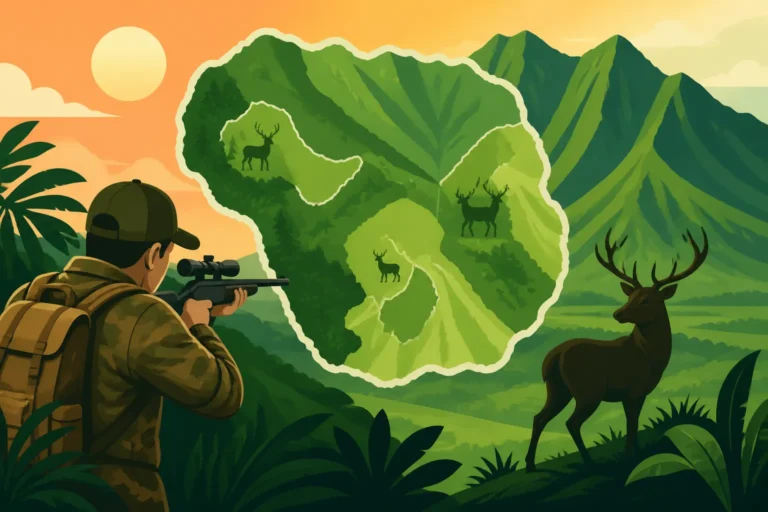
The real impact of PTA on hunting comes from its extensive boundaries. Imagine drawing a big, irregular shape across the middle of the Big Island – that's PTA. This means that several public hunting units, managed by the Department of Land and Natural Resources (DLNR), Division of Forestry and Wildlife (DOFAW), butt right up against its perimeter. These adjacent units are where the hunting opportunities lie. We're talking about areas that are often high elevation, arid, and characterized by volcanic rock and sparse vegetation, but they hold significant populations of feral pigs, feral goats, and especially Mouflon sheep.
Navigating these boundaries is paramount. A hunter's mistake, even a small one, could lead to trespassing on active military land, which is a serious offense and extremely dangerous. Always check the official DOFAW unit maps and cross-reference with digital mapping tools. Knowing exactly where the public land ends and military land begins isn't just a suggestion; it's a necessity for your safety and to stay legal.
Game Movement Near Training Area Edges
Animals don't read maps, but they certainly react to pressure, noise, and changes in their environment. The presence of PTA, with its periodic military activities, can definitely influence how game animals behave in the surrounding public units. For instance, during active training, the noise of helicopters, vehicles, and especially live-fire exercises can push animals out of PTA and into adjacent public lands. Conversely, if hunting pressure is high in a public unit, game might temporarily retreat into the perceived safety of the restricted military zone.
This dynamic movement means that the edges of PTA can sometimes be excellent places to find game, particularly if you understand the recent activity patterns. Animals might use the less disturbed fringe areas within public land for bedding, feeding, or watering, especially if those areas offer thick cover or less human intrusion than the general public hunting grounds. Keep an eye out for fresh tracks, scat, and browse signs along these transitional zones. Reading Axis Deer Sign in Dry Country (though we're talking about Mouflon and pigs here, the principle of reading sign in dry country applies) is crucial for understanding these patterns.
Public Hunting Units Bordering Pohakuloa
While PTA itself is off-limits, the Big Island boasts a number of incredible public hunting units that directly border this massive training area. These are the places where you can actually put boots on the ground and pursue game. It’s rugged country, for sure, but that’s part of the adventure.
Key Units on the Saddle Road Corridor
The Saddle Road (officially Daniel K. Inouye Highway) runs right through the heart of the Big Island, connecting Hilo on the east to Kona on the west, and it essentially bisects the area where PTA sits. This highway provides access points to several key public hunting units that are either adjacent to or influenced by PTA.
For example, large portions of the Mauna Kea Game Management Area (GMA) and the Kaohe Game Management Area lie north and south of the Saddle Road, respectively, and border PTA. These units are renowned for their Mouflon sheep populations, as well as feral pigs and goats. Unit A on Mauna Kea, specifically, is a well-known hunting ground for Mouflon, and parts of it are right up against PTA's northern boundary. You'll find yourself navigating vast lava fields, scattered mamane-koa forests, and cinder cones. The animals here are tough, and so is the hunting. Hunting Mouflon in Mauna Kea's Thin Air is a testament to the challenges and rewards of this elevation.
Further down, toward Mauna Loa's slopes, you have other areas that might not directly touch PTA but are certainly part of the broader landscape influenced by it. These units often feature even more expansive lava flows and high-elevation grasslands. Success in these areas depends heavily on knowing the terrain and understanding how game utilizes it. Hunting Mauna Loa's Upper Slopes gives you a sense of what to expect in terms of elevation and landscape.
Access Challenges and Considerations
Hunting near PTA means you're operating in a dynamic environment. Access can be a significant hurdle. Many of the roads leading into these public units are unpaved, rough, and require a high-clearance 4WD vehicle, especially after rain. It’s not uncommon to encounter deeply rutted tracks, sharp lava rocks that are merciless on tires, or loose cinder. Always go prepared for self-rescue or with another vehicle.
Beyond the terrain, the biggest access challenge comes from military operations. PTA frequently conducts live-fire exercises, and for safety reasons, they will sometimes close adjacent public access roads or even entire hunting units that are in the potential impact zone. These closures can be announced with little notice, so checking DOFAW's website and PTA's public advisories is critical before every hunt. You don't want to drive for hours only to find a locked gate or a "Danger Area" sign. Remember that Hawaii Road Access and 4WD Requirements often apply to these remote areas.
Understanding "No Hunting" Zones and Buffer Areas
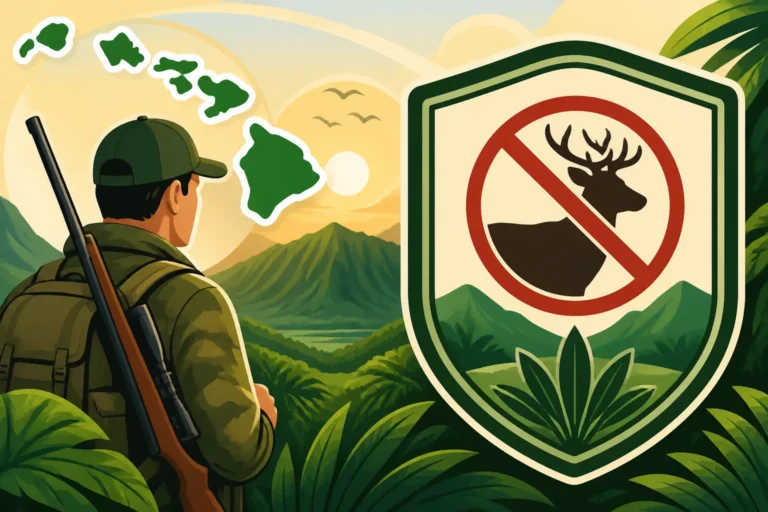
This is where clarity is your best friend. Because of the inherent dangers of live ordnance and military movements, PTA maintains strict "no entry" zones. Sometimes, DOFAW will also designate buffer areas on public land immediately adjacent to PTA where hunting might be restricted or prohibited altogether. These aren't always intuitively marked on the ground, so reliable mapping tools are essential.
I can't stress this enough: invest in a good GPS unit or a reliable mapping app like onX Hunt for your smartphone. Download the offline maps before you lose cell signal, which is a near certainty in these remote parts of the Big Island. Use these tools to clearly delineate the PTA boundary from the public hunting unit lines. It’s your responsibility to know exactly where you are at all times. Crossing into PTA, even accidentally, can result in severe penalties, including fines and imprisonment, not to mention the very real risk to your personal safety. Pay close attention to any signage you see in the field, even if it seems contradictory to what you read online; often, those on-the-ground signs are the most current.
| Game Animal | Typical Habitat Near PTA | Key Hunting Strategy |
|---|---|---|
| Mouflon Sheep | High-elevation lava, cinder cones, mamane-koa forest | Glassing open slopes, spot-and-stalk, patience for wary rams |
| Feral Pig | Forest pockets, gulches, kipukas, near water sources | Still-hunting, dog hunting in denser cover, focusing on fresh sign |
| Feral Goat | Steep cliffs, rocky outcrops, dryland brush | Glassing remote ledges, careful approaches in broken terrain |
Strategies for Hunting Successfully Near PTA
Hunting in the vicinity of the Pohakuloa Training Area isn't your average stroll in the woods. It requires a different kind of preparation, adaptability, and an acute awareness of your surroundings. But for those willing to put in the effort, the rewards can be truly exceptional, offering some of the most challenging and satisfying hunts in Hawaii.
Scouting and Pre-Hunt Research
Before you even think about lacing up your boots, a significant amount of your success will be determined by your homework. Thorough pre-hunt research is non-negotiable here. Start by regularly checking the Hawaii DOFAW website for the specific hunting unit you're interested in. Look for any special announcements, season dates, bag limits, and especially any closures related to PTA activities. These units can operate on unique schedules, so don't assume anything. Getting the Most From a Hawaii Weekend Unit often means doing this research meticulously.
Once you have the official regulations down, dive into maps. Topographic maps, aerial imagery, and digital mapping apps like onX Hunt are invaluable. Look for features that will hold game: old lava flows with scattered vegetation, kipukas (islands of older vegetation surrounded by newer lava), gulches that might offer shelter or moisture, and any accessible water sources. Identify potential travel corridors animals might use, especially those moving away from or towards PTA. Physical scouting, if possible, is the best way to confirm what you see on the map. Walk some of those likely areas, look for fresh tracks, beds, and browse. This also helps you get a feel for the incredibly rough terrain.
Adapting to Conditions and Military Activity
Flexibility is perhaps the most important trait for a hunter in this region. Military training at PTA is ongoing and can be unpredictable. You might experience the rumble of tanks, the buzz of helicopters overhead, or even the distant thud of explosions. These activities can directly impact game behavior. Animals might become more nocturnal, move into thicker cover, or shift their patterns to avoid the noise and presence of humans.
Your hunt plan needs to be fluid. If you arrive at your chosen unit and find signs of recent military activity nearby, be prepared to adjust. Perhaps switch to a different section of the unit, or even have a backup unit in mind entirely. This adaptability will save you frustration and increase your chances of success. Also, be prepared for rapidly changing weather conditions at these high elevations. Sunny and mild mornings can quickly turn into cold, windy, and foggy afternoons. Layered clothing and good rain gear are a must. Hunting Hawaii's High Elevation Alpine Ground demands respect for the elements.
Targeting Specific Game Animals
The primary game animals you'll encounter near PTA are Mouflon sheep, feral pigs, and feral goats. Each requires a slightly different approach:
-
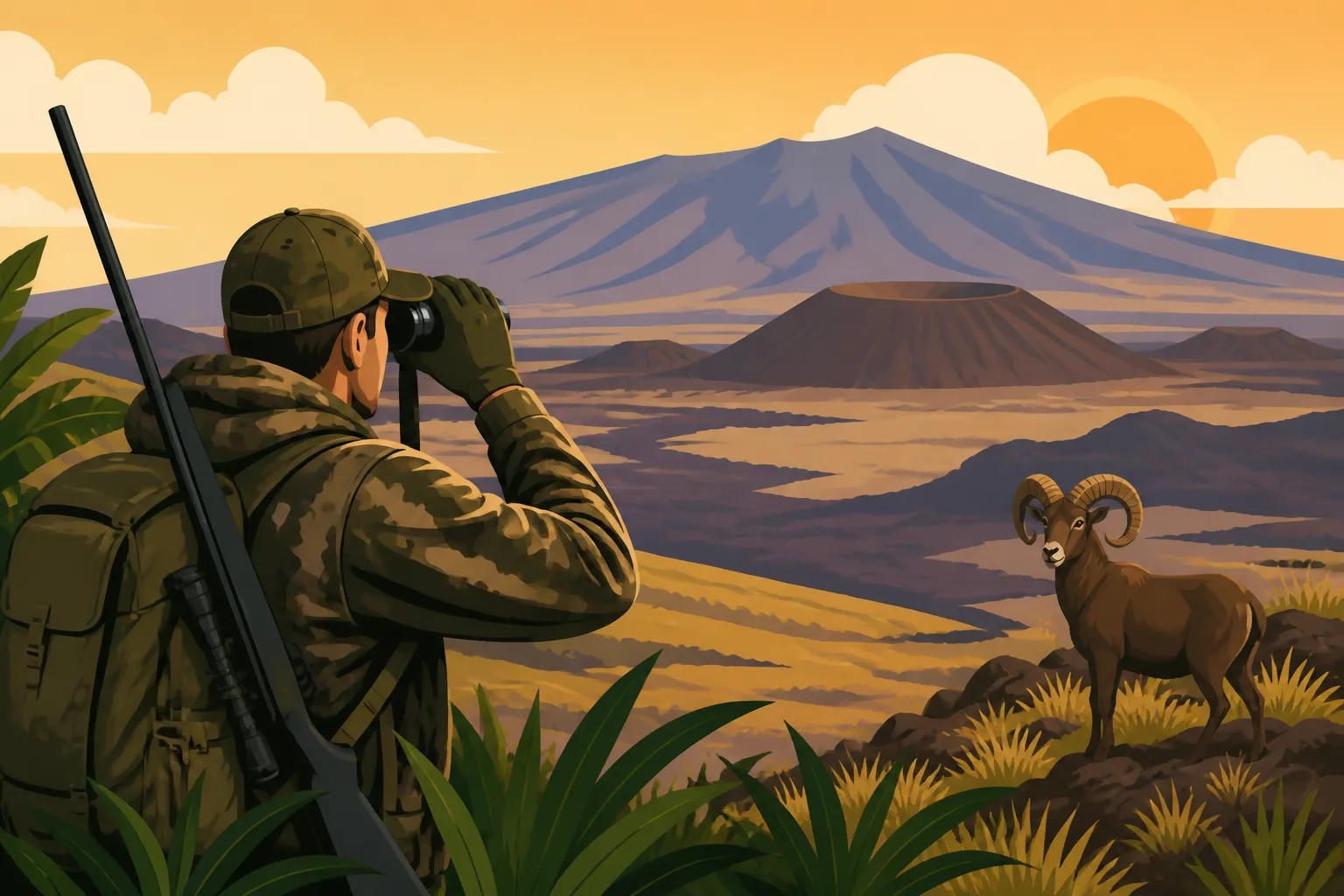
Mouflon Sheep: These wary animals are often found on the more open, rocky, and higher elevation slopes, feeding on grasses and mamane trees. Spot-and-stalk is the name of the game here. You'll spend a lot of time glassing with good binoculars or a spotting scope from a vantage point, picking apart distant slopes for the tell-tale shape of a ram. Once spotted, a careful, often long, stalk through rough lava and sparse cover is required. Remember, Glassing a Lava Flow for Mouflon Rams means being incredibly patient and using the terrain to your advantage.
-
Feral Pigs: Pigs tend to favor areas with more vegetation, whether that's scattered koa forest, dense guinea grass, or the bottoms of gulches where moisture allows for richer plant growth. Still-hunting, moving slowly and quietly through these areas, or dog hunting are common methods. Look for fresh rooting, muddy wallows, and rubs on trees. Pigs can be found anywhere there's food and cover, often moving between different habitat types throughout the day. If you're Still-Hunting Pigs in Hawaii's Wet Forest (though the PTA area is generally drier, pigs will still gravitate to any dense cover), stealth is your best asset.
-
Feral Goats: Goats are incredibly agile and prefer the steeper, more broken terrain, including rocky outcrops, lava flows, and even cliff faces. Like Mouflon, glassing is effective for locating them. Once found, expect a challenging stalk over treacherous ground. They're often found in small groups, so if you spot one, there are likely more nearby.
Safety, Regulations, and Respect
Hunting near the Pohakuloa Training Area carries unique responsibilities. It’s not just about knowing where to find game; it's about staying safe, adhering to all laws, and respecting the land and its diverse uses.
Adhering to All DOFAW and Military Regulations
First and foremost, you are responsible for knowing and following every single DOFAW hunting regulation. This includes possessing a valid Hawaii hunting license, any required permits or tags for the specific unit and species you're pursuing, and adhering to season dates, bag limits, and legal shooting hours. Hawaii Hunting Licenses and What They Cost is a critical first step for any hunter. Always check in and out of the unit as required, whether through a hunter check station or via the OuterSpatial app. Checking In and Out of Hawaii Hunting Units is a non-negotiable rule that ensures your safety and helps DOFAW manage game populations.
Beyond DOFAW, you absolutely must respect the boundaries and regulations of the Pohakuloa Training Area. This means never entering restricted areas, paying attention to all warning signs, and understanding that military personnel have the authority to enforce their rules. If you encounter military personnel, be courteous and cooperative. Their job is to ensure safety, and yours is to adhere to it. An accidental trespass can lead to serious legal consequences and can put you in harm's way.
Personal Safety in Remote and High-Elevation Terrain
The terrain around PTA is spectacular but unforgiving. Most of the hunting takes place at high elevations, often above 6,000 feet, where the air is thinner and the sun can be intense. Hydration is key; carry more water than you think you’ll need. The weather can change dramatically, from hot sun to cold fog and rain, all in a single afternoon. Layer your clothing to adapt.
The ground itself is rugged. Much of it consists of jagged lava rock, loose cinder, or uneven, broken terrain. Good quality, sturdy boots with ankle support are essential. A fall on this type of ground can easily lead to a serious injury. Carry a well-stocked first-aid kit, and always tell someone exactly where you're going and when you expect to return. Cell phone service is spotty to nonexistent in many of these areas, so don't rely on it for emergencies. A satellite communication device is a wise investment for remote hunts. No Cell Signal on a Hawaii Hunt is a reality you must prepare for.
Ethical Hunting and Respecting Boundaries
Ethical hunting practices are the cornerstone of our sport. This includes ensuring clean, humane kills, knowing your target and what lies beyond it, and properly field dressing and packing out your game. Given the heat in Hawaii, knowing how to Cooling Meat Fast on a Hawaii Hunt is vital to prevent spoilage.
Respecting boundaries goes beyond legal definitions; it extends to the spirit of the land. These areas are not only important for hunting but also hold cultural significance and are part of fragile ecosystems. Pack out all your trash, leave no trace, and be mindful of other users of the land, whether they are hikers, researchers, or other hunters. By demonstrating respect for the land, the rules, and each other, we ensure that hunting opportunities near Pohakuloa and across Hawaii remain available for future generations.
Disclaimer
This article is for general informational purposes only and does not constitute professional advice. Laws, prices and regulations vary by location and change over time. Consult a qualified professional for guidance on your specific situation.