Which Hawaii Unit Sees the Least Pressure
It's a common and understandable frustration for hunters everywhere: you want to get out into the field, enjoy the challenge and the beauty of the landscape, but it feels like everywhere you turn, there's another truck, another hunter, or just the clear signs that the animals have been pushed hard. In Hawaii, with our unique island geography and sometimes limited public access, finding a hunting unit that consistently sees the "least pressure" can feel like searching for a secret beach. This guide will help you understand the dynamics of hunting pressure in the islands and equip you with the knowledge to seek out those quieter, more challenging spots where you might just find the solitude and success you're looking for.
Understanding Hunting Pressure in Hawaii
Hawaii hunting offers incredible opportunities, but it's important to be realistic about hunting pressure. Our islands are small, public hunting areas are finite, and the sheer number of passionate local hunters means that truly "unpressured" ground, especially for popular species like pigs and goats, can be elusive. However, that doesn't mean it's impossible to find areas that experience less pressure than others. It's all about understanding the factors that contribute to hunter density and animal behavior in response.
Factors Contributing to High Pressure
Think about what makes a unit popular. Usually, it boils down to accessibility and perceived success rates. Units that are easy to drive into, especially those with good road systems or short walks to productive areas, are naturally going to see more traffic. Similarly, units known for holding high numbers of animals, or for producing trophy-sized animals, will attract more hunters.
For instance, some weekend-only units close to population centers might see a rush on opening day or during peak times, as hunters try to maximize their limited time. This concentrated effort pushes animals deeper into cover or makes them more nocturnal, making hunting more challenging for everyone. The accessibility of a unit often dictates the initial surge of hunters. If you can practically hunt from your truck, or it's a short, easy hike to a well-known game trail, you can bet plenty of others have the same idea.
The Role of Species and Seasons
The species you're pursuing also plays a massive role in pressure. Axis deer, for example, especially on islands like Maui and Molokai, draw considerable attention, particularly during their rut or designated rifle seasons. These animals are a highly prized big game species, and hunters will flock to known deer units. Axis Deer Hunting in Hawaii can be a fantastic experience, but expecting an unpressured hunt in a well-known deer unit is often unrealistic.
Conversely, some game bird seasons, while popular, might spread hunters out more across larger, more varied terrain, simply because birds are less concentrated than a herd of deer. Hawaii Game Bird Hunting can offer a different kind of challenge and often a different hunting experience in terms of human interaction. The legal weapon type for a season can also affect pressure. Archery seasons often see fewer participants than rifle seasons, opening up opportunities for solitude.
Terrain and Its Impact on Hunter Distribution
Hawaii's diverse terrain, from dense rainforests to arid lava fields and steep gulches, is a major equalizer when it comes to pressure. While a flat, open kiawe flat might be easy to glass and access, a unit riddled with steep, tangled ravines or thick, wet jungle is going to deter many hunters. The more physically demanding the terrain, generally, the fewer hunters you'll encounter.
Consider the difference between walking a relatively flat, open cattle pasture boundary for pigs versus having to navigate a Steep Windward Gulch. That kind of physical barrier naturally filters out hunters who aren't prepared for a strenuous day. Animals, especially pressured pigs and goats, often retreat to these impenetrable areas, which means if you're willing to put in the work, you might find them.
Identifying Less-Pressured Units
Finding those elusive low-pressure units isn't about getting a secret map; it's about understanding the characteristics that naturally reduce hunter density and then doing your homework. It often means trading convenience for solitude and effort for potential reward.
Look for Difficult Access Points
The biggest deterrent for many hunters is difficult access. Units that require a long walk-in, a specific type of four-wheel drive vehicle, or even technical maneuvering to reach, inherently see less traffic. Think about roads that are rough, unmaintained, or require crossing private land with permission (though you should always secure permission if required).
For example, some sections of our Forest Reserves might have primitive roads that become impassable after heavy rains, effectively closing off access to all but the most determined. Hunting Hawaii's Forest Reserves often means embracing tougher access. Units that are furthest from paved roads, require significant elevation gain, or involve navigating dense, often wet, vegetation are prime candidates for lower pressure. Before you head out, use a mapping app like onX Hunt to study topo maps and satellite imagery. Look for roadless areas, steep contours, and areas far from established trails or parking. This kind of digital scouting can save you a lot of legwork.
Consider Remote or Less Visited Areas
Hawaii has some truly remote public hunting areas. These aren't necessarily easy to get to, and they might not be teeming with animals, but the likelihood of encountering other hunters drops dramatically. These could be sections of larger Game Management Areas that are far from common entry points or smaller, less-advertised units.
Sometimes, it's not the unit itself, but a particular section of a popular unit that sees less pressure because it requires a multi-mile hike. This means you might be sharing the main access points with other hunters initially, but once you get a mile or two in, you'll be much more likely to find yourself alone. Thinking about Walking In to a Remote Hawaii Unit is often the key to getting away from the crowds.
Understand the Draw System for Specific Units
For certain highly sought-after units or species, like some Axis deer hunts on Lanai or special Mouflon sheep hunts, Hawaii uses a lottery or draw system. While getting a tag for these hunts can be challenging, the very nature of a limited entry system means that during the hunt, the pressure is often more controlled and spread out than in a general over-the-counter season.
Units with a draw system might limit the number of hunters per weekend or per season, ensuring a better experience for those who draw a tag. So, while the competition to get into the unit is high, the competition within the unit is often lower. It’s a trade-off: high application pressure for lower field pressure. How Hawaii's Permit-Tag System Works is crucial to understand if you're aiming for these opportunities.
Table: Characteristics of High vs. Low Pressure Units
To help visualize the difference, here's a quick comparison of what tends to define high versus low pressure units:
| Characteristic | High-Pressure Unit | Low-Pressure Unit |
|---|---|---|
| Access | Paved roads, short drives, easy parking, minimal hike | Rough 4WD roads, long walk-ins, difficult terrain |
| Terrain | Gentle slopes, open areas, defined trails | Steep gulches, dense jungle, lava flows, thick brush |
| Proximity | Close to towns, easy day trips | Remote, requires planning for overnight stays or long days |
| Species | Highly popular species (Axis deer, easily accessible pigs) | More challenging species, or popular species in difficult areas |
| Season Type | General rifle seasons, open weekends | Archery-only, muzzleloader-only, drawn hunts, midweek openings |
| Known Success | Historically high success rates, popular spots | Requires more scouting, physical effort, less predictable |
| Signage | Plenty of hunter sign (boot prints, spent casings) | Sparse hunter sign, animals appear less wary |
Specific Units Known for Lower Pressure
While it's difficult to definitively name one unit that always sees the least pressure (because as soon as you name it, it gets more pressure!), we can talk about types of units and specific examples that tend to offer a more solitary experience. Remember, this often comes with a trade-off in terms of effort or animal density.
Big Island's Remote Reaches
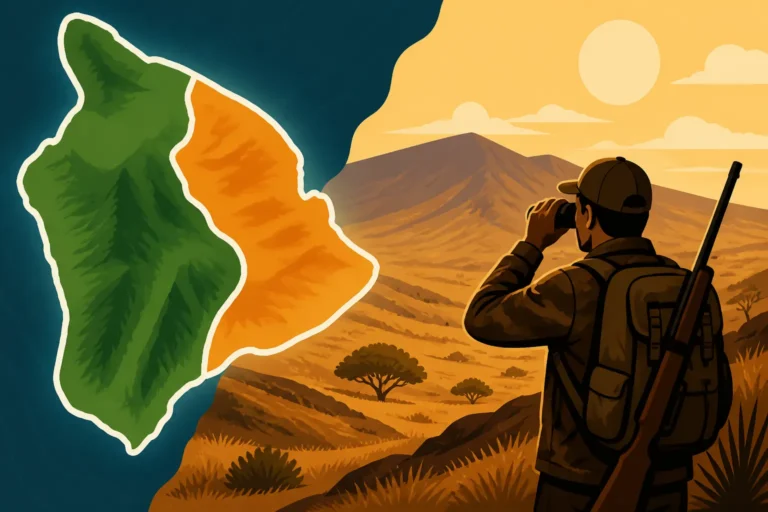
On Hawaii Island, which is vast, some of the most remote units offer genuine solitude. Areas on the upper slopes of Mauna Loa or deep within the Kau Forest Reserve can be incredibly challenging to access and hunt, but they also host fewer hunters. These units often involve navigating rough lava flows, dense ʻōhiʻa forest, or steep, unpredictable terrain, making a long walk-in a given.
Consider the eastern flanks or very high elevations of the island. Hunting Hawaii's High Elevation Alpine Ground means dealing with thin air and often exposed, rocky terrain. These are not casual day hunts, and the sheer physical demand keeps many hunters away. Similarly, portions of the Waiakea Forest Reserve on the windward side, with its perpetually wet and tangled landscape, deter many. Here, you're more likely to be hunting pigs in thick, unforgiving cover.
Maui's Challenging Backcountry
Maui, while famous for its Axis deer, also has areas that see less pressure due to their inaccessibility or ruggedness. While the easily accessible areas of Upcountry Maui get hit hard, venturing into the deeper sections of the Kahikinui Slopes or certain parts of the Kula Forest Reserve and Polipoli can offer more solitude. These areas might require navigating steep hillsides, deep gulches, and often dense brush.
Even on Molokai, where Axis deer hunting is incredibly popular, seeking out animals on the very fringes of common hunting grounds or committing to longer, more arduous hikes away from the established truck trails can lead to less pressured encounters. Hunting Molokai's Axis Deer Country often means embracing the challenge of the terrain.
Kauai's Interior Wilderness
Kauai offers unique hunting for black-tailed deer, pigs, and goats. While the main access roads and popular trails in areas like Hunting the Kokee Country for Deer can see traffic, the deep canyons and dense interior sections of the Na Pali-Kona Forest Reserve or the more remote parts of the Puu Ka Pele Forest Reserve are often less visited.
Hunting Goats in a Kauai Canyon or chasing pigs deep within the island's interior means committing to significant elevation changes and potentially staying found in very dense, wet conditions. These are not hunts for the faint of heart, and that's precisely why they see less pressure. Always carry reliable navigation tools, like a GPS device or the onX Hunt app on your phone, and know how to use them, especially in these thicker areas.
Strategies for Finding Solitude
Beyond simply picking a unit that might see less pressure, there are active strategies you can employ on any hunt to increase your chances of finding solitude and undisturbed game.
Hunt Midweek and Off-Season
This is perhaps the simplest and most effective strategy. Most Hawaii hunting units, especially on the more populated islands, see a significant drop in hunter numbers during the weekdays compared to the weekends. If your schedule allows, a Tuesday or Wednesday hunt can feel like a completely different experience than a Saturday. Hunting Midweek Where Hawaii Allows It can really change your success rate.
Similarly, consider hunting during the "shoulder" seasons or even during periods that are traditionally considered "tough." For instance, chasing pigs during the hottest, driest parts of summer or the wettest parts of winter might deter others, leaving more ground open for you. The animals are still there; their patterns just change.
Go Deeper, Go Higher, Go Further
This is the golden rule for escaping pressure. Most hunters will stick to within a mile or two of a road or easy access point. If you're willing to put in the miles and climb the ridges, you will literally walk away from the crowds. Pack enough water, snacks, and emergency gear to support a longer expedition.
Focus on areas that are physically demanding to reach. This could be crossing multiple gulches, climbing steep hills, or traversing dense, thorny kiawe flats. Animals learn quickly where the pressure comes from and often retreat to these less accessible refuges. Planning for Packing Meat Out of a Hawaii Gulch is a good indicator you're heading into low-pressure territory.
Scout Extensively
Knowledge is power, and consistent scouting is your secret weapon against hunting pressure. Even in well-known units, there are always pockets that get overlooked. Use topo maps and satellite imagery (again, onX Hunt is fantastic for this) to identify potential bottlenecks, hidden water sources, or benches that are just far enough off the beaten path that most hunters ignore them.
Scout during the off-season or on non-hunting days. Look for fresh animal sign, note escape routes, and identify areas that would be arduous to reach for a typical hunter. This reconnaissance will give you a significant advantage when the season opens. Scouting a Hawaii Hunting Unit Before Opening is not just good practice, it's essential for finding low-pressure spots.
Focus on Overlooked Species or Methods
While everyone might be chasing Axis deer with a rifle, consider Bowhunting Hawaii's Public Units for a less crowded experience, as archery seasons often have longer windows and fewer participants. Or, if legal in your unit, explore Muzzleloader Hunting in Hawaii during its specific season. These specialized methods, while requiring different skill sets, often face less competition.
Also, consider targeting species that might be less "glamorous" or harder to hunt, such as certain game birds in thick cover, which naturally distributes hunters more widely than a concentrated deer herd. Sometimes, the less obvious choice leads to a more fulfilling, solitary hunt.
Ultimately, finding a Hawaii hunting unit that sees the least pressure isn't about finding a secret hideaway. It's about being strategic, putting in the effort, and embracing the challenge of our unique island landscapes. It means knowing that the rewards of solitude and undisturbed game often come after a long walk, a steep climb, or a willingness to hunt where others won't.
Disclaimer
This article is for general informational purposes only and does not constitute professional advice. Laws, prices and regulations vary by location and change over time. Consult a qualified professional for guidance on your specific situation.