Hunting the Kokee Country for Deer
Hunting deer in Kokee Country on Kauai can feel like stepping into another world, a rugged, challenging, and incredibly rewarding experience that’s unlike anywhere else in Hawaii. Many hunters, especially those new to Kauai or even seasoned residents who haven't ventured into these units, often feel overwhelmed by the dense terrain, shifting weather, and unique behavior of the black-tailed deer here. This guide is here to cut through that confusion, offering practical, on-the-ground advice for successfully hunting the Kokee Country for deer, from understanding the animals to navigating the regulations and mastering the challenging landscape.
Understanding Kokee's Black-Tailed Deer and Their Habitat
Kokee State Park and the surrounding areas on Kauai are truly unique. You're not just chasing any deer; you're after a specific kind, and they live in an environment that demands respect and a good understanding of its nuances. It’s not your typical open-country deer hunt, that’s for sure.
The Elusive Kauai Black-Tailed Deer
Unlike the plentiful axis deer on Maui, Lanai, and Molokai, Kauai is home to a population of black-tailed deer. These aren't the big-bodied mule deer you might think of on the mainland, nor are they the small, spotted axis deer. They're a subspecies, typically a bit smaller than their mainland cousins, and they've adapted perfectly to Kauai's dense forests and canyon lands. They tend to be far more elusive and solitary than axis deer, often moving through thick cover, making them a true challenge. A mature buck might weigh significantly less than an average mainland whitetail, but don't let that fool you; they're tough, cunning, and perfectly camouflaged for their home. Many hunters are surprised by how quiet these deer can be, vanishing into the foliage without a sound. Knowing What a Kauai Black-Tailed Deer Weighs can help set realistic expectations.
Their behavior is heavily influenced by the constant moisture and abundant forage found in Kokee. Unlike dry-country deer that are tied to water sources, black-tailed deer here have a wide range. They often bed down in dense thickets during the day and move at dawn and dusk, though cloudy, misty conditions can extend their activity throughout the day. You’ll find them browsing on various native and introduced plants, so understanding their diet in the local ecosystem is key. Their senses are incredibly sharp, and with the dense vegetation, they often hear or smell you long before you see them. This means your approach has to be slow, deliberate, and incredibly quiet.
Key Habitat Zones in Kokee
Kokee Country is a patchwork of incredible, diverse habitats. From the towering Norfolk pines and dense native forests to the sheer cliffs overlooking Waimea Canyon, each area presents different opportunities and challenges for deer hunters. The main hunting units in this region often encompass a mix of these landscapes. You've got the cooler, wetter forest reserves in the higher elevations, often shrouded in mist, which tend to hold deer in more secluded pockets. Then there are the edges of the Waimea Canyon itself, where the terrain opens up into steep, rocky ledges and scattered brush. This contrast means you can't use a single tactic for the whole area; you need to be adaptable.
The transition zones, where dense forest meets more open canyon overlooks or old logging roads, are often prime areas to focus your efforts. These deer use the thick cover for bedding and security but will venture out to feed in more open areas, especially during low light. Learning to identify Hunting the Waimea Canyon Rim for Deer requires a different approach than still-hunting an old growth forest. Pay close attention to water sources, even in a wet environment, as deer will often utilize seepages or small streams, particularly during drier spells. The sheer scale of the Waimea Canyon is impressive, and understanding how deer use its various ledges and benches is crucial. It’s a vast area, so breaking it down into manageable sections on a map is a must.
Navigating Kokee's Hunting Units and Regulations
Before you even think about lacing up your boots, you need to understand the rules of engagement for Kokee. Hawaii's public land system, managed by the Department of Land and Natural Resources (DLNR) Division of Forestry and Wildlife (DOFAW), has specific requirements that are different from many mainland states. Ignoring these can quickly turn a hopeful hunt into a frustrating experience, or worse, a citation.
Identifying Open Hunting Areas
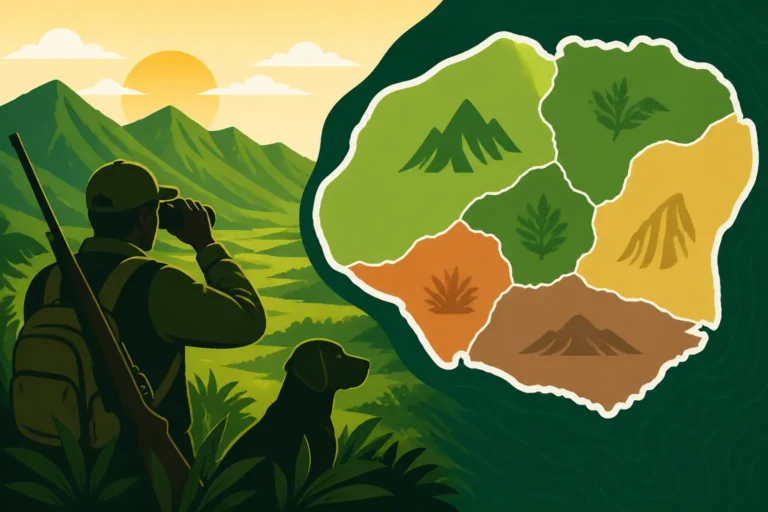
Kokee Country falls primarily within specific hunting units on Kauai, such as Unit A and Unit I, which encompass parts of Kokee State Park and the Na Pali-Kona Forest Reserve. It's crucial to obtain the most current maps and regulations from DOFAW. These units have designated boundaries that are sometimes marked on the ground, but often rely on natural features or old fence lines. This is where tools like onX Hunt become invaluable. You can download offline maps to your phone, overlay the public hunting unit boundaries, and see your exact location in relation to them, even without cell service, which is common in Kokee. Knowing Which Units Cover the Waimea Canyon Rim can help you narrow your focus.
Always double-check the DOFAW website or local office for any last-minute closures or season changes, which can happen due to weather, fire, or conservation efforts. Unit boundaries can be confusing, especially where public and private lands merge. Make sure you know exactly where you are at all times. Trespassing onto private property, even inadvertently, is a serious offense. This level of diligence in mapping and understanding boundaries is critical for a safe and legal hunt.
Essential Permit and Check-in Procedures
Hunting black-tailed deer in Kokee requires a valid Hawaii hunting license and specific permits, often tied to a lottery or application process for certain seasons or units. Unlike year-round pig hunting on some islands, deer seasons are very structured. You'll need to know the exact Kauai Black-Tailed Deer Season Dates. For many of the big game hunts in Hawaii, there's a permit-tag system in place. You apply for a drawn hunt, and if successful, you purchase a tag that must be affixed to your animal immediately after the kill.
| Permit Type | Requirement | How to Obtain | Validity Period | Cost (Shape) |
|---|---|---|---|---|
| Hawaii Hunting License | All hunters need one | Online via Go Hunt Hawaii, or licensed vendors | Annually (July 1 – June 30) | Moderate annual fee |
| Kauai Deer Hunting Permit | Specific to deer hunting on Kauai | Drawn lottery application through DOFAW | Specific season dates (e.g., Kauai Rifle Deer Weekend Dates) | Small application fee, then tag purchase if drawn |
| Check-in/Check-out | Mandatory for many units | Online (OuterSpatial app) or physical station | Per hunt outing | Free, but required for compliance |
Make sure your hunter education requirements are met, especially if you're a nonresident. Hawaii often recognizes mainland hunter education courses, but you might need to apply for a letter of exemption. Once you have your permit, checking in and out of the hunting unit is typically mandatory, either through an online system like the OuterSpatial app or at a physical hunter check station. This isn't just bureaucracy; it's how DOFAW monitors pressure, tracks harvest data, and ensures everyone returns safely from the field. Forgetting to check out can lead to search and rescue operations being initiated, which nobody wants.
Effective Hunting Strategies for Kokee's Terrain
Kokee isn't for the faint of heart, or for those who prefer to sit in a blind and wait. This is a dynamic, physically demanding hunt that requires specific strategies tailored to the steep, often wet, and incredibly dense environment. Success here is truly earned.
Spot-and-Stalk Tactics Along Canyon Rims
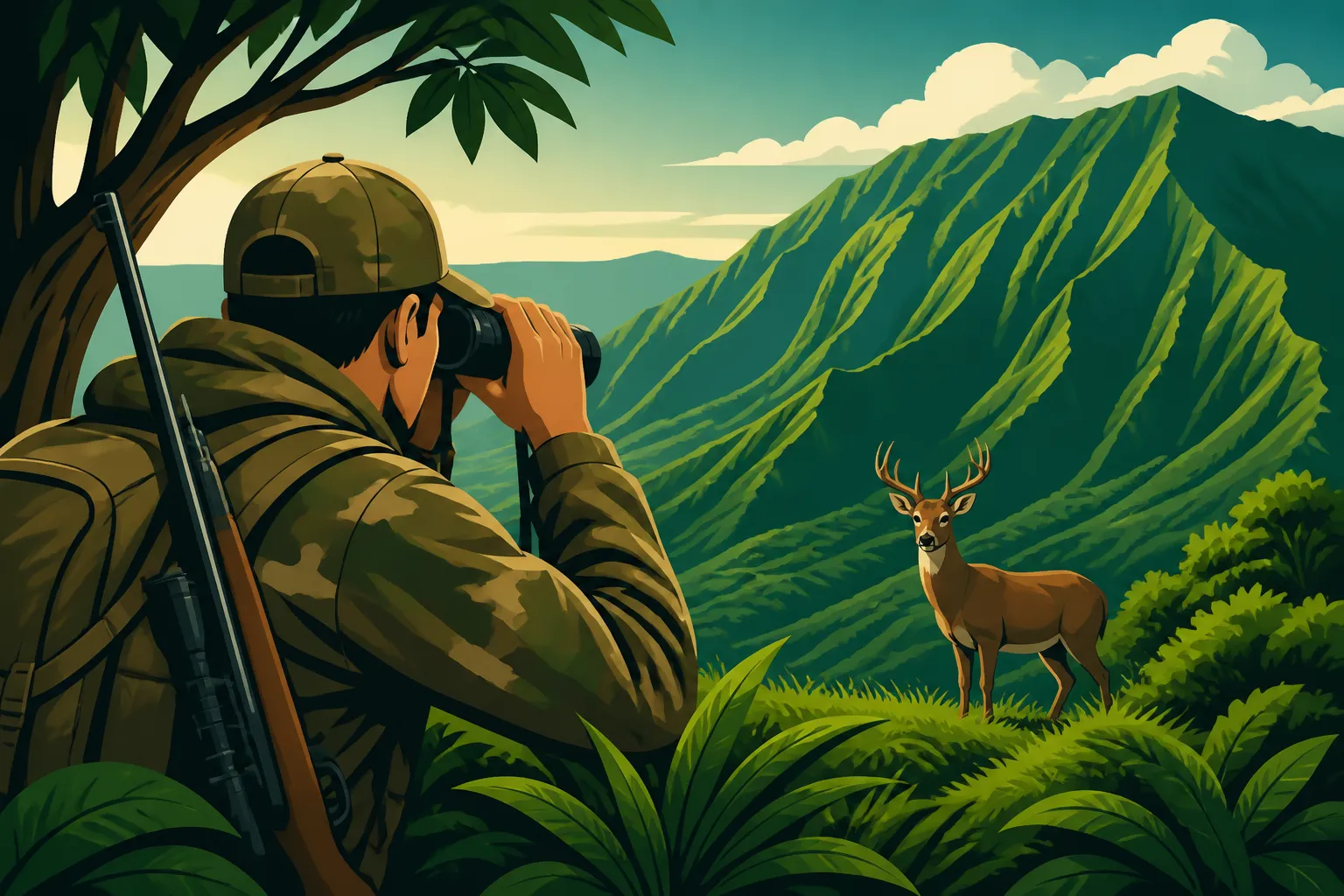
The Waimea Canyon side of Kokee offers some of the most dramatic scenery and unique spot-and-stalk opportunities. You're often looking down into vast gulches and across to opposite canyon walls. This is where good optics are absolutely critical. A high-quality spotting scope or binoculars with excellent light gathering capabilities will be your best friend. Set up on high points or overlooks along the rim at first light, or during the late afternoon. You'll be looking for any movement, a flicker of an ear, a patch of brown against the green, or the unmistakable outline of a deer. Glassing a Hawaii Coastline for Goats offers a similar challenge in terms of terrain, but with different game.
Once you spot a deer, the real work begins. Planning your stalk in this rugged terrain is incredibly complex. You'll often have to drop hundreds of feet into a gulch, navigate dense vegetation, and then climb back up to get within shooting range, all while keeping the wind in your favor. The thermals in the canyon can be tricky, often rising in the morning and falling in the evening, but crosswinds are common. Take your time, break down the terrain into smaller sections, and use every bit of cover available. Sometimes, the best approach is to back out and try to intercept the deer along a known travel route or feeding area if the direct line is impossible.
Still-Hunting the Rainforest Edges
Away from the canyon rim, Kokee's interior shifts into dense, misty rainforest. This is prime habitat for black-tailed deer seeking cover and forage. Still-hunting, a slow, deliberate form of stalking where you move only a few steps at a time, pausing for long periods to listen and look, is incredibly effective here. You're not covering miles; you're dissecting small patches of ground. Think of it more like a chess game than a sprint. Pay attention to Reading Pig Sign Along a Muddy Trail, as deer sign can be similar in these wet conditions, though deer scat and tracks will be distinct.
The key to successful still-hunting in Kokee is patience and keen observation. Look for rubbed trees, fresh tracks in the soft earth, or disturbed vegetation where deer have been browsing. Move into the wind, taking advantage of any natural sounds, like a breeze through the trees or a passing shower, to mask your movement. Your senses need to be dialed in—listen for the rustle of leaves, the snap of a twig, or the soft blowing of a deer. Foot placement is critical on the often-slippery, uneven ground. Wear quiet clothing that won't snag on thorns or make noise as you move. This methodical approach might feel slow, but it greatly increases your chances of surprising a deer in its natural environment, particularly around the edges of thick koa or eucalyptus stands.
Preparing for Your Kokee Deer Adventure
A hunt in Kokee isn't something you can just show up for. It demands physical preparation, the right gear, and a solid understanding of the conditions you'll face. Being unprepared here can quickly turn into a miserable, or even dangerous, situation.
Gear Essentials for Wet and Rugged Country
The weather in Kokee can change in an instant, from sunny skies to thick fog and torrential rain, sometimes all within an hour. Because of this, proper gear is non-negotiable. Start with reliable rain gear – a waterproof jacket and pants that can withstand hours of steady precipitation. Layering is key, as temperatures can vary significantly from the cooler, high-elevation mornings to warmer afternoons. Merino wool or synthetic base layers are ideal as they wick moisture and retain warmth even when wet. Forget cotton; it's a liability here.
Footwear is perhaps the most critical item. You need sturdy, waterproof hiking boots with excellent ankle support and aggressive tread for navigating slippery mud, roots, and rocks. Walking rough lava without wrecking your boots applies just as much to Kokee's difficult trails. Consider bringing gaiters to keep mud, water, and debris out of your boots. A comfortable, well-fitting backpack capable of carrying water, extra layers, food, a first-aid kit, and enough space for meat is essential. Don't forget a headlamp, even for day hunts, as the forest can get dark quickly, and you might be packing out an animal in low light. A reliable knife for field dressing, game bags, and perhaps a small saw or bone cutters are also must-haves. Since cell service is often nonexistent, a GPS device or downloaded maps on a platform like onX Hunt are vital for navigation.
Physical Demands and Safety Considerations
Hunting Kokee is a serious workout. You'll be traversing steep, uneven terrain, climbing in and out of gulches, and pushing through dense vegetation, often in humid conditions. Physical fitness is not just a recommendation; it's a safety requirement. Spend time before your trip hiking with a loaded pack, practicing on inclines, and building endurance. Being able to perform Packing Meat Out of a Hawaii Gulch effectively means being in shape. Dehydration can happen even in wet conditions, so carry plenty of water and know how to filter or treat additional sources if needed.
Safety is paramount. Always hunt with a partner if possible, and let someone know your exact hunting plan and expected return time. Be aware of your surroundings, as falling can be a real risk on slippery slopes. Practice good firearm safety, always knowing your target and what's beyond it, especially in dense cover where visibility can be limited. While deer are the target, you might also encounter feral pigs in Kokee, so be aware of your surroundings and any potential encounters. Understanding Hawaii Hunter Education Requirements is the foundation for responsible hunting, and knowing Hawaii Blaze Orange Requirements is also crucial for visibility, especially if you're on public land during rifle seasons. Be prepared for emergencies by carrying a robust first-aid kit, and understand that help may be hours away. This is truly wild country, and you must be self-sufficient.
Disclaimer
This article is for general informational purposes only and does not constitute professional advice. Laws, prices and regulations vary by location and change over time. Consult a qualified professional for guidance on your specific situation.