Hunting the Kau Forest Reserve
The Kau Forest Reserve on Hawaii Island can feel like a labyrinth of dense vegetation and steep terrain, making even planning a hunt feel overwhelming for newcomers and seasoned hunters alike. But don't let its wild nature deter you; with the right knowledge and preparation, this vast and rugged landscape offers some incredible opportunities for hunting feral pigs and goats. This comprehensive guide will walk you through the unique challenges and rewards of hunting in the Kau Forest Reserve, helping you navigate its diverse ecosystems and put together a successful strategy.
Understanding the Kau Forest Reserve's Unique Landscape for Hunting
The Kau Forest Reserve isn't just one type of environment; it's a dynamic tapestry of ecological zones that shift dramatically as you move through it. This diversity is precisely what makes it challenging, yet also so rewarding for hunting. You’ll find everything from incredibly wet, dense rainforests on the windward side to drier, more open forested areas on the leeward slopes, often just miles apart.
The Diverse Terrain and Vegetation
Imagine starting your hunt in a cool, misty forest thick with native koa and ohia trees, their branches draped in ferns and moss. Underfoot, the ground is a mix of rich soil, fallen leaves, and volcanic rock, often slippery with morning dew or recent rain. Then, as you push deeper or traverse a ridge, the vegetation can suddenly change. You might find yourself slogging through seemingly impenetrable thickets of invasive strawberry guava and ginger, where visibility drops to mere feet. These areas are incredibly tough to move through, and they often hold pigs tight. You’ll really get a feel for why Still-Hunting Pigs in Hawaii's Wet Forest is a skill you need to master here.
On the higher elevations or in certain leeward pockets, you might encounter more open mamane and naio forests, similar to some of the sheep country further north, but still with plenty of undulating terrain. The elevation changes here are no joke; what looks like a gentle slope on a map can be a brutal climb up or down a gulch. Understanding this patchwork of vegetation and terrain is crucial because it dictates where animals feed, rest, and travel, and thus, where you should focus your efforts. Contrast this with some of the dry, open country on Lanai or Maui, and you'll quickly realize Kau demands a different approach.
Primary Game Species and Their Habitat Preferences
The Kau Forest Reserve is primarily known for its populations of feral pigs and feral goats. While you might occasionally encounter a feral sheep hybrid in specific areas, especially bordering other units, pigs and goats are your main targets here.
Feral pigs absolutely thrive in the dense, wet forests and gulches of Kau. They love areas with thick undergrowth for bedding and plenty of rooting opportunities. You'll find them actively foraging for fallen fruits, roots, and invertebrates, especially around water sources. Mud wallows are a dead giveaway of pig activity, indicating both their presence and providing a crucial cooling mechanism in the humid environment. The pigs here can grow quite large, and their destructive rooting habits are evident throughout the forest floor. When hunting pigs, focusing on areas with dense cover, access to water, and fresh rooting is key. Knowing Reading Pig Sign Along a Muddy Trail will be invaluable here.
Feral goats, on the other hand, tend to prefer the steeper, more open, and rocky sections of the reserve. While they are incredibly adaptable and can be found in surprisingly thick areas, they often seek out cliff faces, exposed ridges, and areas with sparse vegetation where they can spot predators (like you!) from a distance. The drier, more rugged edges of the reserve, particularly those with good vantage points overlooking valleys or erosion features, are prime goat habitat. They are masters of navigating treacherous terrain, so be prepared for some serious climbing if you're pursuing these agile animals. Being able to spot them from afar and execute a careful approach, similar to Glassing a Hawaii Coastline for Goats, is often your best bet.
Navigating Access and Regulations in Kau Forest Reserve
Getting into the Kau Forest Reserve and understanding its rules can be a bit tricky, but with a bit of homework, it's entirely manageable. This isn't a unit where you can just roll up and expect easy access. Preparedness is key.
Entry Points and Road Conditions
Access to the Kau Forest Reserve is generally from roads leading off the main Highway 11 on Hawaii Island, particularly through areas like Wood Valley. Many of the access roads are unpaved, often rough, and can quickly become impassable with rain. We're talking deep mud, washouts, and rocky sections that absolutely demand a high-clearance, four-wheel-drive vehicle. Don't even think about taking a two-wheel-drive passenger car back into these areas unless you enjoy calling for an expensive tow truck. It's smart to check with the local Department of Land and Natural Resources (DLNR) or seasoned local hunters for current road conditions before heading out, especially after heavy rains.
Using a reliable mapping app like onX Hunt is an absolute game-changer here. It allows you to clearly see property boundaries, identify potential access roads (and whether they're public or private), and track your location. Cell service is notoriously spotty or non-existent in many parts of the reserve, so download your maps offline before you go. This tool can literally keep you from inadvertently trespassing or getting hopelessly lost in a maze of overgrown tracks. Planning your route and understanding where Hawaii's hunting units begin and end is fundamental to a safe and legal hunt. For more on navigating remote areas, check out Reaching a Hawaii Unit by 4WD Road.
Check-In Procedures and Permit Requirements
Like most public hunting units in Hawaii, the Kau Forest Reserve operates under the state's check-in and check-out system. This is a non-negotiable step to ensure hunter safety and to help the state monitor hunting pressure and harvest data. You'll need a valid Hawaii hunting license and, depending on the specific season and regulations for Kau, potentially a permit-tag for the animals you intend to hunt. While pigs and goats are often open year-round with liberal bag limits in many areas, always double-check the current regulations for the Kau Forest Reserve before you go. The Hawaii Department of Land and Natural Resources (DLNR) website is your official source for this information.
Traditionally, you'd fill out a paper card at a hunter check station. However, the state has largely moved towards the OuterSpatial app for checking in and out, which is incredibly convenient if you have cell service at your access point. If not, a physical card box will still be available. Make sure your phone is fully charged if using the app, and always carry a pen and paper backup just in case. Information about license requirements, including options for residents and nonresidents, can often be found through resources like GoHunt, which can help you understand the initial steps for securing your permits. Always remember to check out, even if you don't harvest an animal. For more details on this critical step, read Checking In and Out of Hawaii Hunting Units.
Effective Hunting Strategies for Kau's Challenging Environment
Hunting in Kau Forest Reserve isn't a walk in the park. It demands physical fitness, mental toughness, and a good understanding of animal behavior in a dense, unforgiving landscape. Forget about wide-open plains; this is up-close and personal hunting.
Still-Hunting and Tracking in Dense Cover
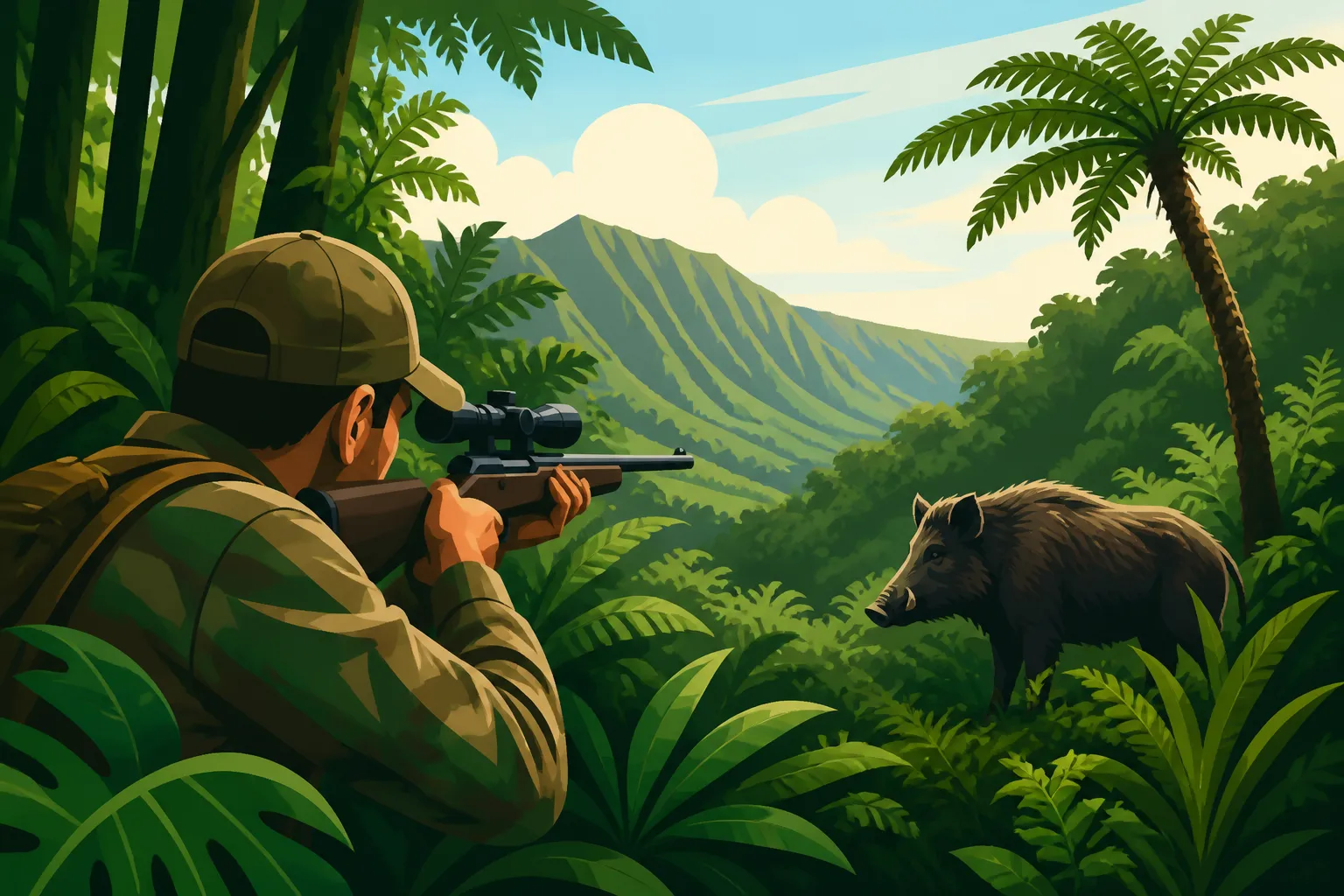
Still-hunting is perhaps the most fundamental and effective tactic in Kau's thick forests. This isn't about sitting in a stand; it's about slow, deliberate movement, covering ground at a snail's pace, pausing frequently to listen and observe. The key is to mimic the natural movements of the forest, blending in as much as possible. Focus on areas where you see fresh pig sign – disturbed soil from rooting, fresh tracks, broken vegetation, and muddy wallows. Pigs often move along faint game trails, especially at dawn and dusk. The thick cover means you'll often hear animals before you see them, so strong listening skills are paramount. Listen for grunts, rustling in the leaves, or the distinctive sound of rooting.
When you find fresh sign, slow down even further. Pigs have an excellent sense of smell and hearing, but their eyesight in dense vegetation isn't always their strongest suit. Using the wind to your advantage is critical. A shifting thermal can give you away in an instant. Work against the wind, moving quietly, placing each footstep carefully to avoid snapping twigs. You’ll rarely get a long-range shot here; be prepared for shots within 30-50 yards, often through narrow lanes in the brush. This style of hunting is intensely rewarding because it forces you to become intimately familiar with the forest and its inhabitants. It truly is about Still-Hunting Pigs in Hawaii's Wet Forest.
Utilizing Dogs for Feral Pig Hunts
For many local hunters, dog hunting is the way to pursue feral pigs in Hawaii, and Kau Forest Reserve is prime territory for it. This is a high-energy, adrenaline-pumping method that involves specially trained dogs. Typically, a "bay dog" will locate and corner a pig, holding it at bay by barking, while the hunter, often accompanied by "catch dogs," makes their way through the dense undergrowth to dispatch the animal. The sounds of the baying dogs echoing through the forest are unmistakable, guiding the hunters to the action.
This method requires a specific set of skills, tough dogs, and a deep understanding of dog behavior and safety. Dogs wear protective cut vests to prevent injuries from a pig's tusks, and GPS collars are vital for tracking them in the incredibly thick terrain where they might disappear from sight in seconds. While it's an exciting and effective way to hunt, it's also demanding, requiring good physical conditioning to keep up with the dogs in challenging terrain. If you’re considering this, definitely dive into Pig Hunting With Dogs in Hawaii for a full understanding of what it entails.
Spot-and-Stalk for Goats in Open or Steep Areas
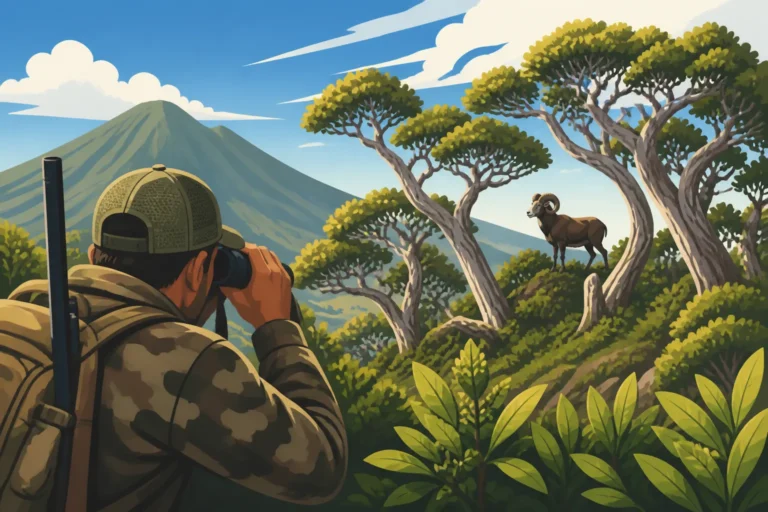
While much of Kau is dense, there are open ridges, steep slopes, and rocky outcrops, especially on the drier edges or at higher elevations, where spot-and-stalk tactics become effective for goats. This involves using good quality optics – binoculars or a spotting scope – to methodically glass promising terrain for feeding or resting goats. Goats often prefer areas where they have a good vantage point to detect danger, so look for them silhouetted on ridges, feeding on steep hillsides, or moving along game trails on cliff bands.
Once you spot a goat, the real challenge begins: planning and executing an undetected approach. This often means long detours, crawling on hands and knees, and using every bit of available cover. The wind is, again, paramount. Goats have excellent eyesight and can pick up movement from incredible distances. Be prepared for steep, often unstable terrain during your stalk. A steady rest for your rifle is crucial for ethical shot placement once you get into range. This kind of hunting requires patience, good judgment of distance, and a high degree of physical capability. For tips on navigating these kinds of environments, remember Hunting Goats on Hawaii's Coastal Cliffs or Hunting Goats in Hawaii's Canyon Country for similar tactics.
Essential Gear and Safety Considerations for Kau Hunting
Hunting in Kau Forest Reserve isn't like a walk in a manicured park. It's a true wilderness experience that demands careful gear selection and a strong commitment to safety. You're entering a remote, rugged, and sometimes unforgiving environment.
Footwear, Clothing, and Navigation
Your choice of footwear is probably the single most important gear decision for Kau. Forget lightweight hiking boots; you need heavy-duty, waterproof boots with excellent ankle support and aggressive traction. The terrain is often uneven, slick with mud, sharp with volcanic rock, or matted with thick roots. Expect to get your feet wet. Gaiters are also highly recommended to keep mud, thorns, and debris out of your boots. For clothing, layers are your friend. It can be cool and misty in the mornings, hot and humid by midday, and rainy at any moment. Quick-drying synthetic materials are preferred over cotton. Blaze orange is often a requirement during certain seasons or in specific units, so always check the latest regulations and wear it for safety, especially with dog hunters in the area.
Navigation is absolutely critical. As mentioned, cell service is unreliable, so a standalone GPS device with preloaded maps or a smartphone with offline maps (like onX Hunt) is essential. Always carry a physical map and compass as a backup, and know how to use them. A portable charger for your electronics is also a must. Getting turned around in the dense jungle or a vast gulch system is easier than you think. Understanding No Cell Signal on a Hawaii Hunt should reinforce the need for redundant navigation tools.
Water, Food, and Emergency Preparedness
This might seem obvious, but it's worth emphasizing: bring more water than you think you'll need. The humidity and physical exertion will dehydrate you quickly. Pack high-energy snacks that are easy to eat on the go. Dehydration and bonking are real risks here. Beyond sustenance, a well-stocked first-aid kit is non-negotiable. You're likely to encounter cuts, scrapes, blisters, and potential insect bites. Whistle, signaling mirror, headlamp, and a fire-starting kit are also important additions.
Always let someone know exactly where you're going and when you expect to return. This "float plan" is a basic wilderness safety rule that could save your life. Be mindful of sudden weather changes; sunny skies can turn into torrential downpours in minutes, making trails slick and streams rise rapidly. Understanding Hunting a Hawaii Unit After Heavy Rain can give you an idea of the changed conditions you might face. Finally, carrying a personal locator beacon (PLB) or satellite messenger device for true emergencies is a very smart investment for anyone venturing deep into Hawaii's remote hunting areas.
Here's a quick comparison of pig and goat hunting considerations in the Kau Forest Reserve:
| Feature | Feral Pig Hunting (Kau) | Feral Goat Hunting (Kau) |
|---|---|---|
| Primary Habitat | Dense, wet forest; gulches; areas with heavy rooting. | Steep, rocky ridges; cliff faces; drier, more open slopes. |
| Hunting Method | Still-hunting, tracking, dog hunting. | Spot-and-stalk, often glassing from a distance. |
| Terrain Focus | Muddy, overgrown, low visibility, thick undergrowth. | Rocky, steep, potentially unstable, good visibility. |
| Key Sign | Rooting, wallows, tracks in mud, fresh rubs. | Droppings on rocks, tracks, browse lines, beds on ledges. |
| Required Fitness | High endurance for slogging through thick brush; quick reactions. | High endurance for climbing; good balance and sure-footedness. |
| Shot Range | Often close-range (under 50 yards), quick target acquisition. | Variable, can be longer-range across valleys or up slopes. |
| Navigational Challenge | Easy to get disoriented in dense vegetation. | Can be exposed on ridges, requiring careful descent. |
| Weapon Preference | Rifle, shotgun (slugs), bow; knife/spear for dog hunts. | Rifle, bow. |
| Noise Level | Often louder with dog hunting, but still-hunting requires silence. | Requires extreme silence during the stalk. |
The Kau Forest Reserve is a wild and untamed place, but for those willing to put in the effort, it offers a truly authentic Hawaii hunting experience. It will test your skills, your gear, and your resolve, but the rewards of bringing home some of Hawaii's finest wild game are absolutely worth it. Remember to always hunt safely, ethically, and with deep respect for the land and its resources.
Disclaimer
This article is for general informational purposes only and does not constitute professional advice. Laws, prices and regulations vary by location and change over time. Consult a qualified professional for guidance on your specific situation.