Hunting Maui’s Kahikinui Slopes
Hunting the vast, often unforgiving slopes of Kahikinui on Maui can be an incredibly rewarding experience, but it’s also one of the most challenging public hunting areas in the islands. Many hunters arrive picturing easy access or plentiful game around every corner, only to be met with rugged terrain, sparse water, and animals that have learned to be exceptionally wary. This guide is designed to help you understand the unique landscape and challenges of Maui's Kahikinui slopes, offering practical advice to increase your chances of a successful and safe hunt.
Understanding the Kahikinui Slopes Terrain and Wildlife
The Kahikinui area on Maui is a sprawling, often dry landscape on the leeward slopes of Haleakala. It's not your typical lush Hawaiian forest; instead, you'll find a mix of open grasslands, scrub brush, thorny kiawe forests, and deep, eroded gulches. This diverse environment dictates where game animals live and how you'll need to approach your hunt.
The Landscape: From Coast to Uplands
Imagine starting your hunt near the coastal plains, which are hot, dry, and often dominated by kiawe trees and sparse grass. As you gain elevation, the vegetation changes, becoming a little less thorny, with more open areas dotted with native and introduced grasses. Further up, you might find pockets of ʻōhiʻa and koa trees, especially in the deeper gulches where moisture collects. The ground itself is a mix of volcanic rock, loose cinder, and hard-packed dirt, making for tough walking. Elevation changes can be dramatic, with steep, unforgiving slopes and hidden ravines that appear out of nowhere. It's a land of stark beauty but also one that demands respect and preparation. You'll definitely want to scout this area thoroughly before your hunt, perhaps using an app like onX Hunt to study the topography and identify potential travel corridors or watering holes.
Key Game Species: Axis Deer and Feral Goats
The primary draw for hunters in Kahikinui is the chance to pursue Axis Deer, Hawaii's Signature Big Game and Hawaii's Feral Goats and Why They Matter. Axis deer thrive in this dry, open country, often congregating near the limited water sources or finding shade in the deeper gulches during the heat of the day. They are incredibly wary animals, with keen senses, and can vanish into seemingly sparse cover with astonishing speed. Spotting a herd of Axis deer in the distance, only to have them disappear as you try to close the distance, is a common Kahikinui experience.
Feral goats are also present, often found on the steeper, rockier slopes and within the gulches, where they navigate the treacherous terrain with ease. While not as numerous as Axis deer, they offer a challenging hunt and can be a good secondary target if deer prove elusive. Understanding the movement patterns of both species, particularly how they use the terrain for cover and access to food and water, is critical.
Accessing and Navigating Kahikinui
Accessing Kahikinui can be straightforward in some areas, but quickly becomes challenging, requiring careful planning and the right vehicle. Many hunters underestimate the sheer scale of the area and the rough conditions of the roads and trails.
Entry Points and Road Conditions
There are several primary entry points into the Kahikinui public hunting units, typically off Highway 31 (Piilani Highway) on Maui's south side. These entry points usually involve unpaved roads that can range from rough gravel tracks to deeply rutted, rocky trails suitable only for high-clearance 4WD vehicles. After heavy rains, some of these roads can become impassable, turning into muddy bogs or eroded washouts. It's always a good idea to check with the Department of Land and Natural Resources (DLNR) for the latest road conditions and unit closures before you head out. Don't rely on your sedan or a rental car without 4WD; you'll likely get stuck or damage your vehicle. Planning your route and knowing what kind of vehicle you need is half the battle when Hawaii Road Access and 4WD Requirements come into play.
| Access Road/Area | Typical Conditions | Recommended Vehicle | Terrain Overview | Primary Game |
|---|---|---|---|---|
| Coastal Access Rds | Dry, dusty, rocky, deeply rutted | High-Clearance 4WD | Kiawe flats, low hills, gulches | Axis Deer, Goats |
| Mid-Elevation Tracks | Rocky, uneven, occasional mud | High-Clearance 4WD | Open slopes, scattered brush, larger gulches | Axis Deer, Goats |
| Upper Mountain Roads | Steep, loose rock, winding, narrow | High-Clearance 4WD | Higher elevation grasslands, ʻōhiʻa pockets | Axis Deer |
Permit System and Check-In Procedures
Like most public hunting lands in Hawaii, Kahikinui operates under a permit system. You'll need a valid Hawaii hunting license and, depending on the specific unit and season, a permit-tag for the animals you intend to hunt. The process for obtaining these and checking in and out of the units is crucial to follow. Often, check-in stations are self-service kiosks at the entrance of the hunting area, requiring you to fill out a card with your license information and vehicle details. Some areas now utilize digital check-in systems, like the OuterSpatial app, which makes it easier to comply with regulations. Make sure you understand Checking In and Out of Hawaii Hunting Units before your trip. Always double-check the regulations for specific seasons and bag limits, as these can change. You can find up-to-date information on the state's wildlife division website or by calling their offices.
Effective Hunting Strategies for Kahikinui's Challenges
Hunting in Kahikinui requires a blend of physical endurance, keen observation, and strategic thinking. It's not a place for the faint of heart, but those who put in the effort are often rewarded.
Spot-and-Stalk in Open Country
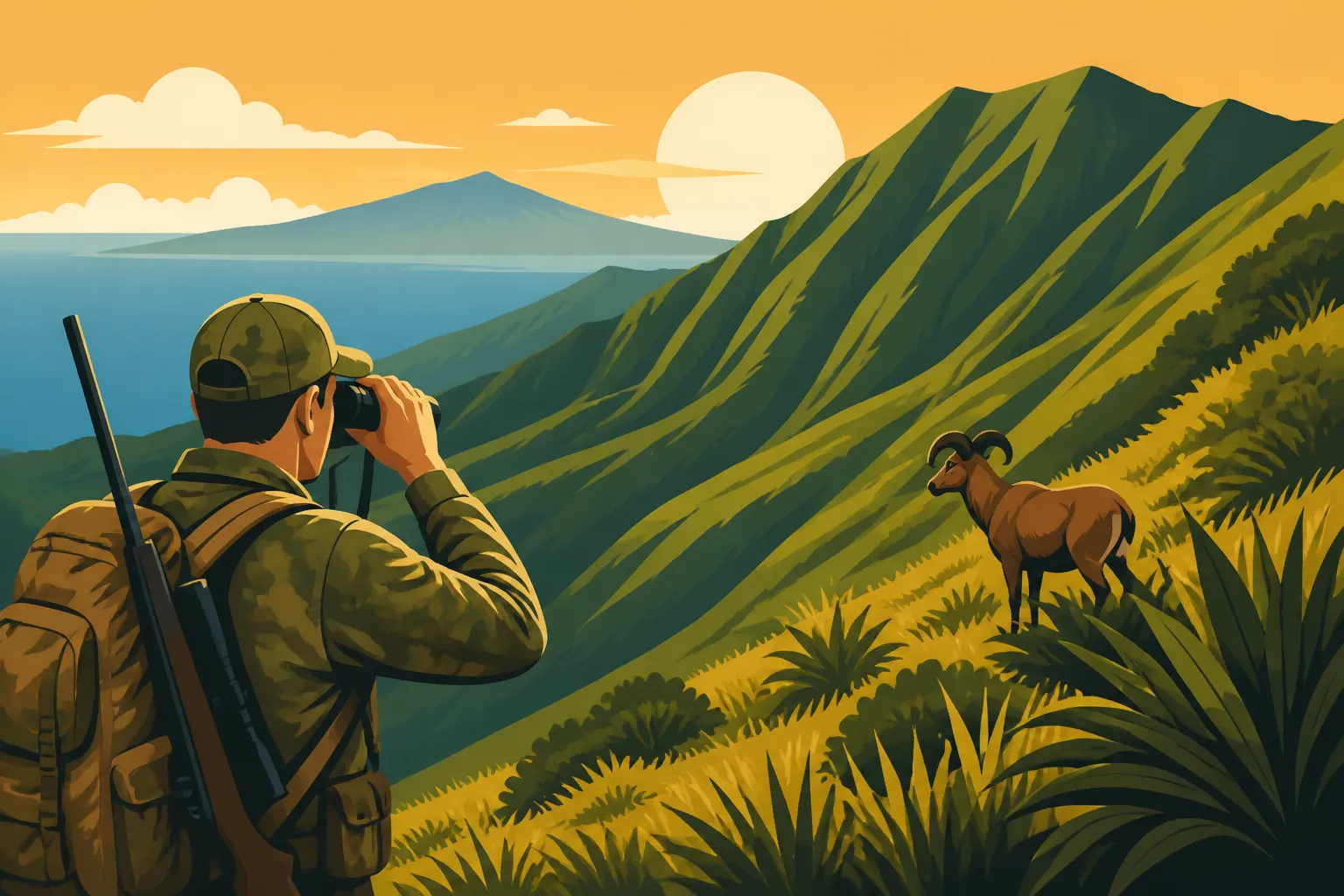
The open nature of much of Kahikinui makes spot-and-stalk hunting the most effective method, especially for Axis deer. This means spending a lot of time glassing, often from high vantage points, to locate animals before attempting an approach. You'll need good binoculars or a spotting scope – don't skimp on optics here. Glass during the early morning and late afternoon when deer are most active and visible. Once you spot an animal, the real challenge begins: using the contours of the land, gulches, and sparse vegetation to close the distance without being seen. The wind in Kahikinui can be notoriously shifty, making scent control vital. A light breeze can turn into a swirling gust in a gulch, giving your position away in an instant. This is where the principles of Spot-and-Stalk Tactics on Open Country truly come into play.
Hunting Gulches and Water Sources
Deep gulches act as natural travel corridors, bedding areas, and sources of shade and moisture in Kahikinui's dry landscape. Learning to read these gulches and understand how game uses them is key. Deer and goats will often descend into gulches during the hotter parts of the day to escape the sun and find cooler air. Hunting around water sources, particularly during dry spells, can also be highly productive. These might be small seeps, cattle troughs, or even lingering puddles after a rain. Be patient, set up downwind, and be prepared to wait. Understanding Hunting a Water Source in Dry Hawaii Country is essential in this arid environment. Remember that game animals are creatures of habit, and they will follow the path of least resistance and greatest comfort. Learning to read Reading Axis Deer Sign in Dry Country will give you an advantage.
Timing and Patience
Axis deer in Kahikinui don't necessarily follow the same rutting patterns as mainland deer species; their breeding can occur year-round. However, there are peak times when buck activity increases. Pay attention to local reports and weather patterns. Drought conditions, for example, can concentrate animals around fewer water sources. Patience is your best friend. You might spend hours glassing only to spot a single herd miles away. The trek to get within range could take even longer, and you might still come up empty-handed. But those moments of tracking a big Axis buck through the kiawe or spotting a wary goat on a cliff face are what make Kahikinui hunting so unforgettable. Remember, Hunting Maui's Year-Round Axis Deer Units means you have opportunities, but also the animals are consistently pressured.
Essential Gear and Safety Considerations
Kahikinui is not a place for casual hunting. The terrain, climate, and remoteness demand proper gear and a strong emphasis on safety. Being unprepared can quickly turn a challenging hunt into a dangerous situation.
Footwear and Clothing
Your feet will take a beating in Kahikinui. Invest in high-quality, sturdy hiking boots with excellent ankle support and a stiff sole to navigate the rocky, uneven ground. Good traction is non-negotiable, especially in the steeper gulches or on loose cinder. Think about what's needed for Boots for Hawaii Lava and Wet Forest, even though Kahikinui is mostly dry, the principles of durability and support remain. Lightweight, breathable clothing that can stand up to thorns and abrasive brush is essential. Long pants and sleeves are highly recommended to protect against cuts, scrapes, and sun exposure. Blaze orange is often required on public lands in Hawaii, so make sure you check the current regulations and incorporate it into your hunting attire for visibility.
Hydration and Navigation
This is critical. Kahikinui can be incredibly hot and dry, with little to no readily available potable water. You must carry significantly more water than you think you'll need, especially if you plan on covering serious ground. Dehydration can set in quickly and severely impact your judgment and physical ability. For navigation, a reliable GPS device or a smartphone with a robust hunting app like onX Hunt is indispensable. Cell service is spotty to non-existent in many parts of Kahikinui, so download offline maps of the unit before you lose service. Knowing your exact location, property boundaries, and how to get back to your vehicle is not just convenient, it's a safety imperative. Planning for Water and Heat Planning for a Hawaii Hunt is paramount. Carrying a physical map and compass as a backup is also a smart move, even in this digital age.
Emergency Preparedness
Due to the remote nature of Kahikinui, emergency services can take a long time to reach you. Always let someone know where you are going, your planned route, and when you expect to return. Carry a basic first-aid kit, a whistle, a headlamp, and emergency signaling devices. A personal locator beacon (PLB) or satellite messenger could be a literal lifesaver in an emergency where cell service is unavailable. Be aware of the presence of wild pigs in some areas, and the potential for leptospirosis if you encounter stagnant water. Respect the local wildlife and environment, and be prepared for self-reliance.
Conclusion
Hunting Maui's Kahikinui slopes is an adventure that pushes hunters to their limits, offering a raw, authentic experience far removed from manicured hunting preserves. The rugged beauty, the elusive Axis deer, and the tenacious feral goats combine to create a truly unique challenge. By understanding the terrain, planning your access carefully, employing smart hunting strategies, and prioritizing safety with the right gear, you can transform the daunting nature of Kahikinui into a memorable and successful Hawaiian hunting expedition. It's a place that demands respect, but for those willing to earn it, the rewards are immeasurable.
Disclaimer
This article is for general informational purposes only and does not constitute professional advice. Laws, prices and regulations vary by location and change over time. Consult a qualified professional for guidance on your specific situation.