Hunting Mauna Loa’s Upper Slopes
Hunting the upper slopes of Mauna Loa on Hawaii Island presents a unique set of challenges that can truly test even the most experienced hunters. The thin air, vast and rugged lava flows, and rapidly changing weather conditions can be incredibly unforgiving, making preparation and strategic thinking absolutely crucial for success. This guide is here to walk you through what to expect, how to prepare, and what tactics might just give you an edge when pursuing game in this extreme, high-elevation environment.
Understanding Mauna Loa's Upper Slopes Environment
Mauna Loa isn't just a big mountain; it's a vast, active shield volcano that dominates the landscape of Hawaii Island. Its upper slopes are unlike anything most hunters will ever encounter, characterized by harsh, exposed terrain and an unpredictable climate. This isn't your typical lush Hawaiian forest; it's a world of rock, sparse vegetation, and wide-open spaces that demand respect and careful planning.
The High-Altitude Challenge
The sheer elevation of Mauna Loa's hunting units presents the first significant hurdle. We're talking about altitudes where the air gets noticeably thinner, often exceeding 8,000 to 10,000 feet, and sometimes even higher depending on the specific hunting area. For those not accustomed to high altitudes, this can lead to symptoms like shortness of breath, headaches, and general fatigue, making physical exertion much more difficult. It's a real energy drain, and what might be a simple hike at sea level becomes a grueling climb up here. You'll feel every step, and that trophy animal might seem a lot farther away than it looks on the map. This thin air also impacts your body's ability to recover, so pacing yourself is key.
Navigating the Lava Flows
Below the summit, the upper slopes are a mosaic of ancient and relatively recent lava flows. This means you're often walking over jagged, uneven 'a'ā lava or the smoother, rope-like pāhoehoe flows. Neither is easy. 'A'ā is like walking on broken glass, sharp and unforgiving to boots and ankles, while pāhoehoe can be deceptively slippery and conceals deep cracks. There are few established trails, so you're constantly picking your way across these formations, which slows your progress considerably and demands constant attention to footing. You'll want to read up on Walking Rough Lava Without Wrecking Your Boots before you head out. These lava fields also make it incredibly difficult to track game, as hoof prints are often non-existent on the hard rock, leaving you relying more on visual spotting and patterns of movement.
Extreme Weather Variability
The weather on Mauna Loa's upper slopes is a fickle beast. One moment, you could be under a clear, intense tropical sun, and the next, a dense fog or rain squall can roll in, dropping temperatures dramatically and reducing visibility to mere yards. The lack of tree cover means you're fully exposed to the elements, whether it's scorching sun, biting wind, or chilling rain. Hypothermia is a real risk, even in Hawaii, if you're caught unprepared in a sudden cold snap. It's not uncommon to experience all four seasons in a single day up here, from the heat of midday to freezing temperatures at night, so packing versatile layers is absolutely essential.
Game Animals and Their Behavior on Mauna Loa
While the landscape is harsh, Mauna Loa's upper slopes are home to hardy game animals that have adapted to this demanding environment. Primarily, you'll be looking for Mouflon sheep and feral goats, though their presence and densities can vary greatly across different sections of the mountain. Understanding their behavior is crucial, as they move and feed differently here than they might in lower, more hospitable areas.
Mouflon Sheep: High-Altitude Specialists
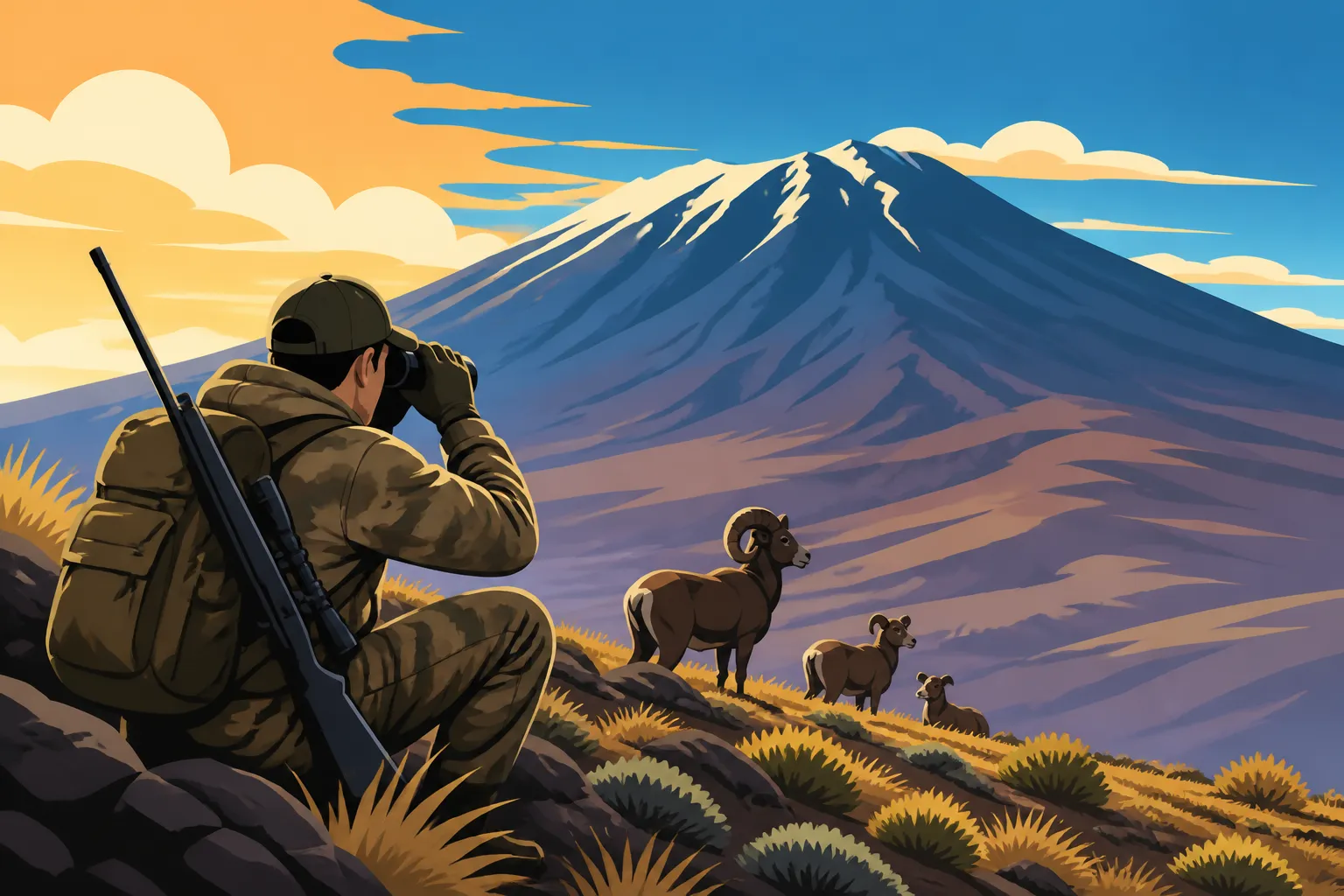
The Mouflon sheep on Mauna Loa are a testament to adaptation. These animals thrive in the higher elevations, often ranging across the vast lava flows and kipukas of sparse vegetation. They are notoriously wary and possess incredible eyesight, making them a significant challenge for hunters. You can learn more about them in Mouflon Sheep Hunting on Hawaii Island. They tend to graze on the limited grasses and shrubs that manage to sprout from the volcanic rock, often moving in small, scattered herds. Their patterns are influenced heavily by the availability of water, which can be scarce up high, especially during dry periods. You might find them concentrated near small, hidden seeps or depressions that collect rainwater, making these areas prime for scouting. They often bed down in rocky outcrops that offer both cover from the wind and a commanding view of their surroundings, allowing them to spot threats from a distance.
Feral Goats: Rugged and Elusive
While often associated with the coastal cliffs and canyons of other islands, feral goats also inhabit portions of Mauna Loa's upper slopes, particularly in areas with more vegetation or rocky features that offer shelter. These goats are equally tough and can navigate the treacherous lava fields with surprising agility. They are opportunistic browsers, feeding on whatever plants they can find, including invasive species that have taken root. Like Mouflon, goats are extremely alert and will quickly disappear into the broken terrain at the first sign of danger. They often move in small family groups, and their presence can sometimes indicate slightly more hospitable pockets of habitat within the otherwise barren volcanic landscape. Identifying fresh goat sign – droppings, rubs on sparse trees, and bedding areas – is key to pinpointing their movements.
Reading Animal Sign in Barren Terrain
In an environment where clear tracks are a rarity, hunters must become masters of subtle sign. Look for disturbed rocks, slight scuffs on volcanic ash, or fresh droppings. Mouflon and goats will often leave behind wool or hair on sharp lava rocks or thorny bushes. Water sources, even temporary ones like puddles after a rain, will be magnets for game. You might also spot rubbed areas on small trees or shrubs where rams have polished their horns. When scouting, remember that thermal currents play a huge role in animal movement. In the mornings, animals might move to sun-exposed slopes to warm up, then seek cooler, wind-blown areas or shady spots among the rocks as the day heats up. Understanding these daily movements is crucial for a successful hunt. Hunting Mouflon in Hawaii's Mamane Forest focuses on a different elevation but still emphasizes understanding how animals use available cover.
Navigating and Preparing for Your Hunt
Hunting Mauna Loa's upper slopes is as much about logistics and preparation as it is about hunting skill. The remote, challenging nature of these units means you need to be self-sufficient and ready for anything. Cutting corners on preparation could put you in a dangerous situation far from help.
Essential Gear for High-Elevation Hunting
Your gear choices on Mauna Loa can make or break your hunt, and frankly, your safety. Layering is paramount due to the extreme temperature swings. Start with a moisture-wicking base layer, add insulating mid-layers like fleece or puffy jackets, and top it off with a waterproof and windproof outer shell. Even in Hawaii, a good winter hat and gloves can be lifesavers. Footwear is non-negotiable; you need sturdy, high-ankle hiking boots with stiff soles, ideally waterproof, to protect against the sharp lava. Remember to try out Walking Rough Lava Without Wrecking Your Boots for more details. Hydration is another critical factor; carry more water than you think you'll need, as there are very few natural water sources. A reliable backpack that can comfortably carry your gear, water, food, and potentially meat is essential. Don't forget a first-aid kit, emergency shelter, fire starter, headlamp, and a reliable navigation device.
| Item Type | Recommended Features | Why It's Crucial on Mauna Loa |
|---|---|---|
| Layering | Moisture-wicking base, insulating mid-layers, waterproof/windproof outer shell | Extreme temperature swings (cold, wind, sun, rain in one day), prevents hypothermia |
| Footwear | High-ankle, stiff-soled, waterproof hiking boots | Jagged lava protection, ankle support, keeping feet dry |
| Hydration | 3-4 liters water minimum, purification tablets/filter | Scarcity of natural water, high exertion in thin air |
| Navigation | GPS device (dedicated or phone app), backup map/compass | Featureless terrain, dense fog, easy to get disoriented |
| First-Aid Kit | Comprehensive for cuts, sprains, altitude sickness meds | Remote location, sharp lava, potential for injuries |
| Emergency | Emergency blanket/bivy, fire starter, headlamp, whistle | Sudden weather changes, getting lost, unexpected overnight stays |
| Optics | High-quality binoculars (10×42 or 12×50), spotting scope | Vast open terrain, spotting wary animals from a distance (e.g., Glassing a Lava Flow for Mouflon Rams) |
| Game Care | Game bags, knife, cordage, bone saw, cool storage | Warm temperatures at lower elevations, preserving meat quality |
Navigation and Communication Challenges
Mauna Loa's upper slopes are incredibly vast and often featureless, making navigation difficult. Lava flows can look identical for miles, and dense fog can suddenly reduce visibility to zero. A reliable GPS device or a robust mapping app like onX Hunt is absolutely non-negotiable. Download offline maps before you go, as cell signal will be nonexistent in most areas of the upper mountain. Always carry a physical map and compass as a backup, and know how to use them. It's a smart move to let someone know your exact hunting plan and expected return time. Carrying a satellite messenger or personal locator beacon (PLB) is highly recommended for emergency communication. Remember, No Cell Signal on a Hawaii Hunt is a reality in these remote areas.
Physical Conditioning and Safety
Hunting Mauna Loa is not for the faint of heart. The combination of high altitude, rugged terrain, and potential for long, strenuous hikes demands a high level of physical fitness. Start conditioning well in advance of your hunt, focusing on cardiovascular endurance and leg strength. Practice hiking with a weighted pack to simulate real-world conditions. Safety is paramount: always hunt with a buddy if possible, especially in such challenging terrain. Be aware of weather forecasts, but be prepared for unexpected changes. Watch your footing constantly to avoid falls and ankle injuries. Always carry enough Water and Heat Planning for a Hawaii Hunt supplies and ensure you have a way to filter or purify additional water if needed.
Hunting Strategies for Mauna Loa's Terrain
Success on Mauna Loa's upper slopes rarely comes by accident. It's a result of careful planning, keen observation, and adapting your tactics to the unique demands of the environment and the behavior of the animals. This isn't a place for casual hunting; it requires dedication and a strategic mindset.
Spot-and-Stalk Dominance
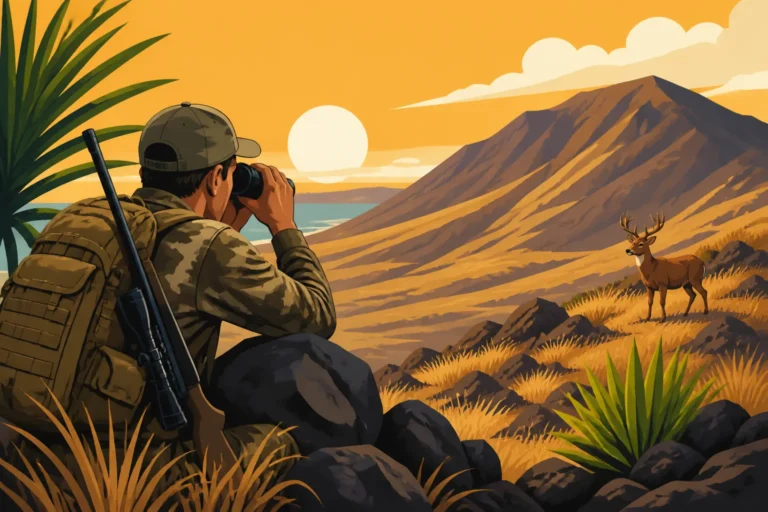
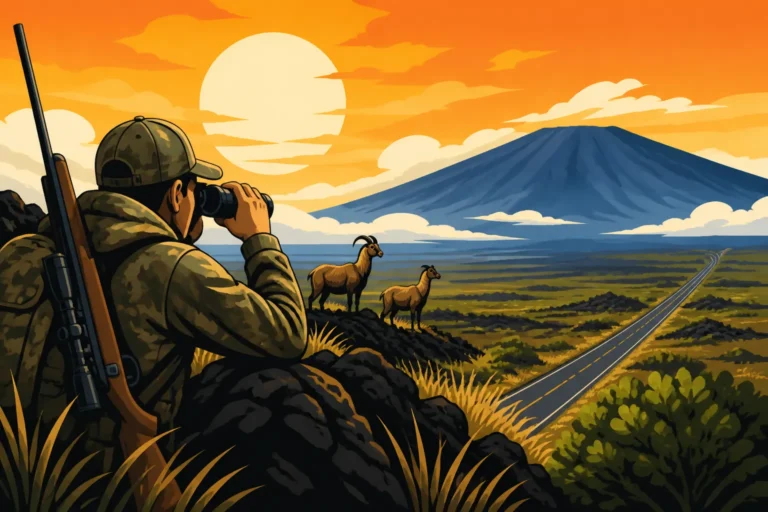
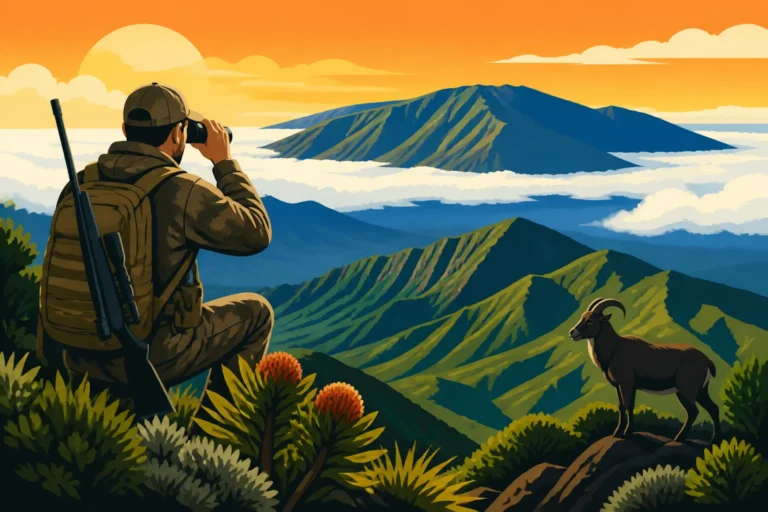
Given the expansive, open nature of Mauna Loa's upper slopes, spot-and-stalk is by far the most effective hunting method. You'll spend a significant amount of time glassing vast areas, looking for the tell-tale shapes or movements of Mouflon sheep or goats. High-quality optics are your best friend here. Find a vantage point, settle in, and meticulously pick apart the landscape, paying close attention to any areas with sparse vegetation, rocky breaks, or where animals might seek shelter from the sun or wind. Once you spot an animal, the real challenge begins: planning an approach that keeps you out of sight and downwind, navigating the tricky lava flows without making noise or revealing your position. This often means long, arduous stalks over incredibly difficult ground, sometimes involving crawling or backtracking to use terrain features effectively. Patience is not just a virtue here; it's a necessity.
Understanding Animal Movement and Thermal Winds
Animals on Mauna Loa are highly attuned to their environment, including the subtle shifts in wind and thermals. In the mornings, cool air will typically flow down the slopes, while as the sun heats the ground, warm air will rise. Understanding these patterns is crucial for scent control. Always try to approach from downwind, even if it means taking a much longer, more difficult route. Additionally, animals often move between feeding and bedding areas during specific times of the day. They may feed more actively during cooler periods, such as early morning and late afternoon, and bed down during the midday heat. Observing these patterns during your scouting or glassing sessions will help you anticipate where they might be and when they'll be on the move. Don't be afraid to sit and observe for extended periods; sometimes, the best strategy is simply to let the animals come to you, or at least reveal their predictable routes.
Capitalizing on Water Sources and Kipukas
In this arid, high-elevation environment, water is life. While large, obvious water sources are rare, smaller seeps, rain-filled depressions, or even dew collected on vegetation can be critical for Mouflon and goats. During dry spells, animals will often concentrate their activity around these limited water points. Scouting for these areas, perhaps through maps or even by aerial observation if available, can provide significant advantages. Hunting a Water Source in Dry Hawaii Country could be a very useful skill. Similarly, "kipukas" – islands of older, often more vegetated land surrounded by more recent lava flows – can be critical pockets of habitat. These areas offer more forage and cover, acting as magnets for game, especially when the surrounding lava is barren. Identifying and focusing your efforts around these greener islands amidst the rock can dramatically increase your chances of success. They provide both food and shelter, creating natural bottlenecks that funnel game movement.
Patience and Persistence
Ultimately, hunting Mauna Loa's upper slopes demands an exceptional level of patience and persistence. Animals are few and far between, the terrain is grueling, and the weather is unpredictable. You might spend days hiking and glassing without seeing a single animal, or you might get a fleeting glimpse that leads to a hours-long stalk. It's easy to get discouraged, but the rewards of a successful hunt in such a wild and challenging environment are immense. Don't rush your shots, make sure you're physically and mentally ready for the stalk, and be prepared to put in the effort required. Remember to secure your Hawaii Hunting Licenses and What They Cost and understand the Mouflon Bag Limits by Island before you head out, and always complete the required Checking In and Out of Hawaii Hunting Units. This type of hunt is an adventure in itself, and the experience is often as fulfilling as the harvest.
Disclaimer
This article is for general informational purposes only and does not constitute professional advice. Laws, prices and regulations vary by location and change over time. Consult a qualified professional for guidance on your specific situation.